
Biography
Utagawa Kunisato (歌川国郷, died 1860) was a late-Edo-period ukiyo-e print designer of the Utagawa school, active mainly in the Kaei and Ansei eras (roughly the late 1840s through the 1850s). He was a pupil of Utagawa Kunisada (Toyokuni III, 1786–1865), the dominant Edo print designer of the mid-nineteenth century, and his position within Kunisada's studio placed him in the second generation of Toyokuni's lineage alongside such Kunisada pupils as Kunichika and Kunihisa II. His name 国郷 (Kunisato) follows the standard Utagawa pupil convention of inheriting a character from the master's name (国 / kuni from Kunisada) prefixed to a personal go (郷 / sato), placing him squarely within the Utagawa-school naming system that organized Edo ukiyo-e production from the 1810s through the 1860s. He is distinct from his more famous Utagawa-school contemporaries Kunisada, Kuniyoshi, Kunichika, and from the slightly later Kunisada II, and his death places his entire active career within the closing decades of the Edo period, before the Meiji Restoration of 1868 transformed the conditions of print production in Japan.
Little is recorded of Kunisato's personal biography beyond what can be reconstructed from his signed prints. His birth year is not documented; his death, given as 1860 (some sources give 1858), is the only firm chronological anchor in his career. Like many second-tier Utagawa pupils, he left no formal biographical record of the kind that survives for major masters such as Kunisada and Kuniyoshi, and his life is now reconstructed largely from the dates encoded in his prints through publisher seals, censorship marks, and series titles tied to specific kabuki productions or current events. He worked primarily in Edo — reference records place his origins in the city's Tatekawa district — and his output centered on the major commercial print genres of the mid-nineteenth century: yakusha-e (actor prints), musha-e (warrior prints), sumo-e (sumo prints), bijin-ga (beautiful women), and the festival-scene and current-events compositions that became increasingly important in the 1850s as Edo print publishers responded to demand for documentary and topical images alongside the older theatrical and warrior genres.
Kunisato's stylistic register is identifiably Utagawa-school of the Kaei–Ansei period, shaped by Kunisada's mature manner while showing the specific features that placed him within the Kunisada workshop's broad output rather than its top tier. His figures tend toward the elongated proportions and dynamic gesture characteristic of mid-nineteenth-century Edo ukiyo-e, his coloration follows the bright palette of the period, and his compositional sense for crowd scenes and festival processions shows the documentary ambition of the 1850s Edo print market, which began to value multi-sheet panoramic compositions documenting specific Edo events, locations, and social activities alongside the older single-actor or single-warrior portrait formats. His multi-part Sannō Festival Procession set, preserved at the Museum of Fine Arts, Boston, exemplifies this documentary turn: each numbered print shows one segment of a long ceremonial procession through Edo, captured in the multi-sheet format that allowed publishers to sell the series as a coherent sequence while making each print viable on its own.
Kunisato's subject range across his documented prints reflects the breadth of the mid-nineteenth-century Edo commercial print market. He produced actor portraits in the standard Kunisada-derived format, including bust portraits and full-length actor studies tied to specific kabuki productions. He produced warrior and historical prints in the musha-e mode that had been dramatically expanded by his contemporary Kuniyoshi in the 1830s and 1840s, among them a composition on the unification of Japan in homage to Toyotomi Hideyoshi, now in the Art Gallery of Greater Victoria. He produced sumo prints documenting the great Ryōgoku tournaments of the 1850s, capturing the leading wrestlers of his day in the standardized half-length portrait format that the sumo-e genre had developed across the early nineteenth century. He produced festival prints documenting Edo's major ceremonial events, including the Sannō Festival procession and the Benzaiten festival on Enoshima. And he produced topical prints addressing current concerns of the urban Edo population — popular-doll fashion prints, children-at-play scenes, and the various semi-documentary commercial genres that filled out the publishers' lists alongside the prestige theatrical and warrior categories.
The documentary value of Kunisato's prints lies precisely in this breadth. As a working second-generation Utagawa pupil, he was producing prints for a publisher list that demanded coverage of the full range of mid-nineteenth-century Edo popular culture, and the prints he signed across the 1850s preserve a coherent record of what Edo print buyers were consuming in the decade before the Meiji Restoration. His Popular Dolls (Ryūkō ningyō), his Asakusa cherry-blossom viewing scene, his sumo and festival prints, and his actor and warrior compositions together form a substantial corpus that documents the visual culture of late-Edo-period Edo with the practical comprehensiveness of a working studio professional. He worked alongside an unusually crowded field of Utagawa-school designers — Kunisada was still active and producing at his peak through the 1850s, Kuniyoshi was producing prolifically until his 1861 death, and the next generation of Utagawa pupils including Yoshitora, Yoshikazu, Yoshitoshi, Kunichika, and Kunisada II were all beginning to publish by the late 1850s — and Kunisato's position within this dense market depended on his ability to deliver competent designs across the full subject range that publishers needed.
The principal Western collection of Kunisato's work is at the Museum of Fine Arts, Boston, which holds the largest single concentration outside Japan, including the Sannō Festival Procession set and the topical-genre compositions of the 1850s. Additional impressions are held at the Edo-Tokyo Museum in Japan (sumo prints, the Benzaiten Festival on Enoshima, and the Miuraya courtesan portraits) and at the Art Gallery of Greater Victoria (the Unification of Japan: Homage to Hideyoshi composition). The overall surviving corpus is modest by comparison with major Utagawa masters but sufficient to define his subject range and stylistic period, and the accessibility of the Boston collection through its open-access digital program has made his prints available for study even though the secondary literature on him remains thin. He died in 1860, just before the political upheavals that would close the Edo period, and his career stands as a representative case of mid-nineteenth-century Utagawa-school production at the working-professional rather than star-designer level.
Key Facts
- Active Period
- 1860
- Nationality
- 🇯🇵Japan
- Movement
- Ukiyo-e
- Works Indexed
- 7
Frequently Asked Questions
Utagawa Kunisato (歌川国郷, died 1860) was a late-Edo-period ukiyo-e print designer of the Utagawa school, active mainly in the Kaei and Ansei eras (roughly the late 1840s through the 1850s). He was a pupil of Utagawa Kunisada (Toyokuni III, 1786–1865), the dominant Edo print designer of the mid-nineteenth century, and his position within Kunisada's studio placed him in the second generation of Toyokuni's lineage alongside such Kunisada pupils as Kunichika and Kunihisa II. His name 国郷 (Kunisato) follows the standard Utagawa pupil convention of inheriting a character from the master's name (国 / kuni from Kunisada) prefixed to a personal go (郷 / sato), placing him squarely within the Utagawa-school naming system that organized Edo ukiyo-e production from the 1810s through the 1860s. He is distinct from his more famous Utagawa-school contemporaries Kunisada, Kuniyoshi, Kunichika, and from the slightly later Kunisada II, and his death places his entire active career within the closing decades of the Edo period, before the Meiji Restoration of 1868 transformed the conditions of print production in Japan.
Utagawa Kunisato's work was shaped by the Ukiyo-e tradition in Japanese woodblock printmaking. Ukiyo-e: ## What is ukiyo-e? Ukiyo-e ([浮世絵](/glossary/ukiyo-e)) — literally "pictures of the floating world" — is the Edo-period Japanese print and painting tradition that flourished from roughly 1660 to 1868, depicting the pleasures of urban life in Edo (modern Tokyo): courtesans, kabuki actors, sumo wrestlers, famous landscapes, and seasonal beauties.
Original prints by Utagawa Kunisato can be found in collections including Museum of Fine Arts Boston, Art Institute of Chicago.
Woodblock Prints by Utagawa Kunisato (7)
Great Prosperity at the Silk Farm (Kaikoya Daihanjono Zu)
c. 1837
Large (oban) woodblock print, triptych
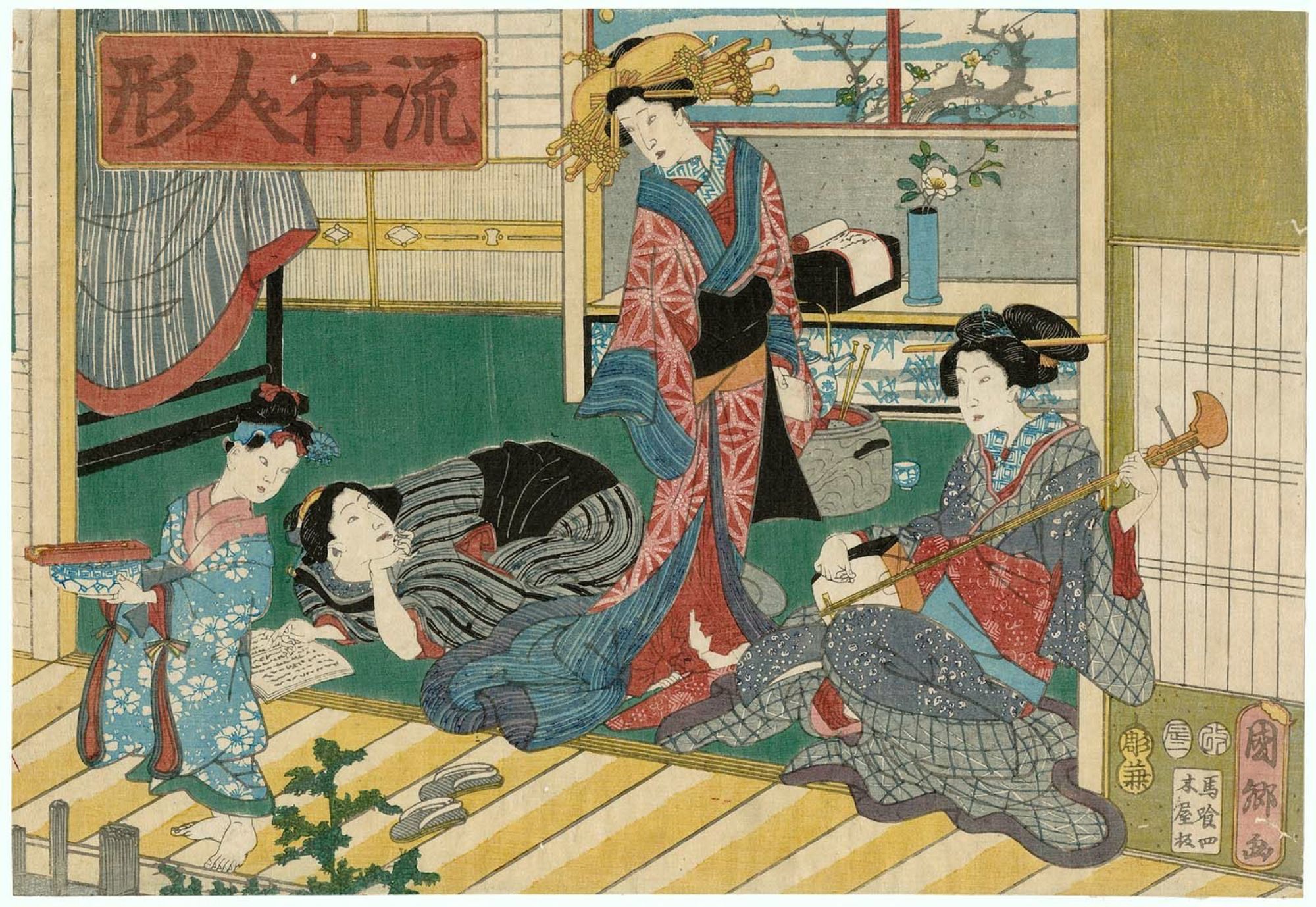
Popular Dolls (Ryūkō ningyō)
1856
Woodblock print (nishiki-e); ink and color on paper
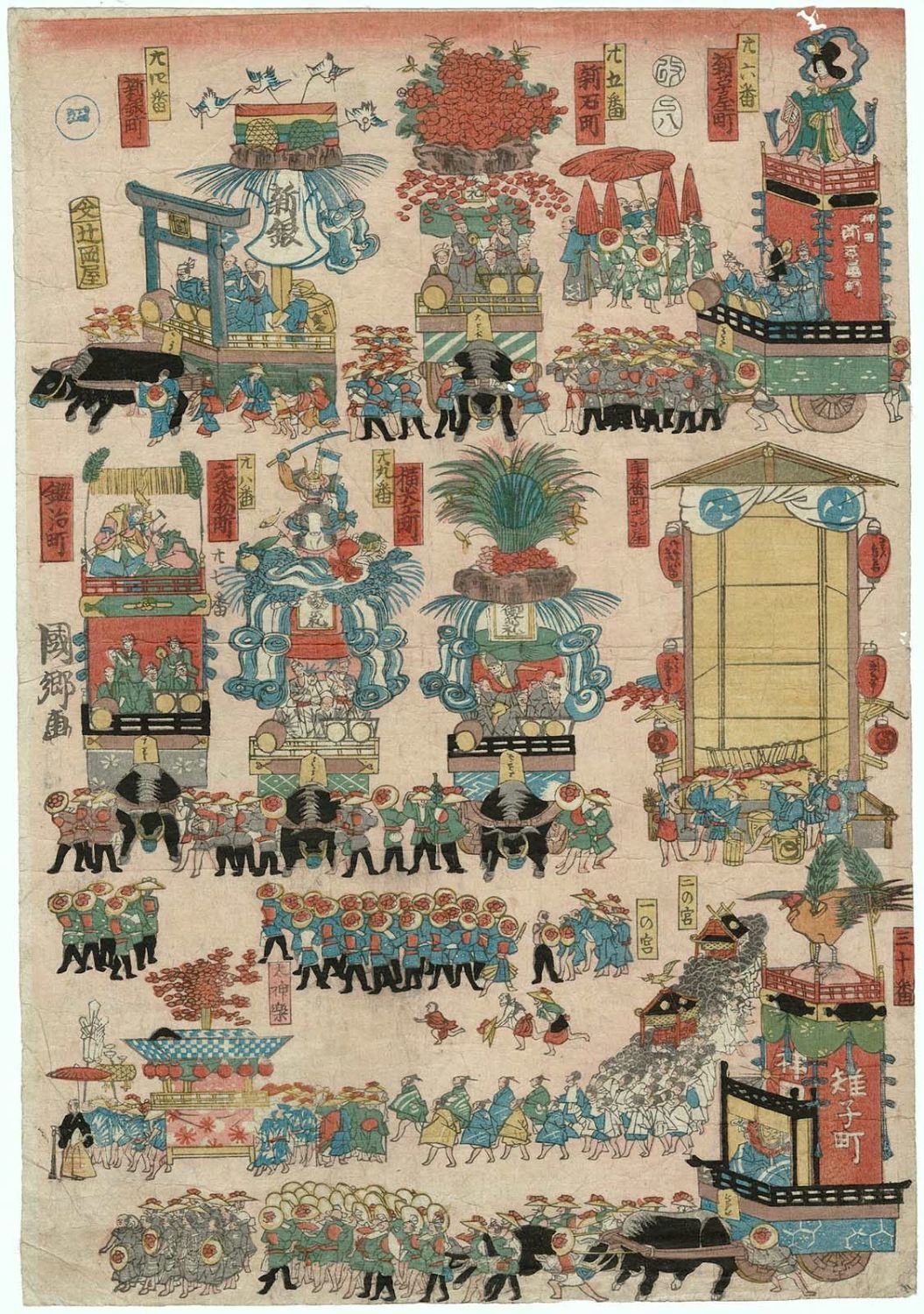
Festival Floats, No. 4 from a series
1857
Woodblock print (nishiki-e); ink and color on paper
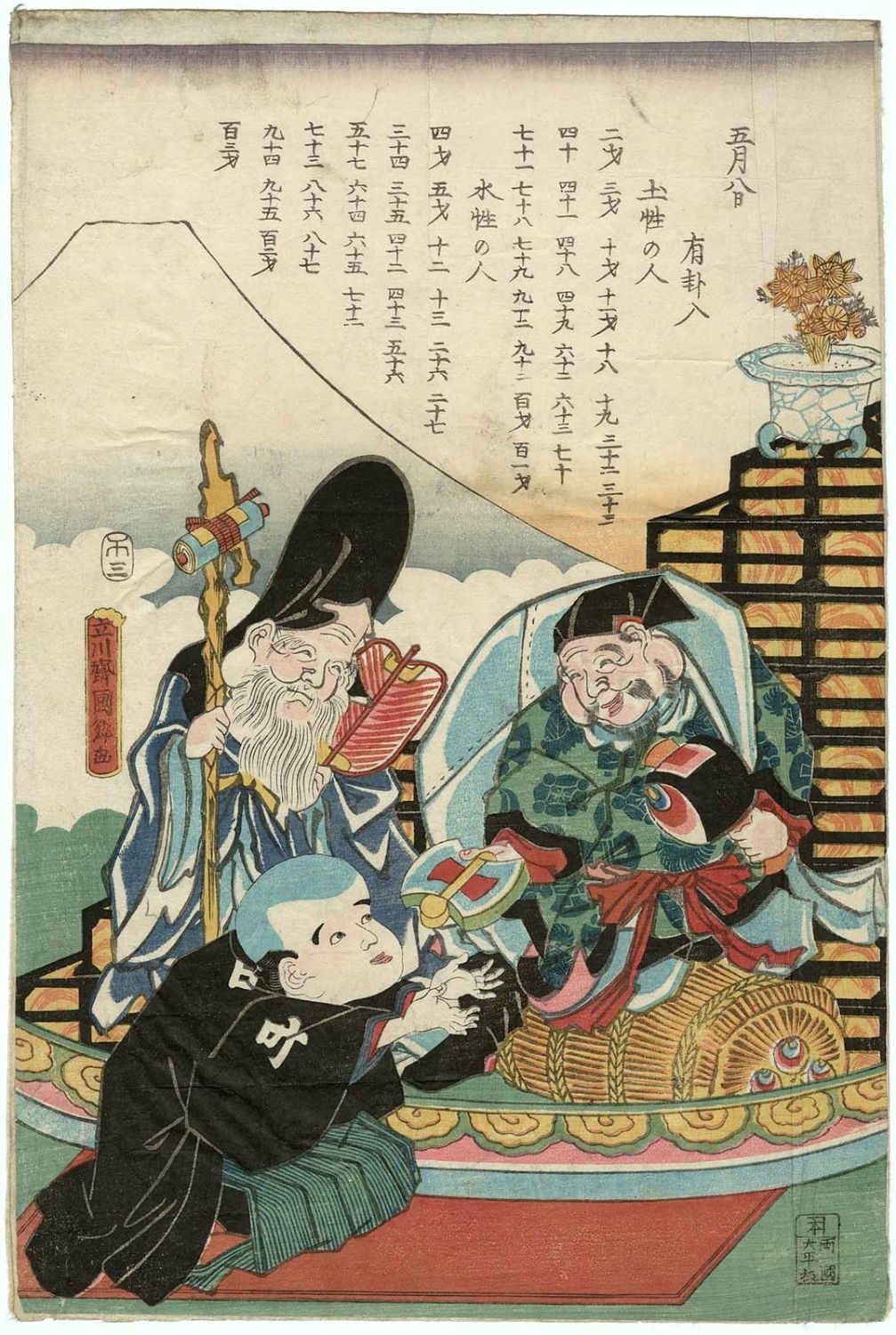
People Born in Earth Signs Will Be Lucky on the Eighth Day of the Fifth Month
1858
Woodblock print (nishiki-e); ink and color on paper
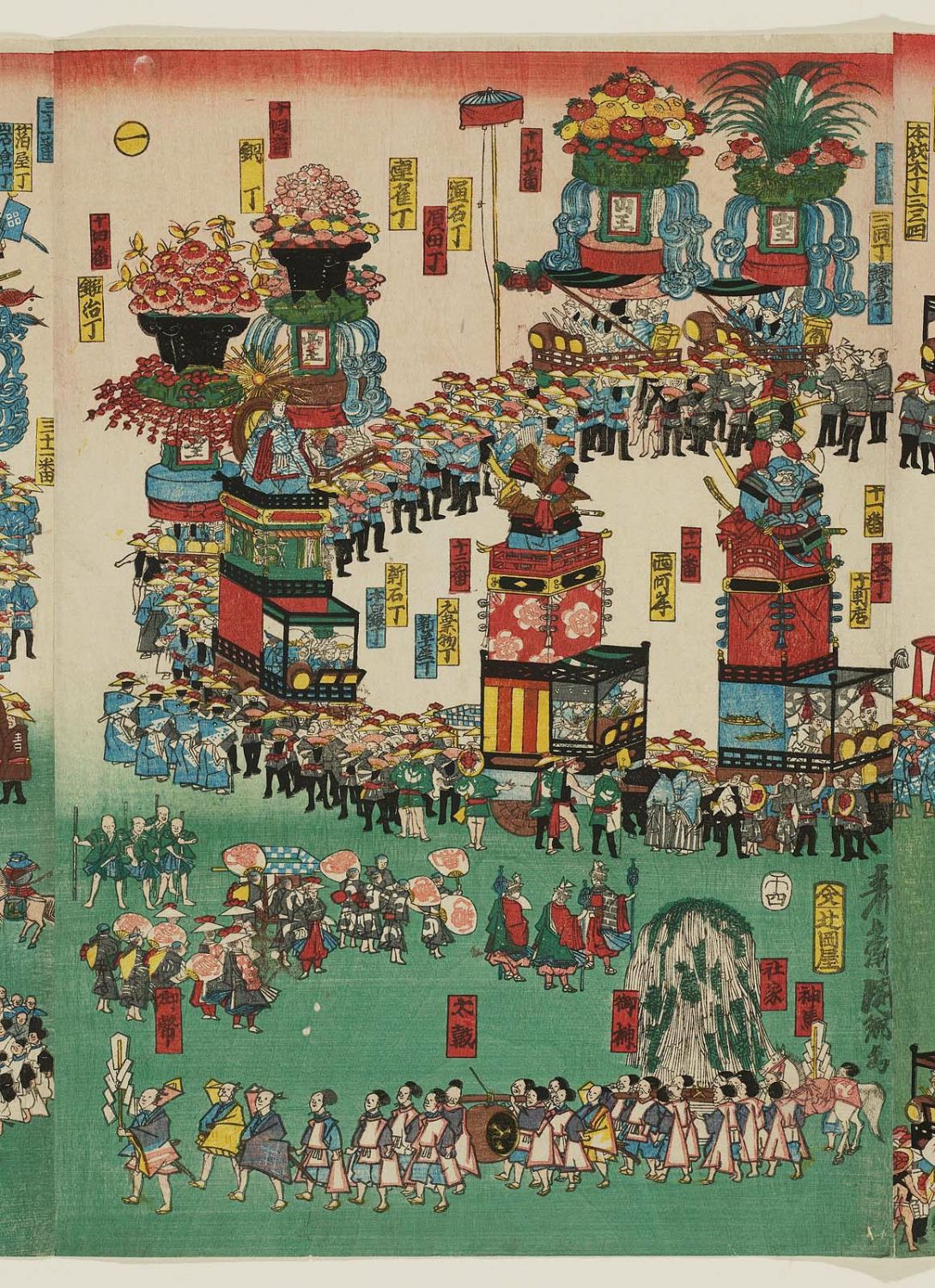
Sannō Festival Procession (Sannō-sama gosairei zu), No. 1
1858
Woodblock print (nishiki-e); ink and color on paper
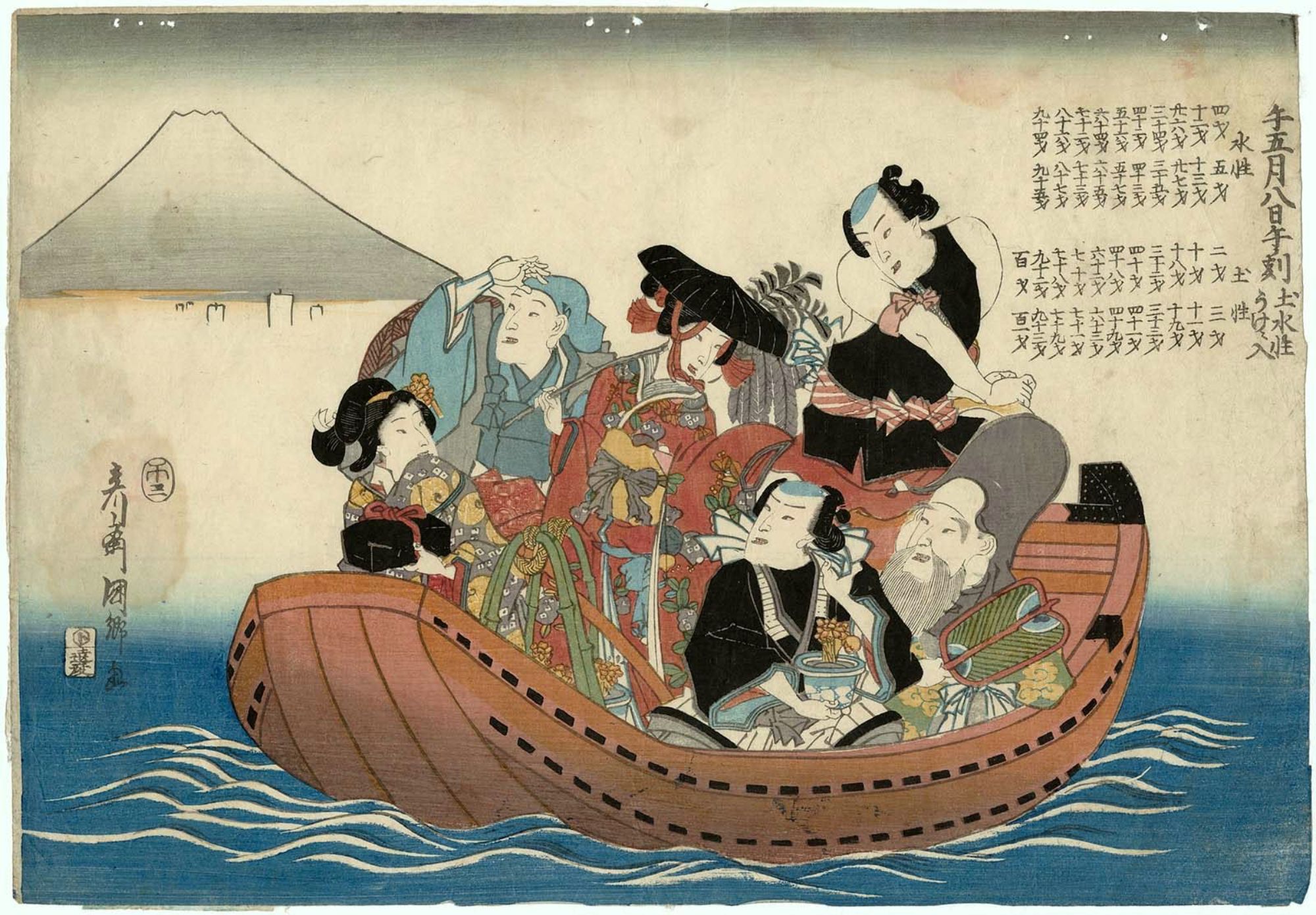
Actors
1858
Woodblock print (nishiki-e); ink and color on paper
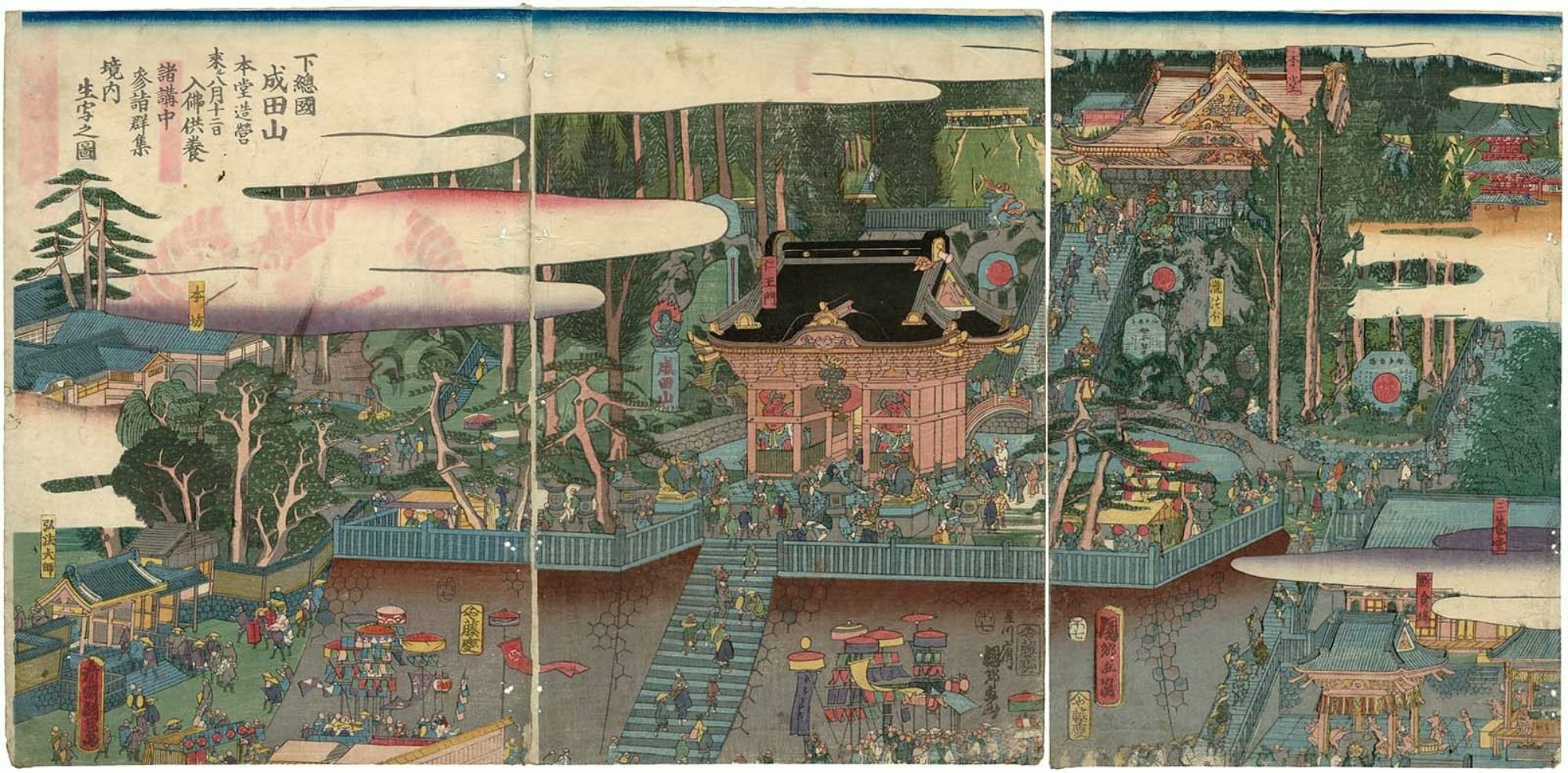
Narita-san
1858
Woodblock print (nishiki-e); ink and color on paper