
Great Prosperity at the Silk Farm (Kaikoya Daihanjono Zu)
- Date:
- c. 1837
- Medium:
- Large (oban) woodblock print, triptych
- Source:
- Art Institute of Chicago
Description
This circa 1837 large ōban triptych by Utagawa Kunisato, held by the Art Institute of Chicago (accession 1939.2275, with two additional impressions accessioned 1925.2316 and 1925.2317), depicts a panoramic scene titled Kaikoya Daihanjono Zu (Great Prosperity at the Silk Farm). The composition documents the silk-rearing industry that was a major source of household-level income in late-Edo and early-Meiji rural Japan, showing women workers tending mulberry-fed silkworms across the three-sheet panorama in a documentary mode that the late-Tenpō Edo print market increasingly demanded alongside the standard theatrical and warrior genres. The dating of c. 1837 places the print at the very beginning of Kunisato's documented career, within the Tenpō reform era when censorship pressures were beginning to constrain the actor- and courtesan-print genres and to push Edo print designers toward documentary, geographical, and current-events subjects that fell outside the reformers' scrutiny. The triptych format allowed publishers to sell the composition as a single luxury piece while making each sheet saleable on its own, a marketing strategy that the Edo publishers used heavily for panoramic compositions of this type. The print is preserved in three separate impressions at the Art Institute of Chicago, all in the Clarence Buckingham Collection or related Japanese print holdings, and the AIC's open-access program has made high-resolution IIIF imagery of all three impressions available for comparative study, an unusually rich documentation for a single Kunisato design and one of the most accessible primary sources for this artist's early Tenpō-era work.
More Prints by Utagawa Kunisato
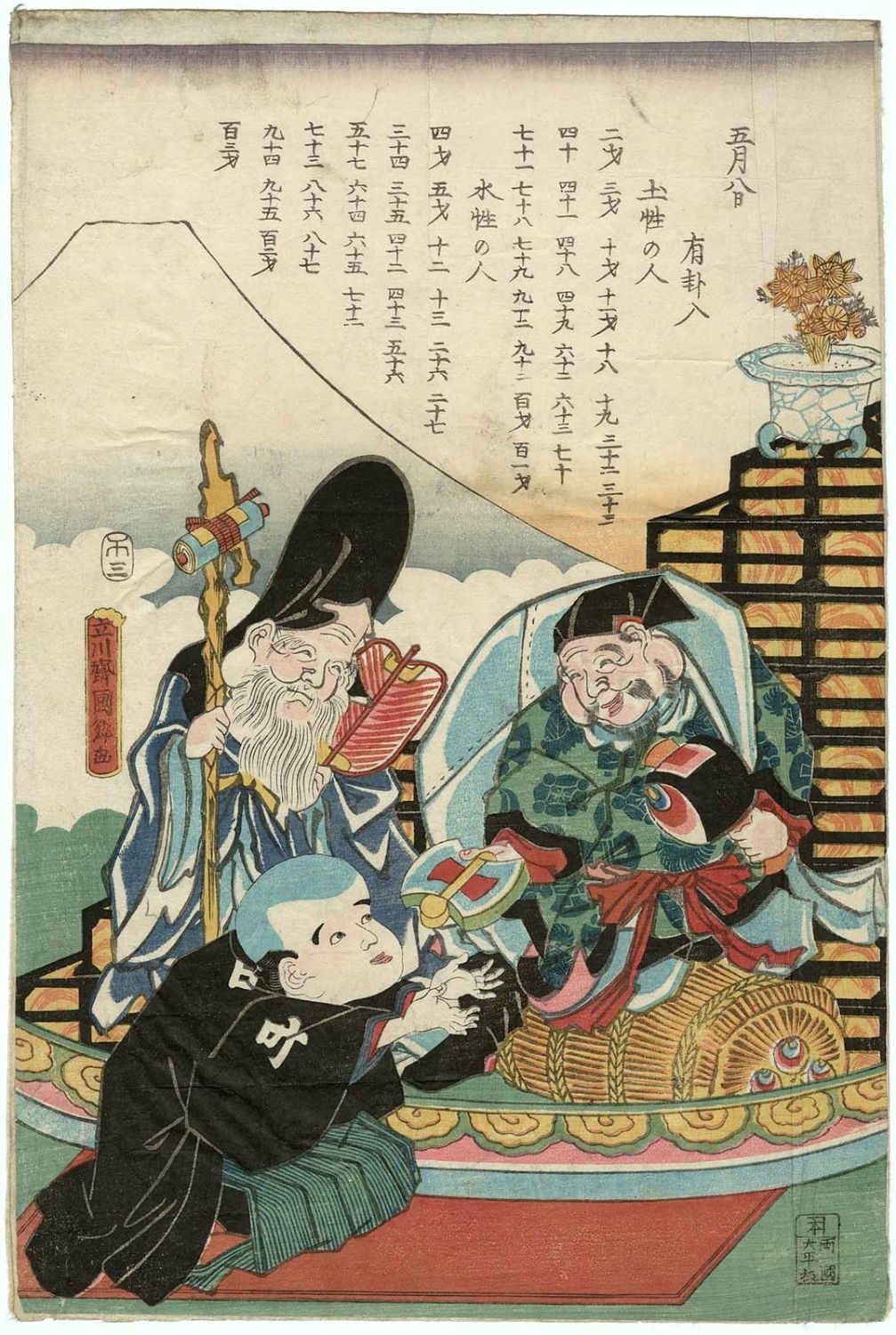
People Born in Earth Signs Will Be Lucky on the Eighth Day of the Fifth Month
1858
Woodblock print (nishiki-e); ink and color on paper
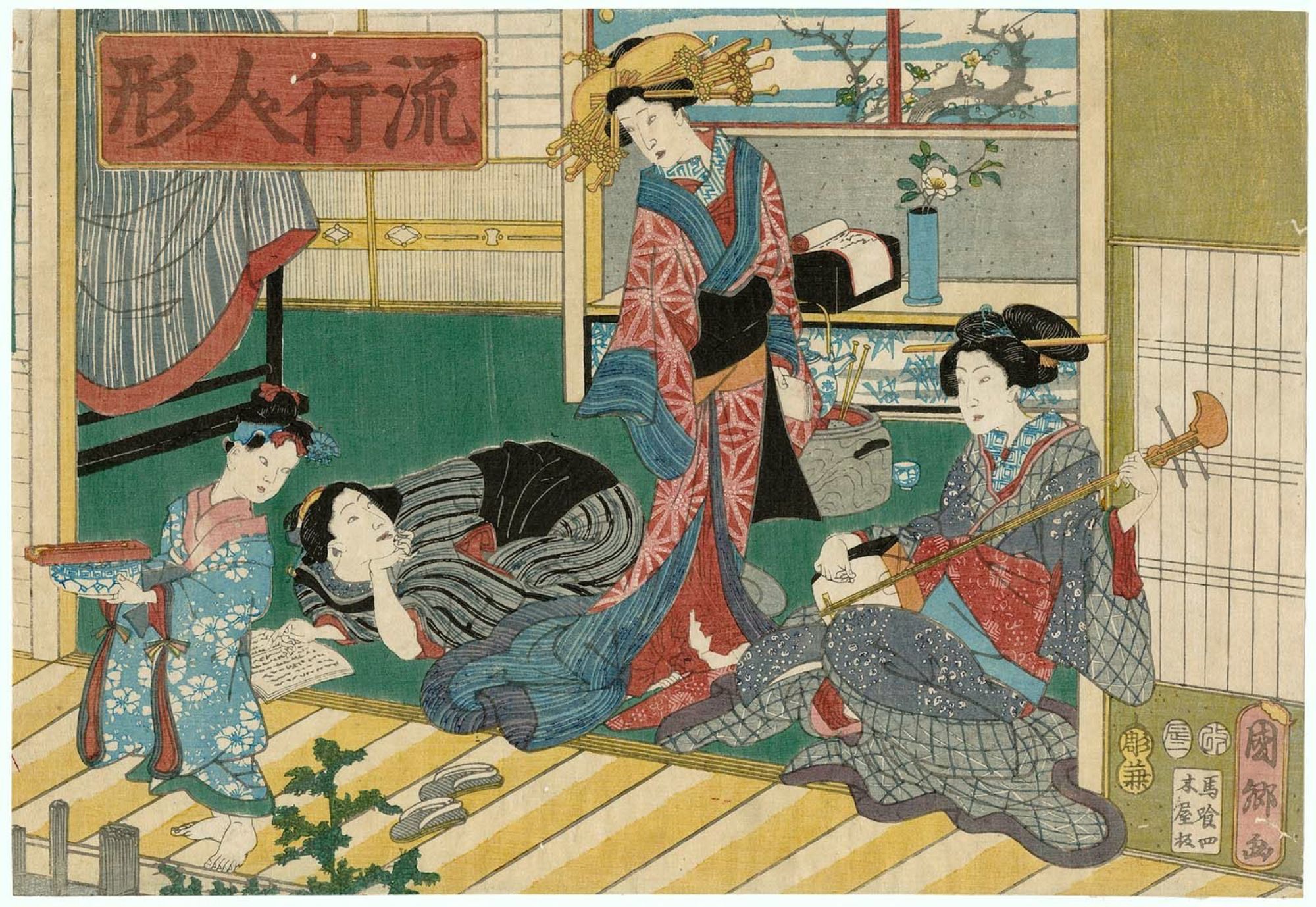
Popular Dolls (Ryūkō ningyō)
1856
Woodblock print (nishiki-e); ink and color on paper
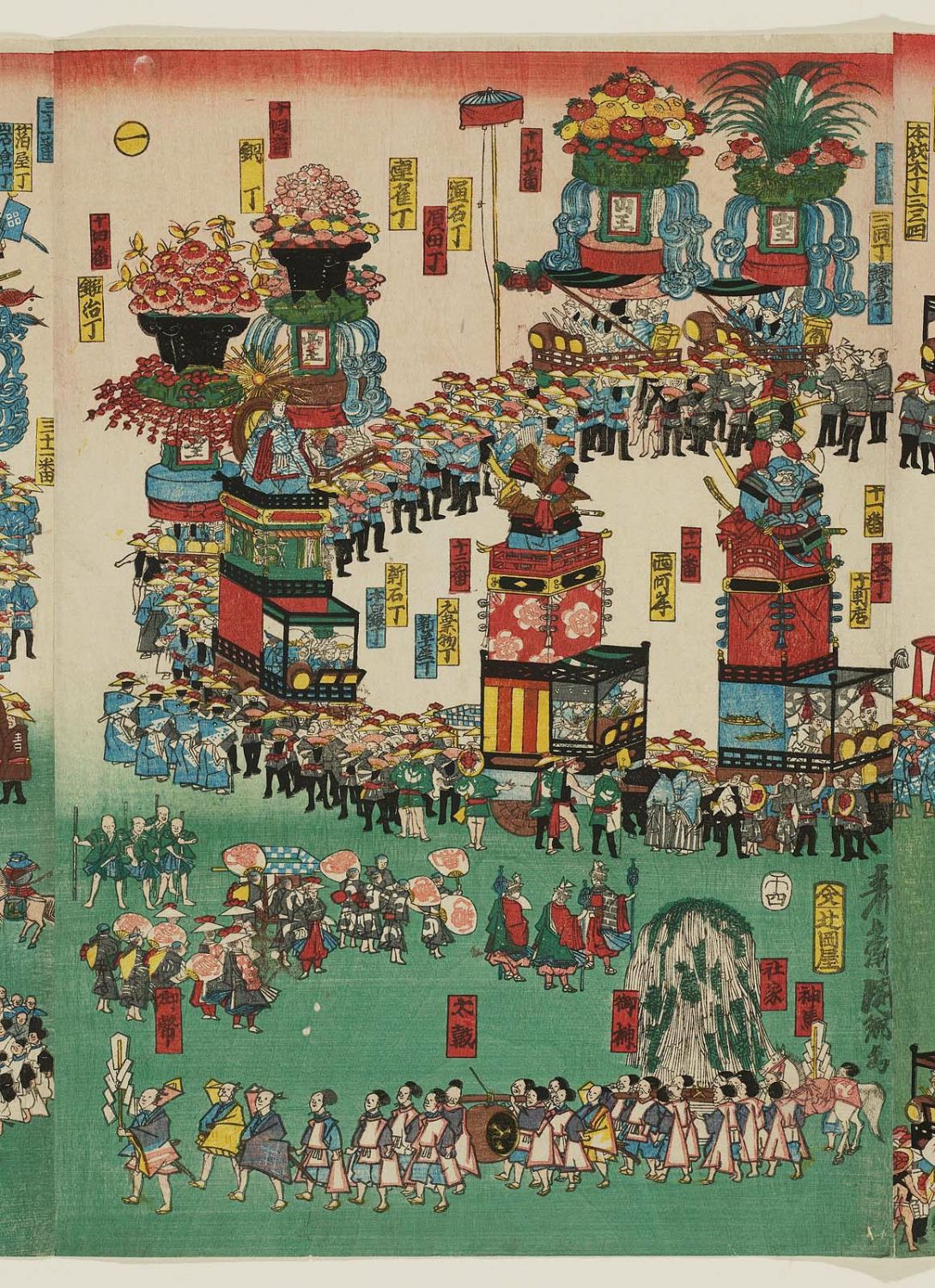
Sannō Festival Procession (Sannō-sama gosairei zu), No. 1
1858
Woodblock print (nishiki-e); ink and color on paper
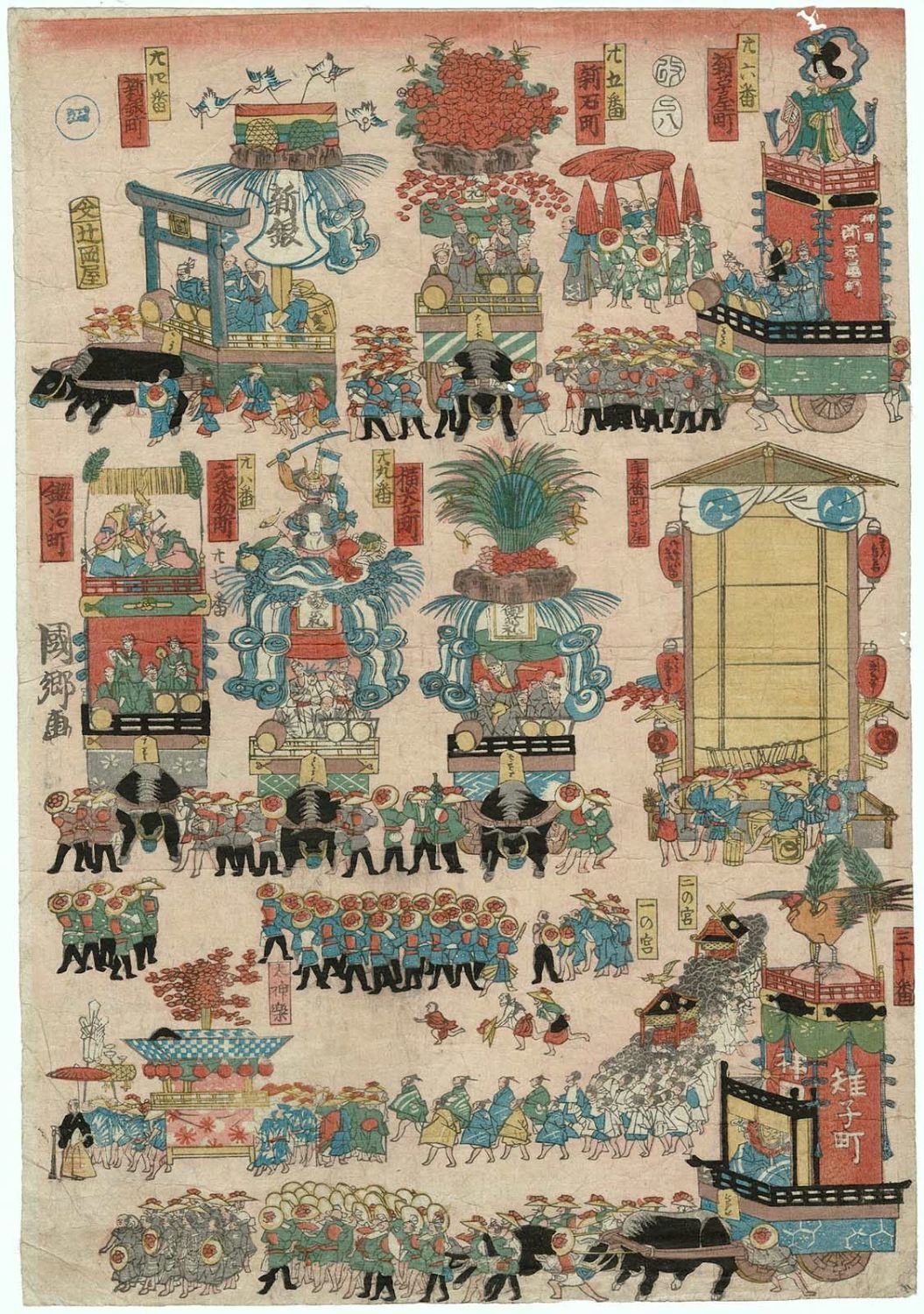
Festival Floats, No. 4 from a series
1857
Woodblock print (nishiki-e); ink and color on paper
Frequently Asked Questions
Great Prosperity at the Silk Farm (Kaikoya Daihanjono Zu) was created by Utagawa Kunisato (歌川国郷) in c. 1837.