Biography
Utagawa Yoshikatsu (歌川芳勝), who also signed as Isshusai Yoshikatsu, was a Japanese woodblock print designer active in the late Edo period, roughly from the 1840s through the 1860s. He was one of the many pupils trained in the Edo studio of Utagawa Kuniyoshi (1797-1861). His exact dates of birth and death are not recorded in the surviving Japanese print literature, which is the common condition of all but the most celebrated Kuniyoshi pupils: the master admitted a large number of students over his long career, and Yoshikatsu belongs to the middle rank of that group whose signed work survives in modest numbers in collections without an accompanying biographical record.
What is preserved of Yoshikatsu's career is reconstructed almost entirely from his prints. He worked in the warrior-print (musha-e) idiom in which Kuniyoshi trained his pupils, inheriting the dynamic figural drawing, crowded compositions, and strong mineral palette of densely printed blues, reds, and ochres against ink-black outlines that characterized the school. Kuniyoshi's own reputation rested on the dense, energetic musha-e he had begun producing in the late 1820s. Yoshikatsu's working life coincided with the aftermath of the Tenpo Reforms of 1842, which had briefly suppressed actor prints and pictures of beautiful women and pushed Edo publishers toward warrior subjects and historical narratives.
Yoshikatsu's most historically distinctive surviving work dates from the catastrophic Edo measles epidemic of 1862. The Bunkyu 2 outbreak was one of the worst public-health crises of the period, claiming many thousands of lives in Edo over the course of a few months, and it triggered a remarkable flowering of hashika-e (measles prints) — single- and multi-sheet woodblock prints commissioned by Edo publishers to provide the urban populace with dietary guidance, talismanic protection, and images of the measles demon being defeated by personifications of healthful foods and medicines. Yoshikatsu contributed a substantial oban diptych, "Profound Advice of Harmonious Unity of Five Body Parts" (五體和合心すいの教訓, Gotai wago shinsui no kyokun), published by Noshu-ya Yasubei in the fifth month of 1862. Signed "Isshusai Yoshikatsu gisha" ("Isshusai Yoshikatsu, caricature picture") with his paulownia seal, the composition uses the conceit of a townsman receiving moxibustion treatment as an extended allegory of Confucian social harmony, its accompanying text comparing the parts of the body to the five fundamental human relationships (gorin). This kind of didactic public-health imagery, addressed to a literate urban audience in an explicitly Confucian moral framework, is one of the most distinctive contributions of the late Edo print to the cultural history of nineteenth-century Japanese medicine, and Yoshikatsu is one of the named designers whose hashika-e survive in identifiable form.
Yoshikatsu's signed work appears to taper off after the mid-1860s, and no firmly dated impressions from the post-Restoration Meiji years have been identified. His prints are today held in modest numbers by museums, libraries, and specialist dealers of late Bakumatsu material, and his 1862 measles diptych in particular is documented in the trade. For students of late Edo print culture, Yoshikatsu is a useful representative of the broad middle stratum of Kuniyoshi's school: a designer whose signed work documents the steady commercial output of warrior prints and topical public-health imagery that defined the Edo woodblock industry in its final decades.
Key Facts
- Nationality
- 🇯🇵Japan
- Movements
- Meiji/Taishō PrintsUkiyo-e
- Subjects
- Mount Fuji
- Works Indexed
- 4
Frequently Asked Questions
Utagawa Yoshikatsu (歌川芳勝), who also signed as Isshusai Yoshikatsu, was a Japanese woodblock print designer active in the late Edo period, roughly from the 1840s through the 1860s. He was one of the many pupils trained in the Edo studio of Utagawa Kuniyoshi (1797-1861). His exact dates of birth and death are not recorded in the surviving Japanese print literature, which is the common condition of all but the most celebrated Kuniyoshi pupils: the master admitted a large number of students over his long career, and Yoshikatsu belongs to the middle rank of that group whose signed work survives in modest numbers in collections without an accompanying biographical record.
Utagawa Yoshikatsu's work was shaped by the Meiji/Taishō Prints and Ukiyo-e traditions in Japanese woodblock printmaking. Meiji/Taishō Prints: Meiji and Taishō era prints (1868–1926) bridge the transition from traditional ukiyo-e to the modern shin-hanga and sosaku-hanga movements. Ukiyo-e: ## What is ukiyo-e? Ukiyo-e ([浮世絵](/glossary/ukiyo-e)) — literally "pictures of the floating world" — is the Edo-period Japanese print and painting tradition that flourished from roughly 1660 to 1868, depicting the pleasures of urban life in Edo (modern Tokyo): courtesans, kabuki actors, sumo wrestlers, famous landscapes, and seasonal beauties.
Utagawa Yoshikatsu's prints frequently feature mount fuji.
Original prints by Utagawa Yoshikatsu can be found in collections including Waseda University Tsubouchi Memorial Theatre Museum, Museum of Fine Arts Boston.
Woodblock Prints by Utagawa Yoshikatsu (4)

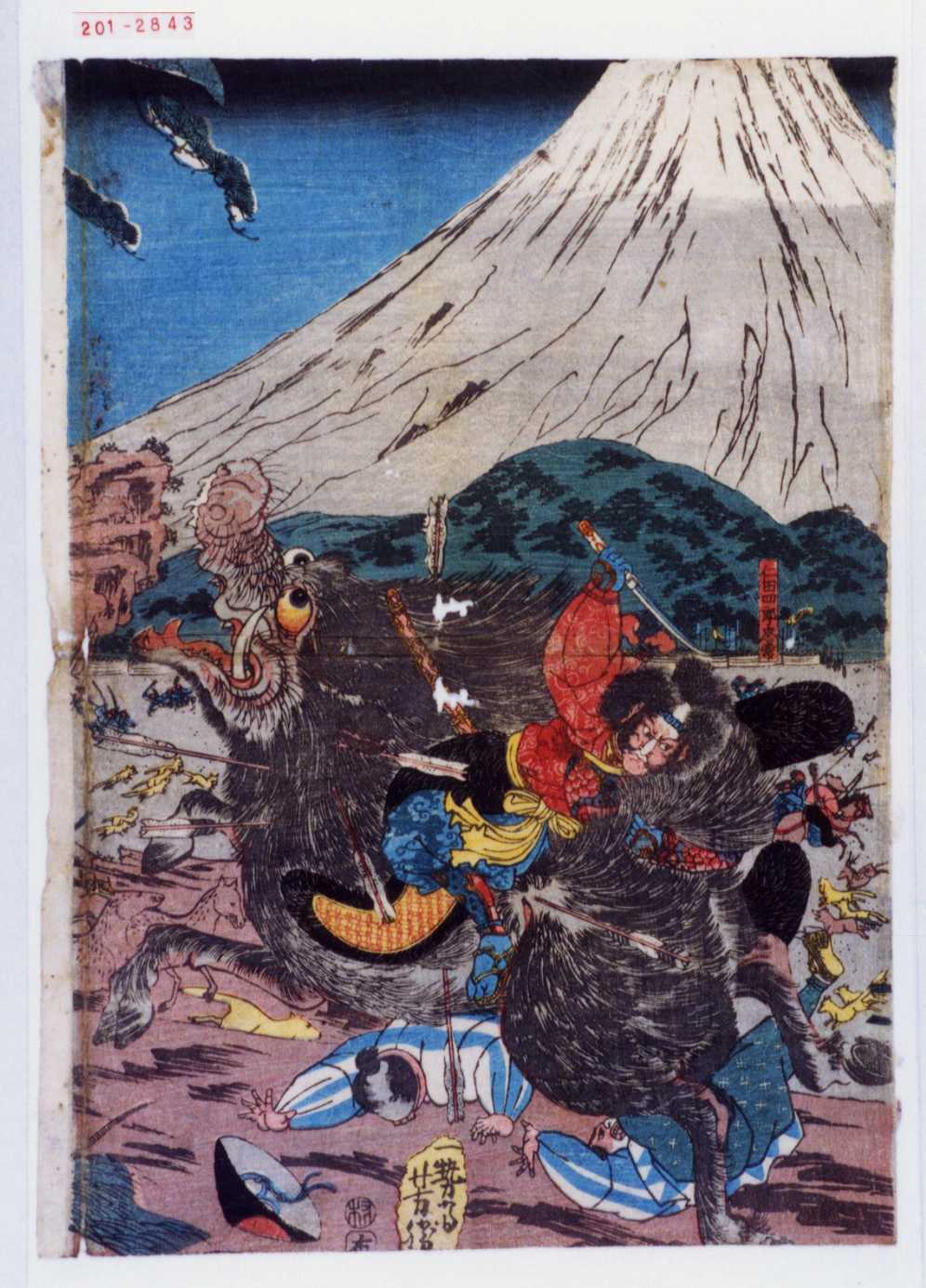
Lord Yoritomo's Hunt at Mount Fuji (right sheet)
頼朝公冨士之御狩図
c. 1843-1847
Woodblock print (nishiki-e), ink and color on paper
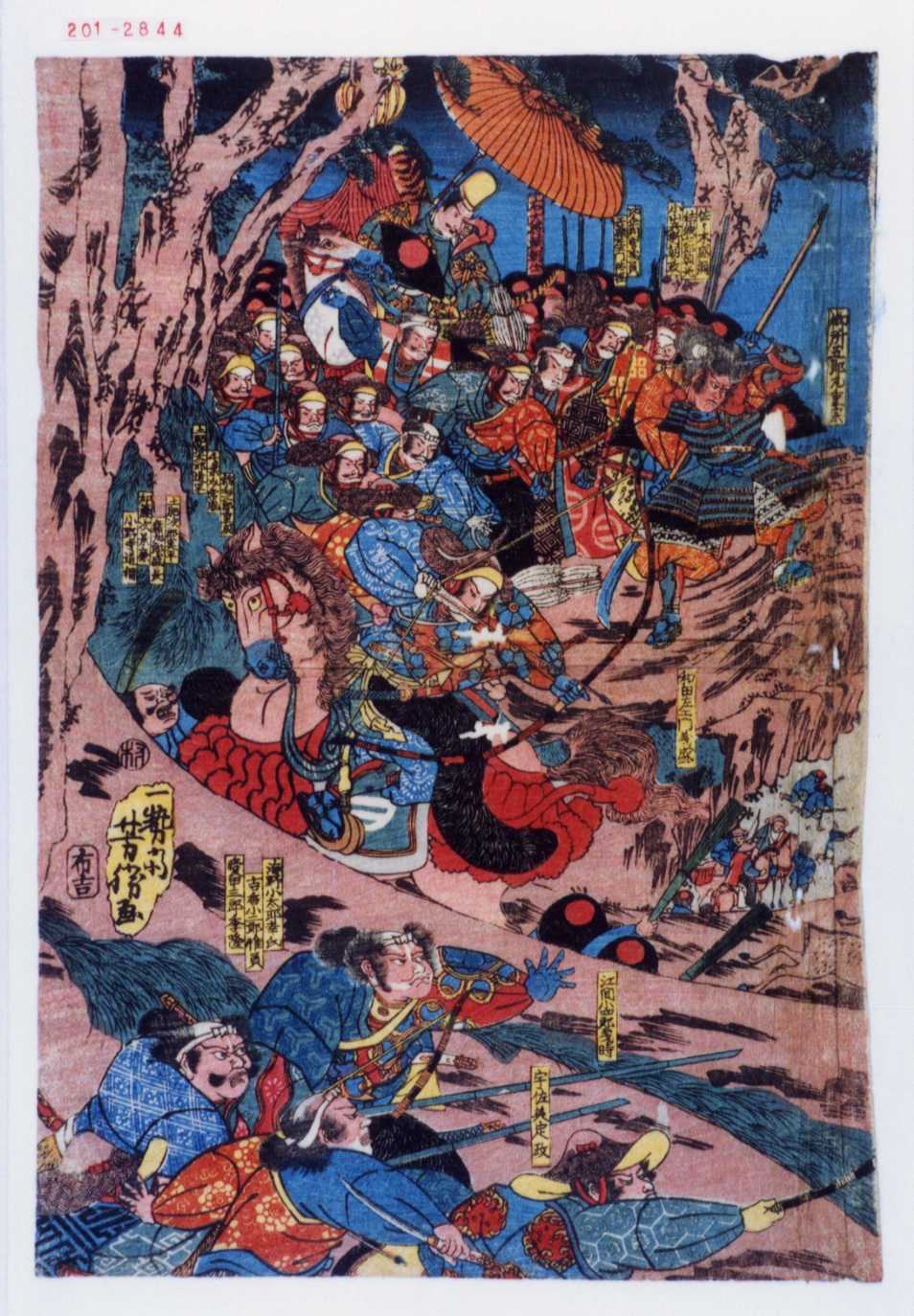
Lord Yoritomo's Hunt at Mount Fuji (left sheet)
頼朝公冨士之御狩図
c. 1843-1847
Woodblock print (nishiki-e), ink and color on paper
Lord Yoritomo's Hunt at Mount Fuji (center sheet)
頼朝公冨士之御狩図
c. 1843-1847
Woodblock print (nishiki-e), ink and color on paper
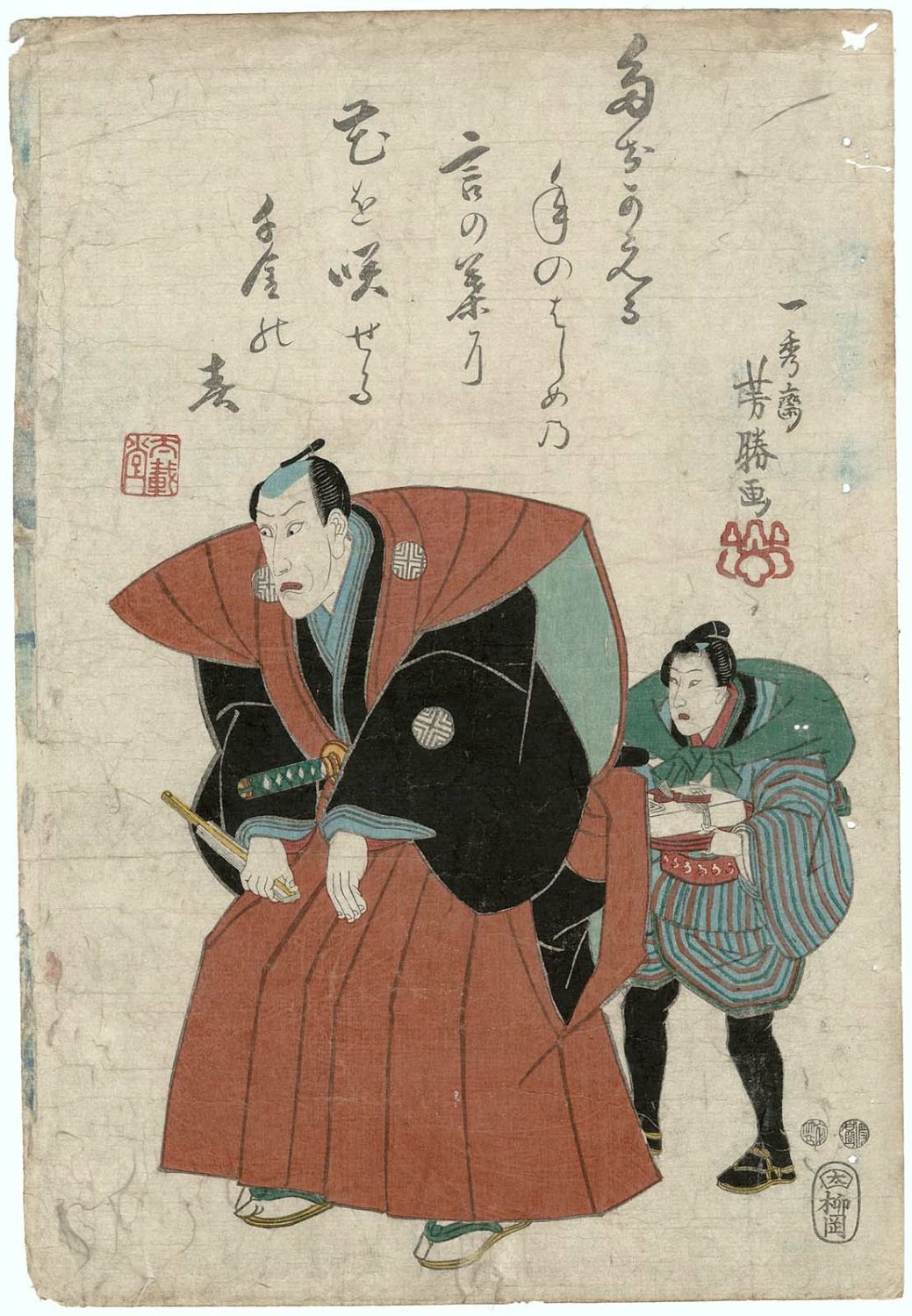
Actors
1847-52
Woodblock print (nishiki-e), ink and color on paper