Biography
Tadanori Yokoo (born June 27, 1936, Nishiwaki, Hyōgo Prefecture) is one of the most influential Japanese graphic designers of the postwar period and a sustained printmaker whose silkscreen output across more than five decades has been cataloged in a 260-page retrospective volume titled Hanga Jungle (Kokushokankokai, 2018), edited by the critic Noi Sawaragi. Although he is also a prolific painter — a turn he formalized in 1981 after seeing a Picasso retrospective at the Museum of Modern Art in New York — his printed work alone constitutes one of the largest bodies of contemporary Japanese silkscreen and offset poster art held by Western museums.
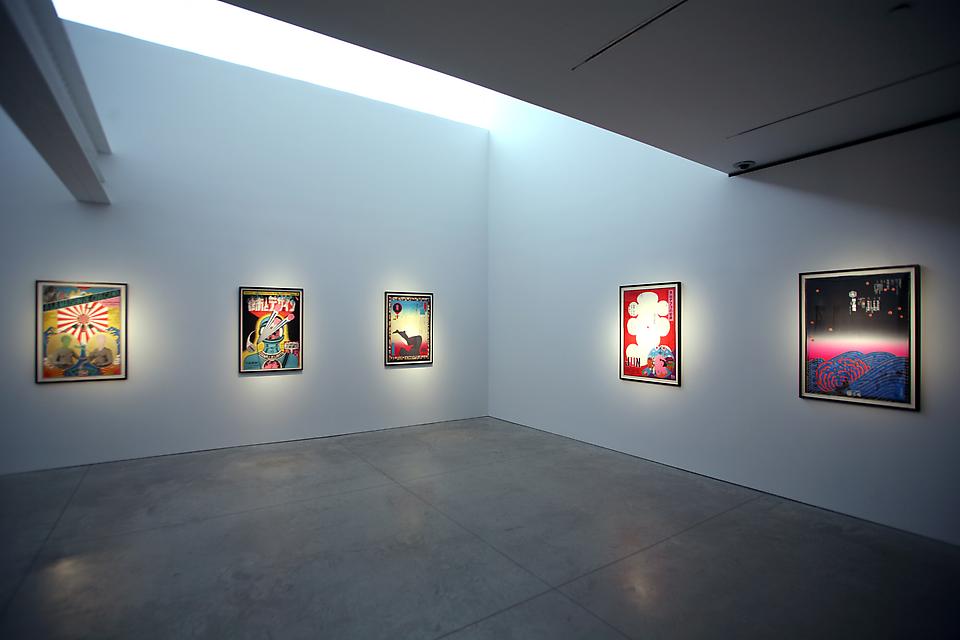
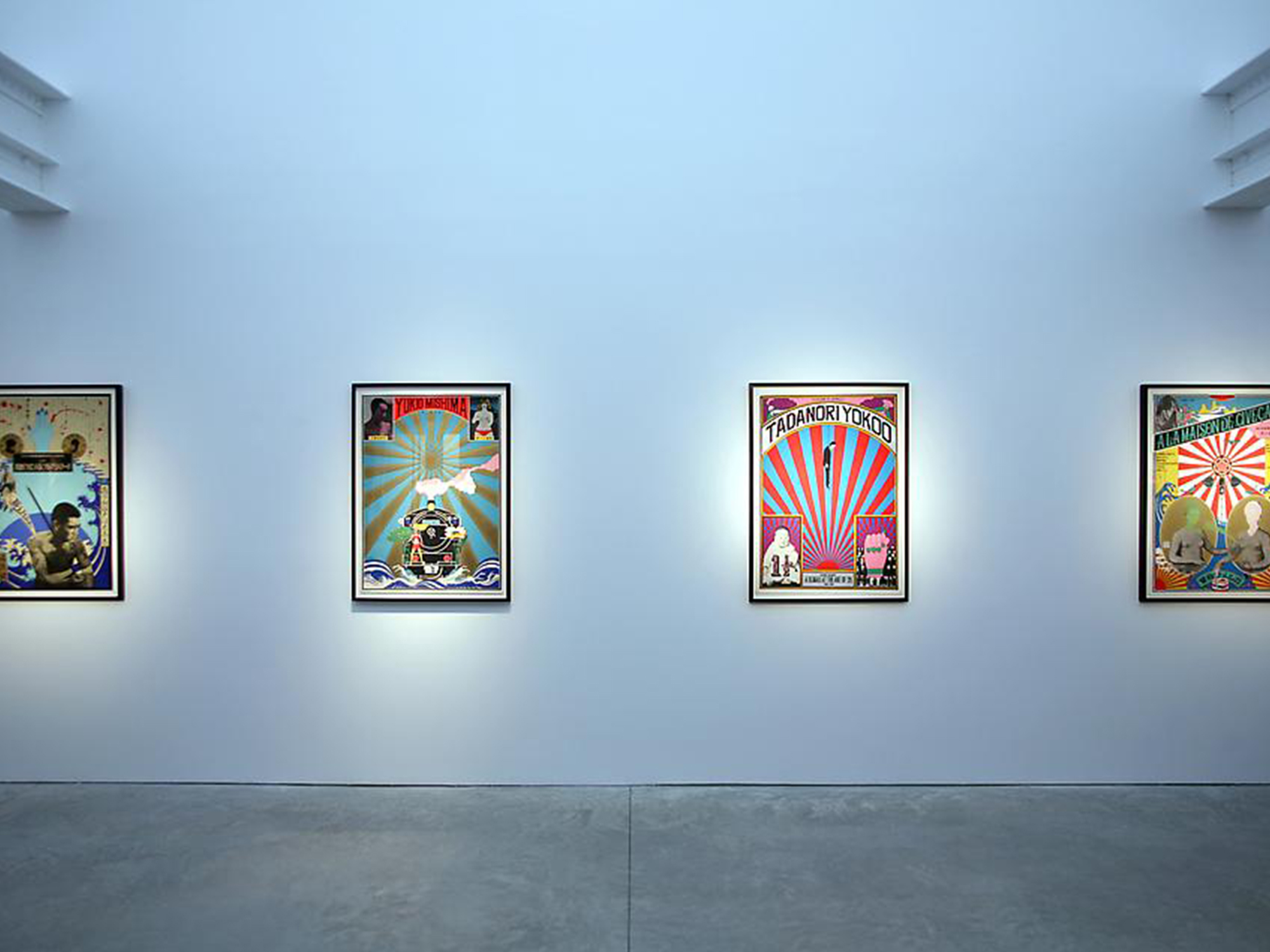
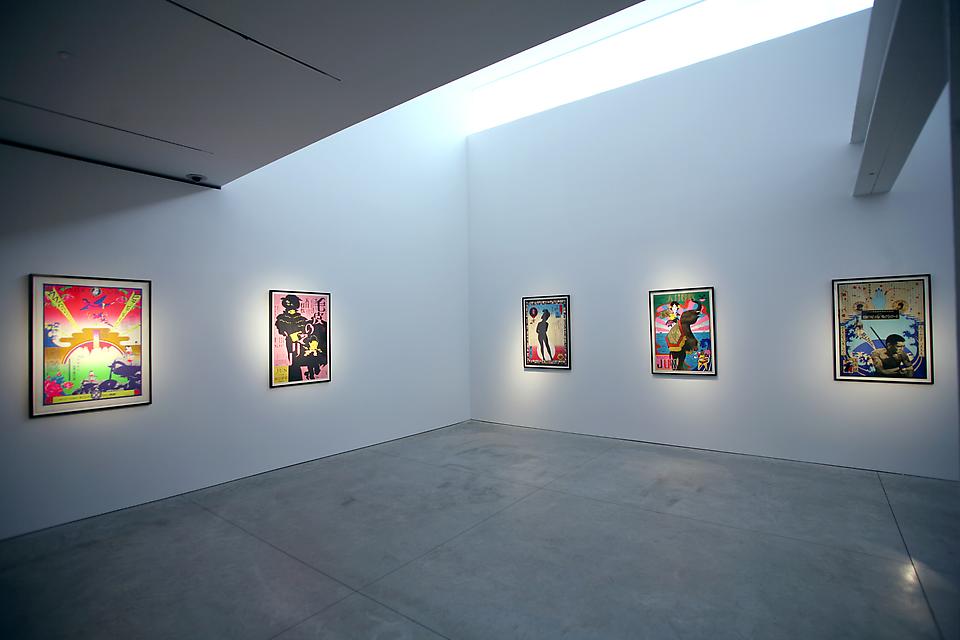
Yokoo trained as a stage designer for avant-garde theater in Tokyo around 1960 and won early recognition at the Japan Advertising Artists Club exhibitions in his early twenties. His breakthrough came with the 1965 self-portrait poster Made in Japan: Having Reached a Climax at the Age of 29, I Was Dead, in which he depicted himself as a hanged figure beneath a rising sun — a deliberate refusal of the international-modernist aesthetic then dominant in Japanese design; the work is now held by the Museum of Modern Art in New York. The following year he produced À la Maison de M. Civeçawa for Tatsumi Hijikata's Ankoku Butoh dance company, one of the silkscreen posters from his theatrical collaborations that later entered major museum collections.
Throughout the late 1960s and the 1970s he produced posters and album artwork for Tatsumi Hijikata, Shūji Terayama's experimental theater troupe Tenjō Sajiki (which he co-founded in 1967), and a long list of Japanese and international musicians — among them his designs for Santana's live album Lotus (1974) and Miles Davis's Agharta (1975). The Museum of Modern Art included his work in the 1968 exhibition Word and Image, then mounted a solo exhibition of his graphic work in 1972.
In 1981 Yokoo announced a shift to fine-art painting, prompted by the Picasso retrospective, but he continued to issue silkscreen prints in editions that recombine his graphic-design vocabulary — collaged photographs, dense Japanese ornament, traditional ukiyo-e quotations, and mass-market imagery — into a sustained pictorial language. His Hanga Jungle catalogue collects more than 250 prints, posters, and editioned works from the late 1960s through 1990, including the early silkscreen posters and the 1980s and 1990s graphic editions.
His printed work occupies a distinctive position in Japanese contemporary print history. He stands outside the academic mokuhanga and intaglio lineages that define most of the field; his medium is silkscreen and offset, his pictorial vocabulary is Pop-art-derived, and his subject matter is autobiographical, theatrical, and frequently nationalist. The Yokoo Tadanori Museum of Contemporary Art, which opened in Kobe in 2012 as a facility of the Hyōgo Prefectural Museum of Art, consolidated his archive into a single permanent institutional home.
Yokoo has received numerous Japanese and international honors, including the Praemium Imperiale (2015) and designation as a Person of Cultural Merit. His prints are held by major international museums, including the Museum of Modern Art in New York.
Key Facts
- Active Period
- 1936
- Nationality
- 🇯🇵Japan
- Movement
- Contemporary Mokuhanga
- Subjects
- Silkscreen
- Works Indexed
- 3
Frequently Asked Questions
Tadanori Yokoo (born June 27, 1936, Nishiwaki, Hyōgo Prefecture) is one of the most influential Japanese graphic designers of the postwar period and a sustained printmaker whose silkscreen output across more than five decades has been cataloged in a 260-page retrospective volume titled Hanga Jungle (Kokushokankokai, 2018), edited by the critic Noi Sawaragi. Although he is also a prolific painter — a turn he formalized in 1981 after seeing a Picasso retrospective at the Museum of Modern Art in New York — his printed work alone constitutes one of the largest bodies of contemporary Japanese silkscreen and offset poster art held by Western museums.
Tadanori Yokoo was active born in 1936. They were associated with the Contemporary Mokuhanga movement.
Tadanori Yokoo's work was shaped by the Contemporary Mokuhanga tradition in Japanese woodblock printmaking. Contemporary Mokuhanga: Contemporary mokuhanga (literally "wood-block print") encompasses artists working from approximately 1970 to the present who continue or reinvent traditional Japanese woodblock printing techniques.
Tadanori Yokoo's prints frequently feature silkscreen.