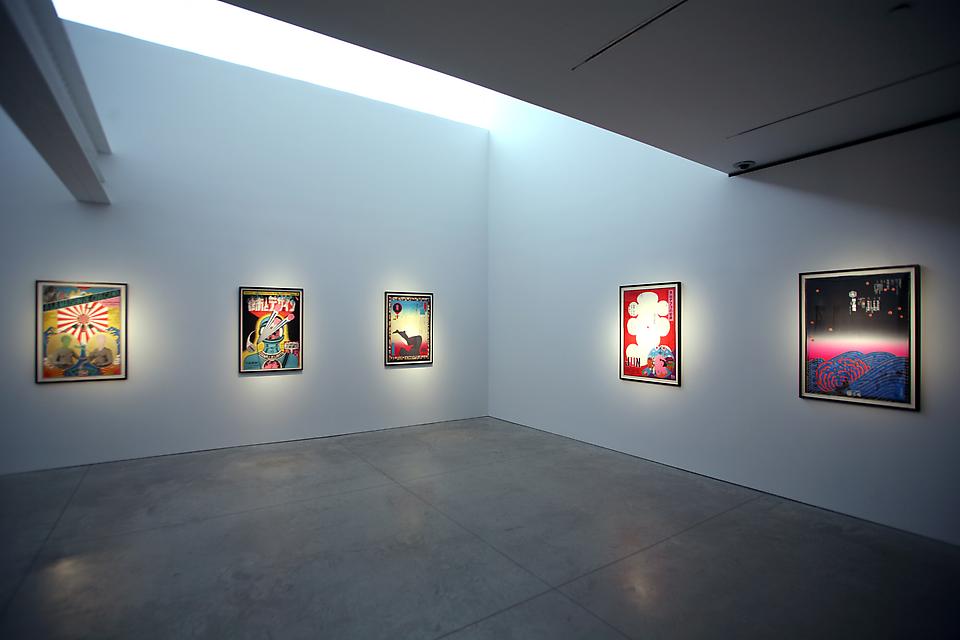
Early Silkscreens 1965-1971 — installation view
- Date:
- 1965-1971
- Medium:
- Silkscreen on paper
- Image courtesy of
- Friedman Benda — The Aesthetics of End: Early Silkscreens 1965-1971
Description
Five framed silkscreen prints hang individually lit on the white walls of a gallery corner, above a bare grey concrete floor and beneath an angled skylight. The prints show bold, saturated graphic imagery in red, yellow, blue, and pink — including a radiating red-and-yellow sunburst with seated figures, a helmeted figure with a striped mask, a red panel with a running animal and Japanese text, a red field with white cloud-like or floral shapes, and a dark composition with a pink gradient horizon and blue wave-like patterns. The gallery space is otherwise empty, with dim ambient lighting except for the spotlit works.
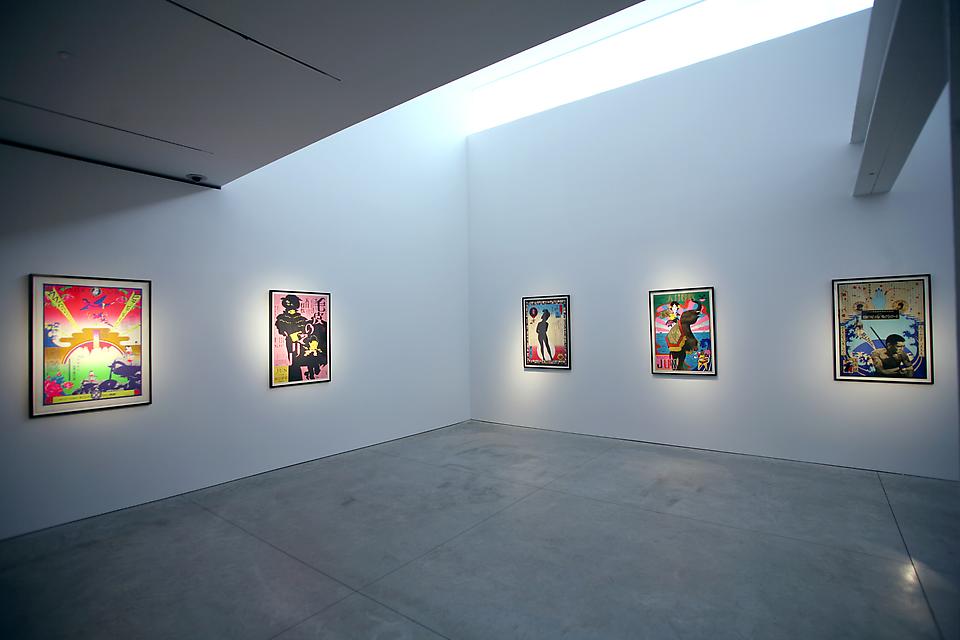
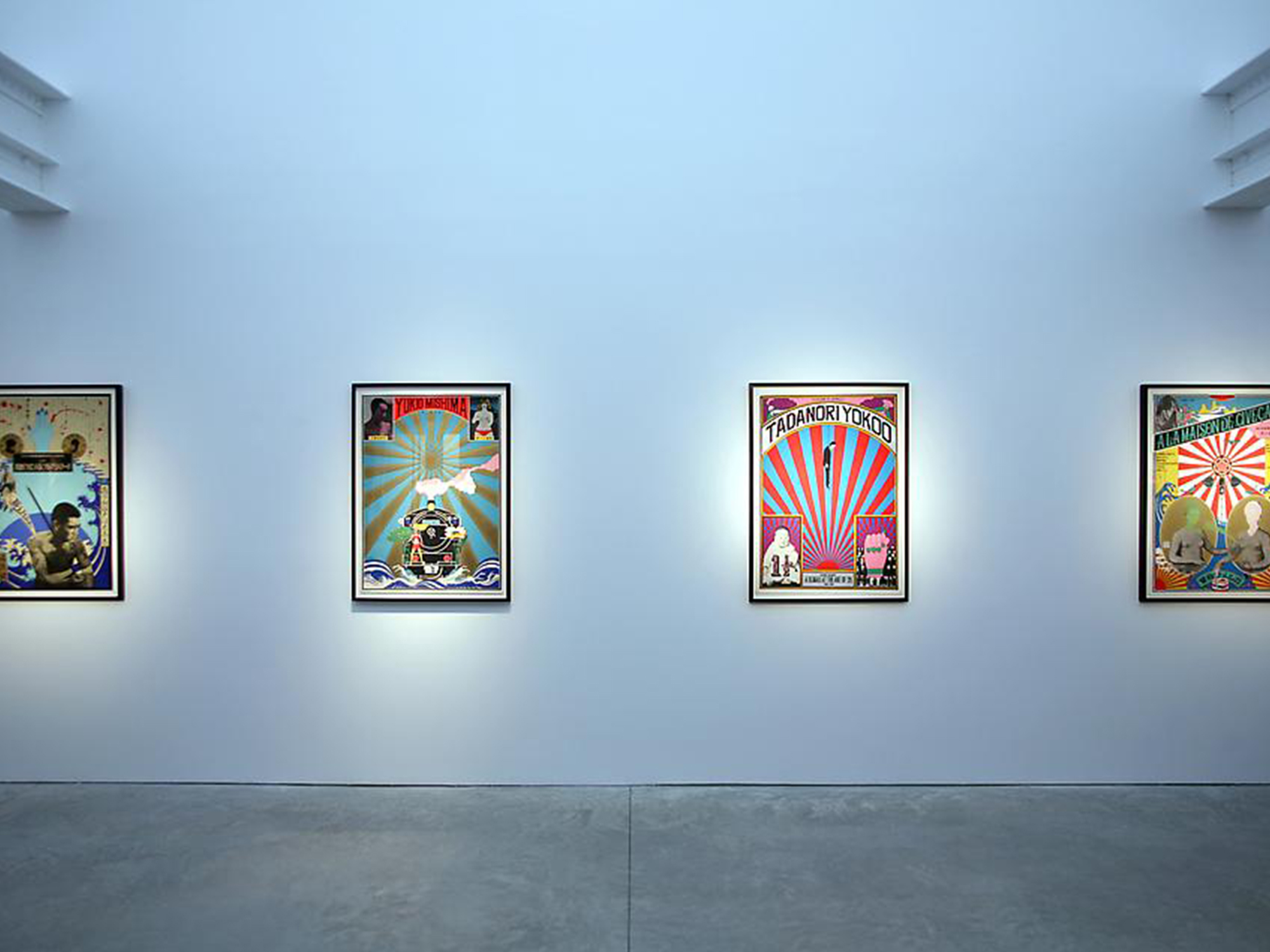
More Prints by Tadanori Yokoo
Frequently Asked Questions
Early Silkscreens 1965-1971 — installation view was created by Tadanori Yokoo (横尾 忠則) in 1965-1971.
Early Silkscreens 1965-1971 — installation view uses Silkscreen, on silkscreen on paper.