
Kyoto Port Festival — 神戸港祭
by Doshun Mori
- Source:
- ukiyo-e.org
Description
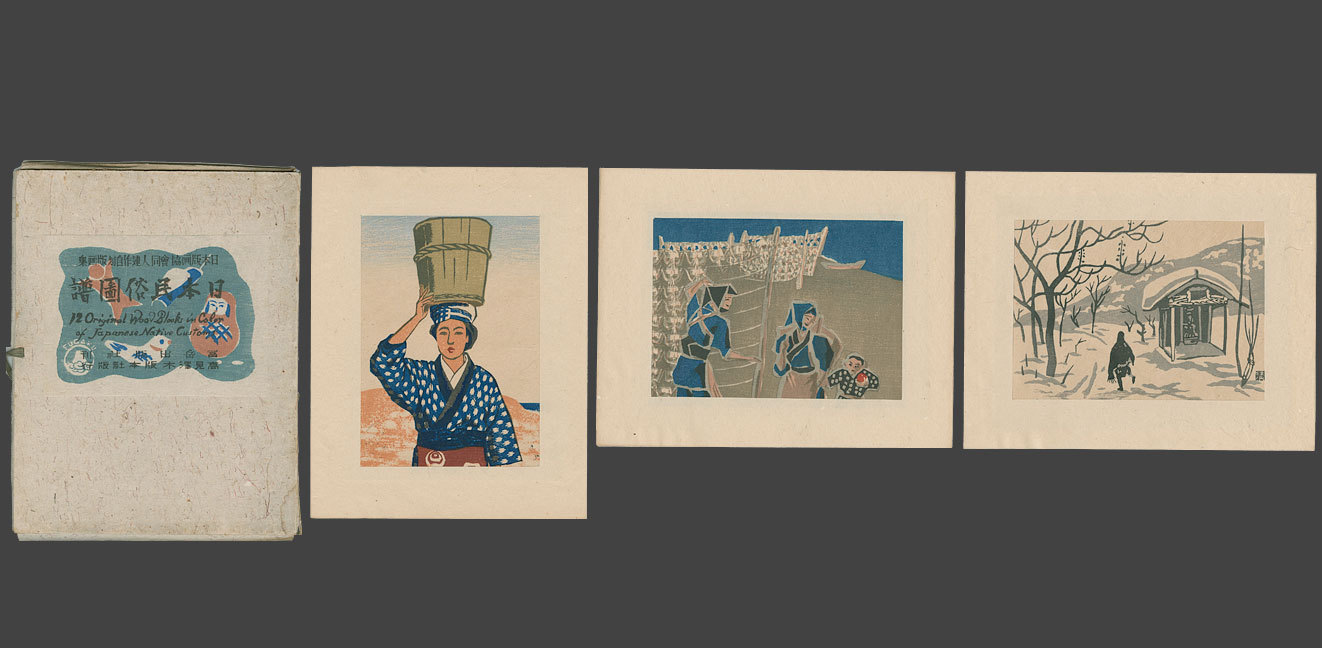
Kyoto Port Festival (神戸港祭) is a Japanese woodblock print associated with Doshun Mori and documented through ukiyo-e.org as part of a portfolio of native customs of Japan. The image captures a festive maritime scene rooted in the cultural fabric of mid-twentieth century Japan, when port towns across the country revived seasonal festivals that combined Shinto ritual with civic celebration. The composition turns its attention to the gathered crowds, decorated vessels, and atmospheric weather that defined these gatherings, treating the harbor itself as a stage on which community life unfolds. As a Japanese woodblock print, the work belongs to a long tradition of festival imagery, where artists used carefully balanced color blocks and confident outlines to convey the noise, motion, and color of public ceremony in a still, intimate format. The print sits within the broader sosaku-hanga (creative print) milieu that flourished in the postwar decades, in which artists pursued personal expression by carving and printing their own blocks rather than working through the publisher-led shin-hanga system. Doshun Mori works in this independent vein, prioritizing observed atmosphere and individual point of view over commercial polish. Subtle gradations in the sky, the rhythmic placement of flags or banners, and the human-scale framing all suggest an artist invested in the lived experience of place rather than tourist iconography. The festival theme also connects the print to a wider postwar interest in regional identity, as Japanese printmakers used local rituals to anchor a modern visual language in older communal traditions. For collectors and students of the Japanese woodblock medium, Kyoto Port Festival offers a window onto how mid-century sosaku-hanga artists translated everyday public life into thoughtful, hand-printed compositions. The work is preserved in the ukiyo-e.org image archive, where it is catalogued as part of the Picture Notes on Native Customs of Japan series.
More Prints by Doshun Mori


Featured in Collections
Curated cross-cuts that include this print.
Frequently Asked Questions
Kyoto Port Festival — 神戸港祭 was created by Doshun Mori (森道春).