Sōsaku-Hanga: The Creative-Print Movement
創作版画
Sōsaku-hanga ('creative prints') is the early-twentieth-century Japanese movement that insisted the artist must design, carve, and print every work themselves. Originating around 1910 with Yamamoto Kanae, it produced Onchi Kōshirō, Hiratsuka Un'ichi, Saitō Kiyoshi, and Munakata Shikō — Japan's first internationally collected modernist printmakers.
About This Collection
Sōsaku-hanga is a movement defined by what it rejected. The traditional Japanese woodblock workshop split labour four ways: a designer (eshi) drew the image, a carver (horishi) cut the blocks, a printer (surishi) inked and burnished, and a publisher (hanmoto) underwrote and distributed. Yamamoto Kanae's 1904 print 'Fisherman' — designed, carved, and pulled by Yamamoto alone — was the first significant break with that division. By the 1920s the principle of jiga, jikoku, jizuri ('self-drawn, self-carved, self-printed') had become the movement's defining ethic.
The artists were modernists. Onchi Kōshirō produced abstract compositions that sit closer to Klee or Kandinsky than to Hiroshige. Hiratsuka Un'ichi worked in austere black-and-white. Saitō Kiyoshi's stone-floor abstractions, Munakata Shikō's calligraphic figures, and Azechi Umetarō's mountain-climber prints carried the movement through to MoMA's 1953 'Japanese Prints Today' exhibition, which transformed the international reputation of Japanese contemporary art.
This collection gathers the sōsaku-hanga works in the Hanga catalogue, drawn from Munakata, Onchi, Saitō, Hiratsuka, Azechi, and the second-generation creative-print artists who carried the movement into the 1970s. Browse to see why a tradition built on rejecting workshop production produced some of the most internationally collected Japanese art of the twentieth century.
Prints in This Collection (80)
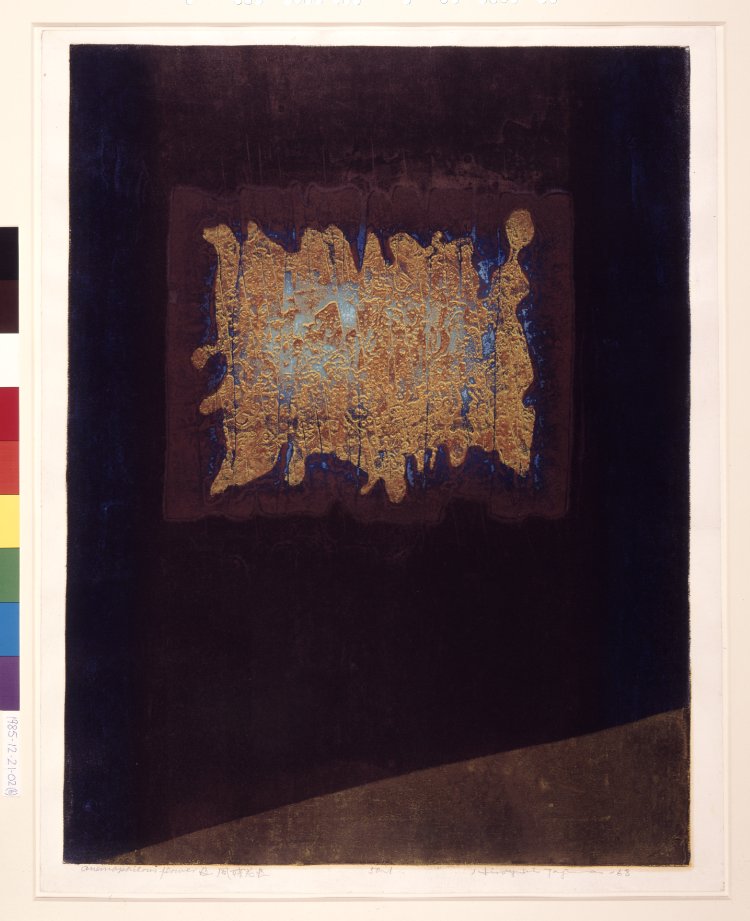
Fubaika B (Anemophilous Flower B)
Woodblock print
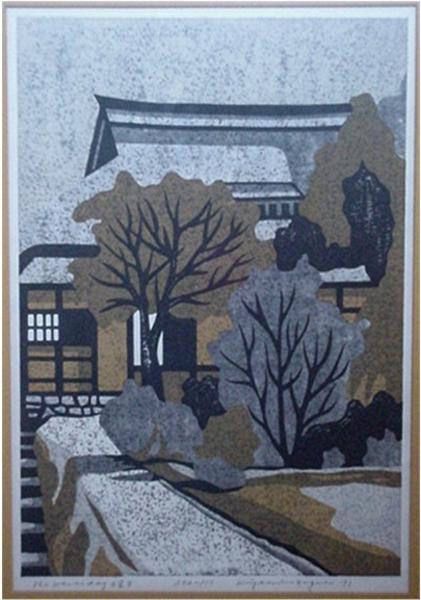
Untitled (hiroyuki-tajima)
Woodblock print
The Warm Day
Woodblock print
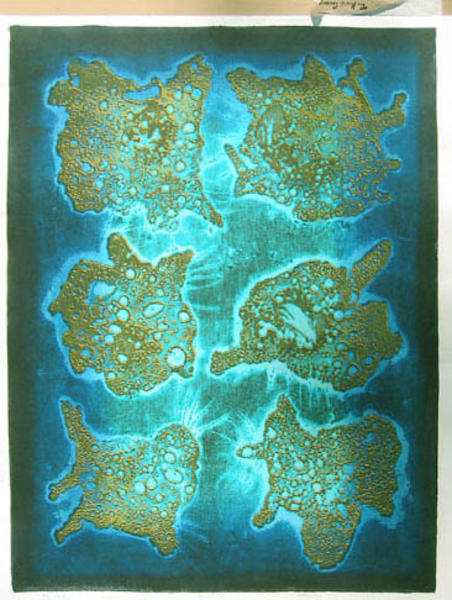
Dried Flowers
Woodblock print
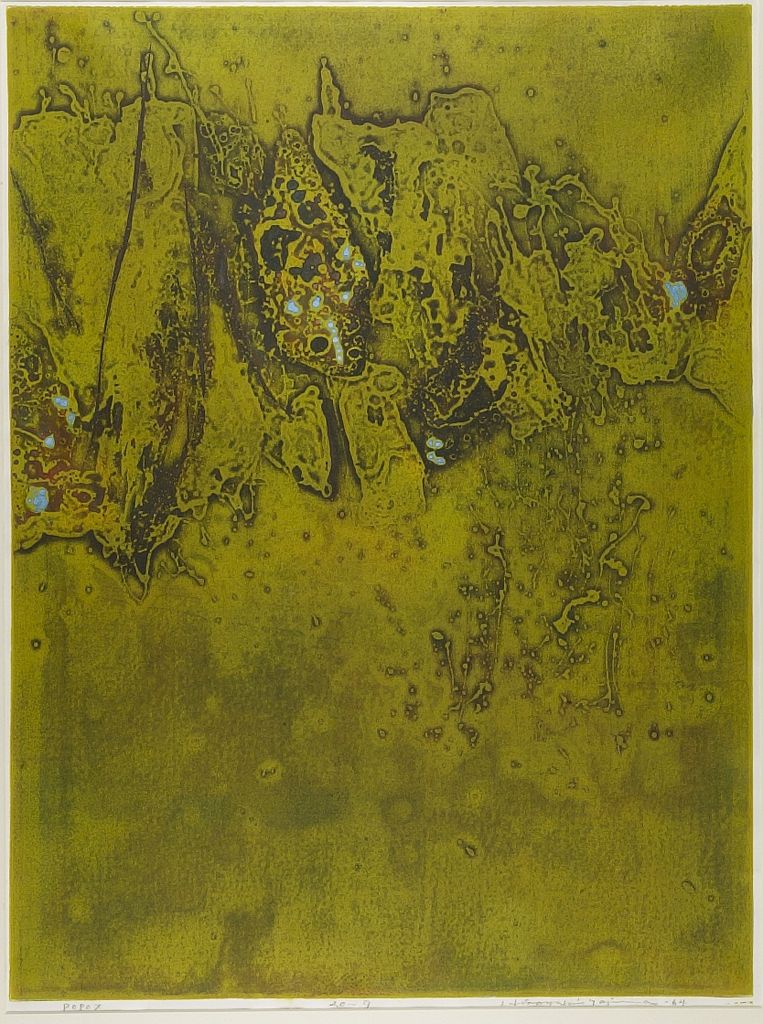
Popox, Shôwa period, dated 1964
Woodblock print
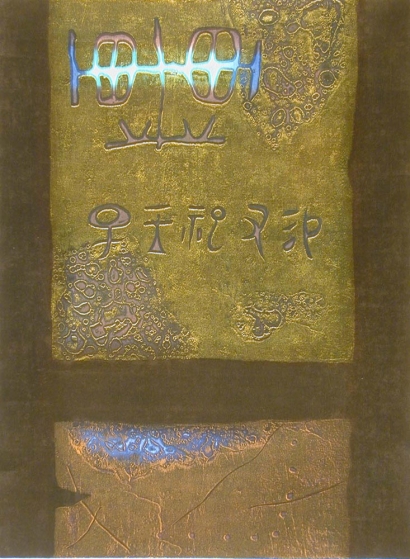
Ancient Writing
Woodblock print
Ancient Writing C 100-2
Woodblock print
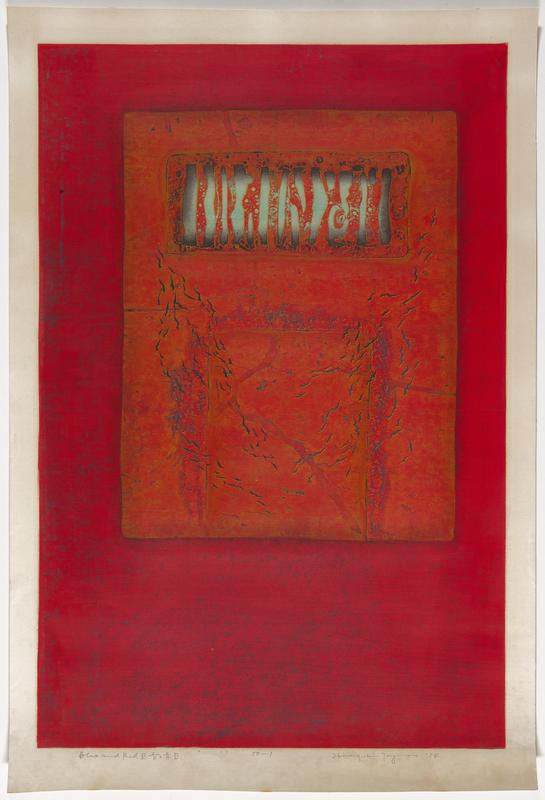
Blue and Red B
1974
Woodblock print, ink and color on paper
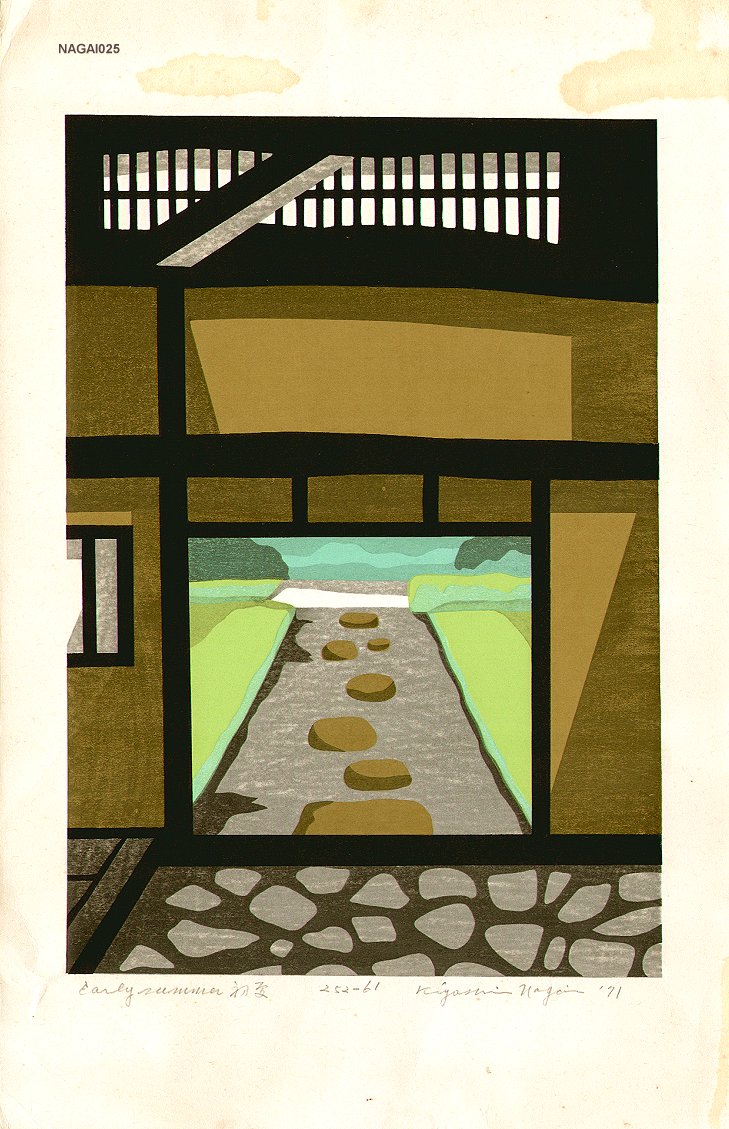
Early Summer
Woodblock print

Evidence A (Sekizo A)
1963
Color woodblock print
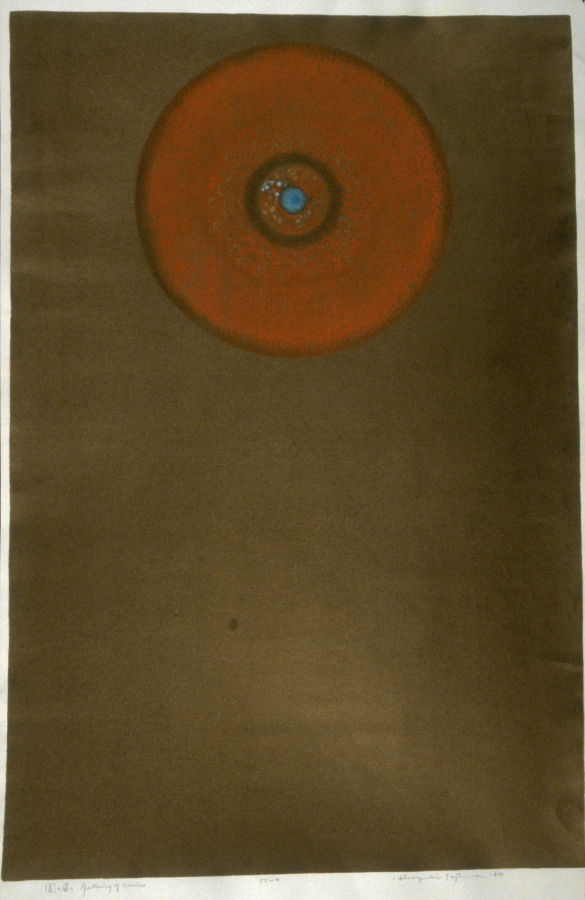
Gathering of Circles
Woodblock print
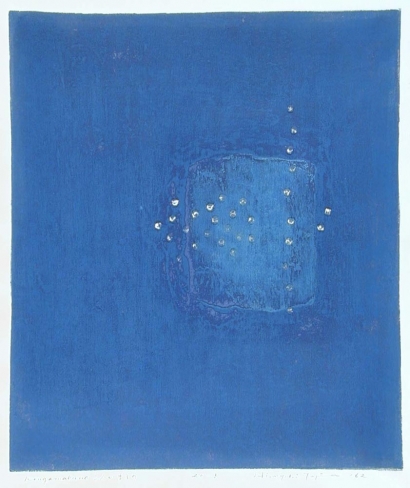
Kongamaluno (Kongamaruno)
Woodblock print
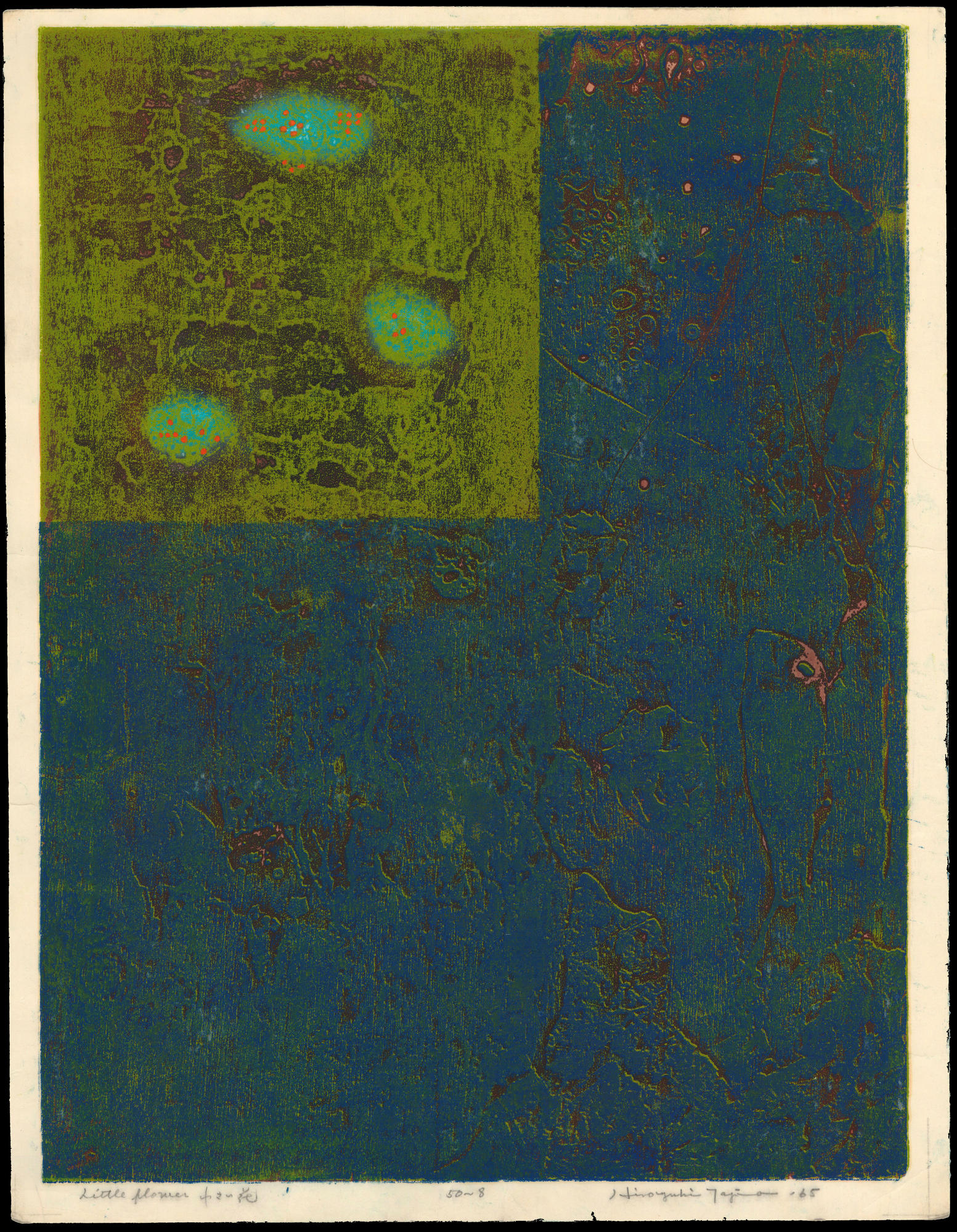
Little Flower - 小さい花
Woodblock print
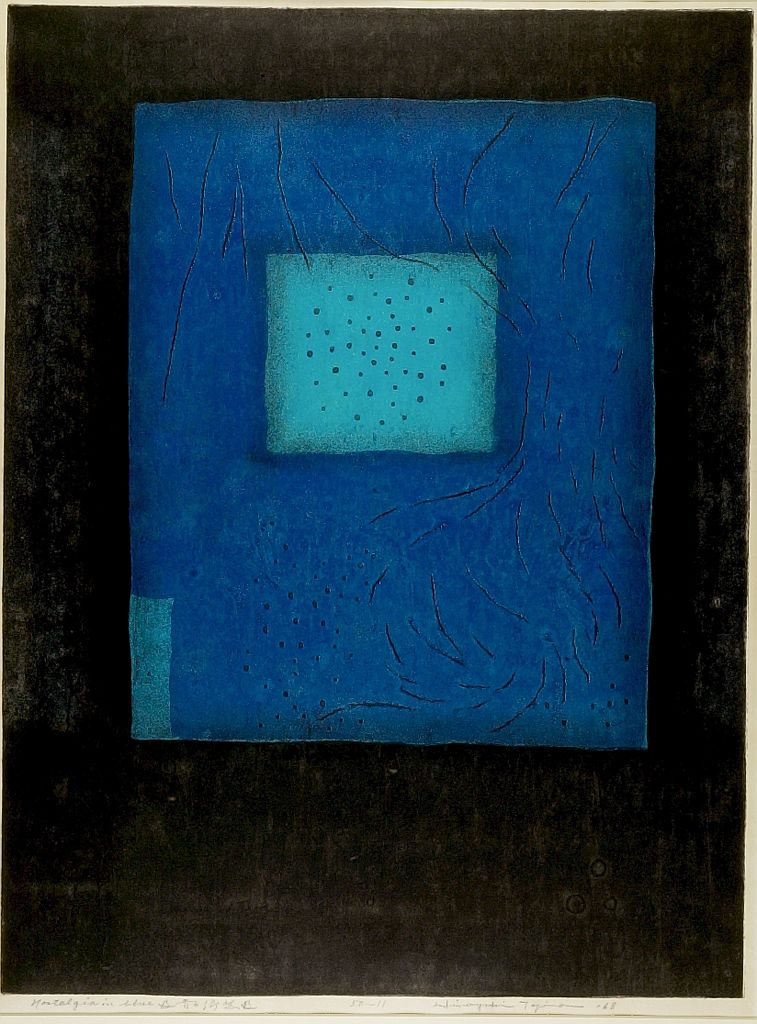
Nostalgia in Blue, Shôwa period, dated 1968
Woodblock print
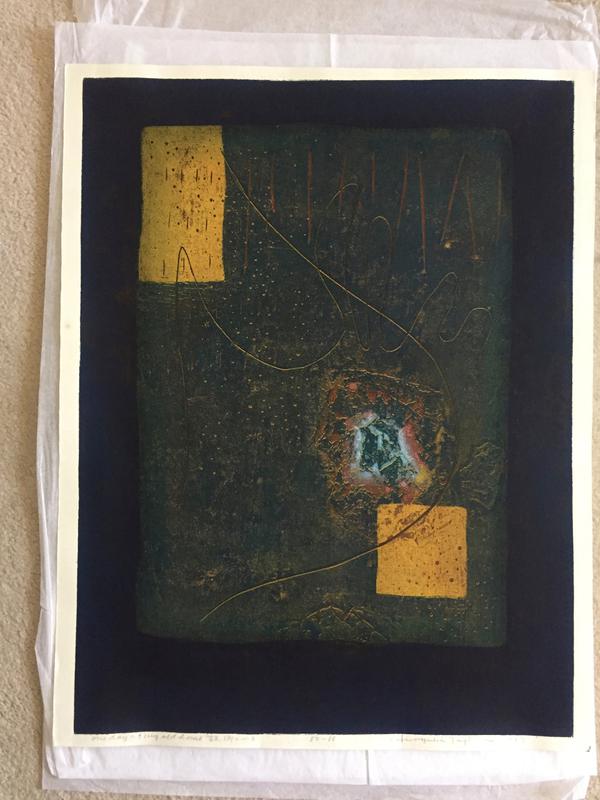
One Day at My Old Home
1967
Woodblock print, ink and color on paper
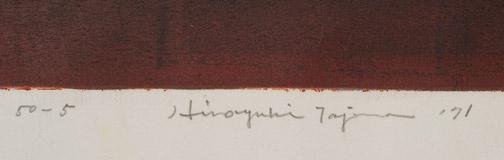
Rays of the Morning Sun
Woodblock print
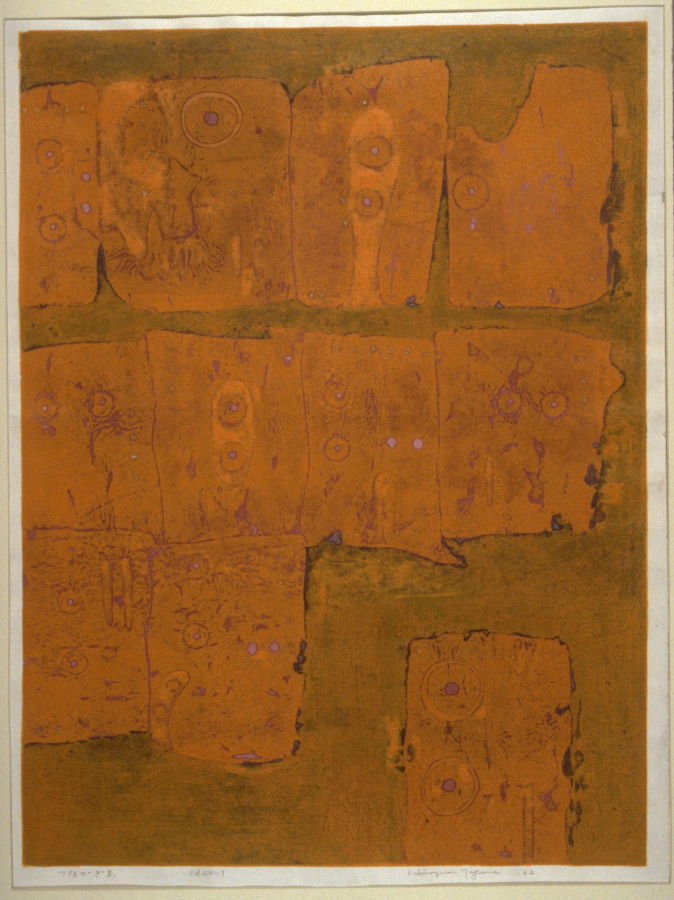
Tsunagagia
Woodblock print
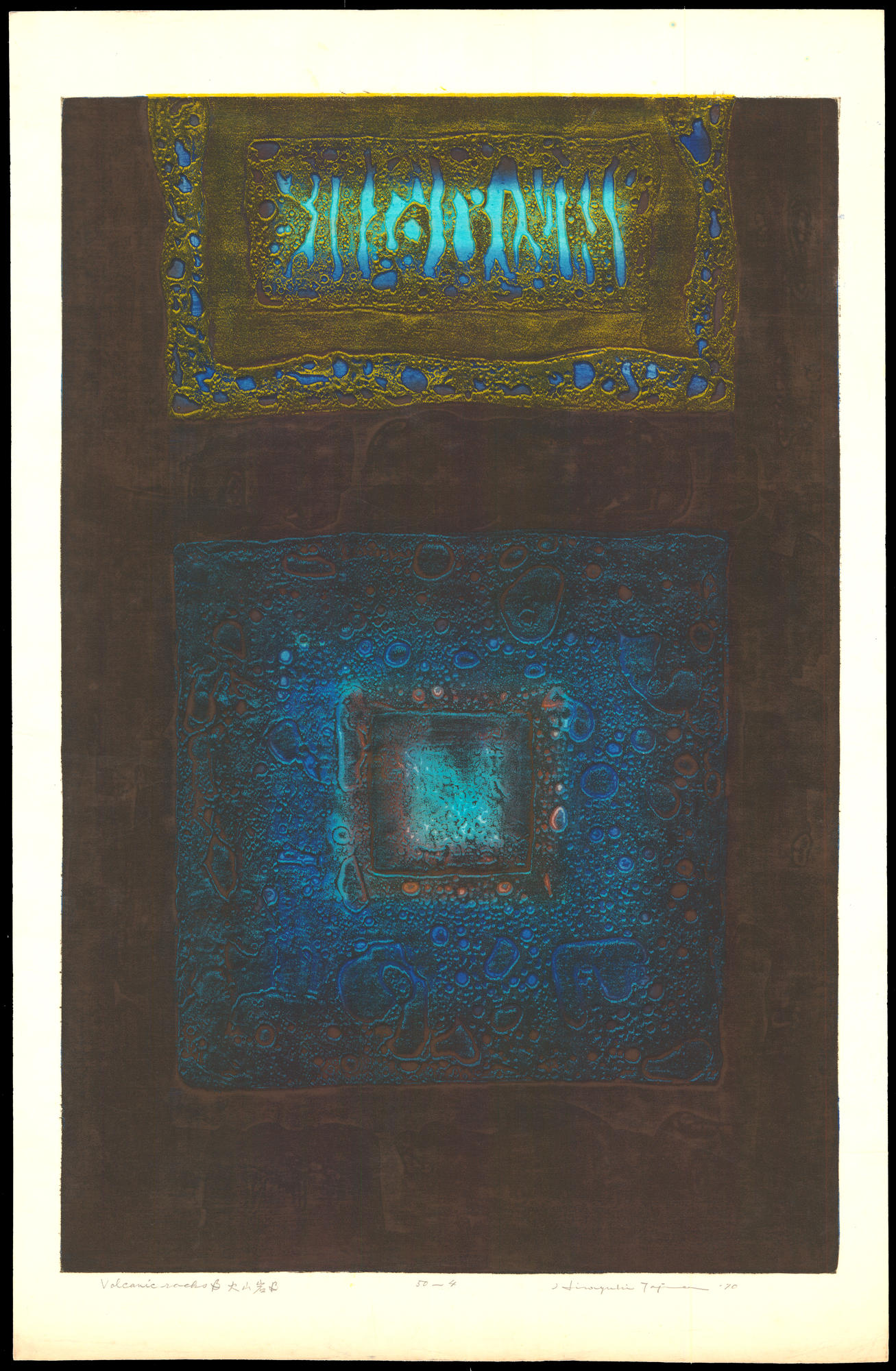
Volcanic Rocks B - 火山岩B
Woodblock print
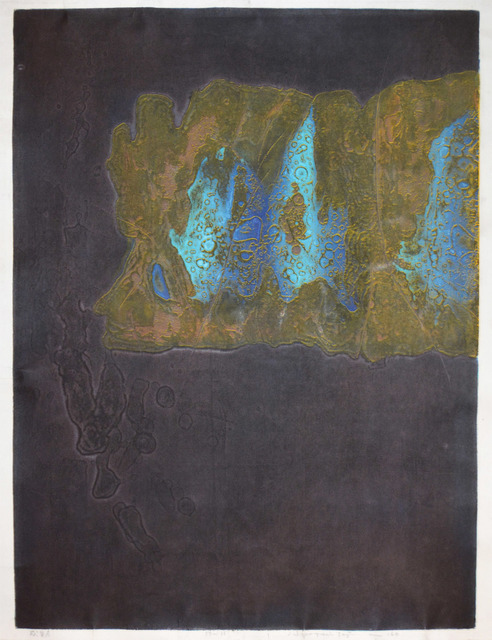
"A"
1964
Woodblock Print
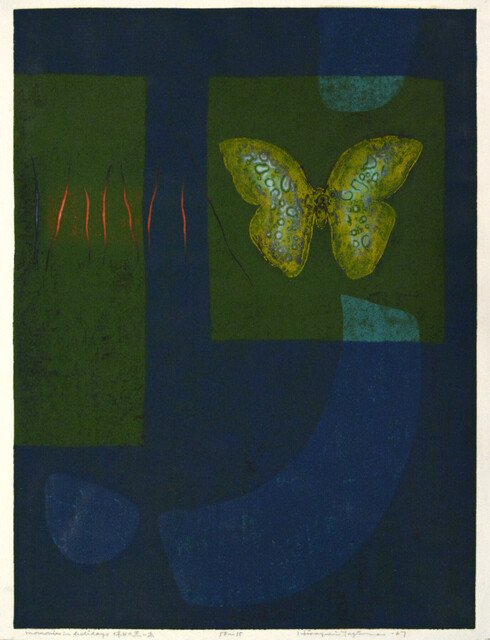
Memories in Holidays
1967
Woodblock Print
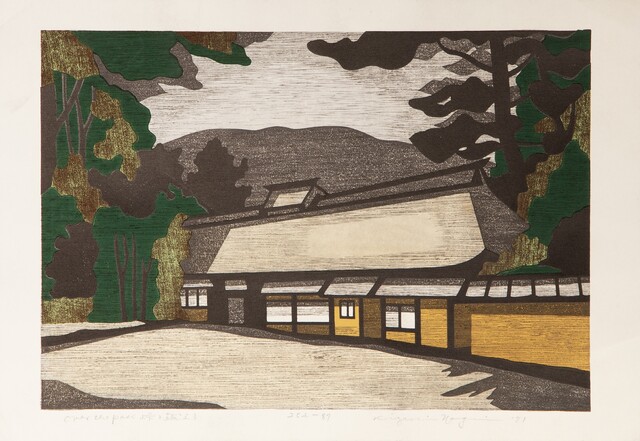
Old Farm House
1971
Woodblock
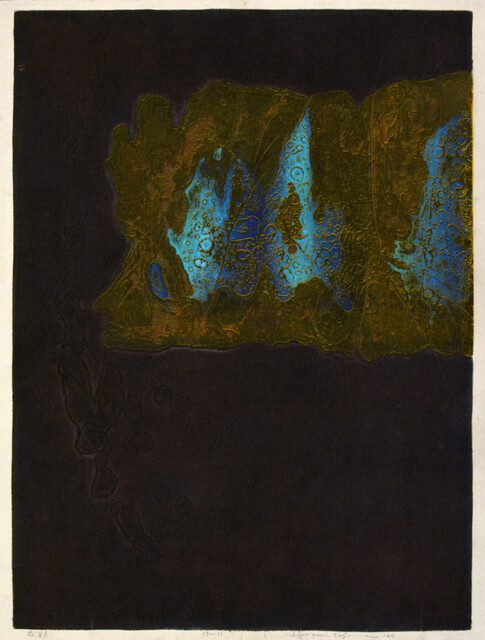
Birth A
1964
Woodblock Print
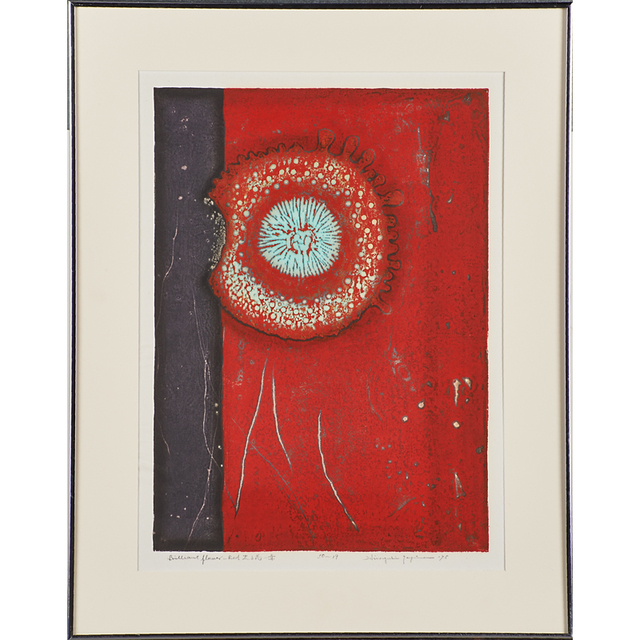
Two woodblocks in colors
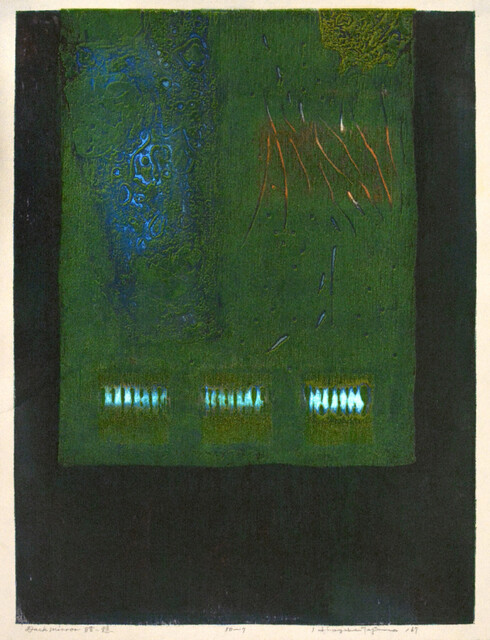
Dark Mirror
1967
Woodblock Print
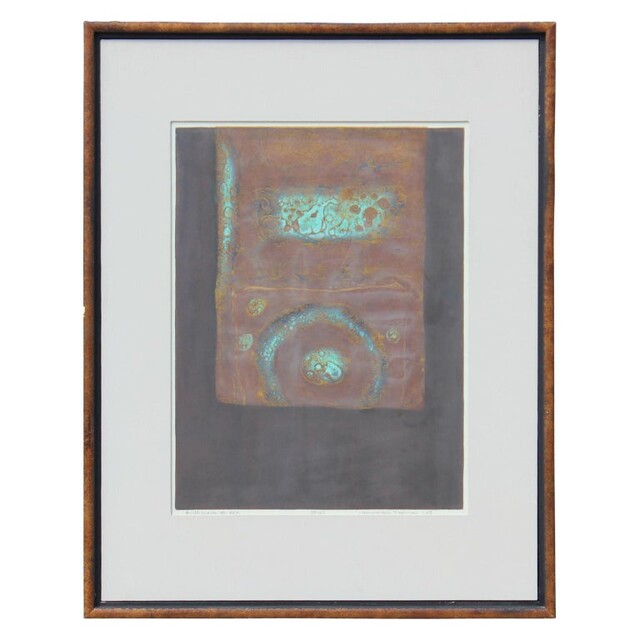
"Birthmark" Abstract Lithograph
1968
Lithograph
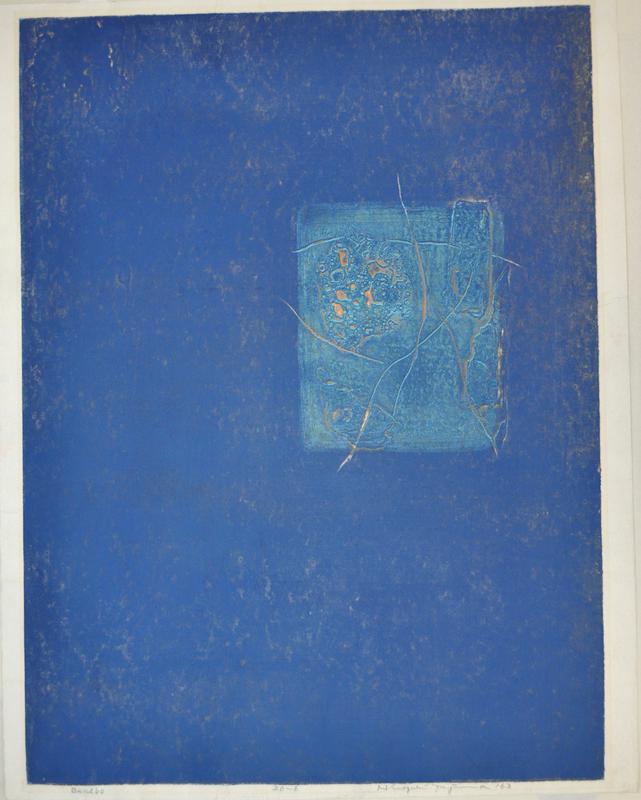
Bendbo
1963
Woodblock print, ink and color on embossed paper

Benibe B
1961
Color woodblock print; edition 1/20
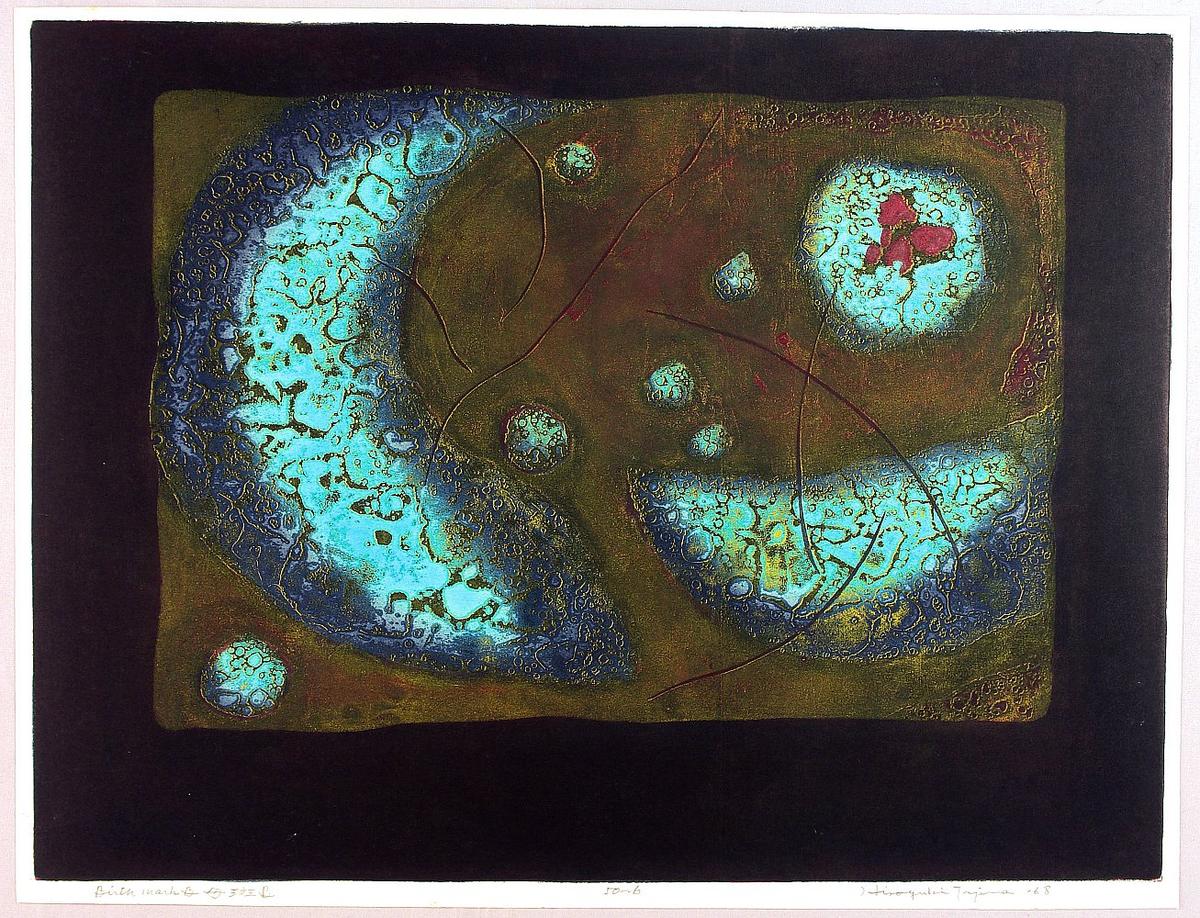
Birthmark
Woodblock print
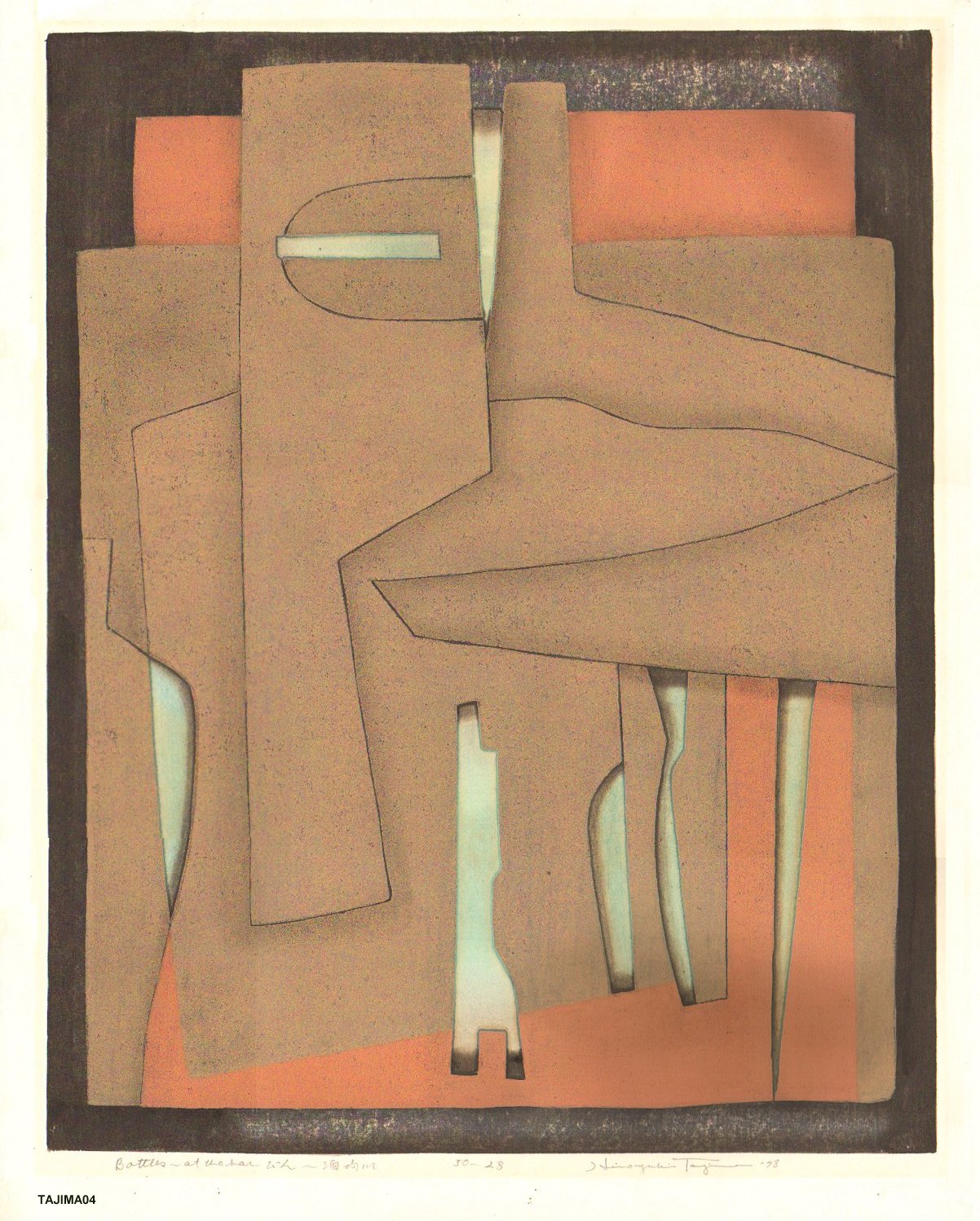
Bottles at the Bar
Woodblock print

Brown Paper (Chairo no kami)
1974
Color woodblock print; edition 2/50
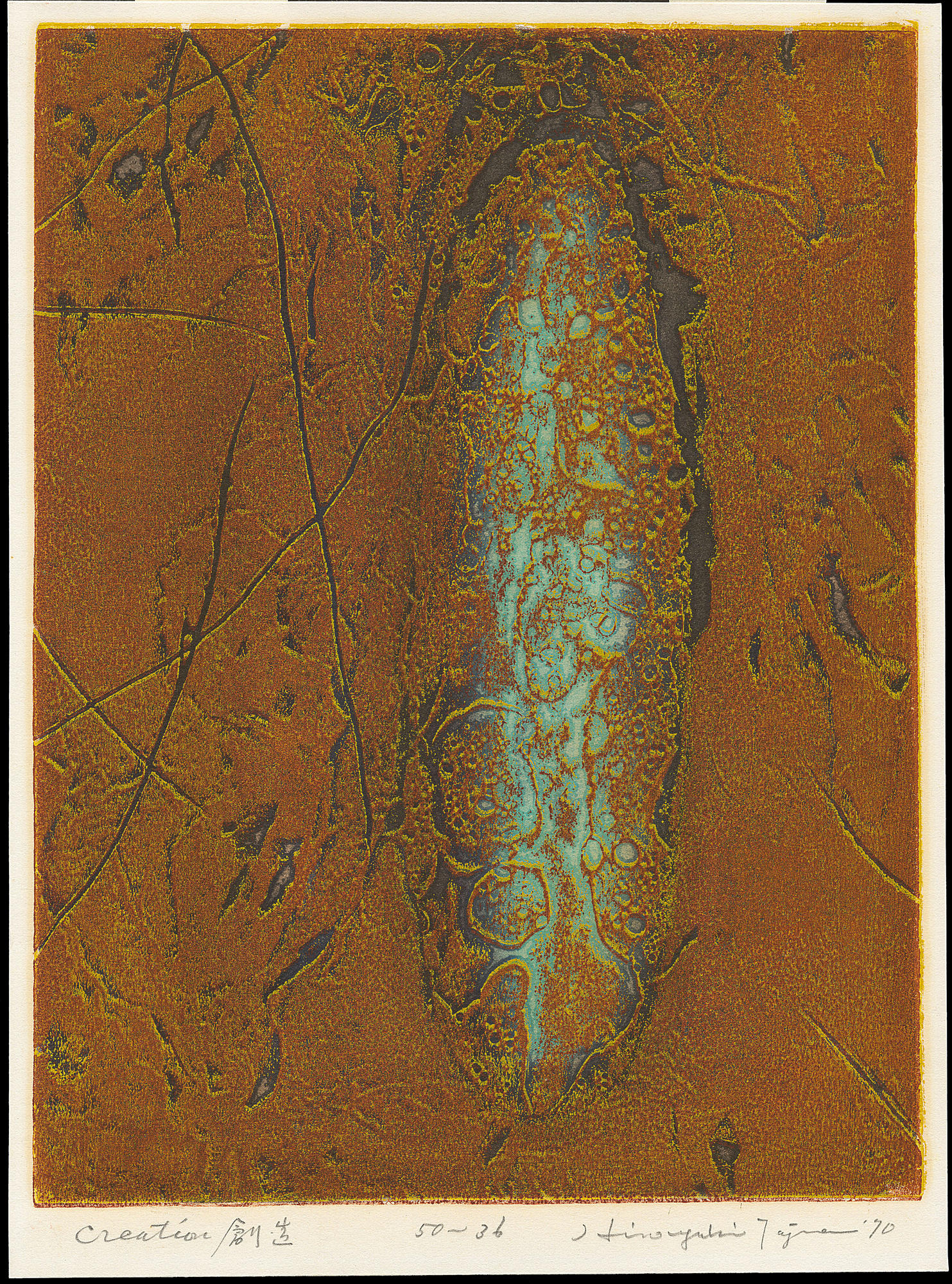
Creation
Woodblock print
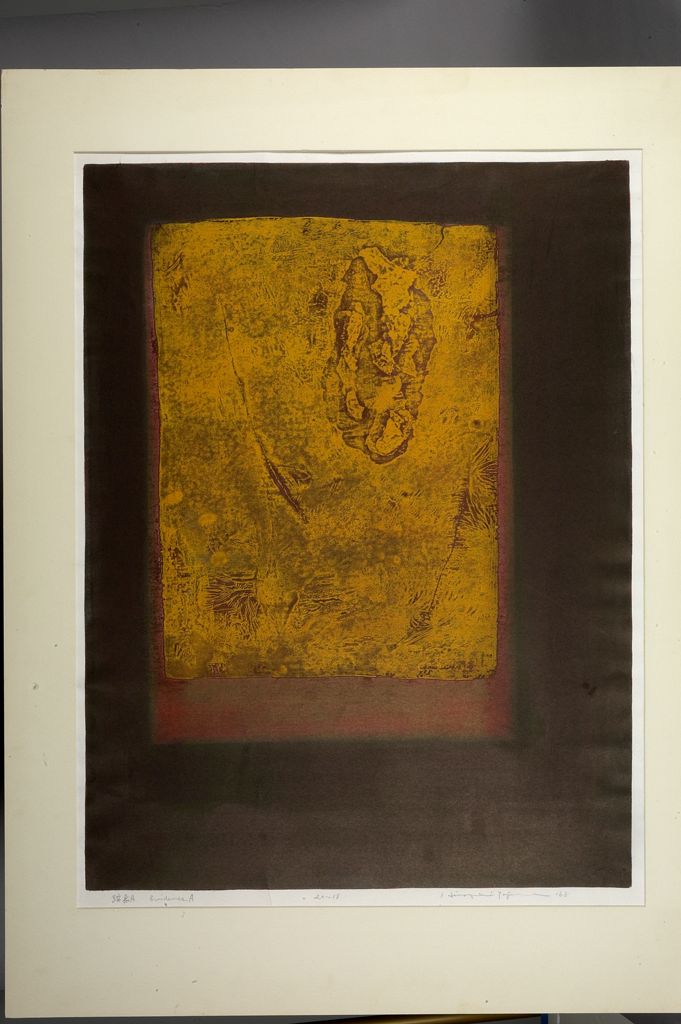
Evidence A, Shôwa period, dated 1963
Woodblock print
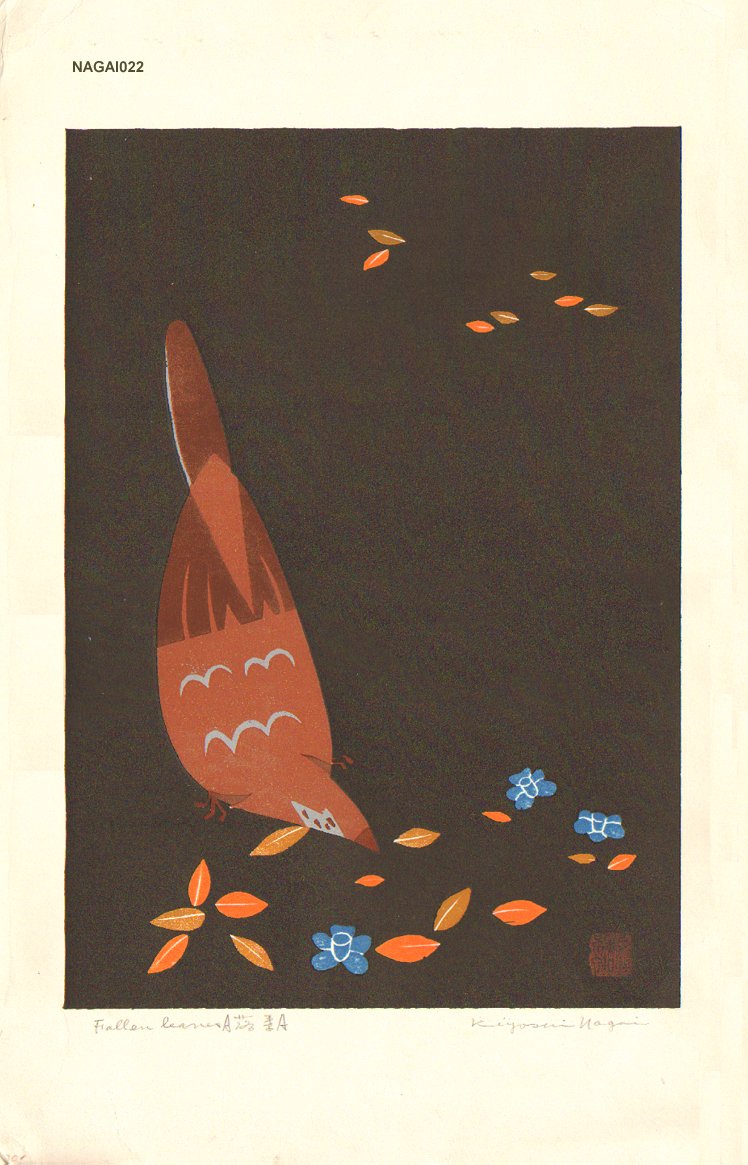
Fallen Leaves A
Woodblock print

Floating Shadow (Hyoei) Yellow
1964
Color woodblock print; edition 3/20
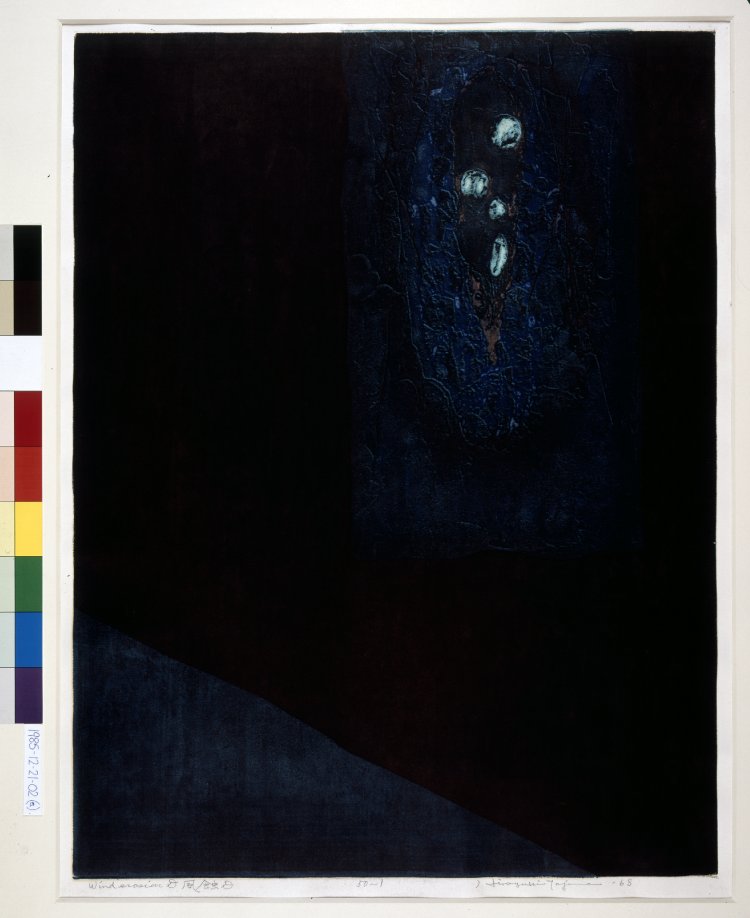
Fushoku D (Wind Erosion D)
Woodblock print
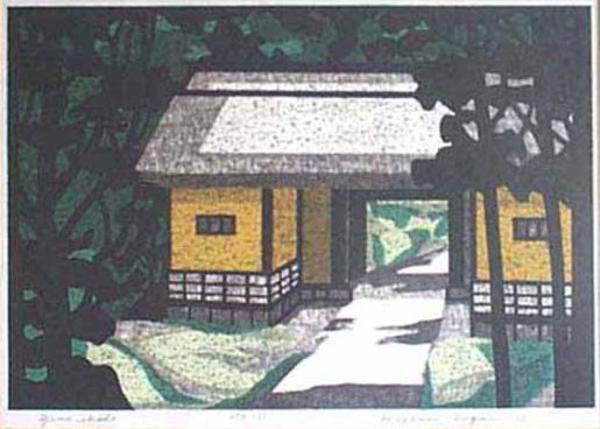
Green Shade
Woodblock print
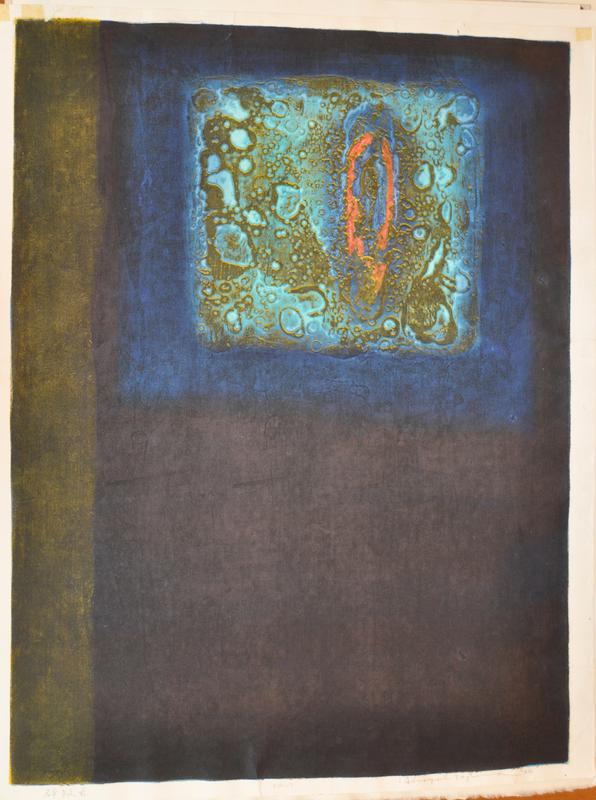
Hemei-B
1964
Woodblock print, ink and color on paper
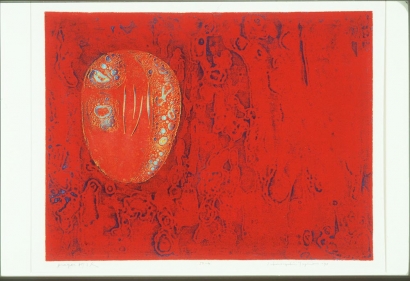
Prayer
Woodblock print

Shrine of the Rock (Iwa no hokora)
1965
Color lithograph on paper; edition 1/50
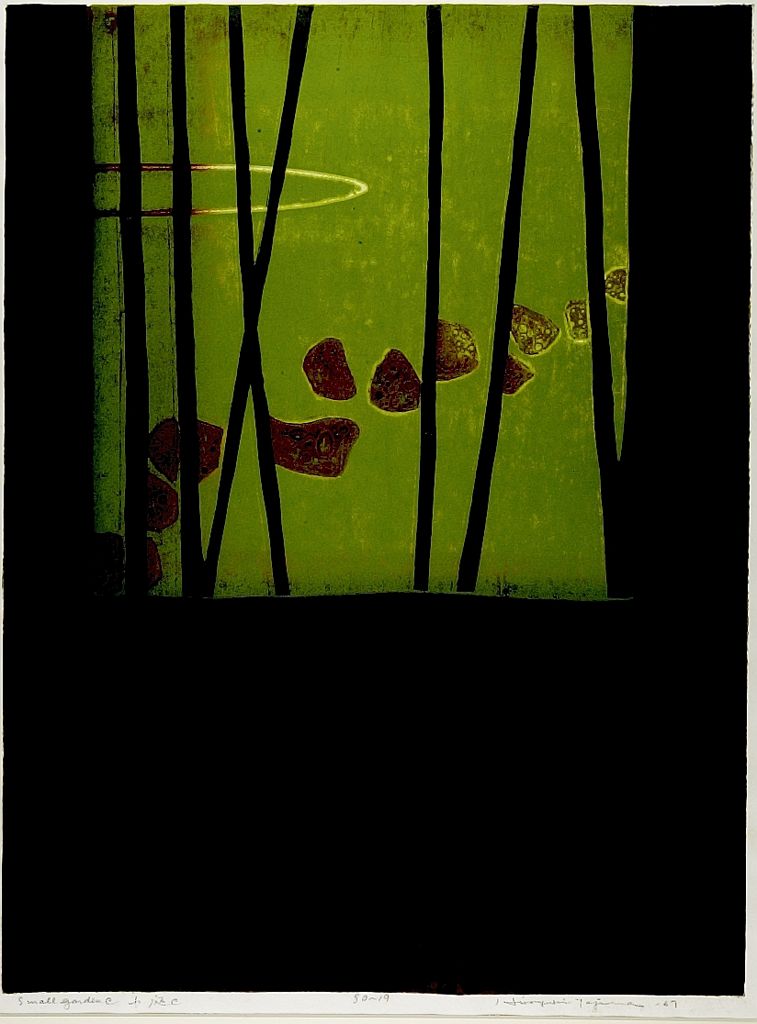
Small Garden, Shôwa period, dated 1967
Woodblock print
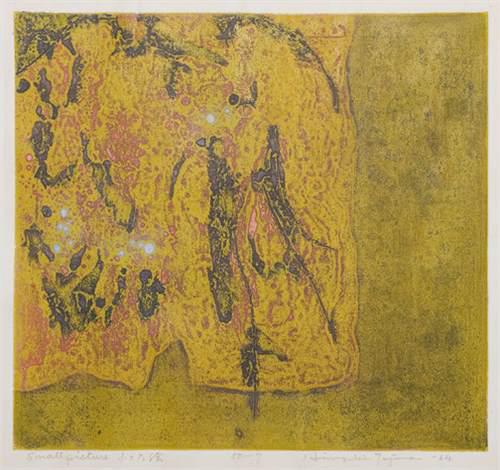
Small Picture
Woodblock print
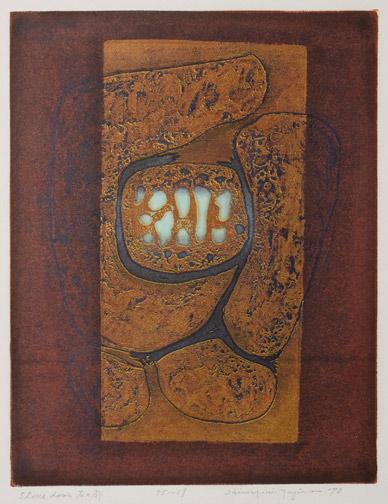
Stone Door
Woodblock print

Almanac
Woodblock print
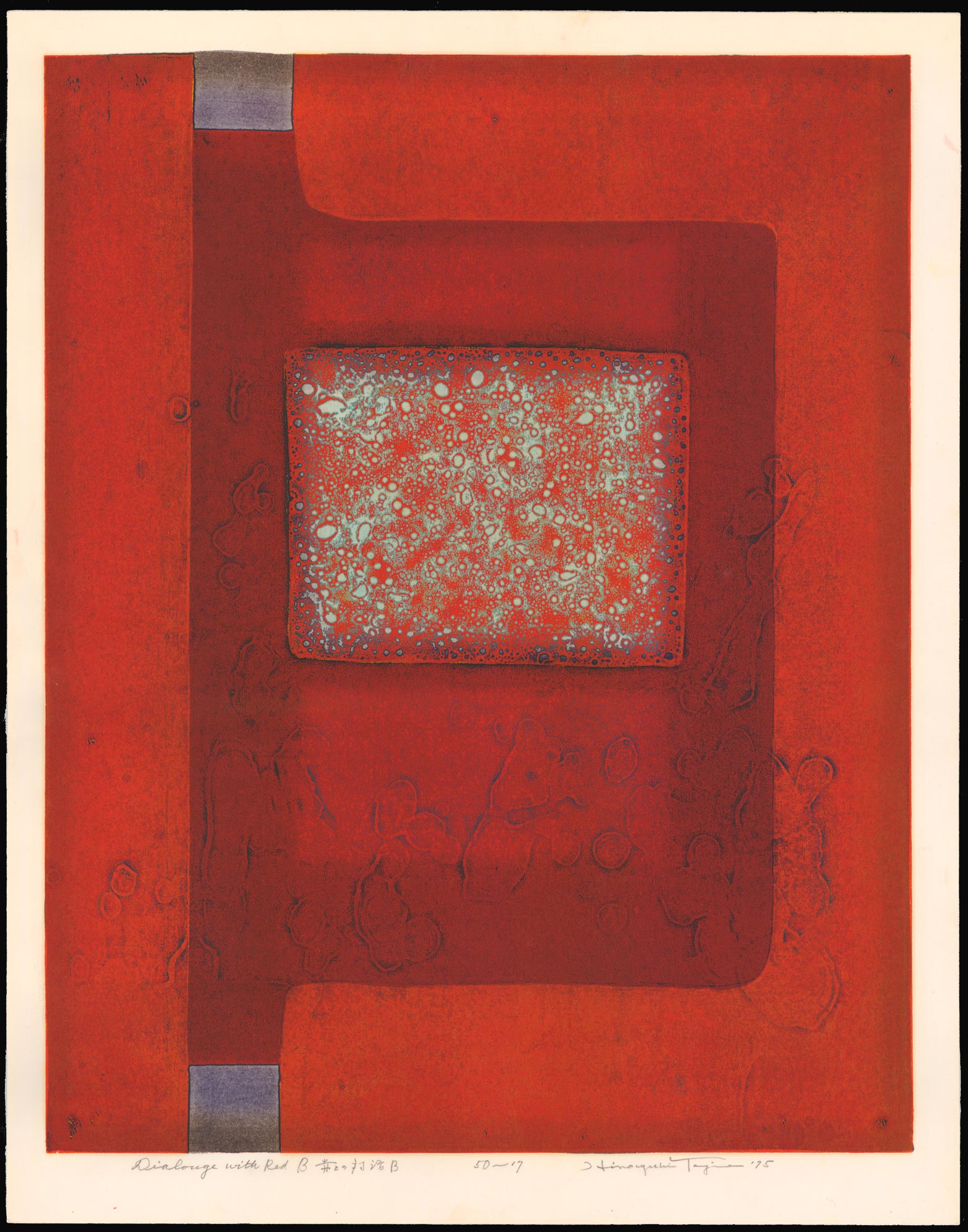
Dialogue With Red (B)
Woodblock print
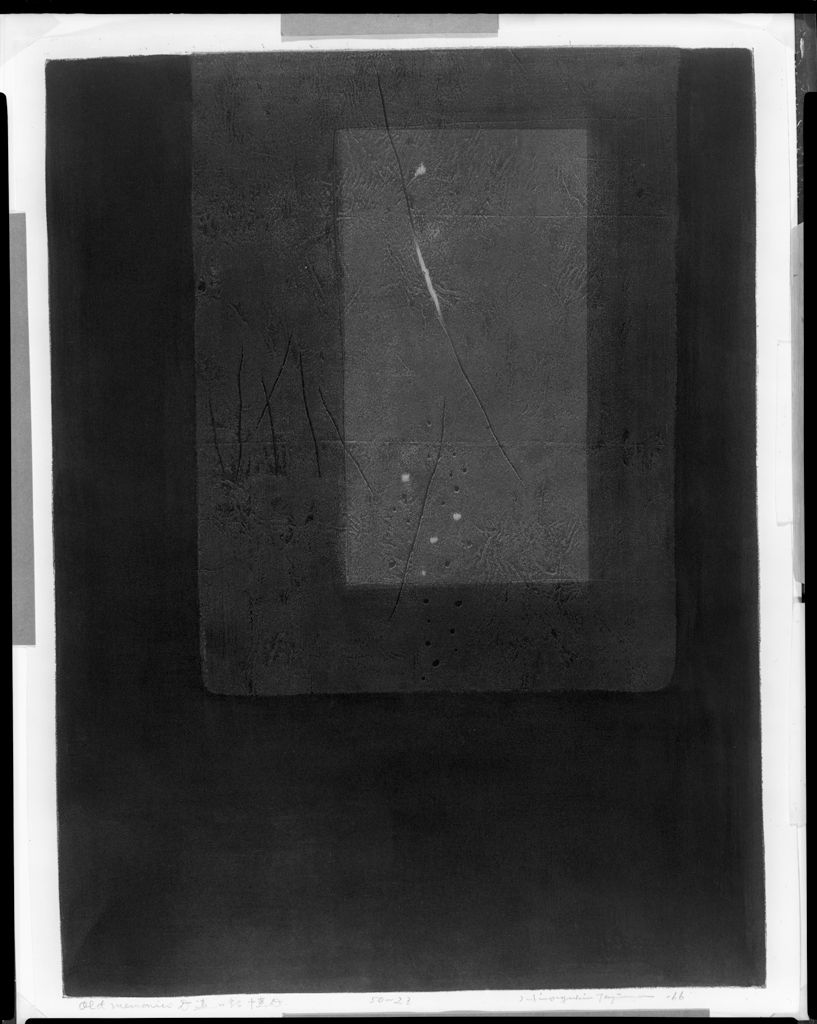
Old Memories D, Shôwa period, dated 1966
Woodblock print
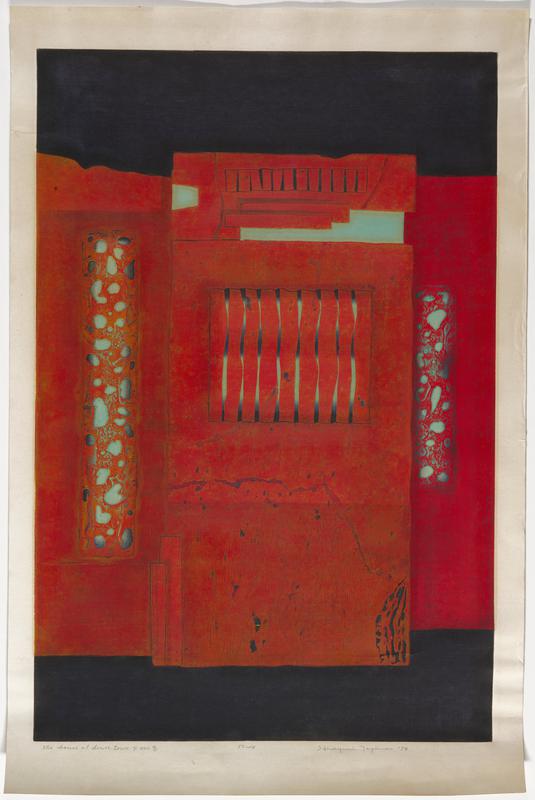
The house at down town
1974
Woodblock print, ink and color on paper
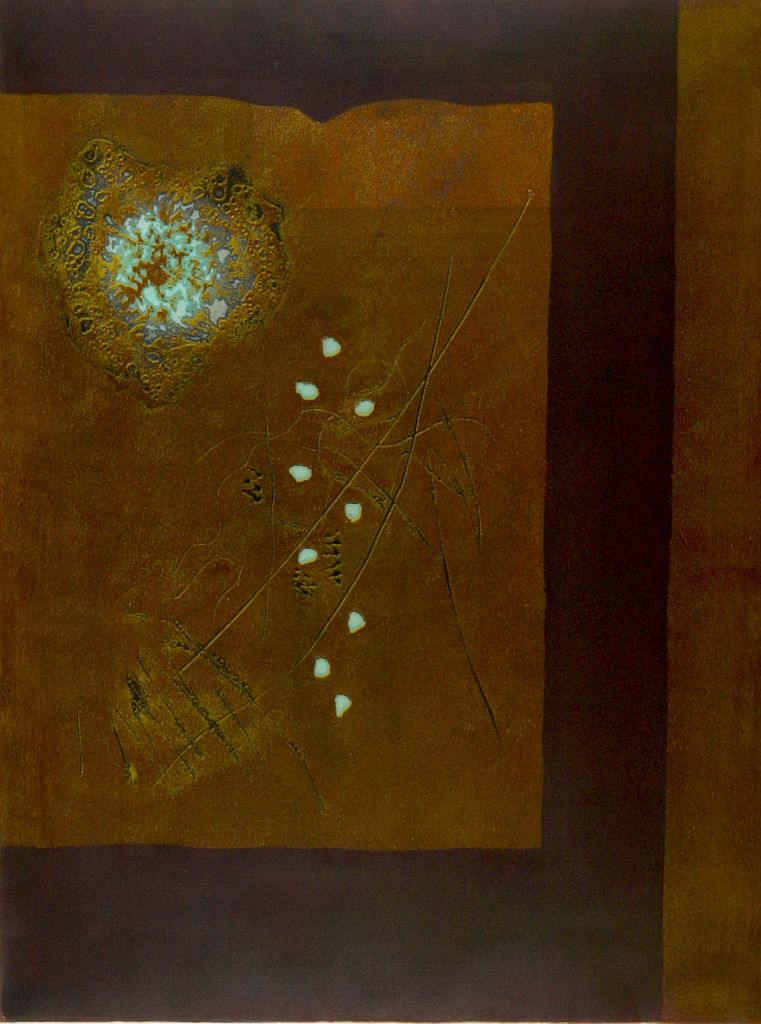
Brown Wall, Shôwa period, dated 1971
Woodblock print

Distant Memory L
1966
Woodblock print, color on paper
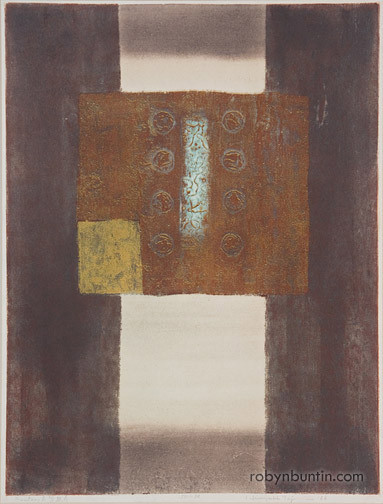
Fantasy A 50-30
Woodblock print
![Title unknown [abstract image in yellow and black] by Hiroyuki Tajima](https://1.api.artsmia.org/800/135741.jpg)
Title unknown [abstract image in yellow and black]
1964
Woodblock print, ink and color on paper
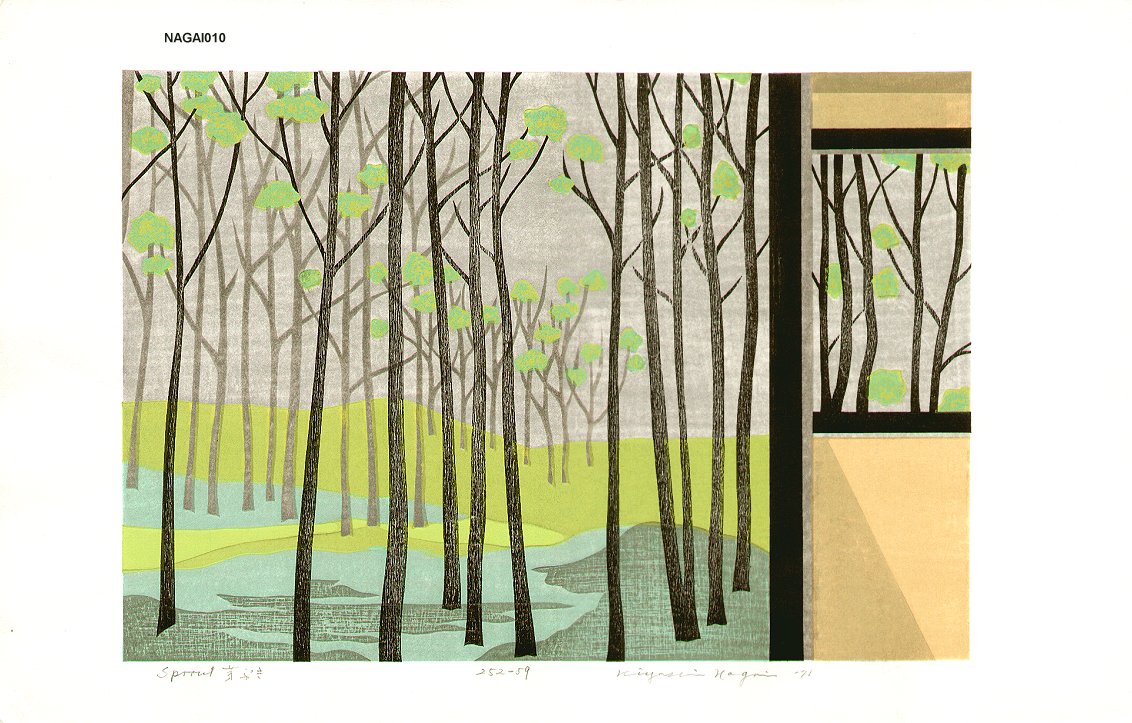
Sprout
Woodblock print
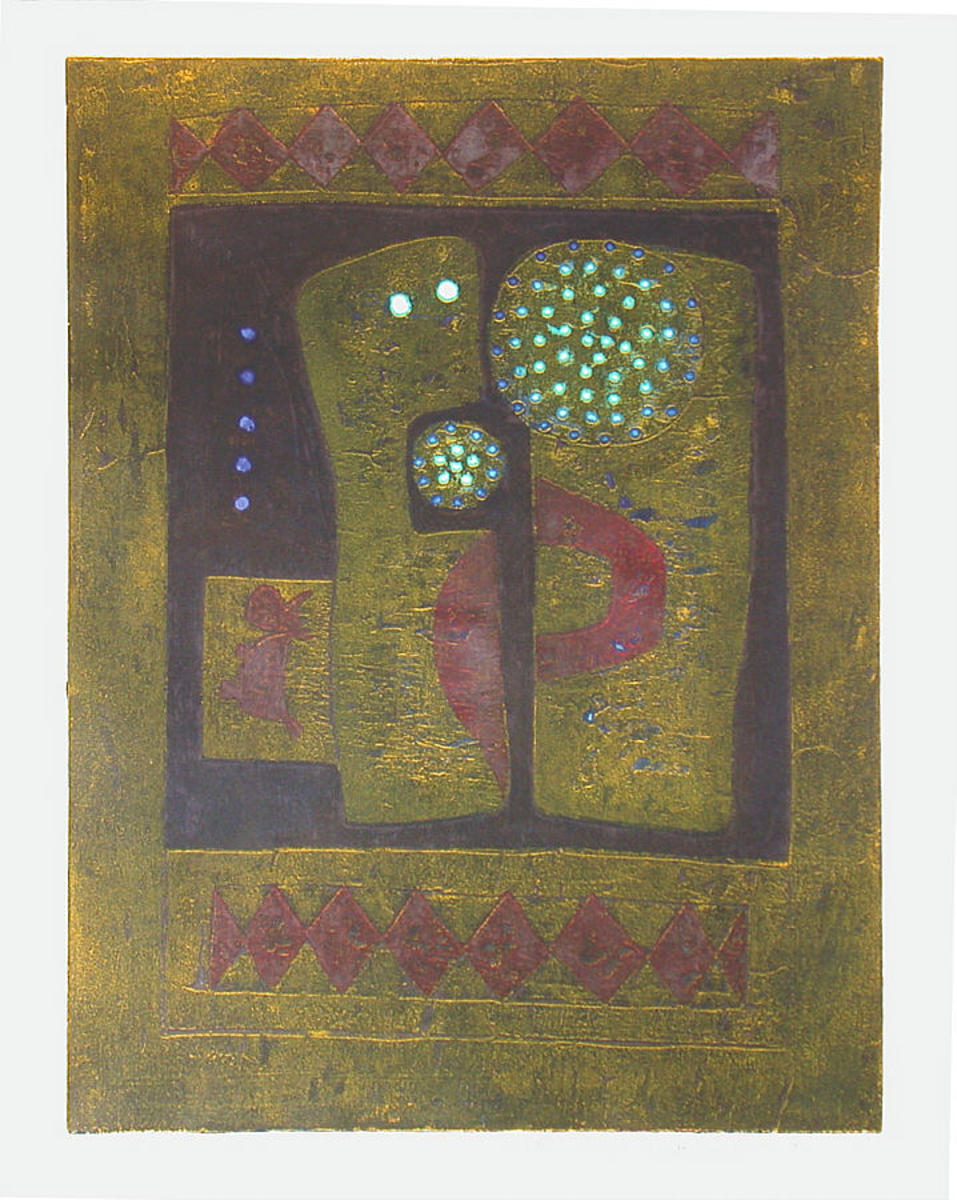
Pierrot and His Son
Woodblock print
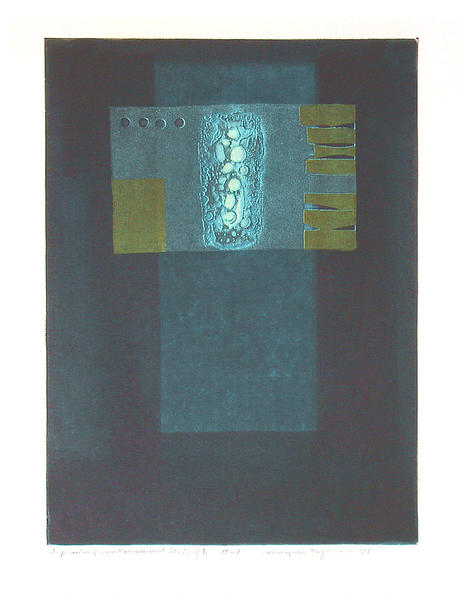
Impression of Small Monument
Woodblock print
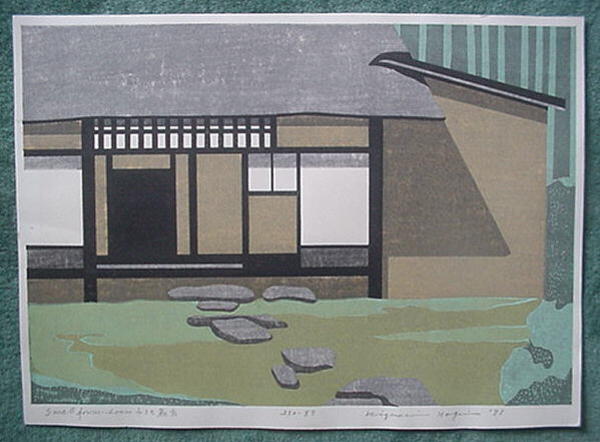
Small Farm-House
Woodblock print
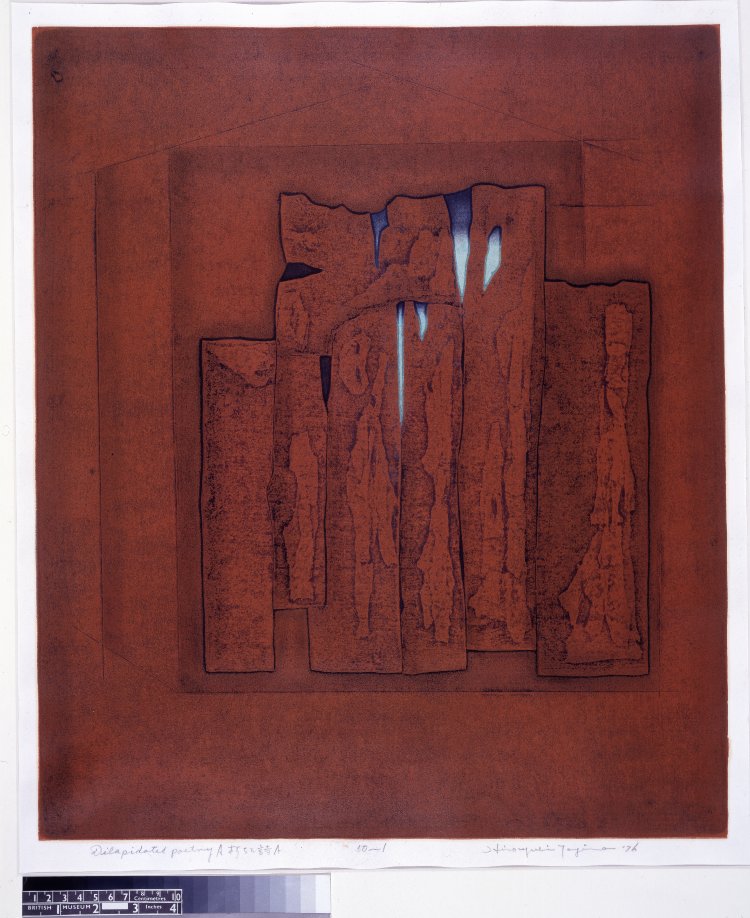
Dilapidated Poetry A
Woodblock print
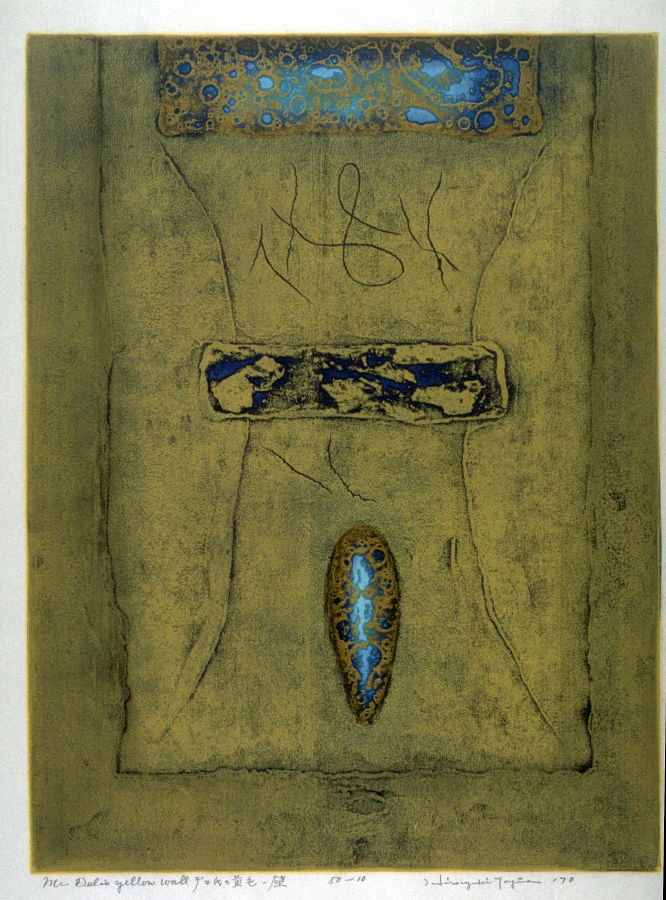
Mr. Delo's Yello Wall
Woodblock print
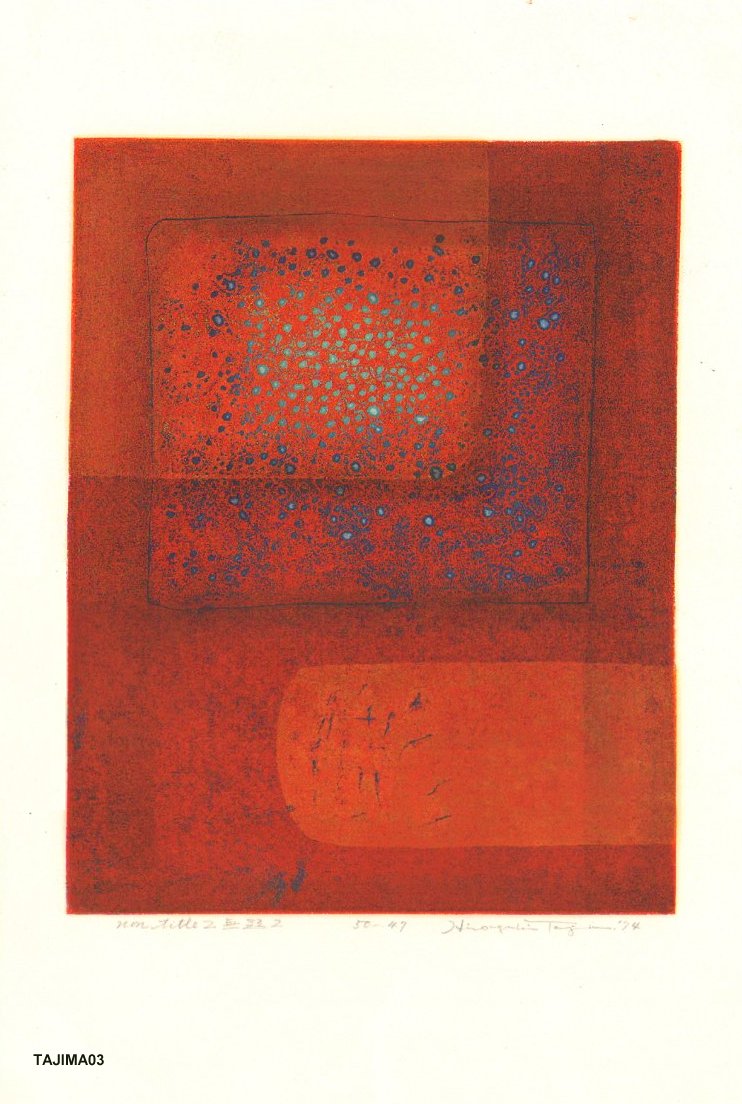
Nontitle 2
Woodblock print
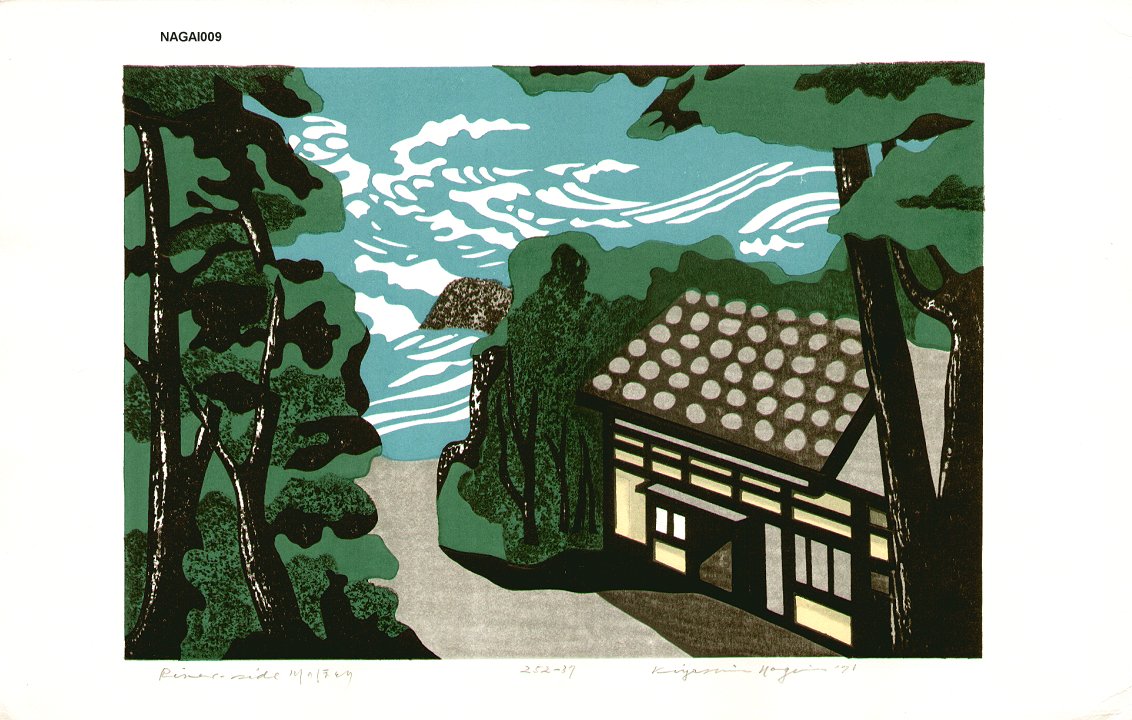
River-side
Woodblock print
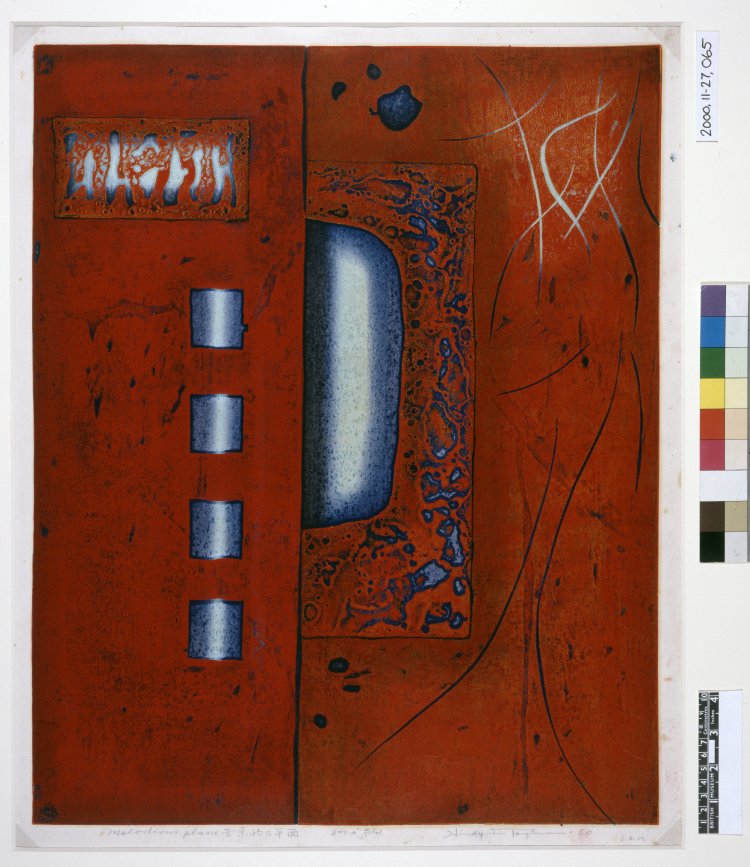
Melodious Plane
Woodblock print
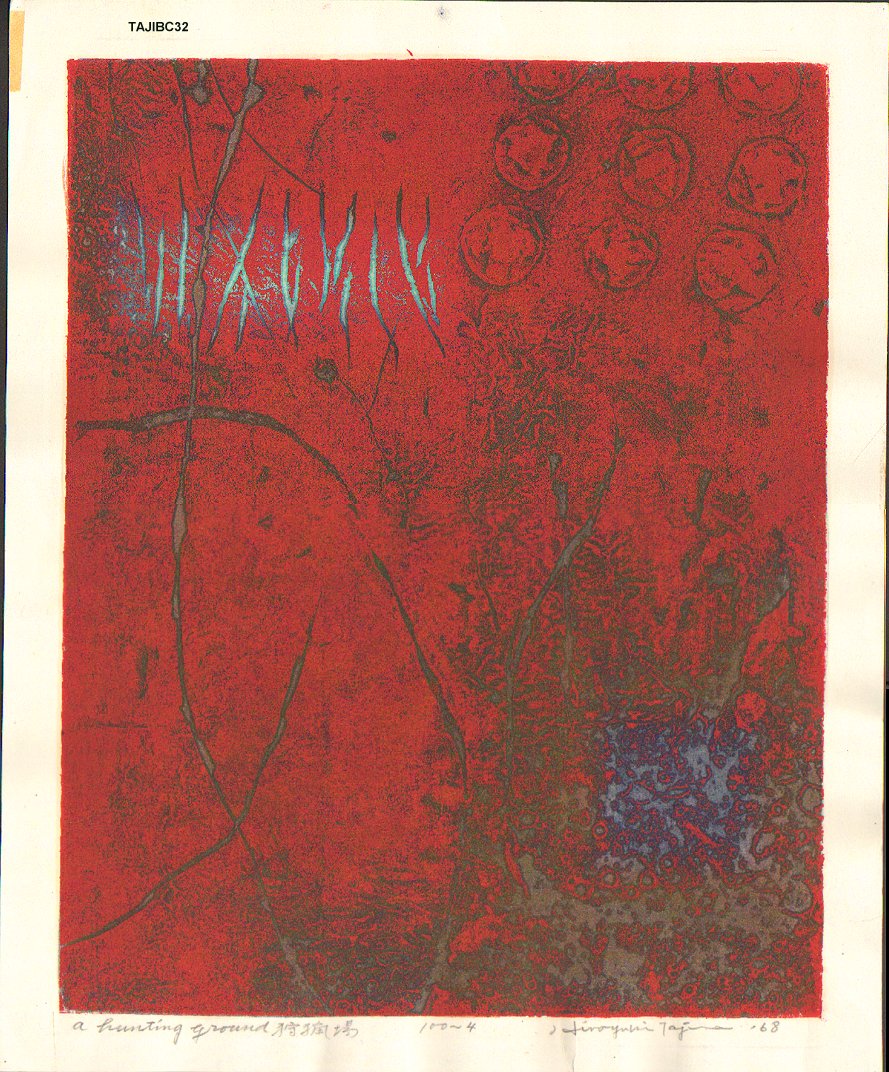
A Hunting Ground
Woodblock print

Armoured Men (Yoroeru otokotachi)
1974
Color woodblock print; edition 8/50
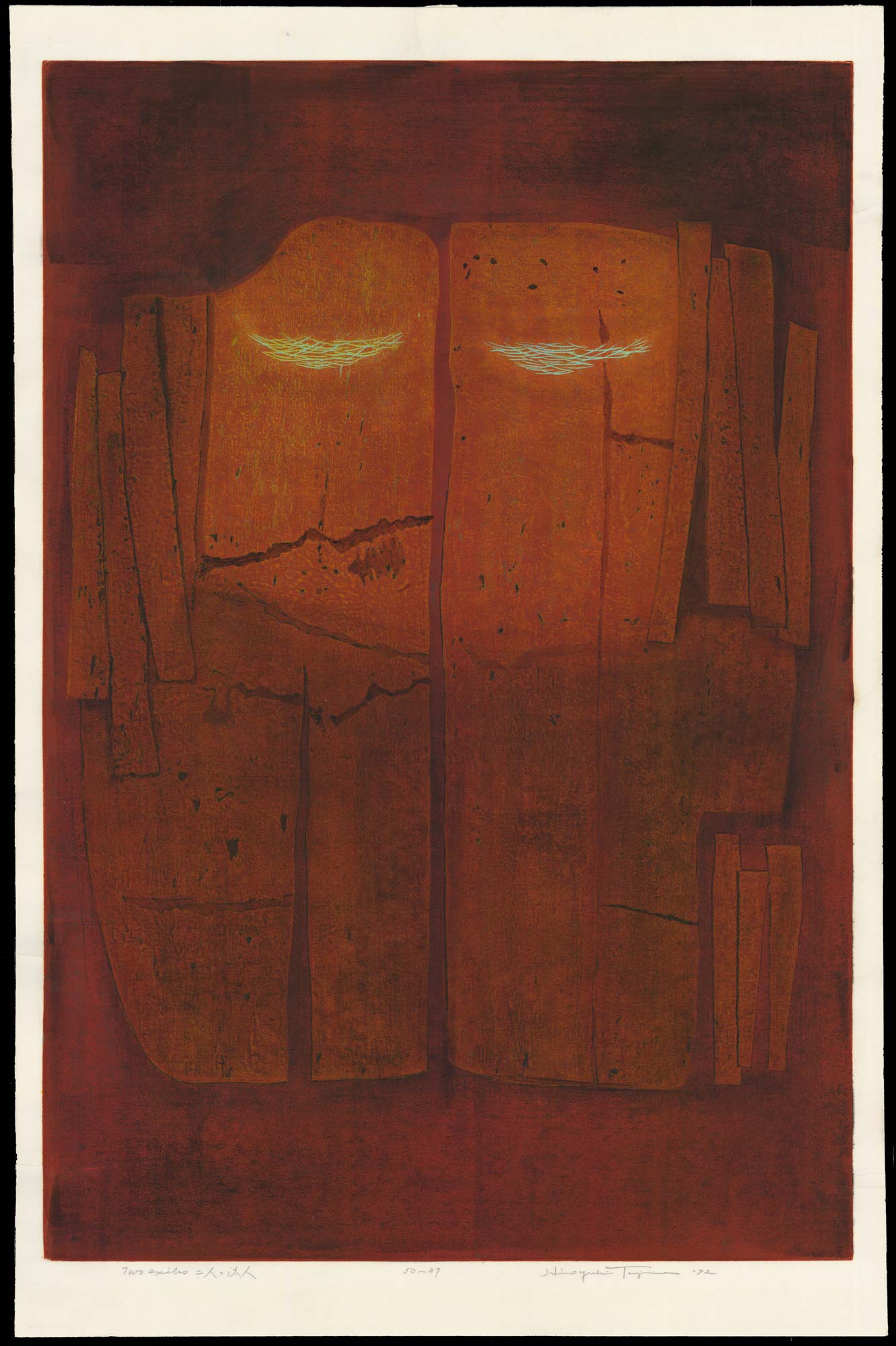
Two Exiles
Woodblock print

Mountain Range
20th century
Woodblock print

Temple
20th century
Woodblock print
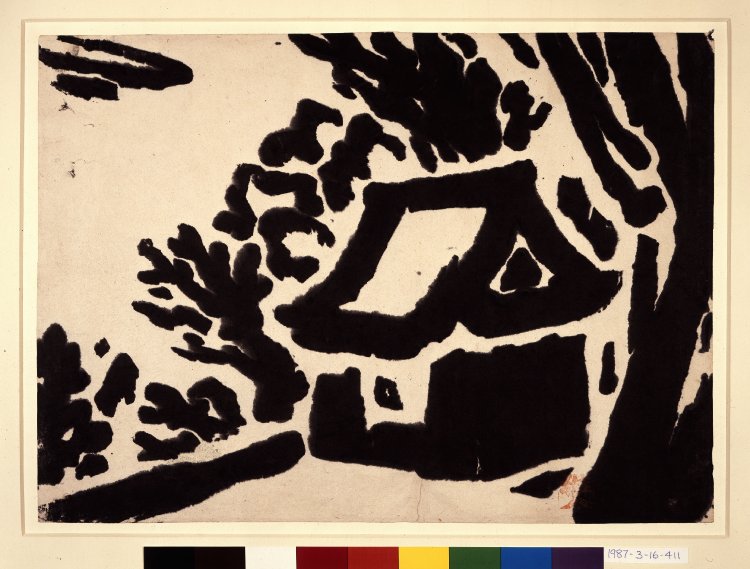
Kosaka Gajin
Woodblock print

Grove
Mokuhanga (Japanese woodblock)

Revived Ginza street
Mokuhanga (Japanese woodblock)

Mt Fuji
Mokuhanga (Japanese woodblock)

Landscape at Matsushima
Woodblock print

Place of Worship, Shôwa period, circa 1945-1953
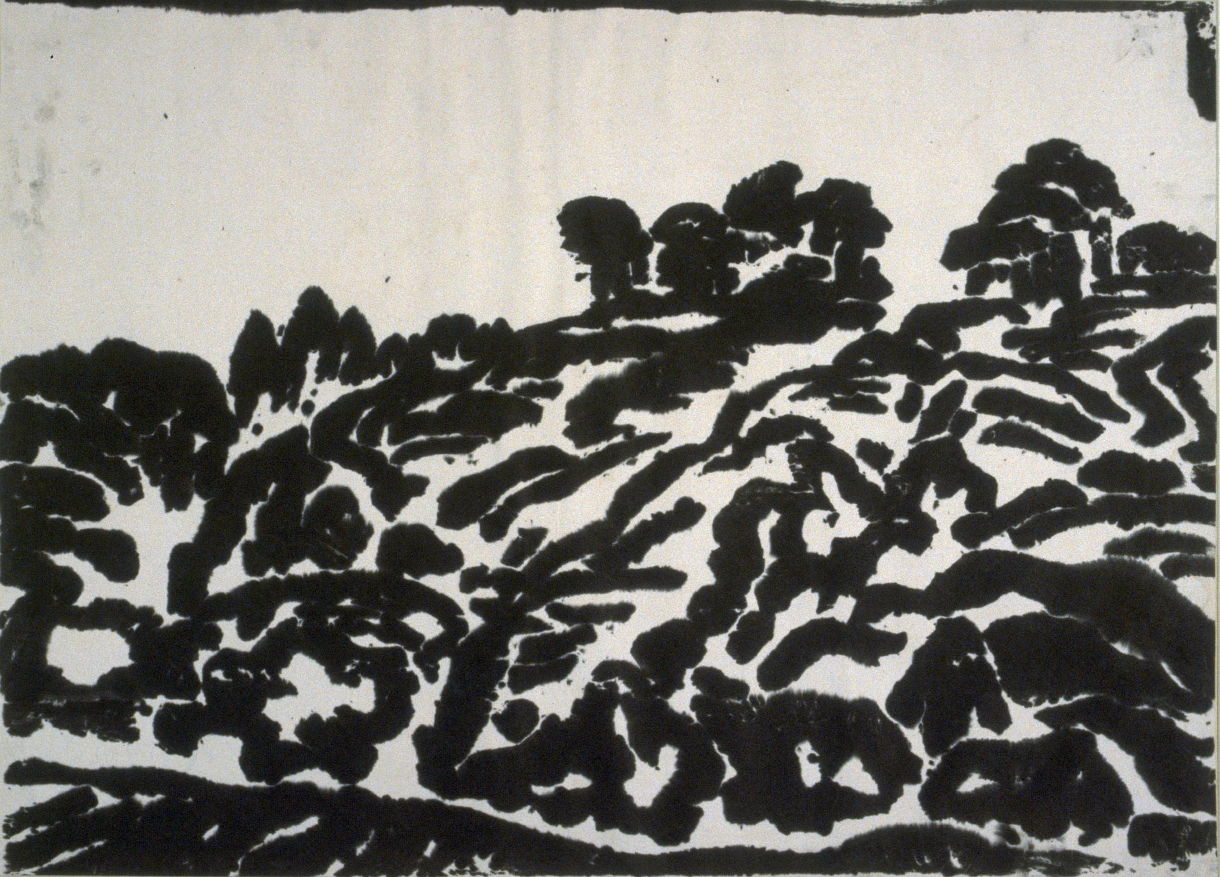
Landscape at Magome
Woodblock print
Untitled
Woodblock print

Tokyo Rhapsody
東京ラプソディ
Lithograph

Night View of Shinjuku, from the series Recollections of Tokyo
1945
Color woodblock print

Coast
20th century
Color woodblock print
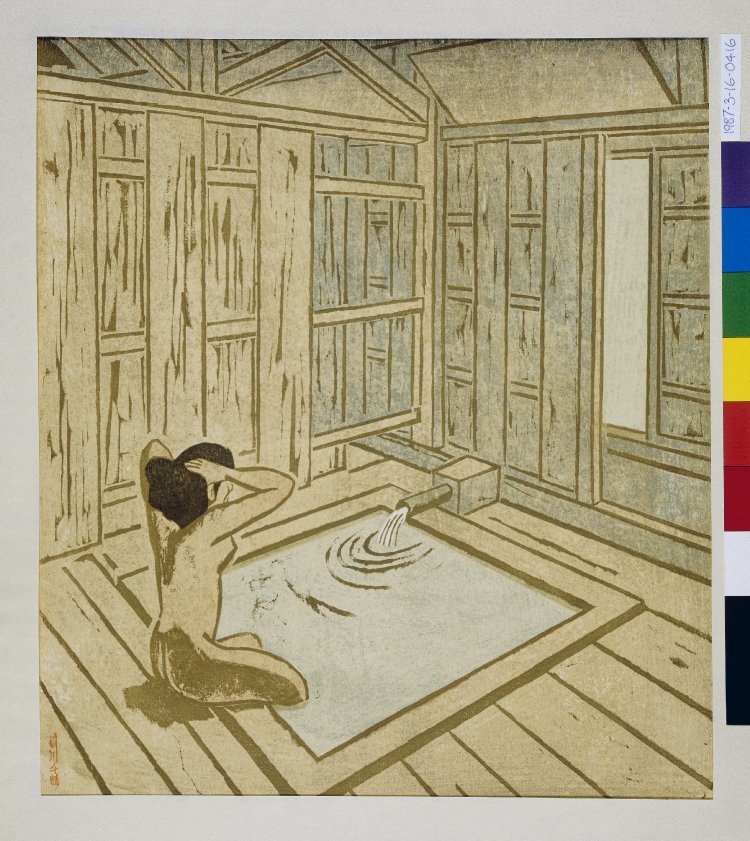
Woman at Bath
湯浴みする女
c. 1933
Color woodblock print

A Flower Seller
1951
Color woodblock print

Bird
Mokuhanga (Japanese woodblock)

Flower Girl
Mokuhanga (Japanese woodblock)
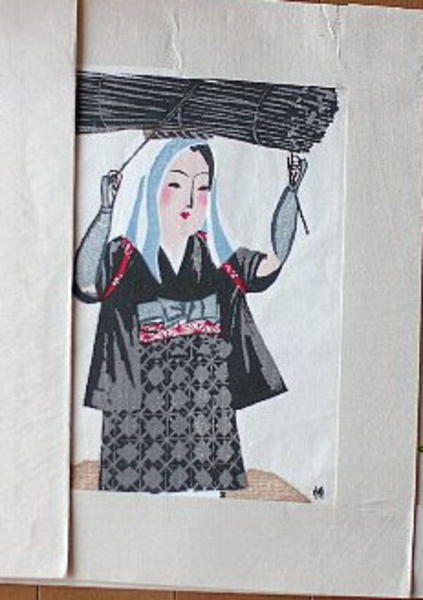
Oharame — 大原女
Woodblock print
Frequently Asked Questions
Sōsaku-hanga (創作版画) translates as 'creative prints.' It refers to the early-twentieth-century Japanese woodblock movement in which the artist designed, carved, and printed each work themselves — rejecting the four-person workshop division that had defined ukiyo-e and shin-hanga.
Yamamoto Kanae's 1904 print 'Fisherman' is the conventional starting point. Onchi Kōshirō, Yamamoto, and Ishii Hakutei founded the journal Hōsun in 1907, which became the movement's first organising venue. The movement consolidated through the 1910s and reached international prominence after MoMA's 1953 exhibition 'Japanese Prints Today.'
Onchi Kōshirō, Munakata Shikō (the most internationally collected), Hiratsuka Un'ichi, Saitō Kiyoshi, Azechi Umetarō, Maekawa Senpan, and Sekino Jun'ichirō are the canonical names. Munakata received the grand prize at the 1956 Venice Biennale, the highest international honour given to a Japanese printmaker.
Shin-hanga (1915–1950s) preserved the traditional artist–carver–printer–publisher workshop and produced representational landscapes and beauty prints in a Western-influenced naturalistic style. Sōsaku-hanga (1904–1970s) insisted the artist do all three roles personally and pursued modernist, often abstract subject matter.