
Good and Evil Influences (Zendama akudama)
- Date:
- c. 1795
- Medium:
- Color woodblock print; left sheet of oban triptych
- Source:
- Art Institute of Chicago
Description
The left sheet of an oban triptych in the Art Institute of Chicago, dated c. 1795, this design from Chōki's Good and Evil Influences (Zendama akudama) series belongs to a parody mode in which the moral allegory of good and bad spirits whispering into a person's ears is replayed as a Yoshiwara genre scene. The Zendama-akudama device — small dumpling-shaped sprites perched on the shoulders of an indecisive mortal — was a stock visual joke in late-Edo popular literature, drawing on Buddhist-influenced morality tales that had circulated in Japanese print culture for centuries. Chōki's handling combines its didactic origins with the elegant figure work of his bijin-ga practice, treating the small allegorical sprites with the same refined linework he gave his courtesans. The left sheet preserves one of the three panels of the original composition; the center and right sheets exist as separate accessions in the same museum. The print exemplifies the comic register that Chōki, like his contemporaries, deployed alongside his more serious courtesan portraits, and demonstrates the breadth of his pictorial range.
More Prints by Eishōsai Chōki

Kan, a waitress of the Izutsuya, and the geisha Fuseya of the Ogiya

The Courtesan Hinazuru of the Chojiya and Her Attendants
early 1790s
Color woodblock print; right sheet of oban triptych

The Front Room of the Naniwaya (Naniwaya misesaki)
c. 1800
Color woodblock prints; aiban triptych
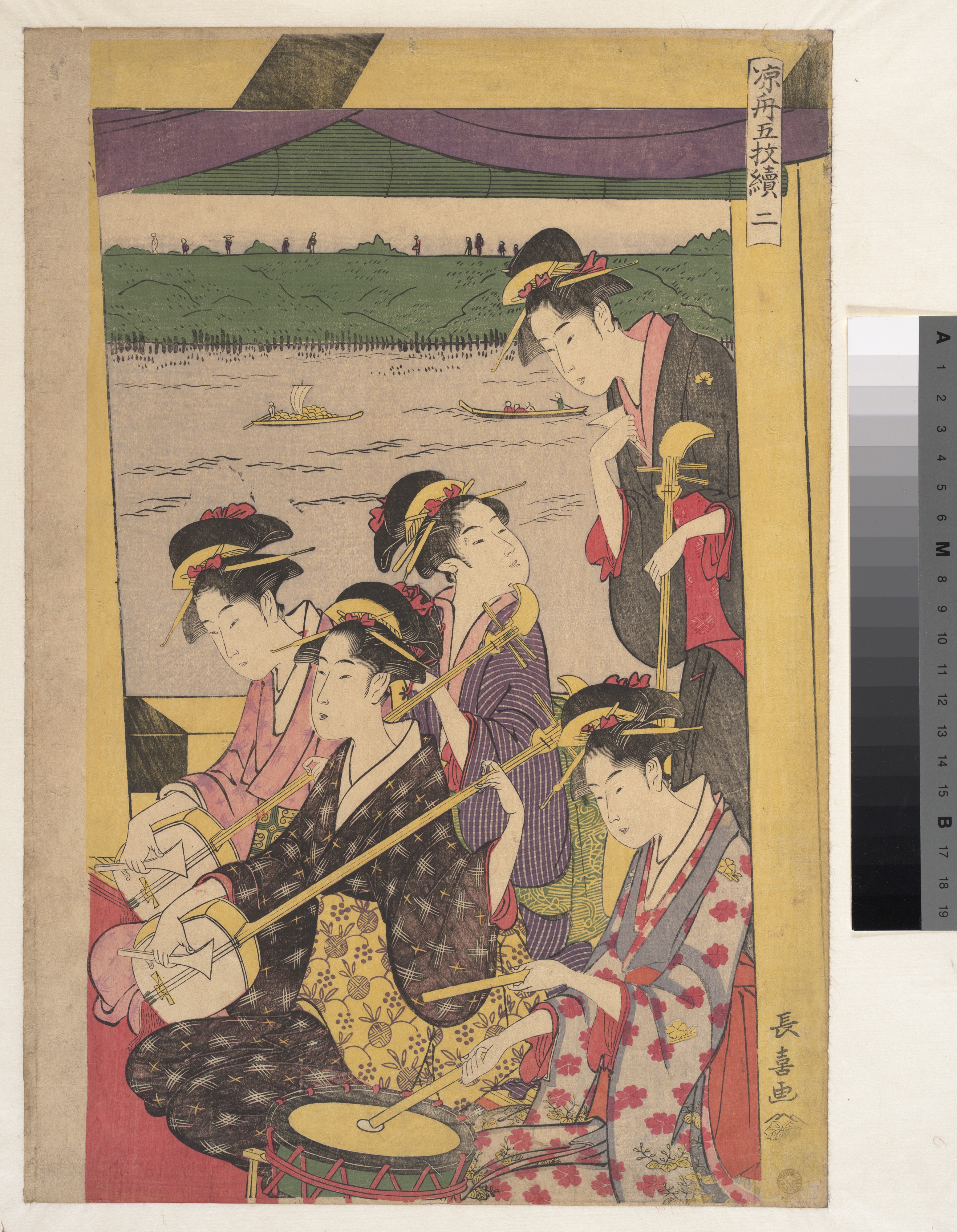
A Party of Geisha in a Suzumi-bune (Second Scene of a Boating Party)
ca. 1796
Second sheet of a pentaptych of woodblock prints; ink and color on paper
Frequently Asked Questions
Good and Evil Influences (Zendama akudama) was created by Eishōsai Chōki (栄松斎長喜) in c. 1795.