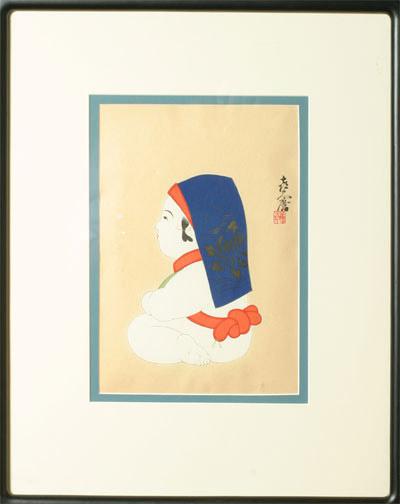
Japanese Doll
- Medium:
- Woodblock print
- Source:
- Robyn Buntin of Honolulu
- Image courtesy of
- Robyn Buntin of Honolulu
Description
Fujiki Kikumaro here turns attention to a kokeshi-type or rounded gosho ningyo, a doll form originating in the Edo period and associated with gift-giving among aristocratic households. Gosho dolls are characterized by disproportionately large heads, pale skin, and minimal costuming that emphasizes the rounded contours of the carved wooden body. The composition would exploit this form's near-spherical silhouette, creating a strong focal mass against a neutral or lightly patterned ground. Kikumaro's print isolates the doll as a single figure study, using the woodblock medium's capacity for clean, unmodulated color fills to render the doll's smooth lacquered surfaces. The subject's wide, dark eyes and simple painted features require precise keyblock registration to read clearly at print scale. Such doll subjects were associated with childhood, luck, and the domestic interior of the traditional Japanese home.
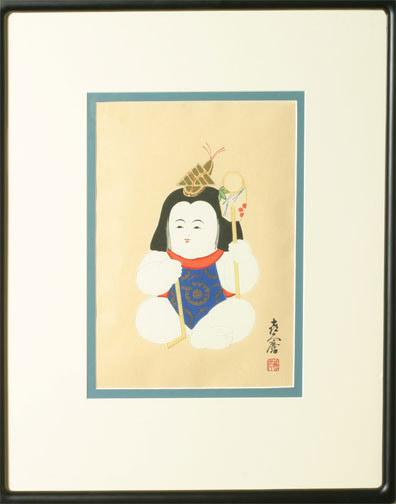
More Prints by Fujiki Kikumaro
Frequently Asked Questions
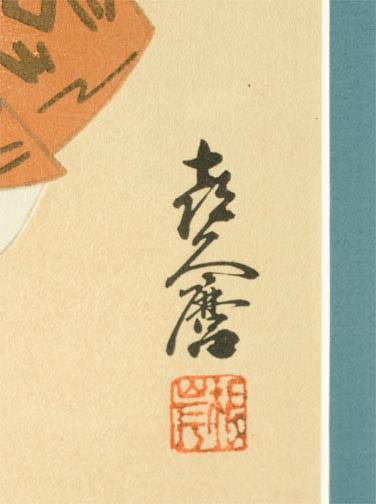
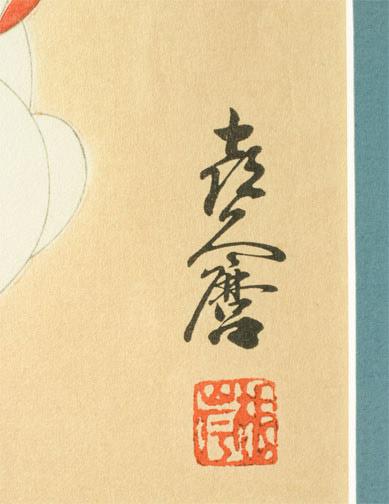
Japanese Doll was created by Fujiki Kikumaro.