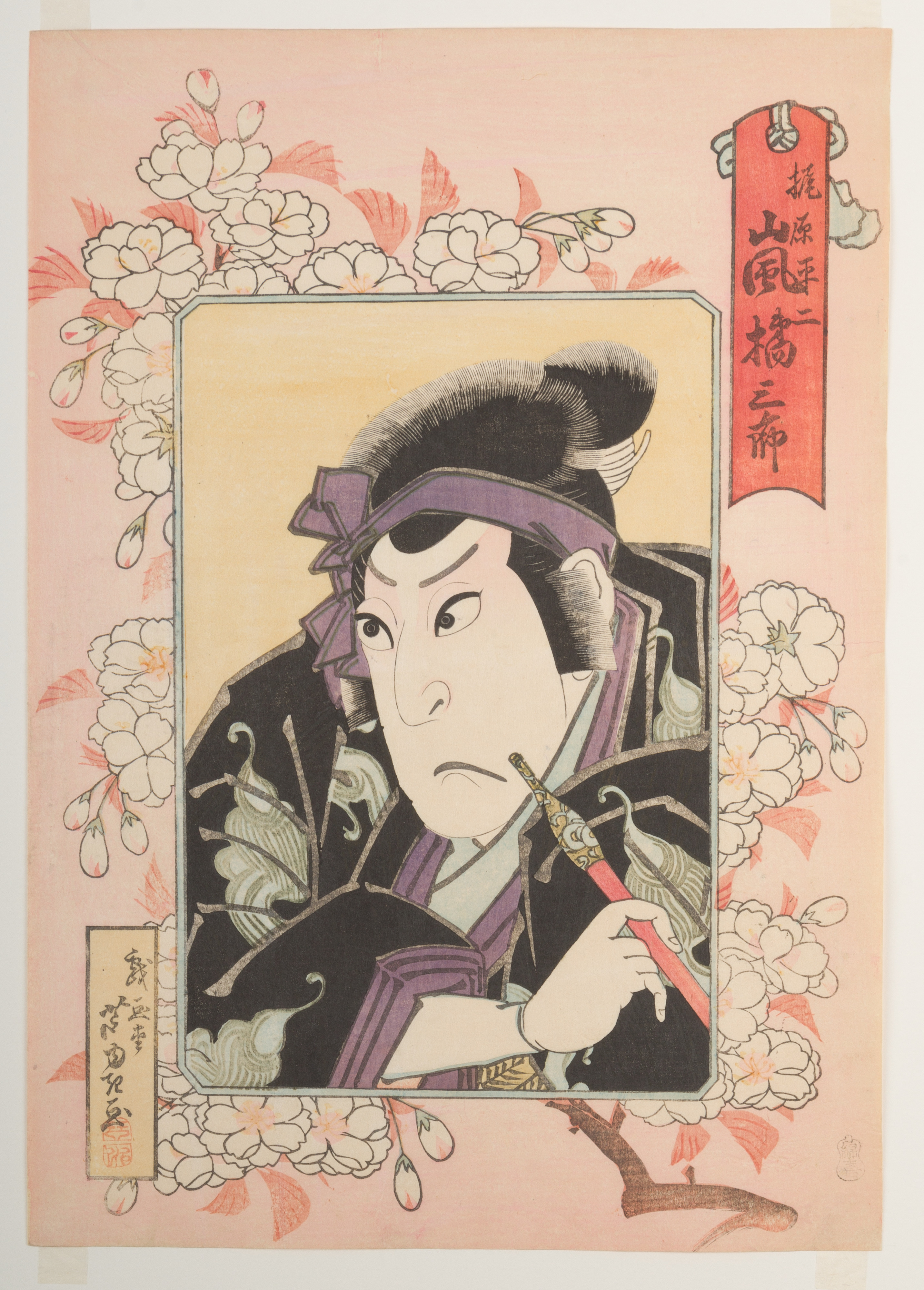
Kabuki Actor Arashi Kitsusaburō II as Kajiwara Heiji, in the play Hiragana seisuiki (Records of the Battles between the Minamoto and Taira Clans in the Japanese Syllabary)
- Date:
- 1827
- Medium:
- Woodblock print; ink and color on paper
- Source:
- Metropolitan Museum of Art
Description
This 1827 yakusha-e by Gigadō Ashiyuki, held by the Metropolitan Museum of Art (accession 2011.131), portrays Arashi Kitsusaburō II in the role of Kajiwara Heiji in the play Hiragana seisuiki (Records of the Battles between the Minamoto and Taira Clans in the Japanese Syllabary). Hiragana seisuiki is one of the great Genpei-cycle jidaimono (period dramas) of the kabuki repertoire, dramatizing the closing campaigns of the twelfth-century war between the Minamoto and Taira clans, and the role of Kajiwara Heiji is a high-ranking warrior figure caught up in the play's late dramatic reversals. Arashi Kitsusaburō II had inherited the stage name of his celebrated father Kitsusaburō I, whose 1821 death was commemorated by Shunkōsai Hokushū in two memorial portraits, and Ashiyuki's 1827 portrait of Kitsusaburō II in the Kajiwara Heiji role documents the younger actor's establishment in the Osaka tachiyaku (male-lead) tradition. The print measures approximately 37.1 by 26 centimeters as a vertical ōban woodblock print in ink and color on paper. The Met's holding is part of a 2011 acquisition that brought together a coherent sample of Osaka kamigata-e from the late 1820s, complementing the museum's parallel Hokushū collection from the same period. Ashiyuki's composition follows his characteristic format: a tight half-length view of the actor in costume, careful inscription of the role and play title, and a restrained palette that subordinates decorative effect to the central study of the actor's interpretation.
More Prints by Gigadō Ashiyuki
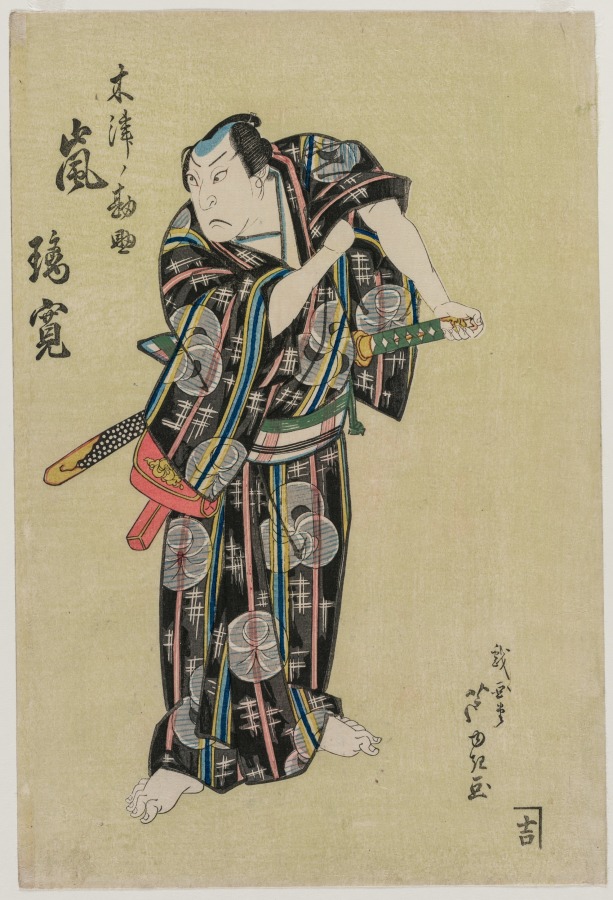
Arashi Rikan II as Kizu Kansuke
1829
color woodblock print
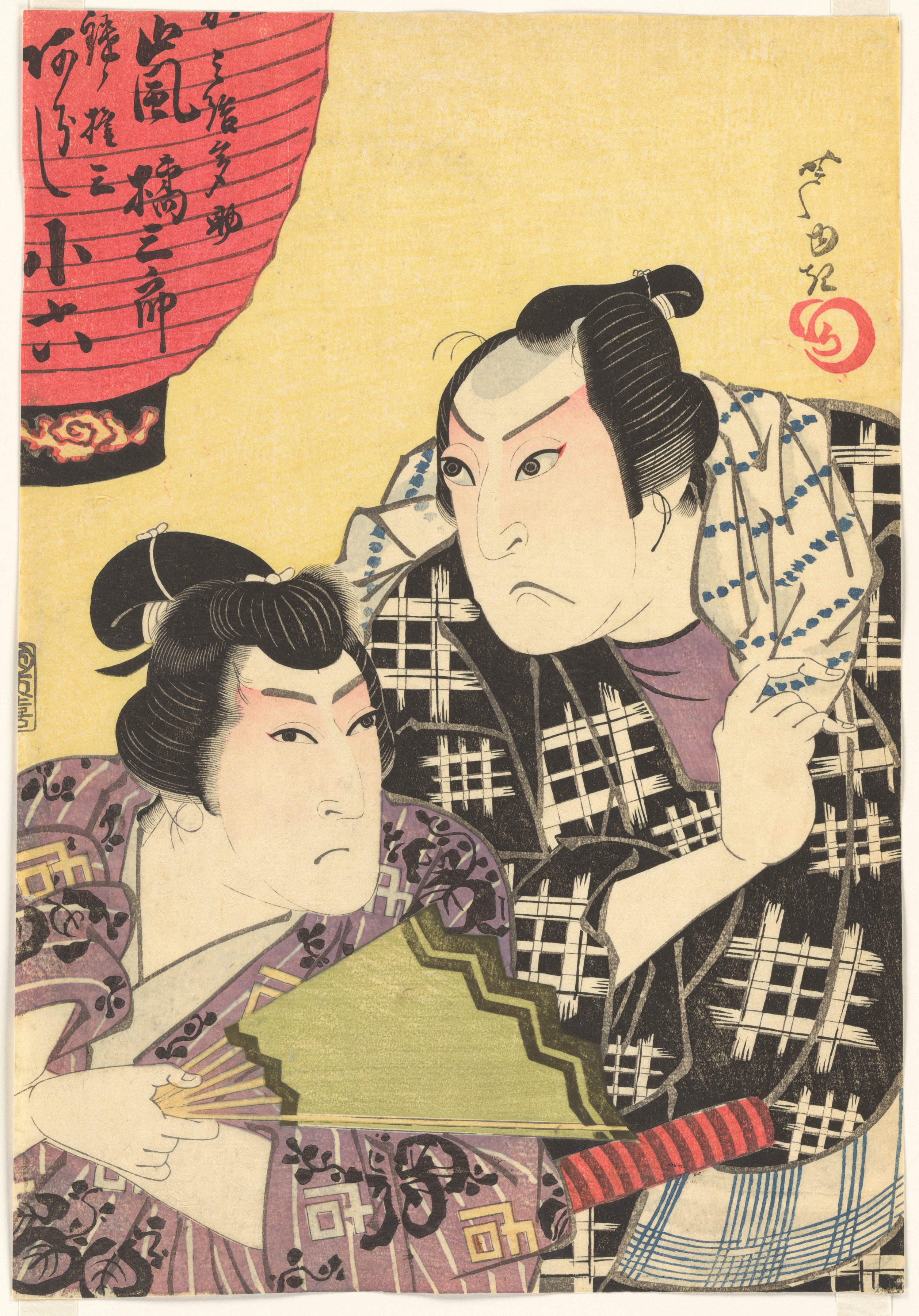
The Actors Arashi Kitsusaburō II as the Hairdresser Kamiyui Tasuke, and Arashi Koroku IV as Gonza the Lancer (Yari no Gonza)
1824
Woodblock print (nishiki-e); ink and color on paper; vertical ōban
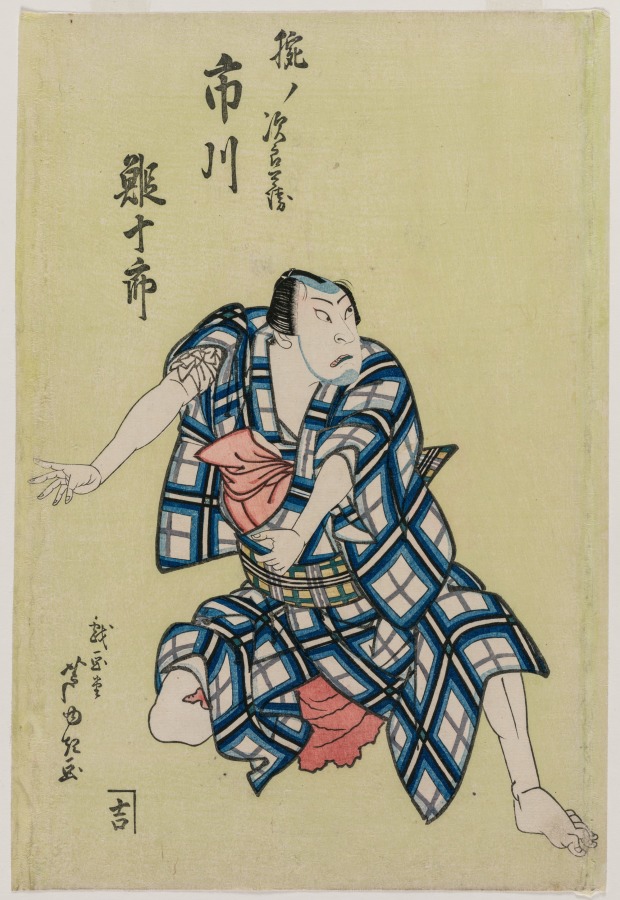
Ichikawa Ebijuro II as Ude no Jirobei
c. 1813-34
woodblock print

The actors Otani Tomoemon II (right) and Arashi Kitsusaburo II as Miura Matazo
1825
Color woodblock print
Frequently Asked Questions
Kabuki Actor Arashi Kitsusaburō II as Kajiwara Heiji, in the play Hiragana seisuiki (Records of the Battles between the Minamoto and Taira Clans in the Japanese Syllabary) was created by Gigadō Ashiyuki (戯画堂芦幸) in 1827.