Biography
Gigadō Ashiyuki (戯画堂芦幸, active c. 1813–1833) was a leading Osaka kabuki print designer of the late Bunka and Bunsei periods and one of the principal documentary recorders of the kamigata stage during the same two decades in which his more prolific contemporary Shunkōsai Hokushū dominated the field. Working in a market entirely distinct from Edo ukiyo-e, Ashiyuki produced a substantial body of yakusha-e (actor prints) portraying the leading male and female-role specialists of the Osaka theaters, and his designs are now held by major Western museums including the British Museum, the Metropolitan Museum of Art, and the Museum of Fine Arts Boston, which together with other collections preserve the broader Osaka kamigata-e corpus outside Japan.
Like nearly every Osaka print designer of the period, Ashiyuki left almost no biographical trace beyond his signed prints. His personal name is not recorded, his birth and death dates are unknown, and his career is reconstructed entirely from dated and dateable print designs. He was a pupil of the Osaka designer Asayama Ashikuni, and inherited from Ashikuni a position within the Asayama school network that gave him access to the publishers and fan-club patrons who drove the kamigata-e economy. The character 芦 (ashi) at the start of his art name signaled his discipleship to Ashikuni, a naming convention that anchored him to a specific Osaka lineage at a moment when Hokushū was building his own studio under the related sign of 北 (hoku) that acknowledged Hokusai's influence. The two designers thus represented parallel branches within the broader Osaka kamigata-e network of the 1810s and 1820s.
Ashiyuki's go (art name) Ashiyuki (芦幸) combines his teacher's first character with the character 幸 (yuki, meaning fortune or happiness), and he typically signed his prints with the studio name Gigadō (戯画堂, literally 'playful-picture hall'), a studio-style identifier that distinguished his designs from those of contemporaries. Active from about 1813 — signing his earlier work under the name Nagakuni (長国) — he produced his most documented designs across the Bunsei period (1818–1830). His output covered the same theatrical events as Hokushū, often portraying the same star actors, among them Nakamura Utaemon III, Arashi Kitsusaburō II, and Arashi Rikan II, in the same productions, but his stylistic register tended toward a slightly more delicate line and a more atmospheric treatment of costume than Hokushū's tighter portrait-style cropping. The format he favored was the standard ōban, sometimes used as single sheets and frequently extended into diptychs and triptychs for multi-actor confrontation scenes drawn from specific kabuki productions.
The documentary mission of Osaka yakusha-e was distinct from its Edo equivalent. Where Edo prints concentrated on a handful of celebrity actors and were mass-published for a citywide commercial market, Osaka kamigata-e were produced in smaller editions, often financed by fan clubs (renju) or theater patrons, and the printing quality (heavier paper, metallic and mica pigments, embossing, restrained colors) reflected a more discerning local audience. Ashiyuki's surviving prints conform closely to these kamigata-e conventions: the actor is identified by inscription, the role and play title are recorded, and the composition privileges character study over decorative spectacle. His coverage of supporting roles and lesser-known productions, alongside the major star turns, is one of the principal reasons his corpus remains an essential source for the cultural history of Osaka kabuki between 1815 and 1833.
Ashiyuki's signed work disappears around 1833, the cause and date of his death unrecorded. Later Osaka designers such as Konishi Hirosada carried actor portraiture forward through the 1840s and 1850s, even as the Tenpō Reforms of the early 1840s sharply constrained the genre. His work is preserved today in major museum collections outside Japan, including the British Museum, the Metropolitan Museum of Art, and the Museum of Fine Arts Boston, which together sustain his standing as one of the leading Osaka kamigata-e actor-print designers of the early nineteenth century.
Key Facts
- Nationality
- 🇯🇵Japan
- Movement
- Ukiyo-e
- Works Indexed
- 9
Frequently Asked Questions
Gigadō Ashiyuki (戯画堂芦幸, active c. 1813–1833) was a leading Osaka kabuki print designer of the late Bunka and Bunsei periods and one of the principal documentary recorders of the kamigata stage during the same two decades in which his more prolific contemporary Shunkōsai Hokushū dominated the field. Working in a market entirely distinct from Edo ukiyo-e, Ashiyuki produced a substantial body of yakusha-e (actor prints) portraying the leading male and female-role specialists of the Osaka theaters, and his designs are now held by major Western museums including the British Museum, the Metropolitan Museum of Art, and the Museum of Fine Arts Boston, which together with other collections preserve the broader Osaka kamigata-e corpus outside Japan.
Gigadō Ashiyuki's work was shaped by the Ukiyo-e tradition in Japanese woodblock printmaking. Ukiyo-e: ## What is ukiyo-e? Ukiyo-e ([浮世絵](/glossary/ukiyo-e)) — literally "pictures of the floating world" — is the Edo-period Japanese print and painting tradition that flourished from roughly 1660 to 1868, depicting the pleasures of urban life in Edo (modern Tokyo): courtesans, kabuki actors, sumo wrestlers, famous landscapes, and seasonal beauties.
Original prints by Gigadō Ashiyuki can be found in collections including Cleveland Museum of Art, Metropolitan Museum of Art, Art Institute of Chicago, Victoria and Albert Museum.
Woodblock Prints by Gigadō Ashiyuki (9)
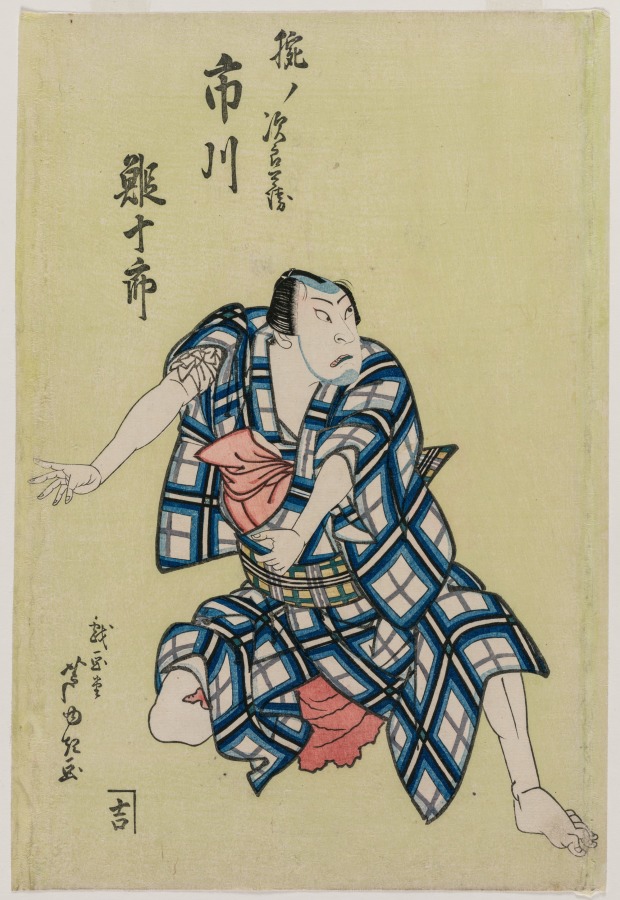
Ichikawa Ebijuro II as Ude no Jirobei
c. 1813-34
woodblock print
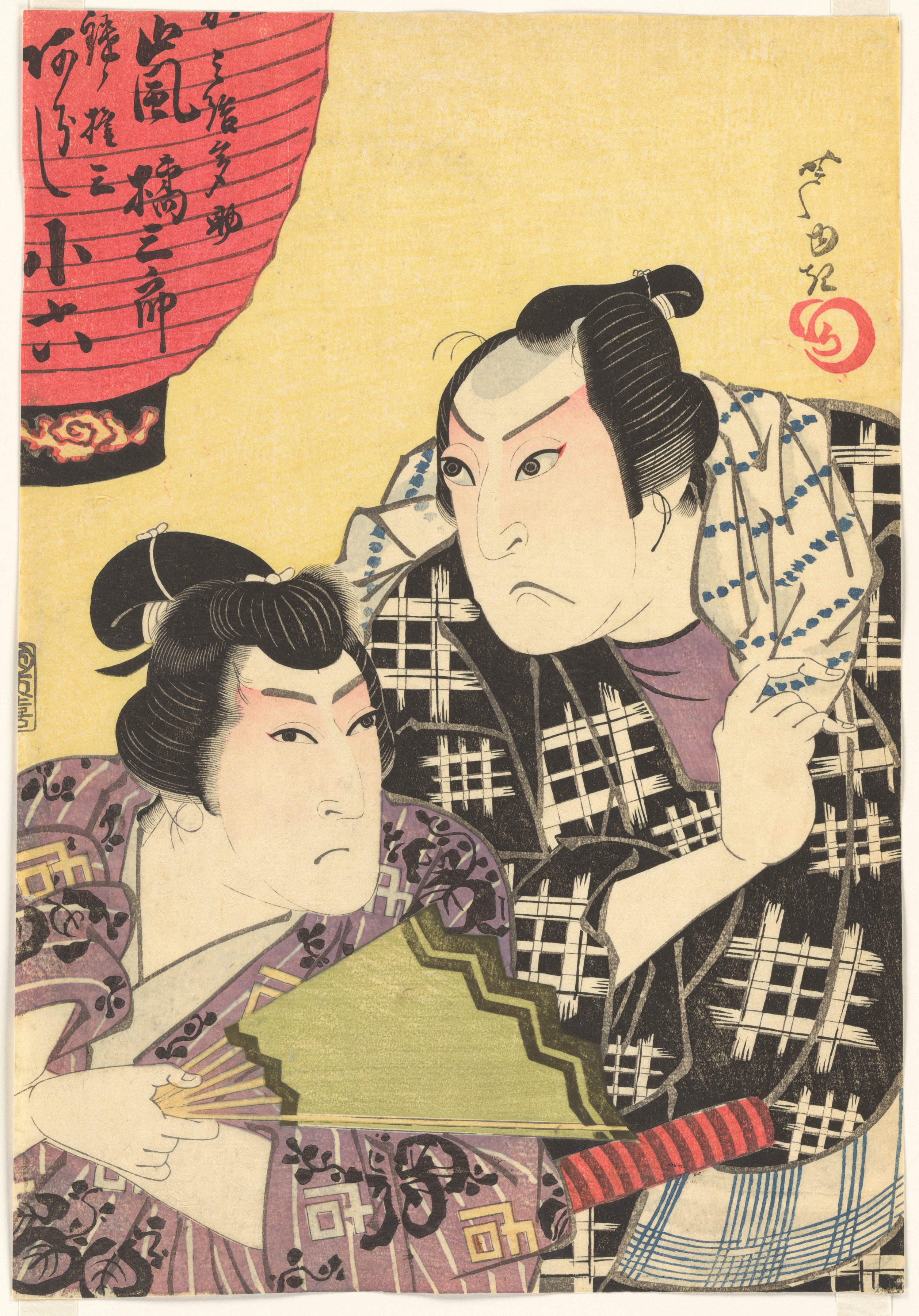
The Actors Arashi Kitsusaburō II as the Hairdresser Kamiyui Tasuke, and Arashi Koroku IV as Gonza the Lancer (Yari no Gonza)
1824
Woodblock print (nishiki-e); ink and color on paper; vertical ōban

The actors Otani Tomoemon II (right) and Arashi Kitsusaburo II as Miura Matazo
1825
Color woodblock print
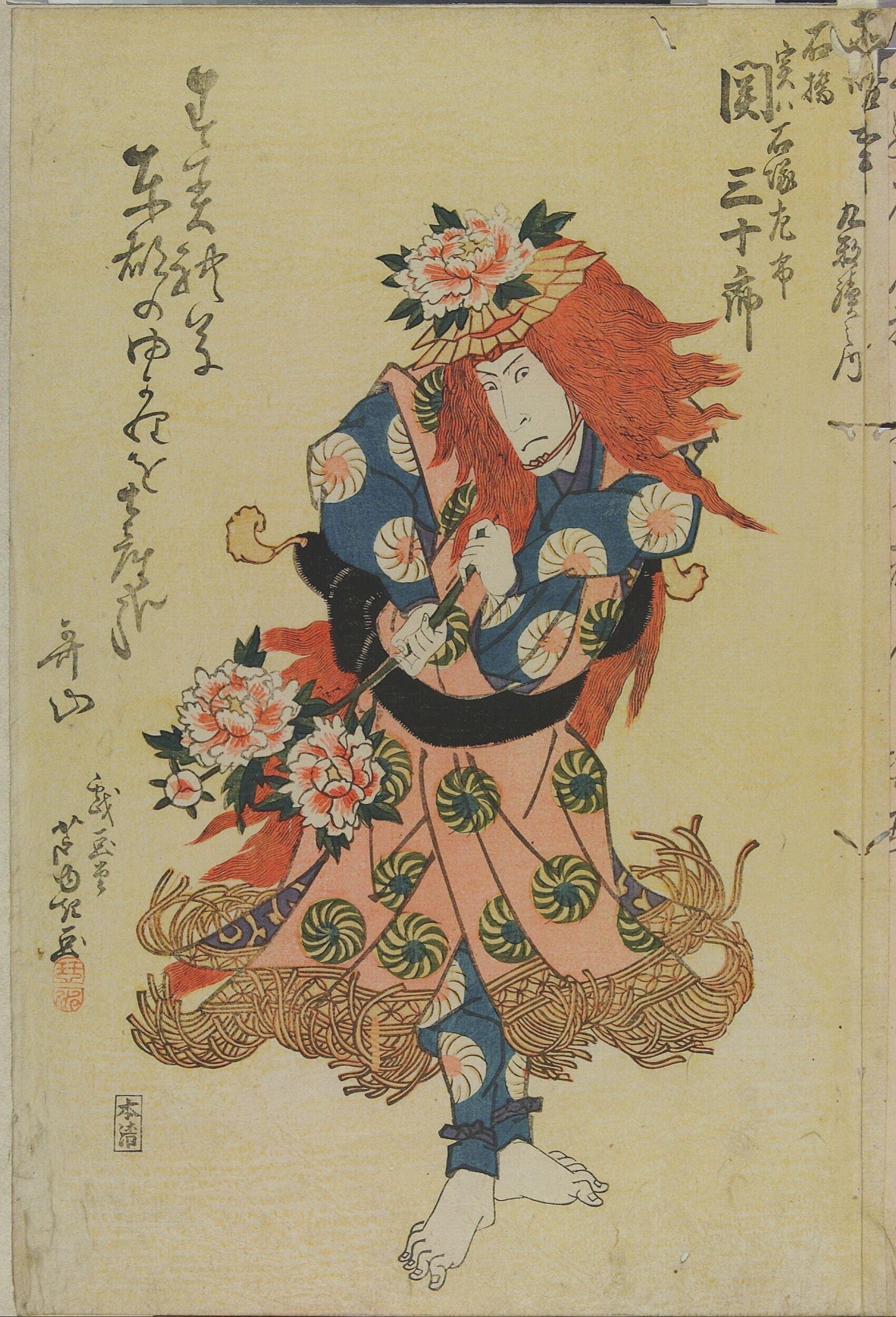
Nakamura Shikan II (Shakkyō, actually Satake Shinjūrō), Nakamura Utaemon III (Shakkyō, actually Ōbuchi Hidemaru), Seki Sanjūrō II (Shakkyō, actually Ishizuka Saichi)
1827
Woodblock print; ōban format, nishiki-e
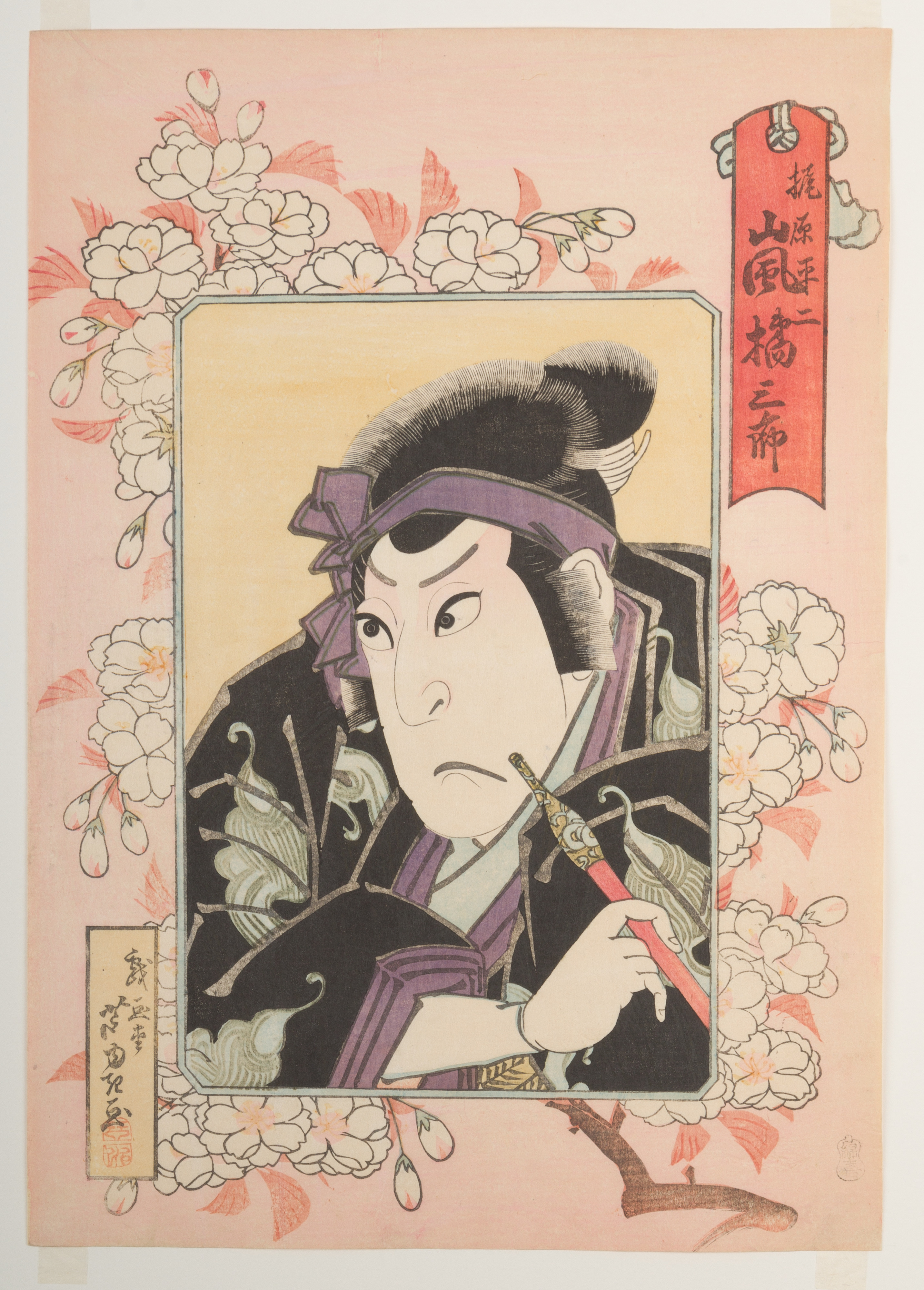
Kabuki Actor Arashi Kitsusaburō II as Kajiwara Heiji, in the play Hiragana seisuiki (Records of the Battles between the Minamoto and Taira Clans in the Japanese Syllabary)
1827
Woodblock print; ink and color on paper
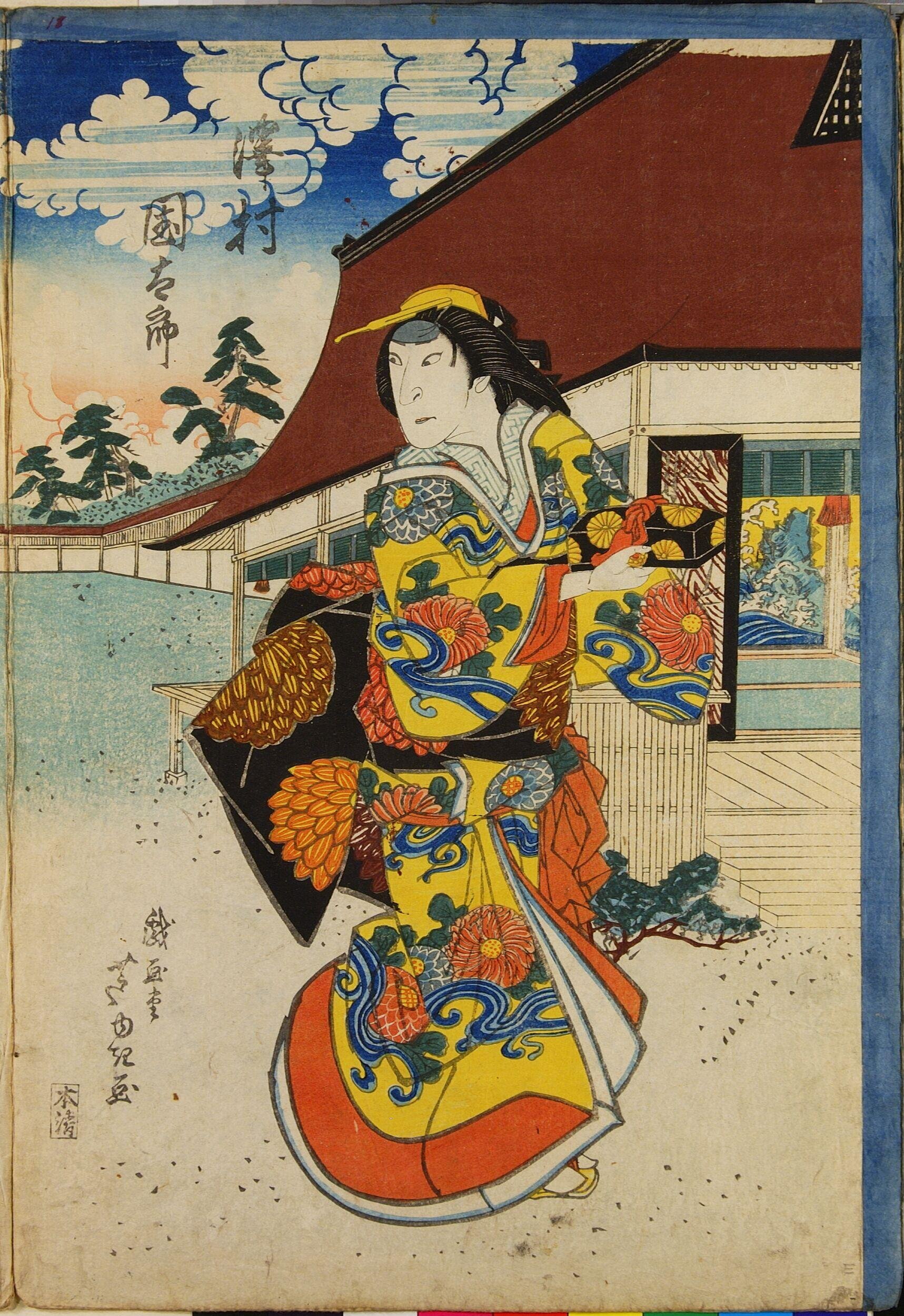
Actors Sawamura Kunitarō II, Arashi Rikan II and Nakamura Matsue III
1829
Woodblock print on paper, in album; ōban format, nishiki-e
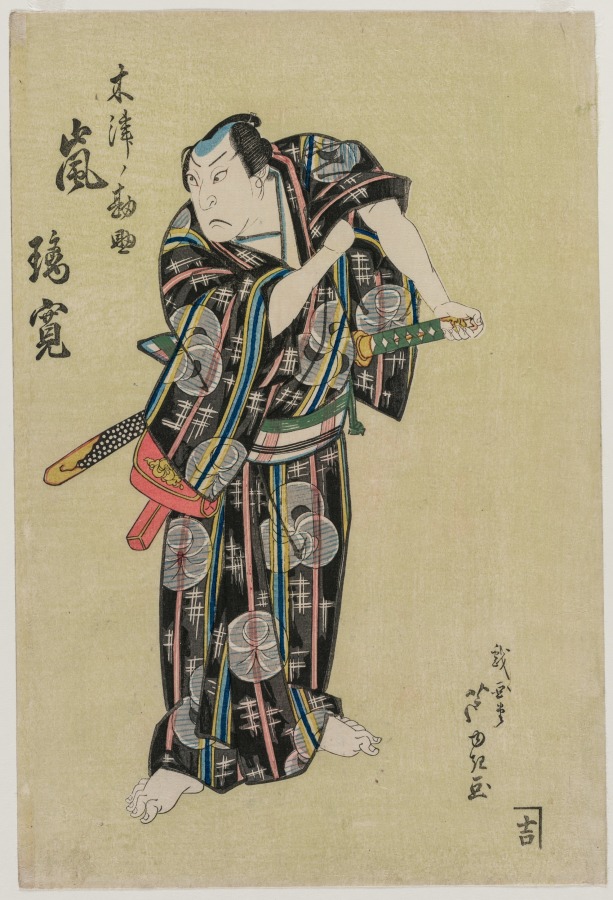
Arashi Rikan II as Kizu Kansuke
1829
color woodblock print
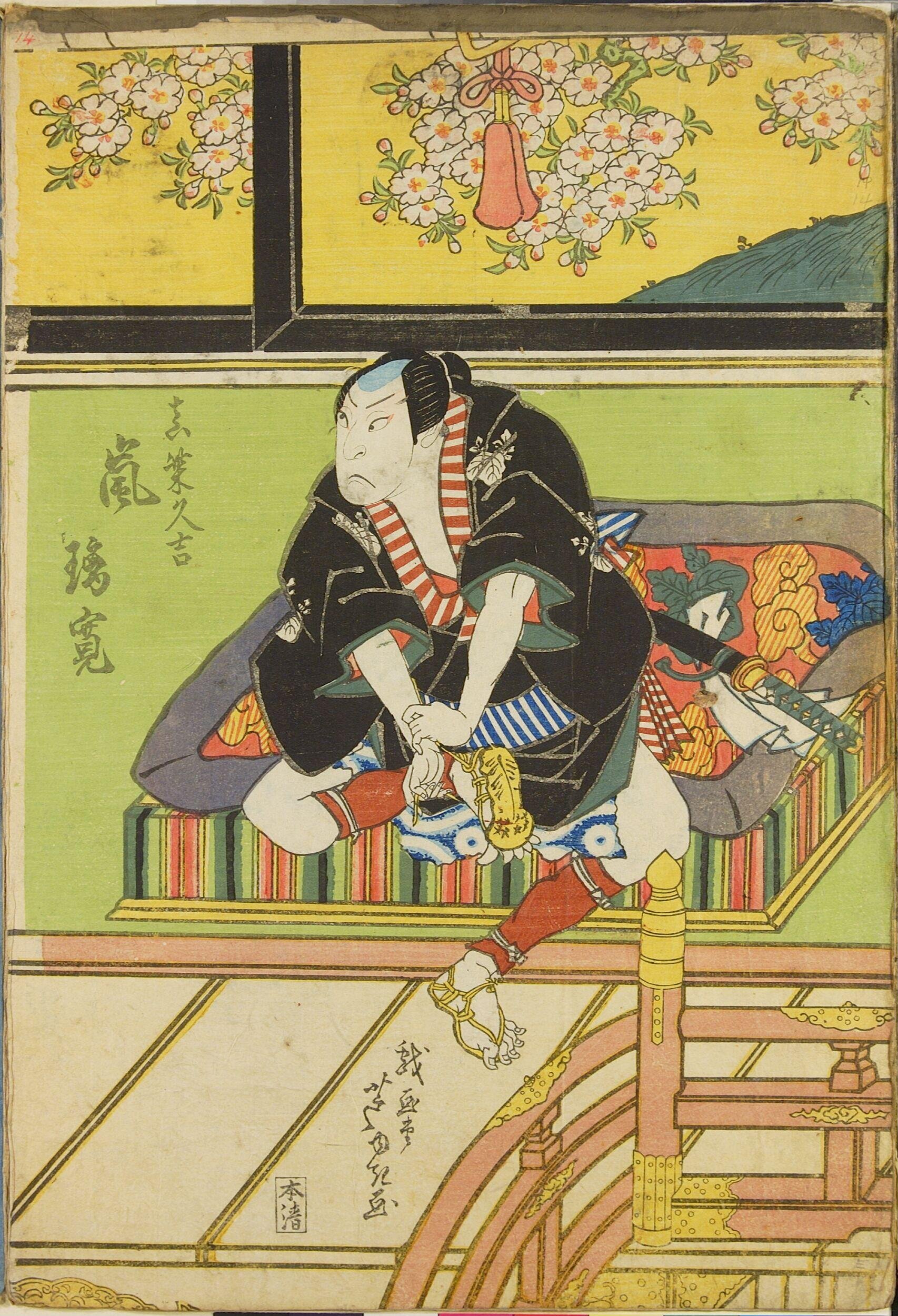
Actor Arashi Rikan as Mashiba Hisayoshi
ca. 1830
Woodblock print on paper in album; ōban format, nishiki-e

Arashi Rikan II as Miyamoto Musashi
1832
Woodblock print (nishiki-e); vertical ōban