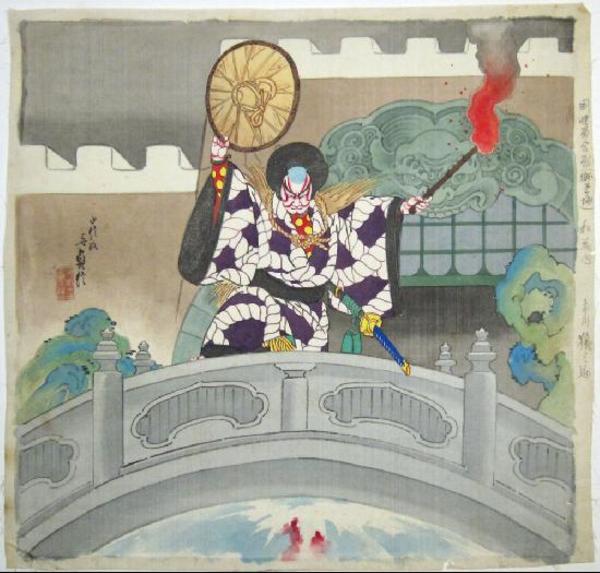
Watonai
- Medium:
- Color woodblock print
- Source:
- ukiyo-e.org
Description
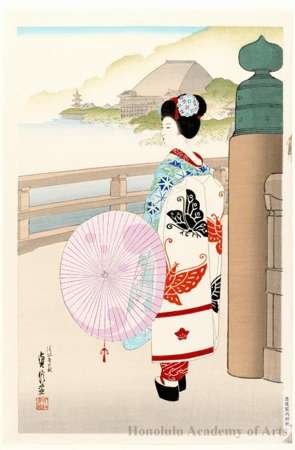
Watonai is an undated Taishō or early Shōwa print by Hasegawa Sadanobu III (1881-1963), preserved on ukiyo-e.org via the Japanese Art Open Database (https://ukiyo-e.org/image/jaodb/Sadanobu_3_Hasegawa-No_Series-Watonai-00042482-100830-F06). The subject is Watōnai, the half-Japanese, half-Chinese hero of Chikamatsu Monzaemon's 1715 jōruri masterpiece Kokusen'ya kassen (The Battles of Coxinga), one of the foundational works of the Osaka-Kyoto puppet theatre — written for the Takemoto-za, where it ran an unprecedented seventeen-month opening engagement, immediately adapted for the kabuki stage, and circulating thereafter through both bunraku and kabuki as one of the most enduring properties in the Kamigata theatrical repertoire. Watōnai is loosely modeled on the historical Ming-loyalist warlord Zheng Chenggong (Koxinga); Chikamatsu's play recasts him as a heroic figure whose famous Bamboo Forest Scene, in which Watōnai subdues a tiger with the talismanic image of the Ise Shrine, became one of the great pictorial subjects of late-ukiyo-e theatrical prints. As third head of the Hasegawa Osaka-Kyoto ukiyo-e house, Sadanobu III worked squarely in that Kamigata tradition; the Watōnai print issued from the workshop carries forward a subject that had been central to Osaka theatrical printmaking since Chikamatsu's own day. The single-figure format isolates the hero against a plain ground in the workshop's typical clean late-Hasegawa manner, costume and pose marking the figure as Watōnai and visually echoing the codified stage iconography that Kamigata audiences would have recognized immediately from contemporary bunraku and kabuki productions. The ukiyo-e.org record carries the sheet as a Sadanobu III print without museum-level cataloguing, but the subject's Kamigata provenance and its place in the Hasegawa workshop's theatrical product line are unambiguous.
More Prints by Hasegawa Sadanobu III
Featured in Collections
Curated cross-cuts that include this print.
Frequently Asked Questions
Watonai was created by Hasegawa Sadanobu III (長谷川貞信三世).