
Lion (folding screen)
獅子図屏風
- Date:
- 1915
- Medium:
- Folding screen; ink and color on paper
- Source:
- Wikimedia Commons
Description
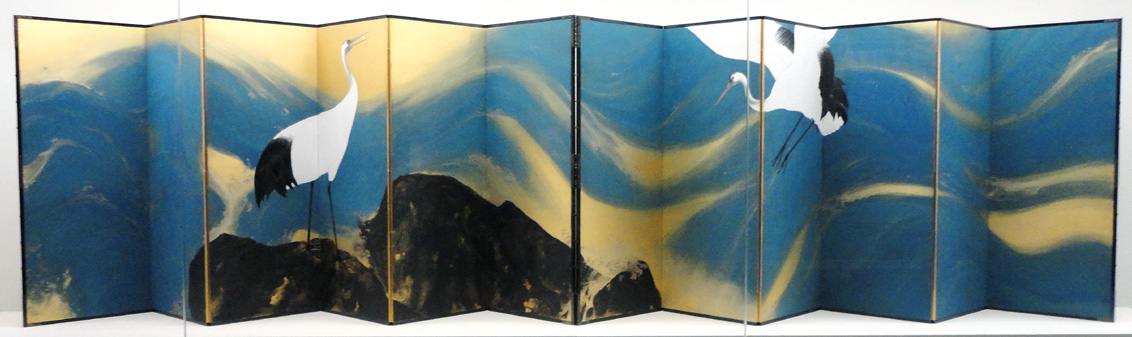
Lion (獅子図屏風) is a 1915 folding screen by Hirafuku Hyakusui in ink and color on paper, depicting a lion — a subject not native to Japan but absorbed into Japanese painting through Chinese painting and Buddhist iconography, and a standard test of a senior nihonga painter's ability to combine close observation with the symbolic grandeur appropriate to the screen format. The work belongs to a 1915 watershed in Hyakusui's career, the year before his co-founding of the Kinreisha exhibition society (1916) with Yūki Somei and Kaburaki Kiyokata and four years before his trip to study European painting collections in 1922. His treatment of the lion is restrained: rather than the stylized roaring lion of Edo-period Kanō-school screens, Hyakusui draws on the Maruyama-Shijō tradition of close zoological observation he had inherited from his father Hirafuku Suian and his Tokyo School of Fine Arts teacher Kawabata Gyokushō, producing a more naturalistic figure that nevertheless retains the symbolic weight of the lion in East Asian decorative tradition. The 1915 screen demonstrates Hyakusui's confident command of the large decorative format in his late thirties and prefigures the larger byōbu works he would produce in the 1920s, including the Cranes screens and the Oak Trees of 1928.
More Prints by Hirafuku Hyakusui


Frequently Asked Questions
Lion (folding screen) (獅子図屏風) was created by Hirafuku Hyakusui (平福百穂) in 1915.