
Oak Trees
槲樹
- Date:
- 1928
- Medium:
- Pair of six-fold screens; color on paper
Description
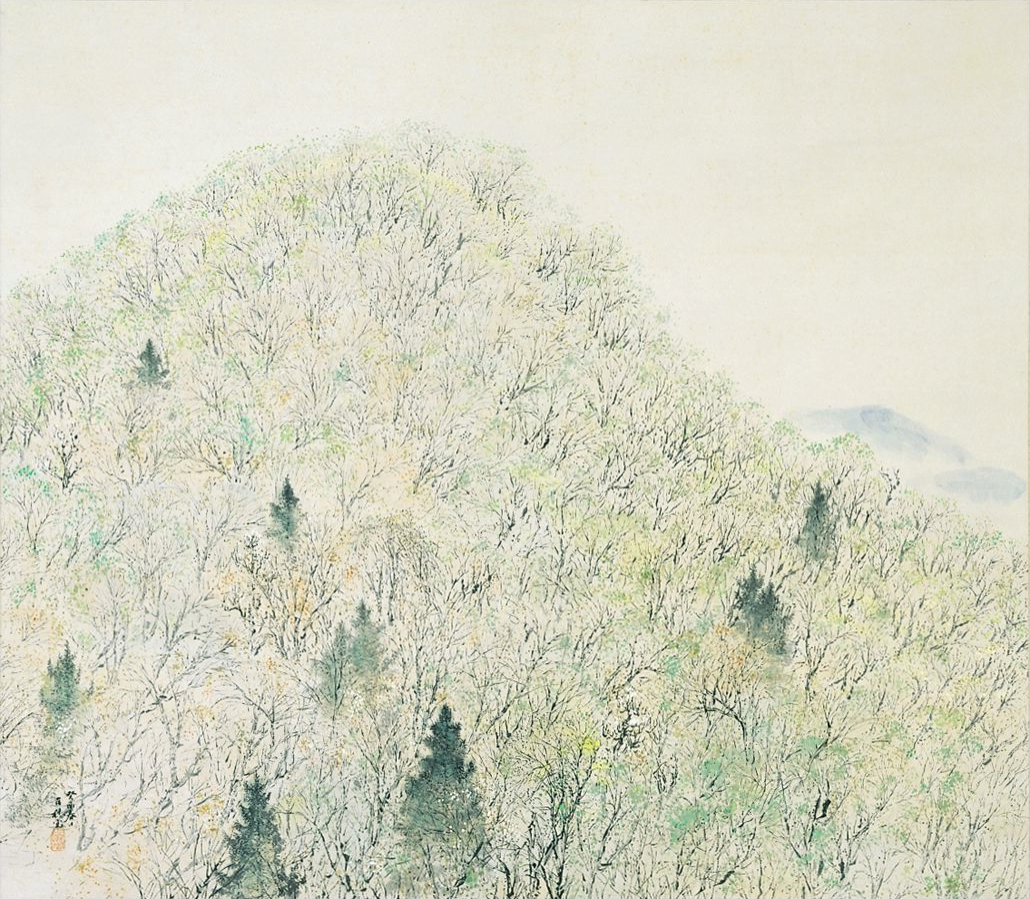
Oak Trees (槲樹, kashiwa) is a pair of six-fold folding screens by Hirafuku Hyakusui in color on paper, dated 1928, and held by the Museum of the Imperial Collections (Sannomaru Shōzōkan) in Tokyo — the museum that holds works inherited from the Imperial Household. The work depicts oak trees rendered at architectural scale across the twelve combined panels, in the formal byōbu format that had been a central showcase format for Japanese painting since the Muromachi period. Painted in the year before Hyakusui's appointment as a professor at the Tokyo School of Fine Arts (1929) and two years before his election to the Imperial Art Academy (1930), the screens belong to the period of his greatest institutional standing and represent a confident late statement of his command of the large decorative formats. The handling of trunk, branch, and leaf reflects the Maruyama-Shijō discipline of observation that Hyakusui had inherited from his father Hirafuku Suian and his teacher Kawabata Gyokushō, while the deployment of close observation at large scale across paired screens shows the influence of late Edo and Meiji predecessors such as Mori Sosen and Maruyama Ōkyo himself. The Oak Trees is among the most important Hyakusui works in an imperial collection and an essential reference for understanding his late screen painting.
More Prints by Hirafuku Hyakusui


Frequently Asked Questions
Oak Trees (槲樹) was created by Hirafuku Hyakusui (平福百穂) in 1928.