
Hydrangeas
紫陽花
- Date:
- c. 1902
- Medium:
- Color on silk
- Source:
- Google Art Project
Description
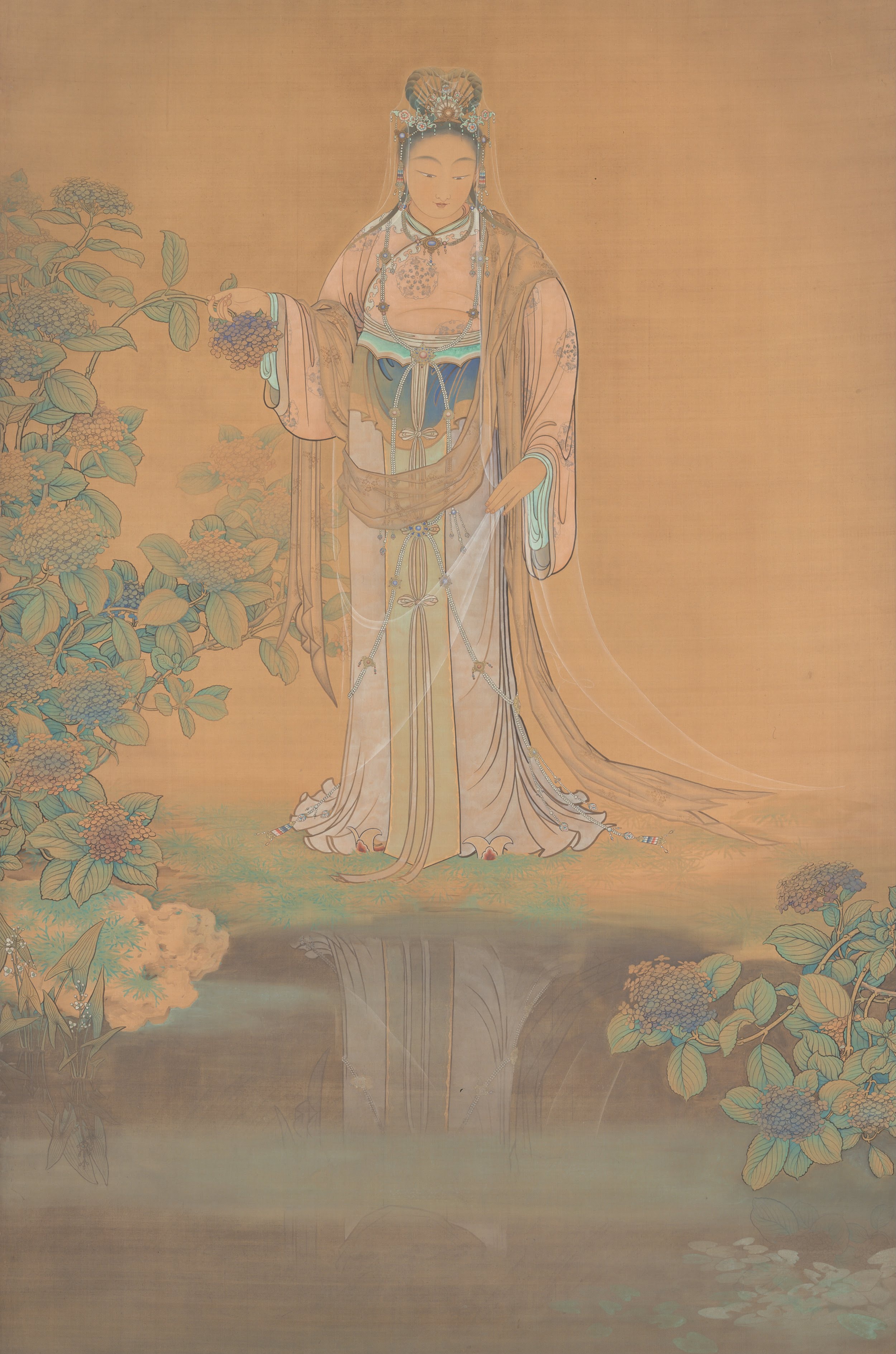
Painted around 1902, Hydrangeas (Ajisai) is an intimate study of the flowering hydrangea in late spring, executed in color on silk in the horizontally extended format Hishida Shunsō often favored for botanical and seasonal subjects. The composition concentrates on a single mature hydrangea bush, its broad lobed leaves and pale-blue and lilac flower heads filling the picture surface in a loose all-over distribution that recalls both the close-observation tradition of Edo-period kachō-e (bird-and-flower painting) and the cropped, intimate frame favored by contemporary European Impressionists. The hydrangea blossoms are constructed from the layered atmospheric washes of the mōrō-tai technique, their delicate gradations of color from rose-pink at the center to cool blue-violet at the periphery built up through transparent overlays of pigment rather than through outlined drawing. The work is significant as one of Hishida's relatively early experiments in the mōrō-tai vocabulary applied to a traditional Japanese flower subject, demonstrating that the new atmospheric technique could be deployed not only for the larger compositional ambitions of figure and landscape painting but also for the intimate close-observation tradition of plant studies. The painting is widely circulated in twentieth-century reproductions and was photographed for the Google Art Project from a Japanese collection.
More Prints by Hishida Shunsō


Frequently Asked Questions
Hydrangeas (紫陽花) was created by Hishida Shunsō (菱田春草) in c. 1902.