- Date:
- early 18th century (1700–1733)
- Medium:
- Monochrome woodblock print (sumie); ink on paper
- Source:
- Metropolitan Museum of Art
Description
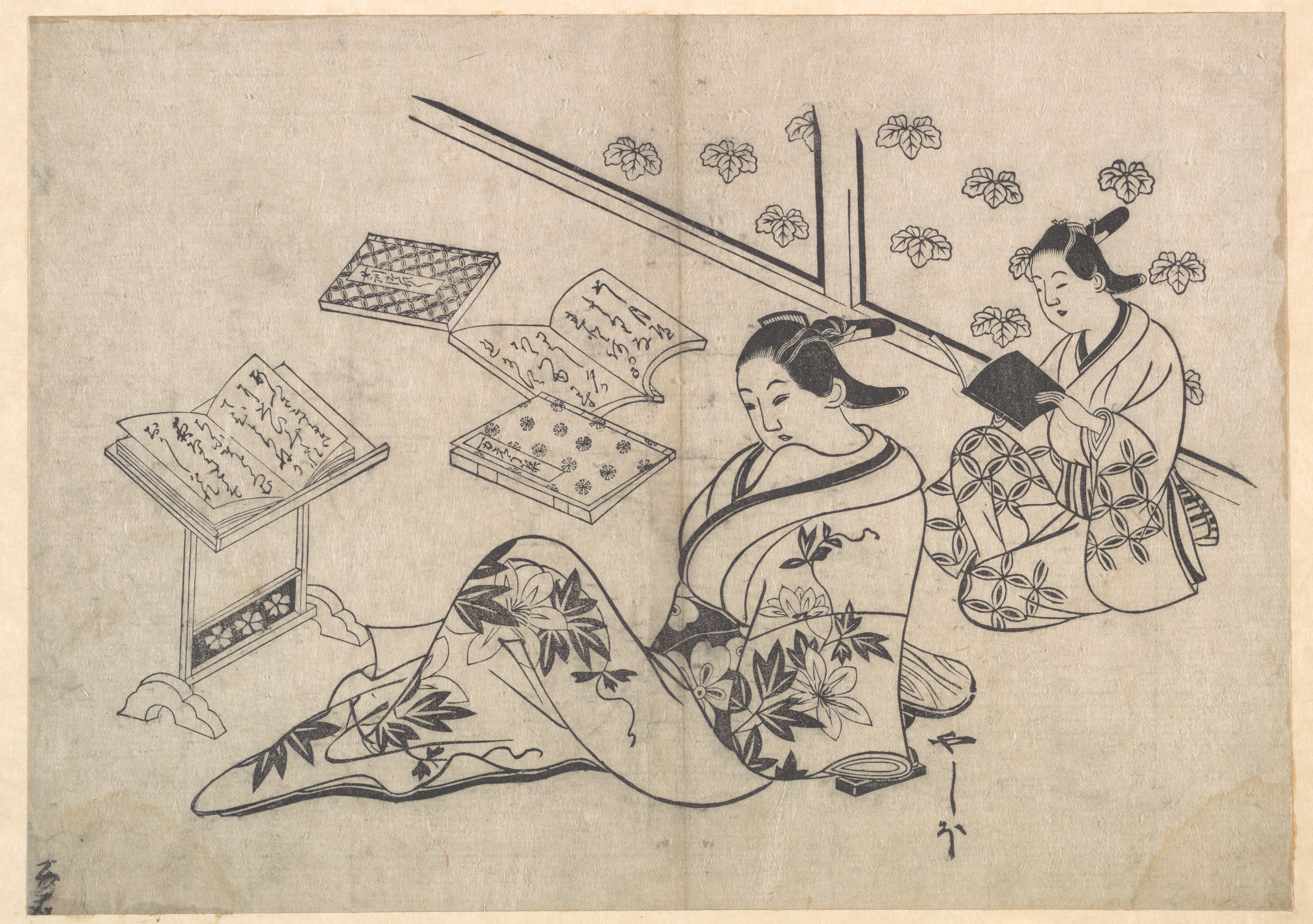
Held in the Metropolitan Museum of Art and dated to the early eighteenth century (1700-1733), this untitled sumie monochrome woodblock print, measuring approximately 24 by 35 centimeters, exemplifies Hishikawa Morofusa's mature command of the Hishikawa-school linear style in the years after his father's 1694 death. Printed in ink on paper using the sumizuri-e single-block technique that remained the dominant Edo print mode through the early eighteenth century, the work demonstrates the confident contour drawing and dense kimono patterning that Morofusa inherited and faithfully maintained from Moronobu's late-career style. The print's modest horizontal proportions and intimate subject matter situate it within the broader Hishikawa-school tradition of genre and figural scenes intended for direct purchase and private viewing, the very category of single-sheet print that Moronobu had pioneered a generation earlier and that Morofusa was now carrying forward as the senior heir of the workshop. The work's acquisition by the Metropolitan Museum (accession JP2642) reflects the long-standing scholarly interest in early Hishikawa-school production and the recognition that artists like Morofusa, working in the immediate generation after the founder of single-sheet ukiyo-e, played an essential role in transmitting the genre's foundational conventions into the eighteenth century. The print is one of relatively few works attributed to Morofusa in major Western museum collections, making it an important document of his independent practice during the late Genroku and early Kyōhō cultural reigns when the Hishikawa school was being gradually superseded by the rising Torii, Kaigetsudō, and Okumura ateliers.
Frequently Asked Questions
Print was created by Hishikawa Morofusa (菱川師房) in early 18th century (1700–1733).