
Geisha with umbrella neas Pagoda
- Source:
- ukiyo-e.org
Description
This Japanese woodblock print by Hodo Nishimura, 'Geisha with umbrella near Pagoda,' is documented in the Saito Hodo No Series through the Japanese Art Open Database as aggregated on ukiyo-e.org. The composition combines two heavily worked elements of shin-hanga iconography: the geisha, the trained female performer of Kyoto and other historical entertainment districts, and the pagoda, a multi-tiered Buddhist tower that functioned both as a sacred structure and as one of the most legible markers of Japanese urban skyline in prints aimed at overseas collectors. Pairing the figure with a paper or oiled-paper umbrella adds a further layer of conventional shin-hanga vocabulary, since umbrellas were used to signal weather, season, and the careful protection of the elaborate hairstyles and kimono that defined the geisha's professional appearance. Nishimura worked within the shin-hanga, or 'new prints,' movement, a twentieth-century revival of the collaborative ukiyo-e workshop system that combined the inherited specialization of designer, carver, printer, and publisher with subtly modernized rendering, including atmospheric backgrounds and bokashi gradations. The geisha-and-pagoda pairing aligns the print with a recognizable subgenre of mid-century shin-hanga that supplied a refined, slightly nostalgic vision of traditional Japan to Western buyers in the postwar decades. As a Japanese woodblock print preserved within the Saito Hodo No Series record, the sheet contributes to the documented corpus of Hodo Nishimura's authorized output.
More Prints by Nishimura Hodo
More Pagodas Prints

Frequently Asked Questions
Geisha with umbrella neas Pagoda was created by Nishimura Hodo (西村蒲堂).
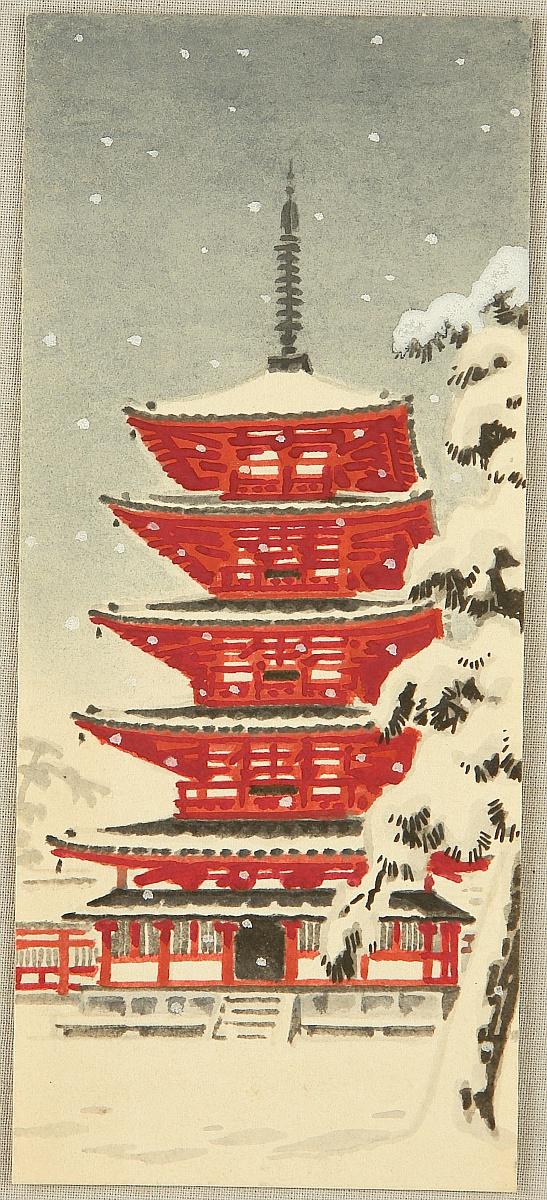
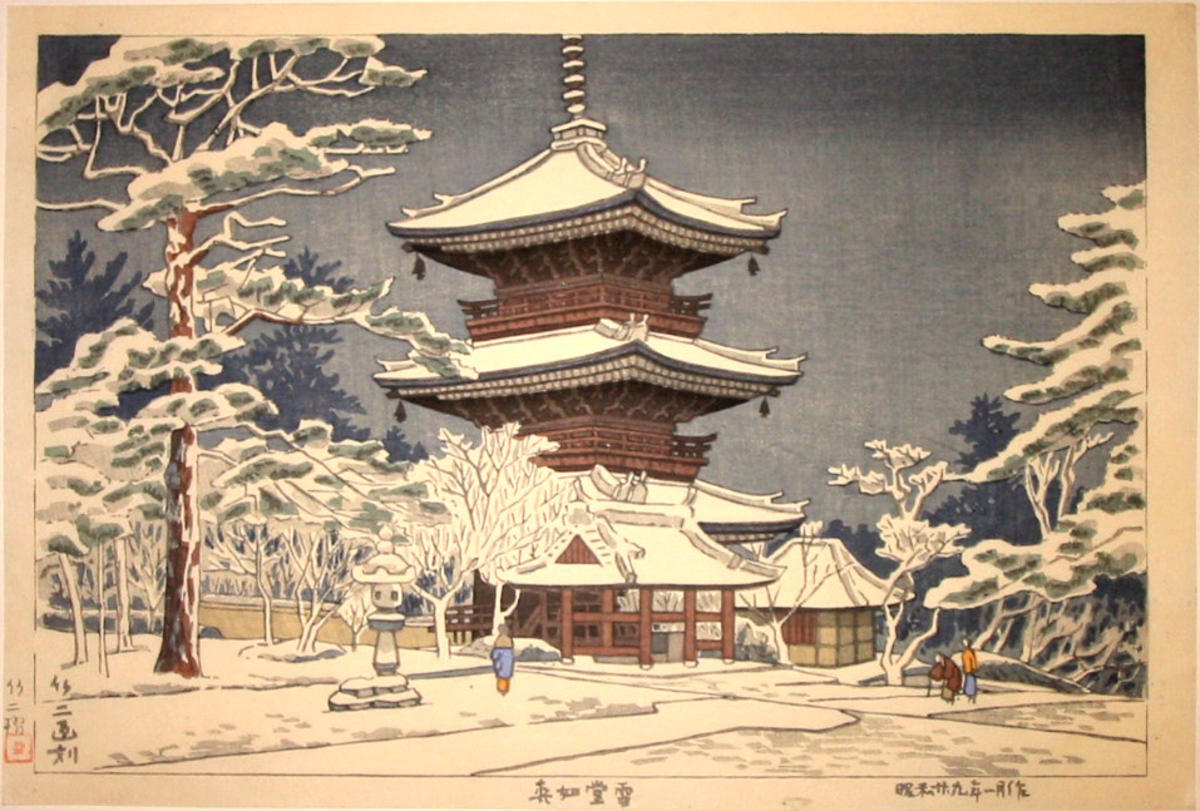
Geisha with umbrella neas Pagoda depicts pagodas.