
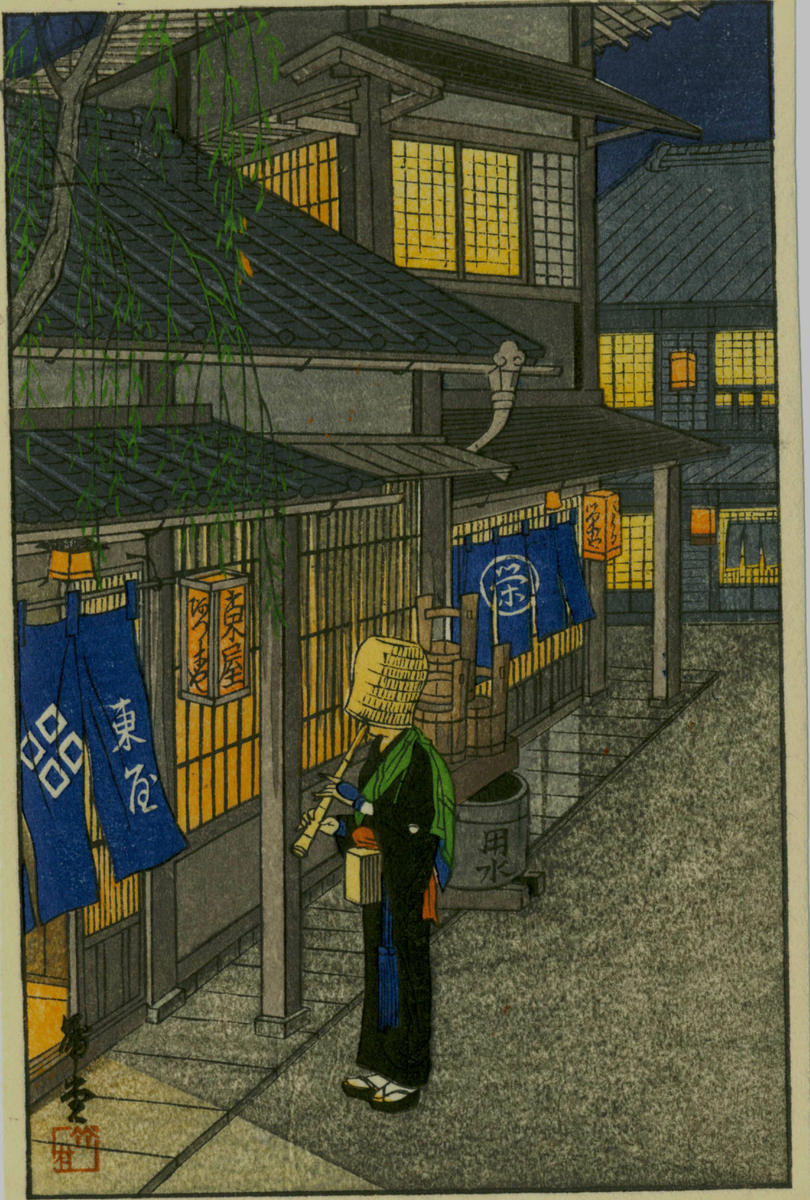
Gion in Kyoto (H)
- Source:
- ukiyo-e.org
Description
This Japanese woodblock print by Hodo Nishimura, 'Gion in Kyoto (H),' is held in the collection of the Metropolitan Museum of Art and accessible through the museum's online catalogue. Gion is the most famous geisha district in Kyoto, established in the medieval period to serve pilgrims approaching the Yasaka Shrine and later transformed into a hanamachi, or 'flower town,' housing teahouses, ryotei restaurants, and the okiya boarding houses where maiko and geiko trained and lived. Gion's wooden machiya facades, paper lanterns, and narrow streets have made it one of the most photographed and depicted neighborhoods in Japan, and shin-hanga printmakers returned to it repeatedly throughout the twentieth century. Nishimura was active within the shin-hanga movement, which combined the inherited collaborative workshop structure of ukiyo-e with subtly modernized rendering, particularly the use of softer color gradations and an attention to specific weather and light effects that earlier ukiyo-e tended to suppress. The Metropolitan Museum holds an extensive collection of Japanese prints, anchored by major nineteenth- and twentieth-century acquisitions, and its preservation of this Hodo Nishimura print sustains the visibility of an artist whose work has historically circulated more through dealers and private collectors than through scholarly publication. As a Japanese woodblock print of Gion, the sheet exemplifies the shin-hanga commitment to documenting traditional urban environments at a moment when postwar redevelopment was beginning to transform Japanese cities at unprecedented speed.
More Prints by Nishimura Hodo
Frequently Asked Questions
Gion in Kyoto (H) was created by Nishimura Hodo (西村蒲堂).