
Old man
- Source:
- ukiyo-e.org
Description
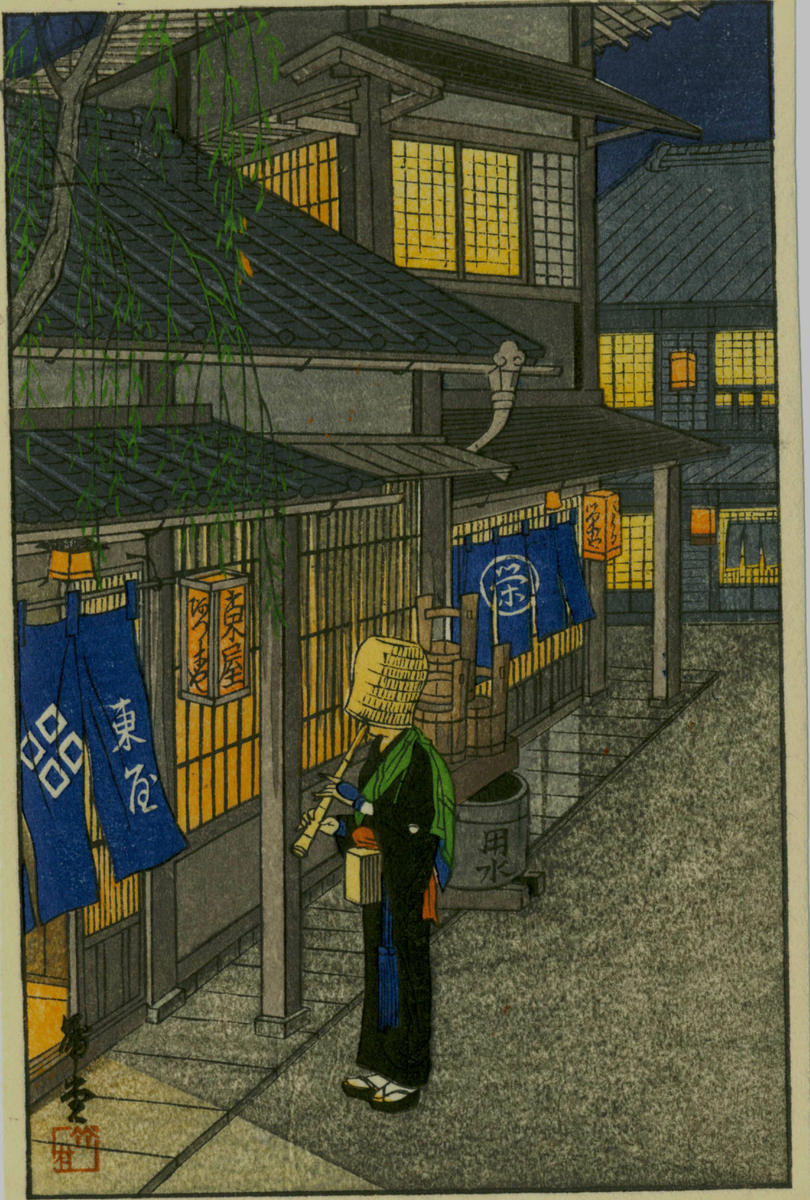
This Japanese woodblock print by Hodo Nishimura, titled 'Old man,' is part of the artist's body of work issued through the Saito Hodo No Series, a publishing program that distributed his prints internationally during the mid-twentieth century. The image is preserved through ukiyo-e.org's aggregated archive, drawing on the Japanese Art Open Database. Nishimura worked within the shin-hanga tradition, the 'new prints' movement that emerged in early twentieth-century Japan as a collaborative revival of the classical ukiyo-e production system in which designer, carver, printer, and publisher each contributed specialized labor to a single finished sheet. Shin-hanga artists like Nishimura distinguished their work from earlier ukiyo-e by introducing Western pictorial conventions, particularly modeled light and atmospheric perspective, while retaining traditional pigments, washi paper, and hand-burnishing techniques. The depiction of an elderly man fits a recurring shin-hanga interest in everyday human types: rather than the historical actors and famous beauties that dominated nineteenth-century ukiyo-e, twentieth-century shin-hanga printmakers turned toward intimate genre subjects that could appeal to collectors curious about contemporary Japanese life. Hodo Nishimura's prints are sometimes catalogued under variant readings of his name, reflecting the unsettled transliteration conventions of the period when these sheets first reached overseas markets. As with many shin-hanga prints, the sheet would have been issued in modest editions through small-scale Kyoto and Tokyo publishers, and surviving examples are now scattered across institutional and private collections. This Japanese woodblock print represents the quieter, character-study side of Nishimura's output, complementing his better-known scenes of geisha, gardens, and seasonal landscapes that defined the broader shin-hanga aesthetic of refined nostalgia.
More Prints by Nishimura Hodo
Frequently Asked Questions
Old man was created by Nishimura Hodo (西村蒲堂).