
Asakusa Kanon
by Inoue Yasuji
- Source:
- ukiyo-e.org
Description
Asakusa Kanon is a Meiji-era woodblock print by Inoue Yasuji depicting the famous Sensoji temple precinct in Tokyo's Asakusa district. As one of Inoue Yasuji's signature subjects within his broader catalogue of Meiji prints, this composition extends the artist's deep engagement with the Tokyo Famous Places (Tokyo meisho) tradition, in which Edo-era place pictures were updated to reflect the evolving capital under the new imperial order. Inoue Yasuji studied under Kobayashi Kiyochika and is closely identified with the kosen-ga (light-ray pictures) movement, a Meiji innovation that fused Western perspectival space, atmospheric chiaroscuro, and gradated bokashi printing with the traditional ukiyo-e format. In Asakusa Kanon the artist directs attention to the Kannon hall (Kanon-do) that gave the temple its popular name, organizing pilgrims, lanterns, and architectural mass into a balanced view that locates the visitor at street level rather than above it. The print belongs to the era when Asakusa was being transformed by gas lighting, the new Sixth District (Rokku) entertainment quarter, and an increasingly diverse mix of devout worshippers and modern sightseers, and Inoue Yasuji's understated palette registers that crowded coexistence without resorting to spectacle. As preserved on the ukiyo-e.org reference database, this impression continues to serve scholars and collectors interested in how Meiji prints translated familiar Edo landmarks into the visual language of the new capital. For studies of late nineteenth-century cityscape printmaking and of Inoue Yasuji's role as Kiyochika's most accomplished pupil, Asakusa Kanon remains an instructive example of how kosen-ga rendered a sacred site as part of a modernizing urban fabric.
More Prints by Inoue Yasuji

The Emperor Meiji and Empress in a Carriage during their Silver Wedding Anniversary Celebration at Aoyama
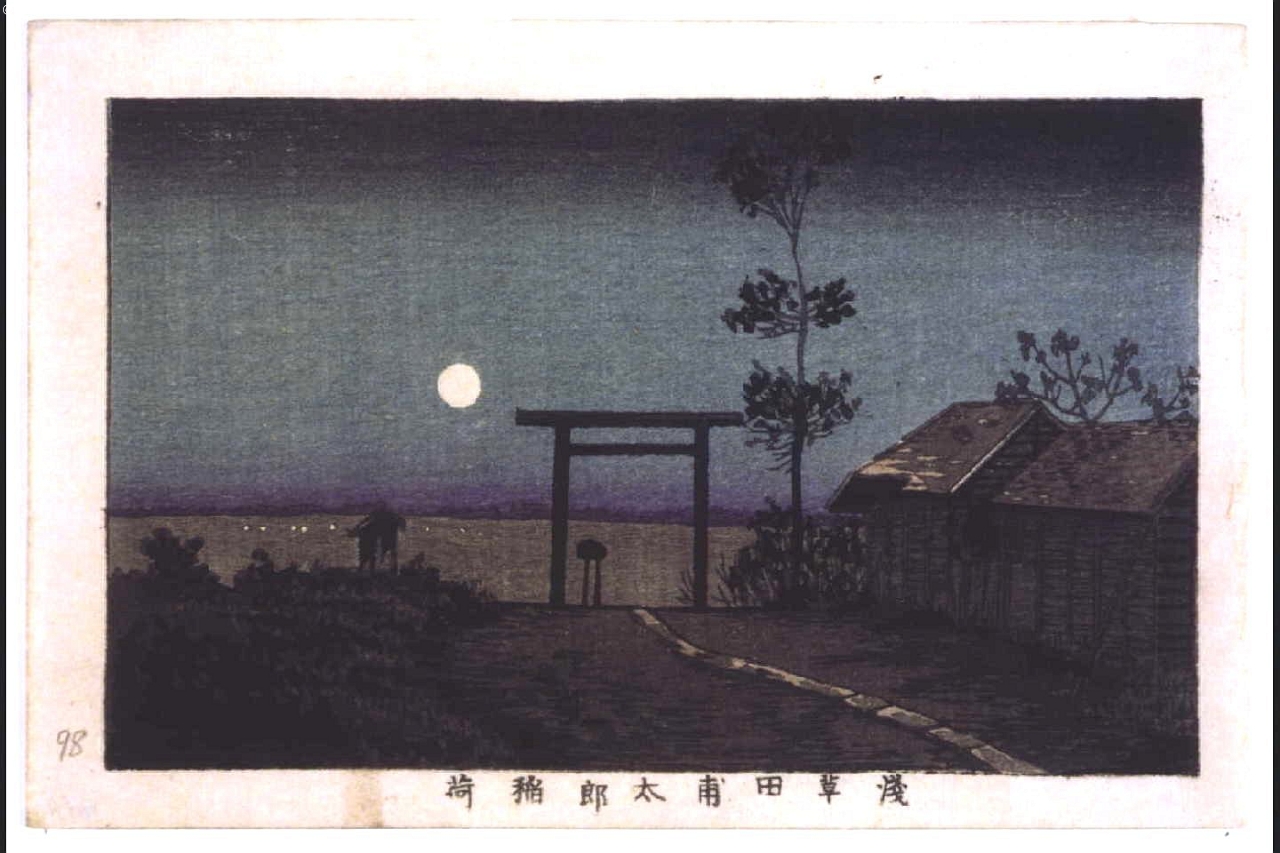
True Pictures of Famous Places in Tokyo: Taro Inari Shrine in Asakusa-tanbo
Woodblock print
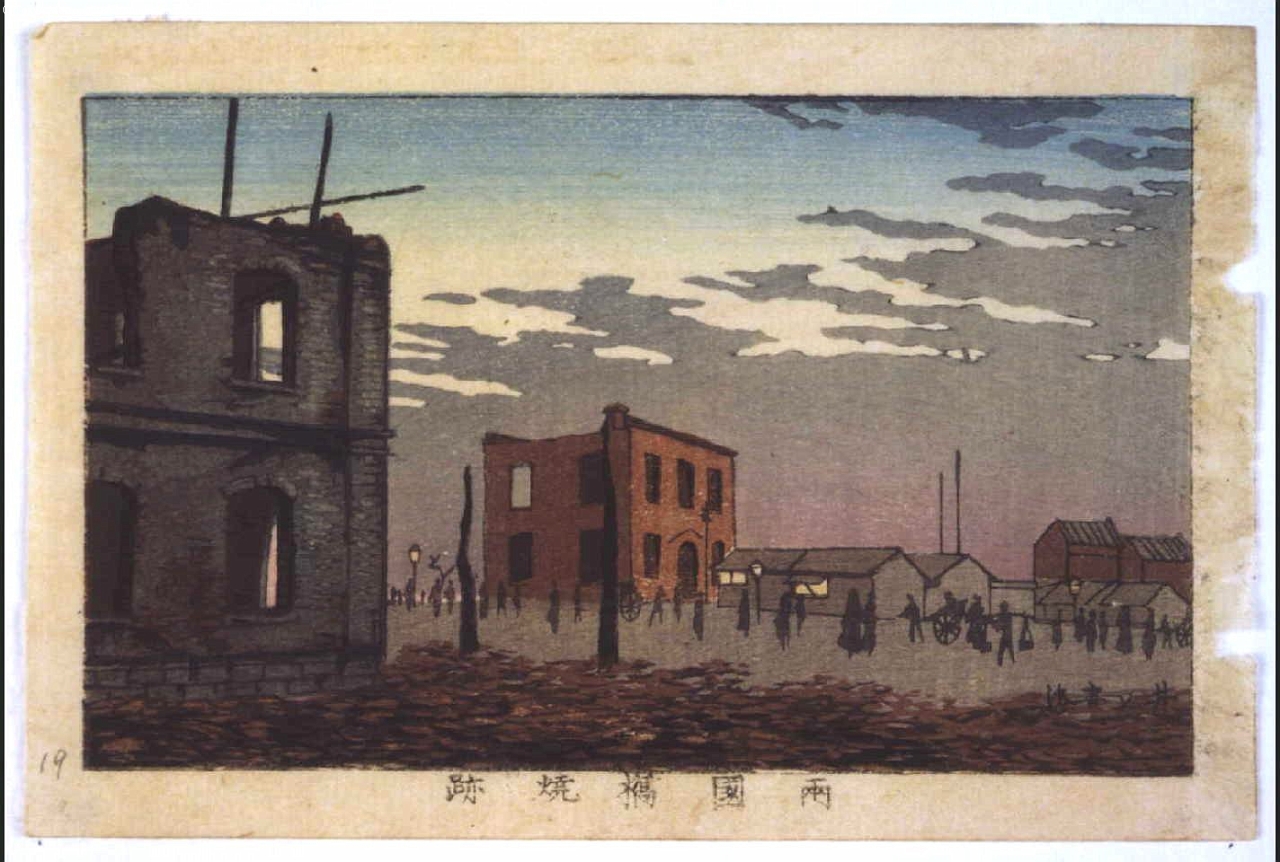
True Pictures of Famous Places in Tokyo: The Burnt Remains of Ryogokubashi Bridge
Woodblock print
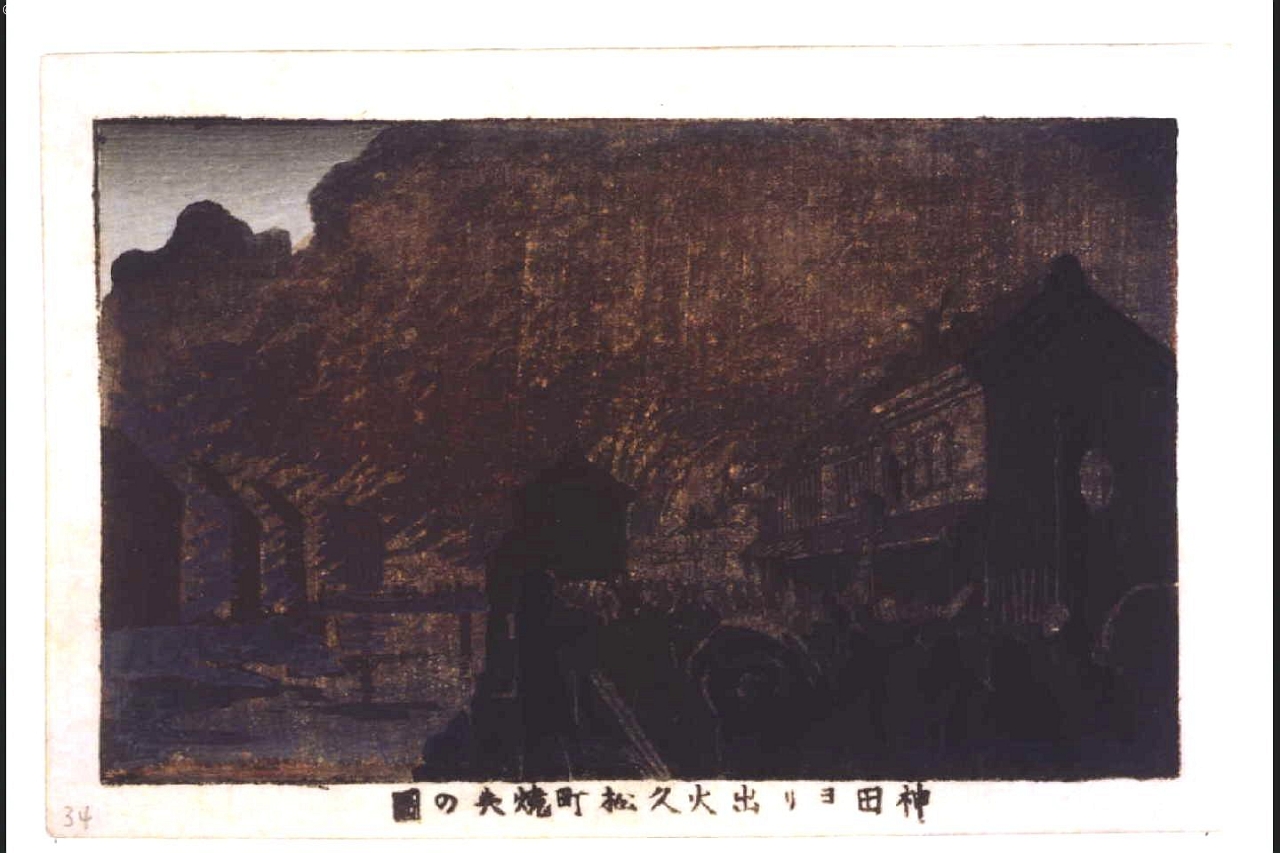
True Pictures of Famous Places in Tokyo: The Destruction of Hisamatsucho in a Fire that Started in Kanda
Woodblock print
Frequently Asked Questions
Asakusa Kanon was created by Inoue Yasuji (井上安治).