
Koume Happyaku Matsu
by Inoue Yasuji
- Source:
- ukiyo-e.org
Description
Koume Happyaku Matsu is a landscape print by Inoue Yasuji centered on the famous Eight Hundred Pines of Koume, a long-established meisho in the Koume district east of the Sumida River. Edo-period guidebooks had already canonized the stand of pines, and the subject offered Meiji-era artists a chance to register continuity with the older meisho tradition while applying their newer kosen-ga technique. Inoue Yasuji, the most accomplished pupil of Kobayashi Kiyochika, arranges the pines in a deep middle ground, with a foreground path, scattered figures, and a quiet horizon that frames the trees as a continuous dark mass against a graded sky. The bokashi work in the upper sheet and along the field reads as both atmospheric description and as deliberate citation of earlier Edo prints, while the controlled keyblock keeps the pines themselves legible as individual silhouettes. Although Koume Happyaku Matsu is not part of the formal Tokyo Famous Places series, it functions as part of Inoue Yasuji's broader meisho project and offers a useful contrast to his more urban cityscapes. The ukiyo-e.org archive preserves this impression, where it stands as evidence of how Meiji prints could revisit traditional landscape sites through the disciplined tonal vocabulary of kosen-ga without lapsing into pastiche. For collectors tracing the dialogue between Edo place-pictures and late nineteenth-century woodblock landscape, the design is an especially clear case study.
More Prints by Inoue Yasuji

The Emperor Meiji and Empress in a Carriage during their Silver Wedding Anniversary Celebration at Aoyama
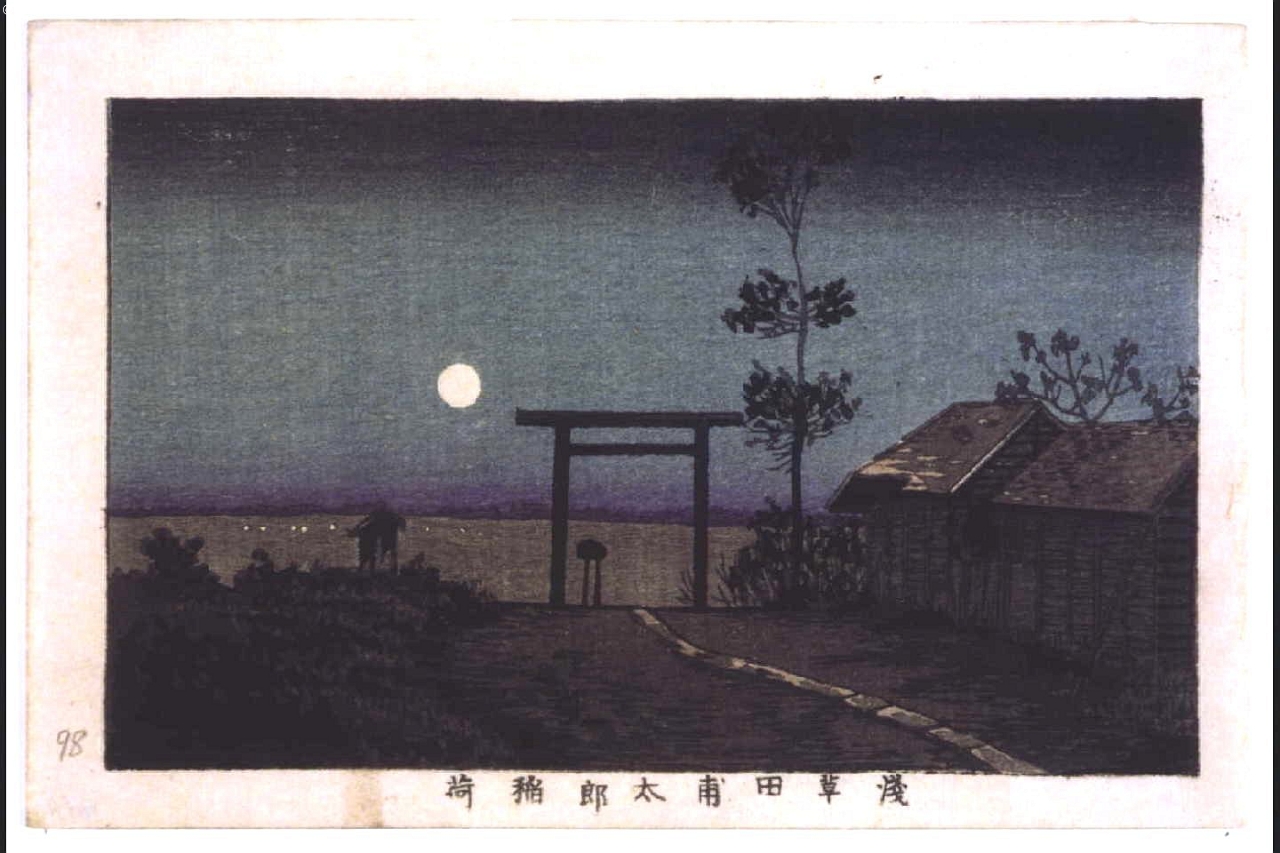
True Pictures of Famous Places in Tokyo: Taro Inari Shrine in Asakusa-tanbo
Woodblock print
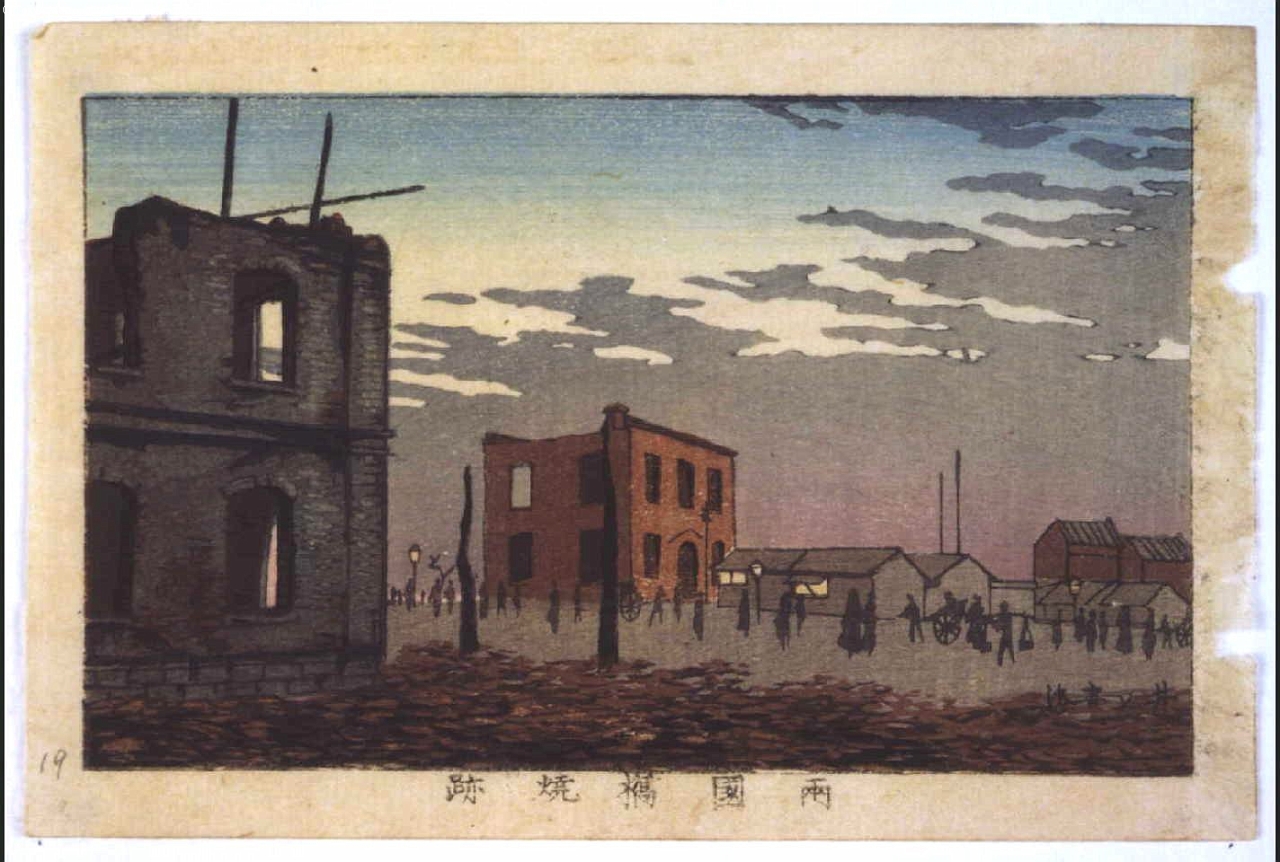
True Pictures of Famous Places in Tokyo: The Burnt Remains of Ryogokubashi Bridge
Woodblock print
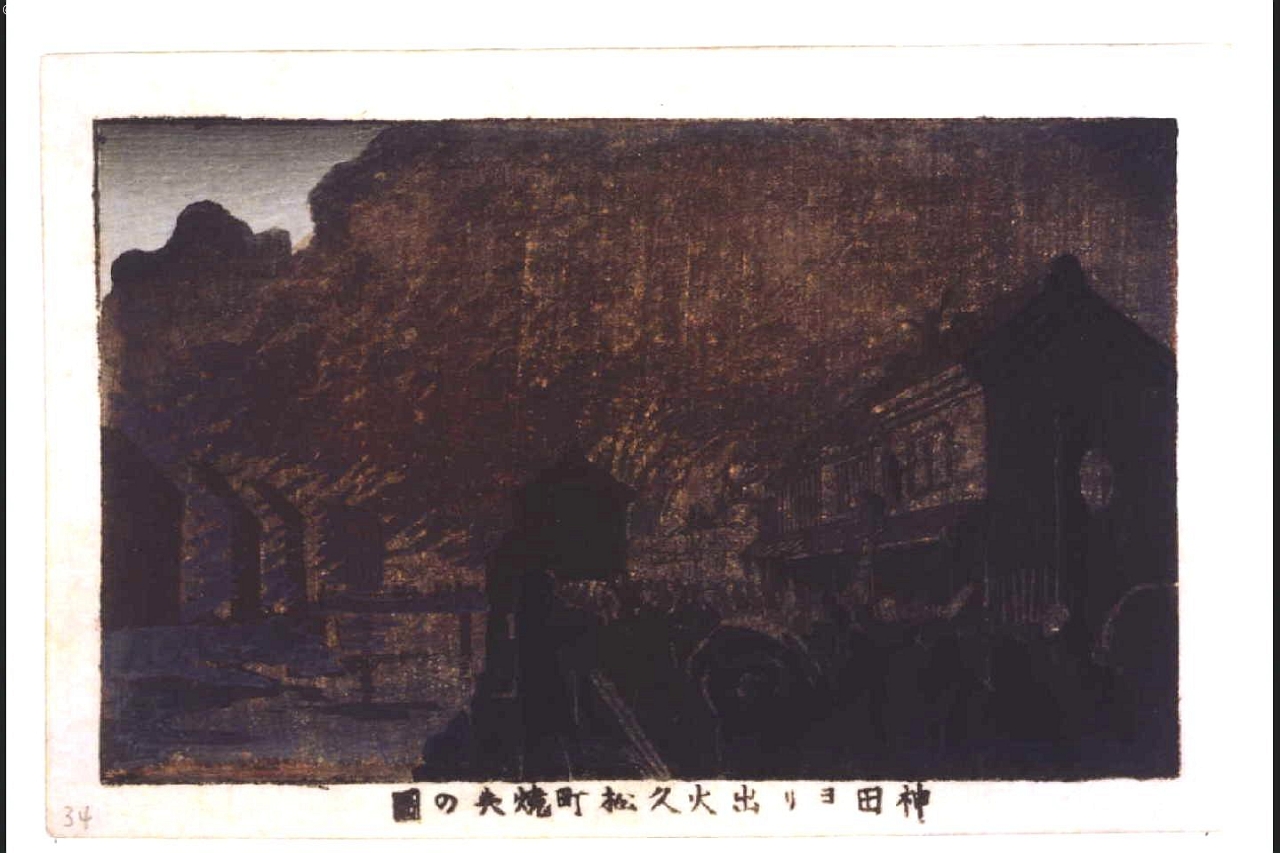
True Pictures of Famous Places in Tokyo: The Destruction of Hisamatsucho in a Fire that Started in Kanda
Woodblock print
Frequently Asked Questions
Koume Happyaku Matsu was created by Inoue Yasuji (井上安治).