
Omori Sea
by Inoue Yasuji
- Source:
- ukiyo-e.org
Description
Omori Sea by Inoue Yasuji turns toward the shoreline at Omori, the strip of coast south of central Tokyo that in the Meiji era still functioned as a working fishing district even as it began to attract recreational visitors arriving by the new railway. This Meiji woodblock print, documented through ukiyo-e.org and produced in Yasuji's small-format F6 series of Tokyo views, gathers the elements that defined Omori's identity at the time: a low horizon over Tokyo Bay, the dark sails or hulls of fishing boats, the line of dunes or seawall where pine trees grow, and a sky tuned to the soft, atmospheric registers Yasuji learned from Kobayashi Kiyochika. Yasuji's coastal scenes are usually quieter than his urban ones; here the human element is incidental rather than central, with figures drawn small against the openness of water and sky. The site has historical resonance beyond its fishing economy — the Omori shell mound, identified by Edward S. Morse in 1877, was Japan's first major archaeological discovery, marking the area as a place where modern science had begun reading the deep past. Yasuji likely had no narrative interest in that history, but his print preserves the seafront in its late-Meiji condition, before twentieth-century landfill changed the coastline beyond recognition. For collectors of Inoue Yasuji and Tokyo views, Omori Sea is a representative example of his ability to compress a wide marine prospect into a small sheet without losing the sense of distance.
More Prints by Inoue Yasuji

The Emperor Meiji and Empress in a Carriage during their Silver Wedding Anniversary Celebration at Aoyama
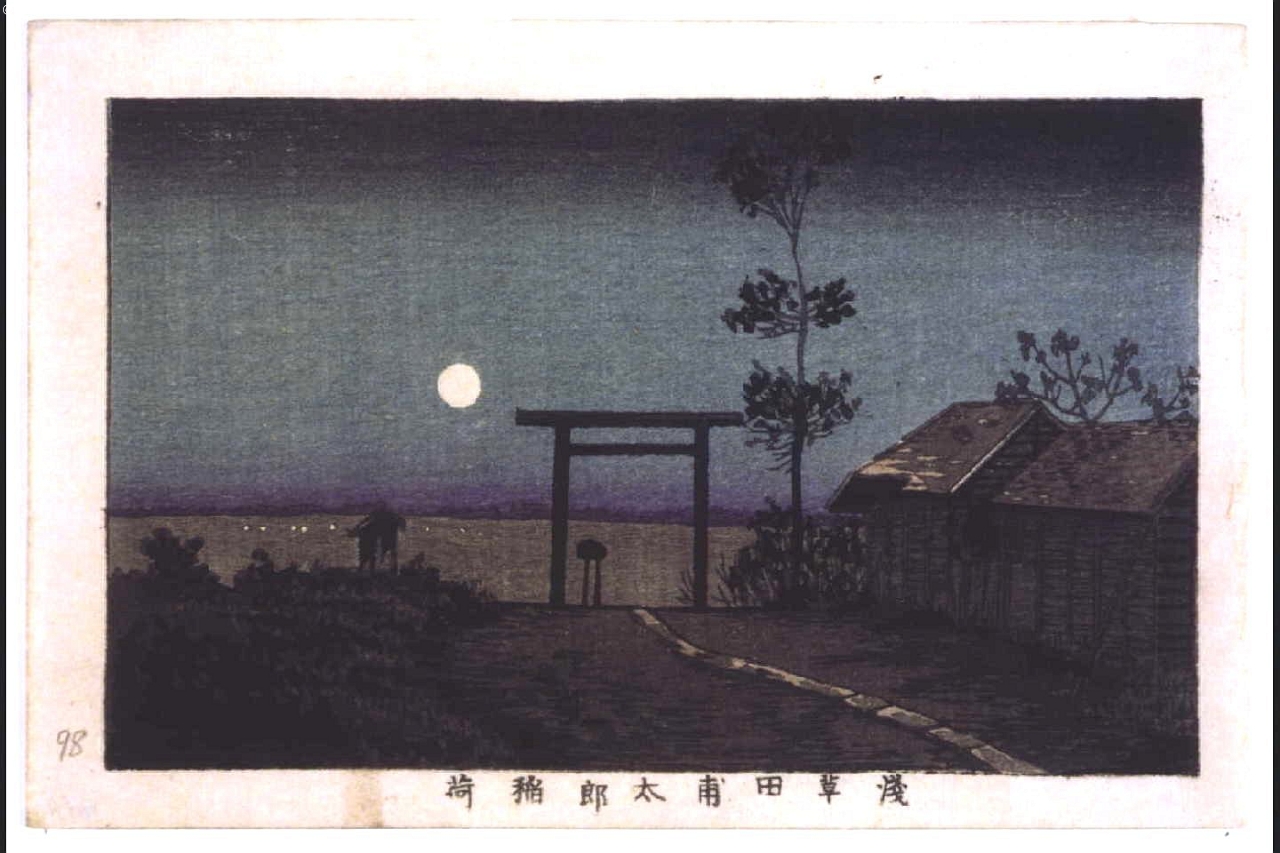
True Pictures of Famous Places in Tokyo: Taro Inari Shrine in Asakusa-tanbo
Woodblock print
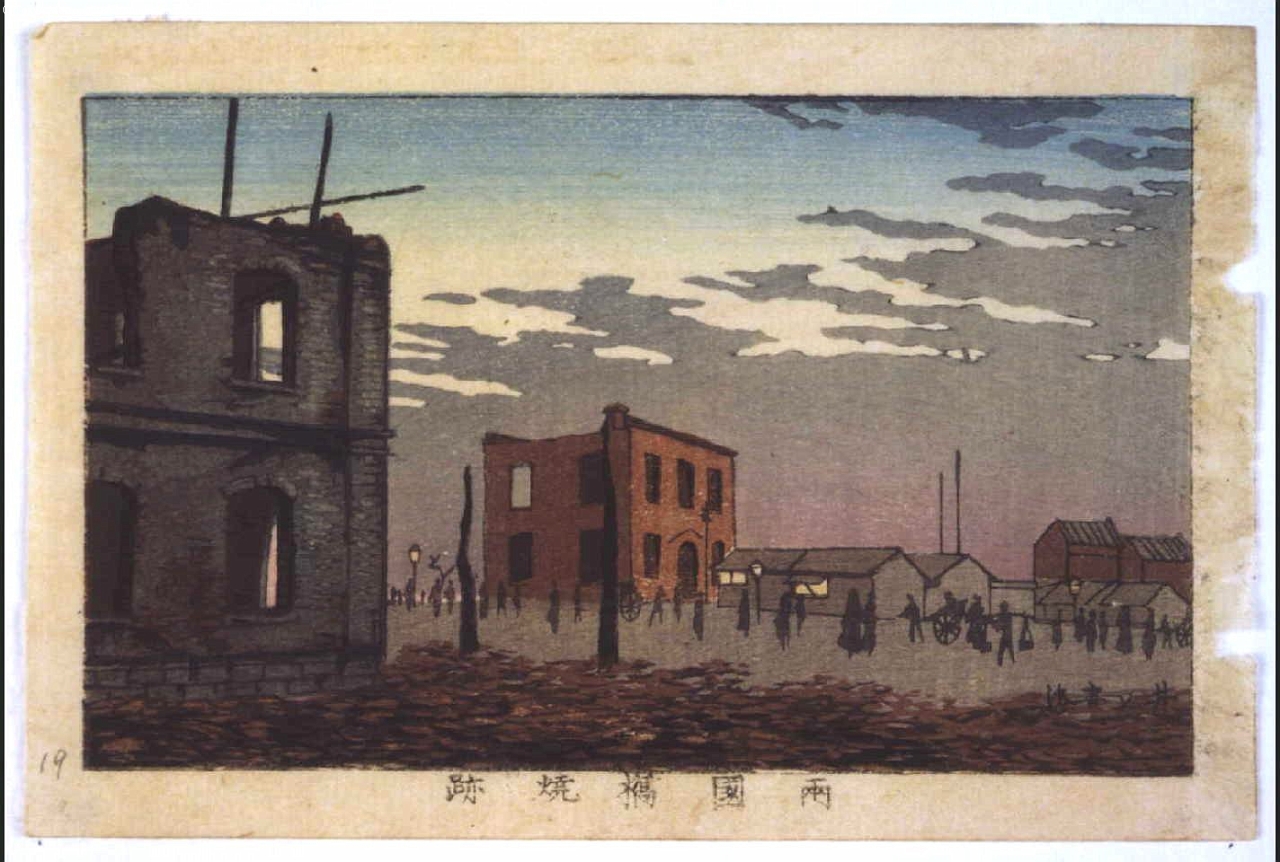
True Pictures of Famous Places in Tokyo: The Burnt Remains of Ryogokubashi Bridge
Woodblock print
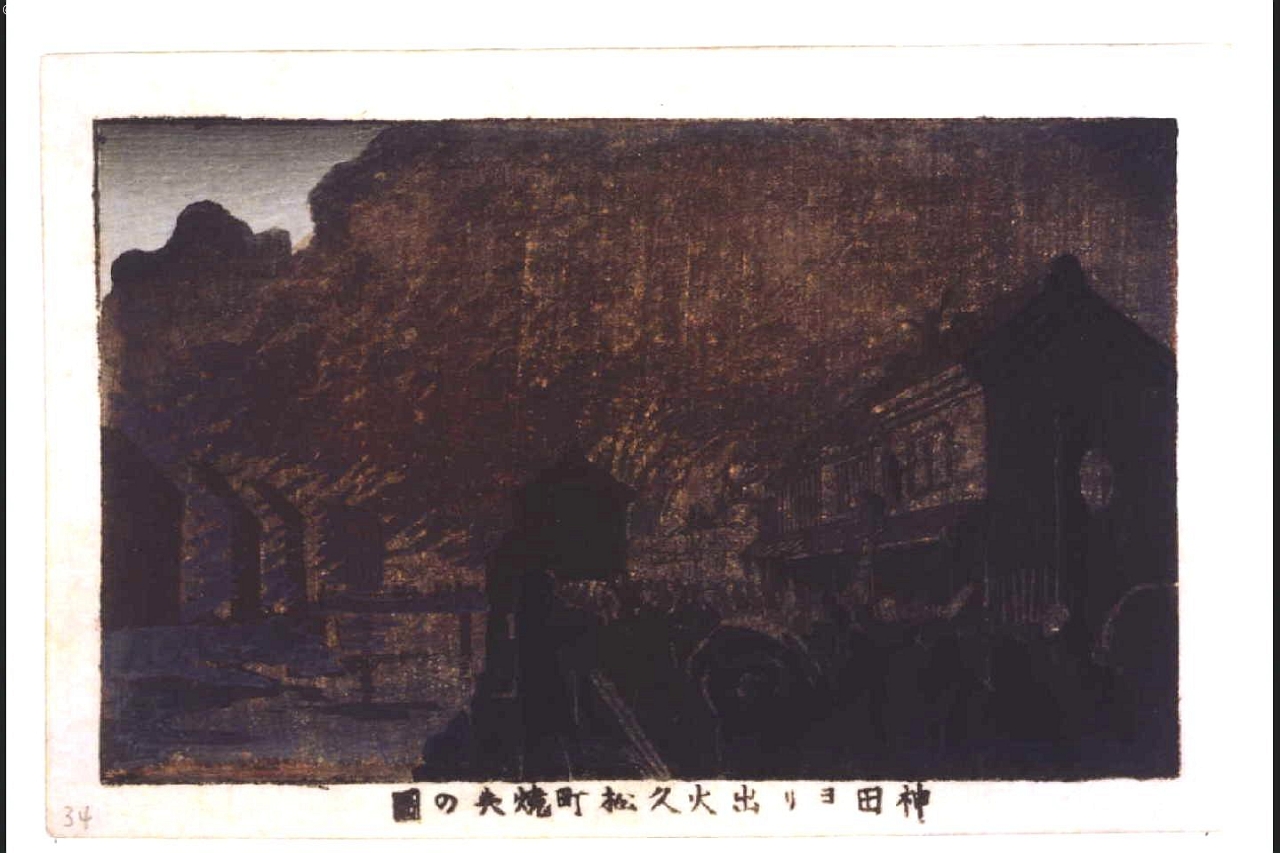
True Pictures of Famous Places in Tokyo: The Destruction of Hisamatsucho in a Fire that Started in Kanda
Woodblock print
Frequently Asked Questions
Omori Sea was created by Inoue Yasuji (井上安治).