
Reiganhima, Takahashi no Kei
by Inoue Yasuji
- Source:
- ukiyo-e.org
Description
Reiganjima Takahashi no Kei is a riverside view by Inoue Yasuji centered on the Takahashi (High Bridge) at Reiganjima, an island district on the eastern edge of central Tokyo that had grown through Edo and Meiji into a busy commercial waterfront. The composition belongs to Inoue Yasuji's catalogue of Tokyo Famous Places sheets and uses the bridge as a structural device, its span cutting horizontally across the print while warehouses, masts, and small craft thread the canal beyond. The lighting is characteristic kosen-ga: a low sun or twilight tone laid in as a single broad bokashi gradient, with stronger local color reserved for the bridge timbers, lanterns, and figures crossing toward the viewer. Inoue Yasuji learned this controlled atmospheric mode from Kobayashi Kiyochika, but in sheets like this one he disciplines it further, pulling spatial recession into measured architectural geometry. Reiganjima itself was tied to Edo's shogunal storehouses and later to the foreign-influenced commerce of early Meiji, making it an apt subject for a series concerned with the working fabric of the capital. The Museum of Fine Arts, Boston preserves this impression, where it sits alongside other Inoue Yasuji designs as part of the museum's documentation of late nineteenth-century Tokyo cityscape printing. For collectors studying how Meiji prints reshaped the older meisho canon around bridges, canals, and quay walls, Takahashi no Kei is a representative and especially well-resolved example.
More Prints by Inoue Yasuji

The Emperor Meiji and Empress in a Carriage during their Silver Wedding Anniversary Celebration at Aoyama
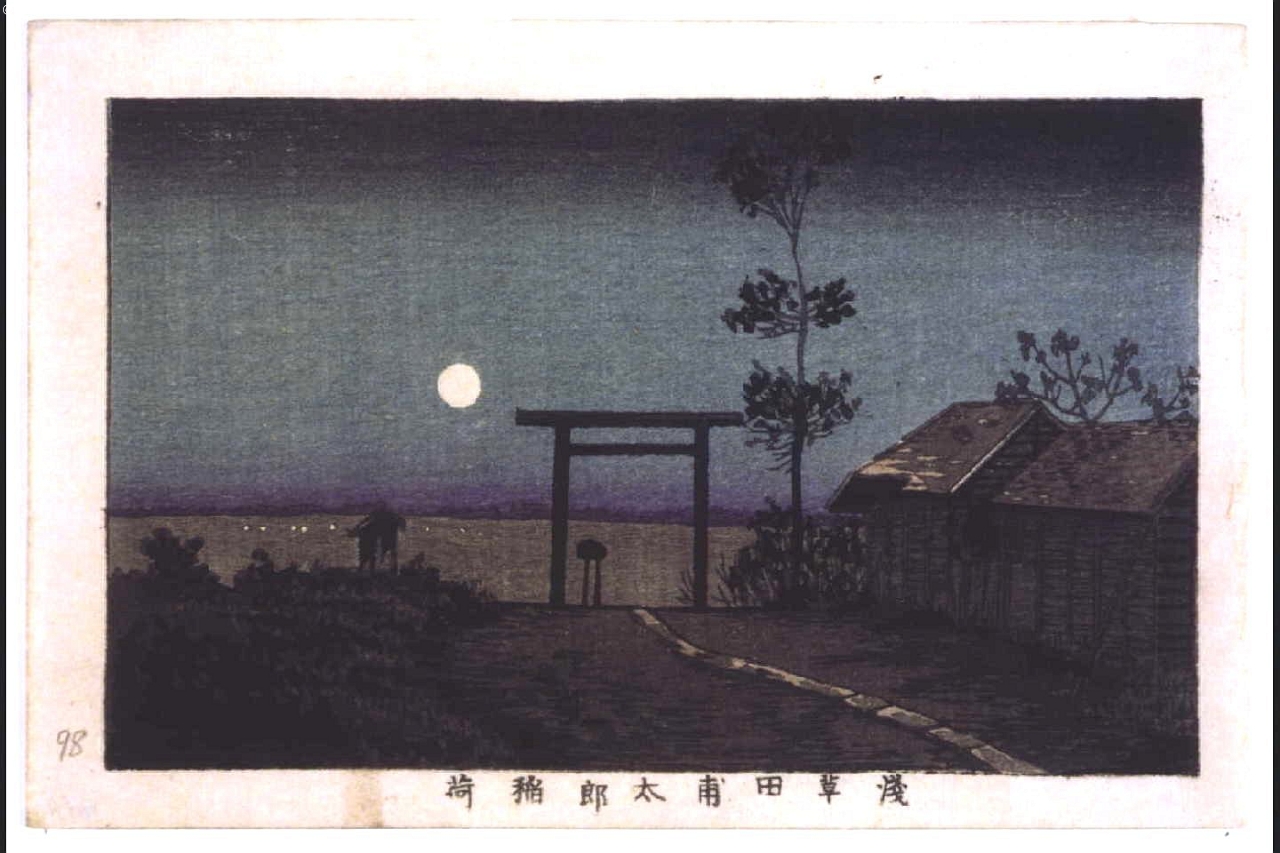
True Pictures of Famous Places in Tokyo: Taro Inari Shrine in Asakusa-tanbo
Woodblock print
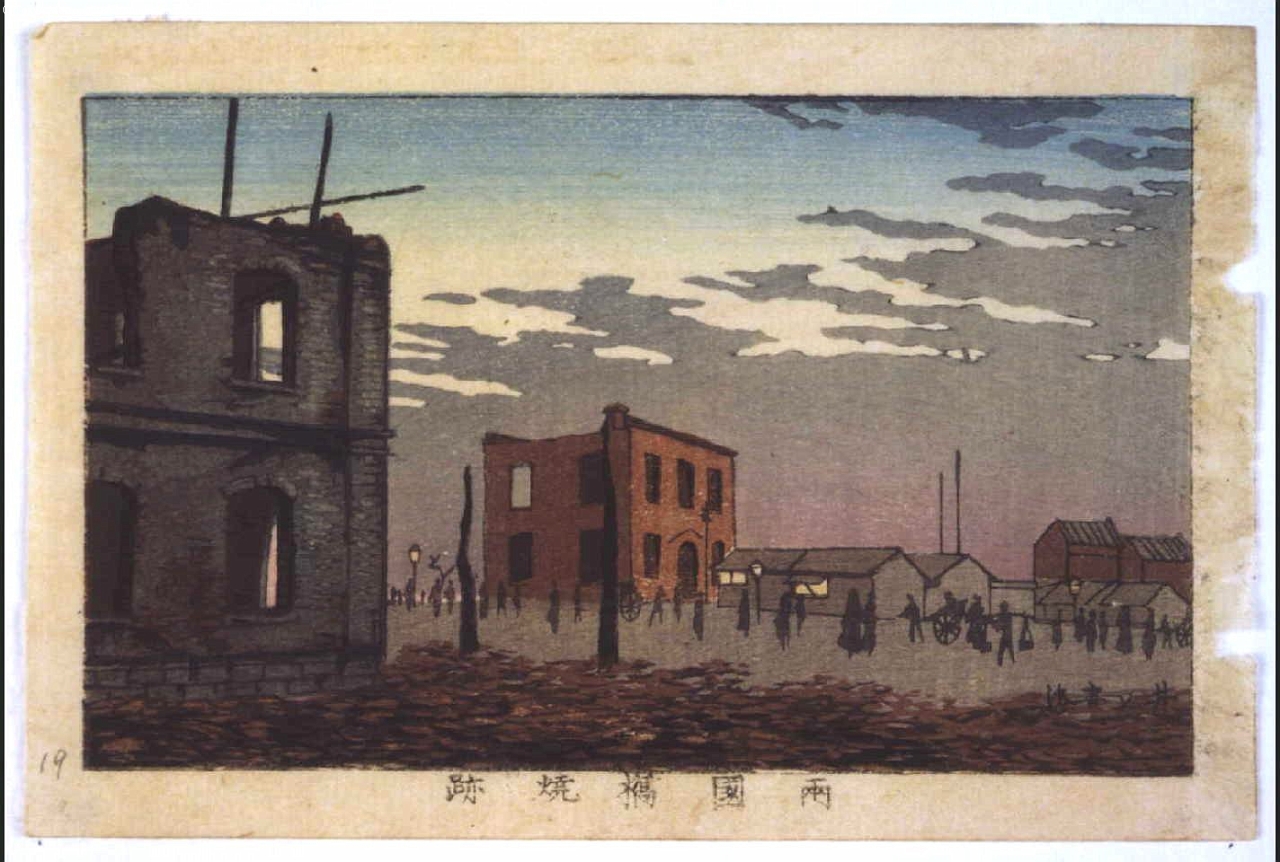
True Pictures of Famous Places in Tokyo: The Burnt Remains of Ryogokubashi Bridge
Woodblock print
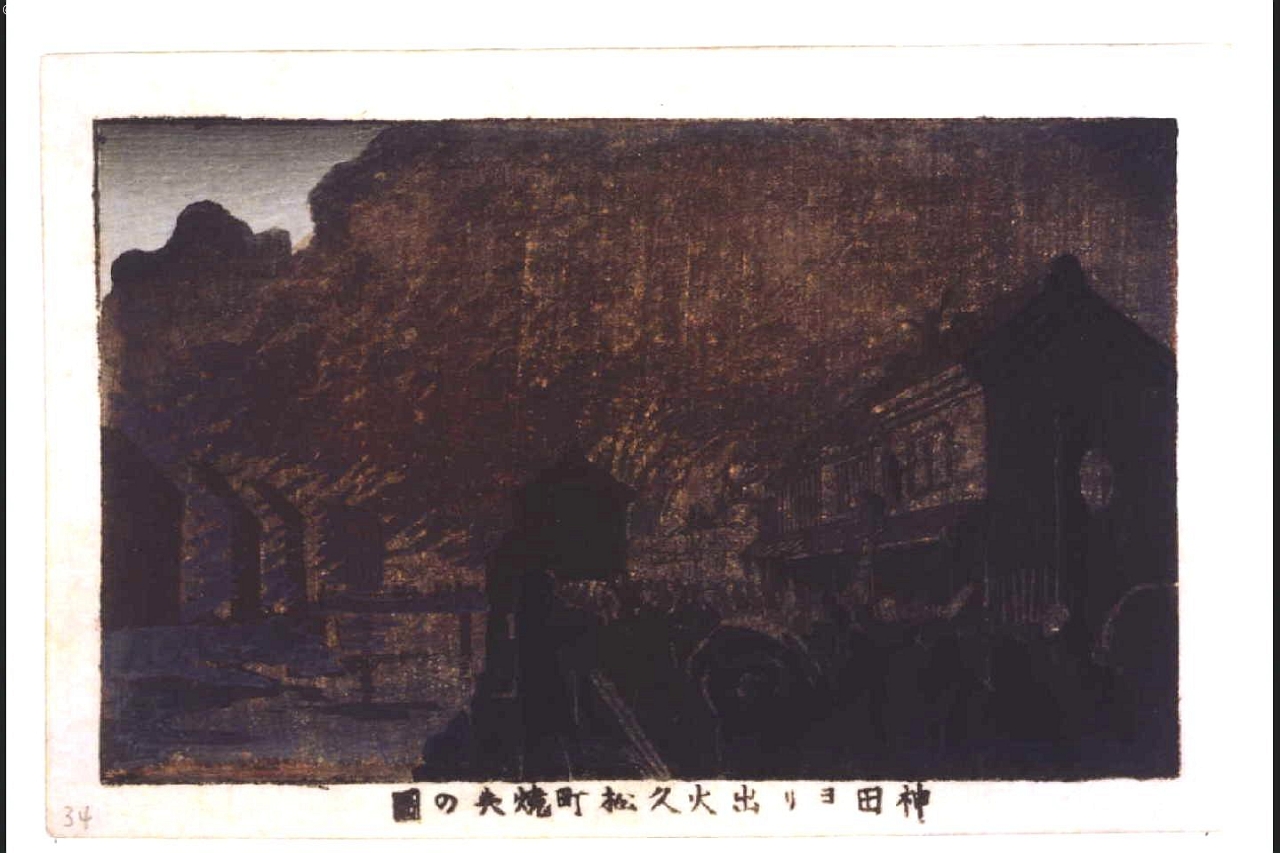
True Pictures of Famous Places in Tokyo: The Destruction of Hisamatsucho in a Fire that Started in Kanda
Woodblock print
Frequently Asked Questions
Reiganhima, Takahashi no Kei was created by Inoue Yasuji (井上安治).