
Suidobashi
by Inoue Yasuji
- Source:
- ukiyo-e.org
Description
Suidobashi by Inoue Yasuji depicts the area around the Suidobashi bridge in central Tokyo, where the Kanda Aqueduct once supplied fresh water to the city and gave the locality its name. This Meiji woodblock print, documented through ukiyo-e.org, belongs to Yasuji's small-format Tokyo views series from the late 1880s. By the time he made the print, Suidobashi had become an important node in the developing urban infrastructure: the old wooden bridge was being replaced and re-engineered, the surrounding banks landscaped, and the area's role as a transit point between the Kanda district and the Hongo plateau intensified. Yasuji handles the scene with his usual quiet precision. The bridge itself anchors the composition, with the river running beneath in a clean horizontal band, and embankments lined with trees climbing toward the upper edges of the sheet. Foot traffic and a rickshaw or two animate the bridge without crowding it. The atmospheric handling — pale sky, muted greens, the soft gray of stone — is recognizably the inheritance from Kobayashi Kiyochika, applied with Yasuji's lighter touch. As a Meiji woodblock representation of urban water infrastructure, Suidobashi is among the more documentarily specific of Yasuji's prints, recording the way the old aqueduct city was being remade into a modern hydraulic landscape. For collectors of Inoue Yasuji and of Tokyo views, this sheet is a clear example of how the artist found visual interest in functional sites that the more romantic ukiyo-e tradition might have overlooked.
More Prints by Inoue Yasuji

The Emperor Meiji and Empress in a Carriage during their Silver Wedding Anniversary Celebration at Aoyama
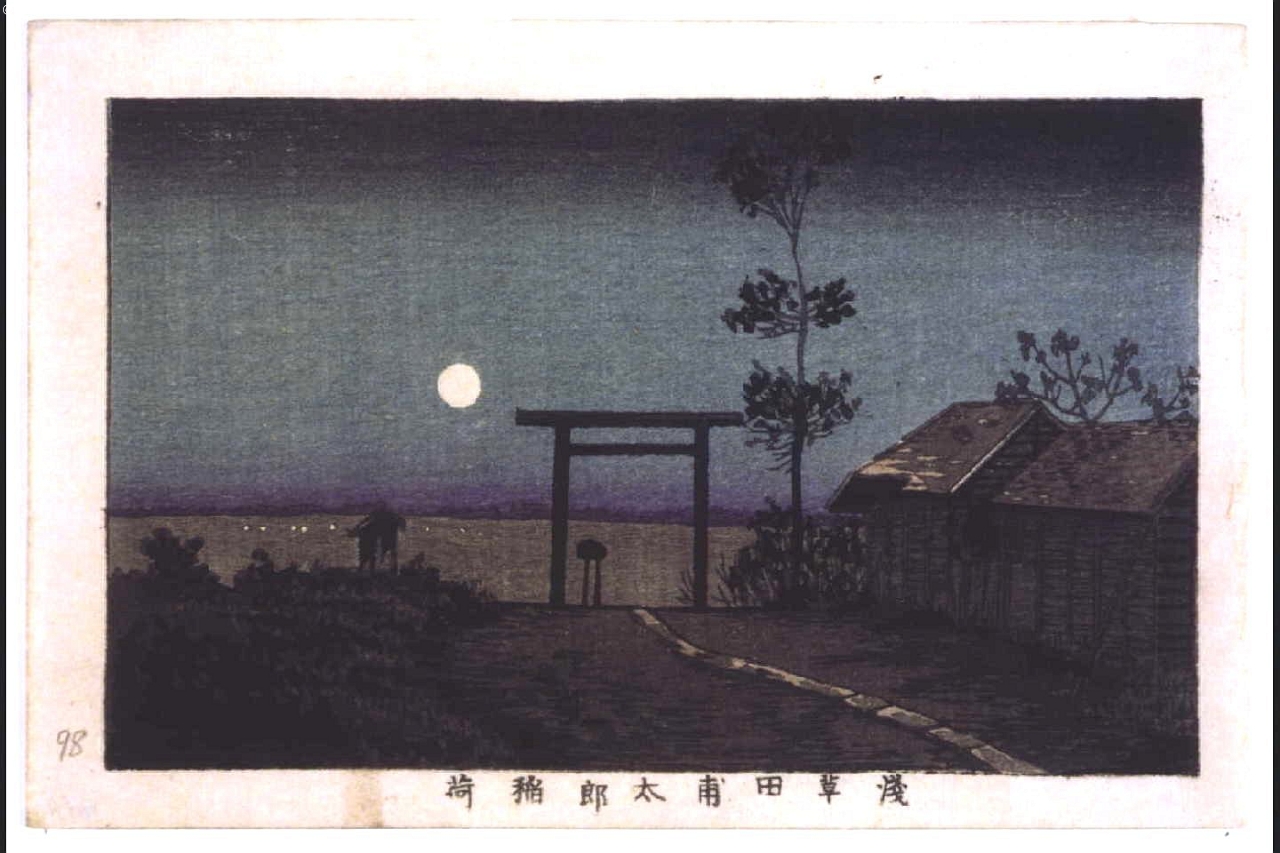
True Pictures of Famous Places in Tokyo: Taro Inari Shrine in Asakusa-tanbo
Woodblock print
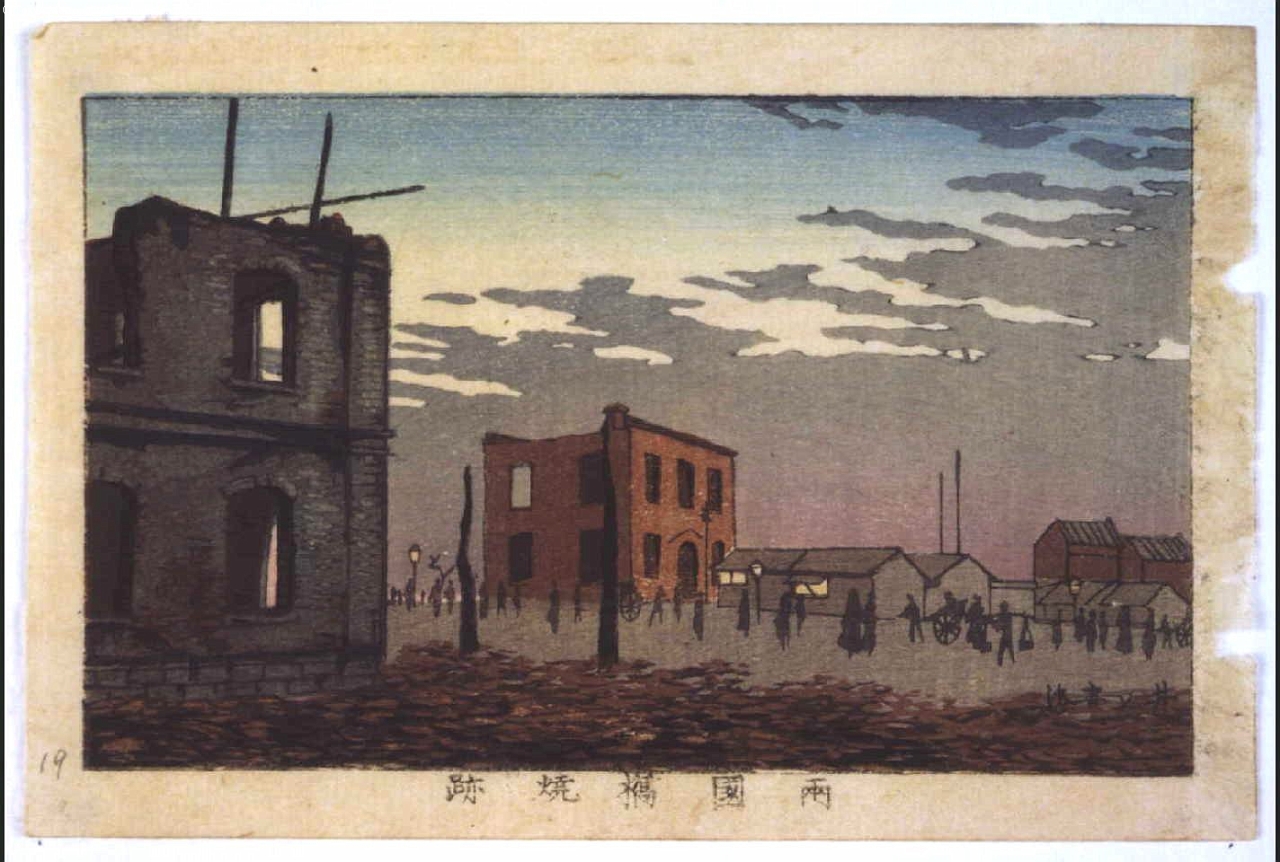
True Pictures of Famous Places in Tokyo: The Burnt Remains of Ryogokubashi Bridge
Woodblock print
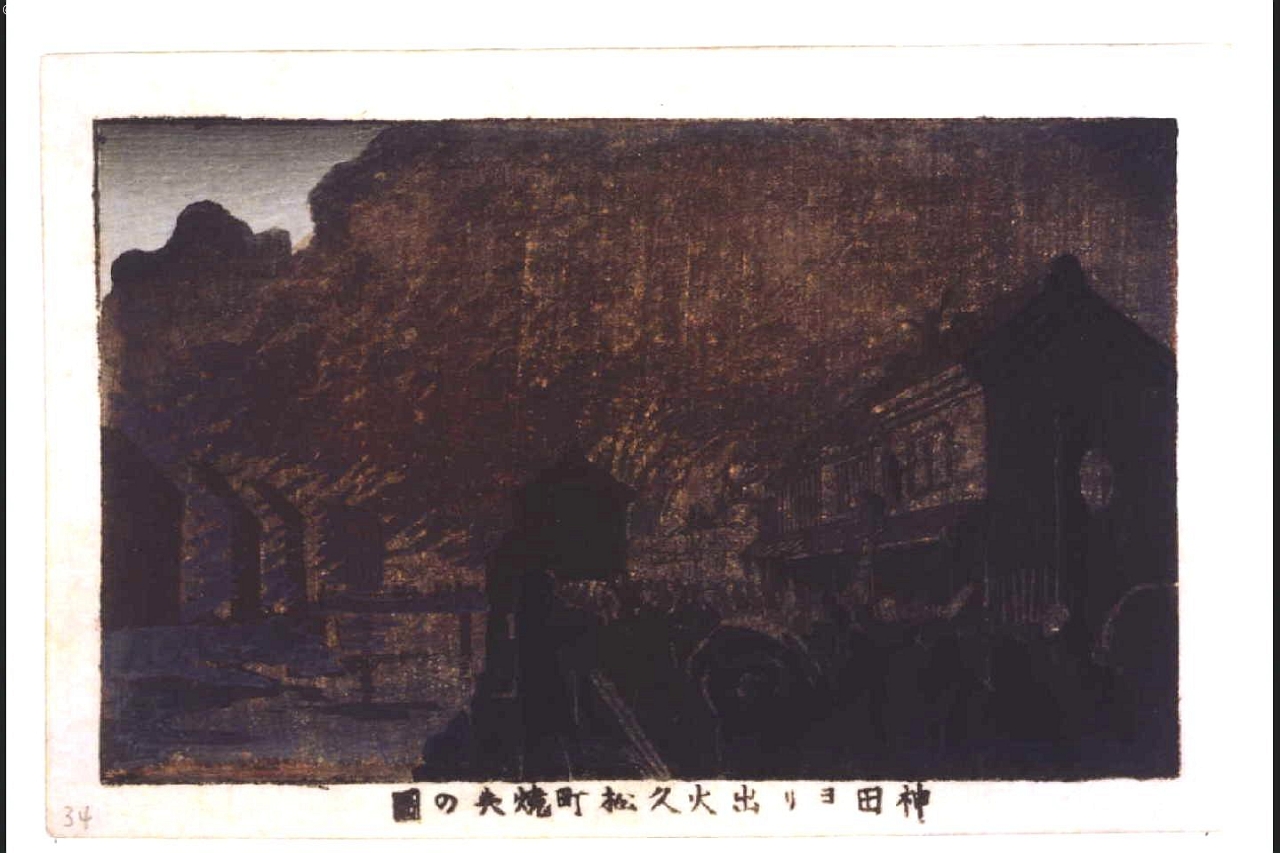
True Pictures of Famous Places in Tokyo: The Destruction of Hisamatsucho in a Fire that Started in Kanda
Woodblock print
Frequently Asked Questions
Suidobashi was created by Inoue Yasuji (井上安治).