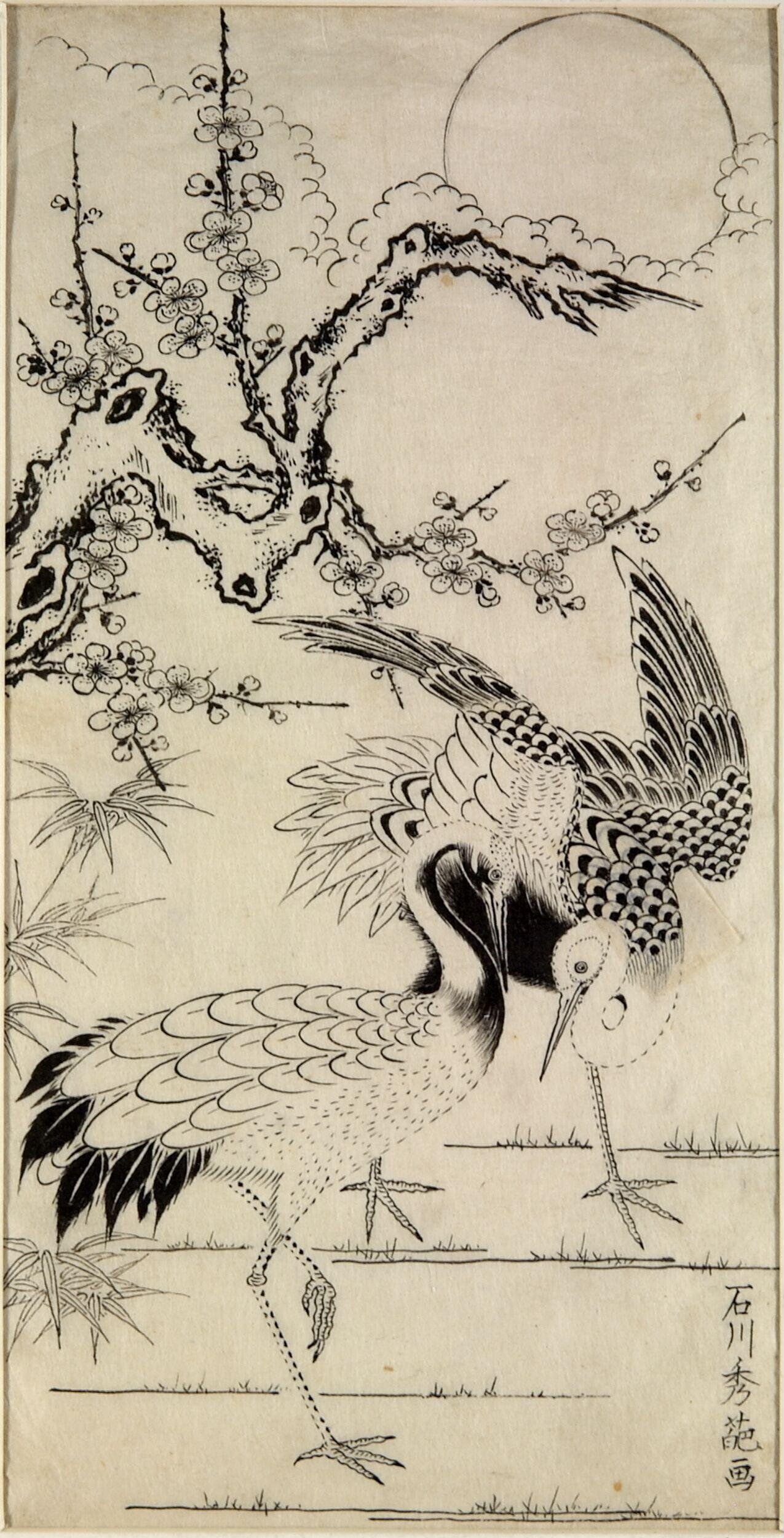
Two Cranes and a Plum Tree
- Date:
- ca.1741 to ca.1764
- Medium:
- Source:
- Victoria and Albert Museum
Description
Held in the Victoria and Albert Museum, Ishikawa Toyonobu's "Two Cranes and a Plum Tree" is a graceful example of his work in the kachō-ga (bird-and-flower) tradition. Cranes — symbols of longevity, fidelity, and dignified old age in East Asian visual culture — are paired here with the early-blooming plum tree, an emblem of perseverance because its blossoms open before the last snows of late winter have melted. The combination is one of the most auspicious in the Japanese visual vocabulary, and contemporary buyers would have understood the print as a New Year or wedding image as readily as a decorative one. Toyonobu organizes the composition vertically, the trunk of the plum tree rising along one side and the two cranes balanced beneath its branches; the curves of the cranes' necks echo the bend of the plum, binding flora and fauna into a single unified design. Although Ishikawa Toyonobu is best known today as a designer of bijin-ga and yakusha-e for early Edo ukiyo-e, prints like this confirm how broadly he moved across the genre's subject categories. The sheet sits within the benizuri-e period of the mid-eighteenth century, when limited two- and three-color printing — black keyblock plus rose and green — provided the technological floor for ukiyo-e before full-color nishiki-e arrived in the 1760s. The restraint of that palette suits the cranes and the plum well; pattern is reserved for the birds' plumage and the blossoms while the background remains open. The work is a reminder that early Edo ukiyo-e was not only an art of city pleasures but also of seasonal symbol and auspicious wish, and that Ishikawa Toyonobu was as comfortable celebrating cranes and plum as he was portraying onnagata actors and Yoshiwara beauties.
More Prints by Ishikawa Toyonobu

Young Woman after a Bath
c. 1745
Hand-colored woodblock print; wide hashira-e, beni-e

A Young Couple Visiting a Shrine
18th century
Color woodblock print; hashira-e

Young Woman and Hotei
c. 1741
Hand-colored woodblock print; wide hashira-e, sumizuri-e

Youth Carrying a Lantern and an Umbrella
1740s
Hand-colored woodblock print; hashira-e, beni-e
More Birds & Flowers Prints
Frequently Asked Questions
Two Cranes and a Plum Tree was created by Ishikawa Toyonobu (石川豊信) in ca.1741 to ca.1764.
Two Cranes and a Plum Tree depicts birds & flowers.