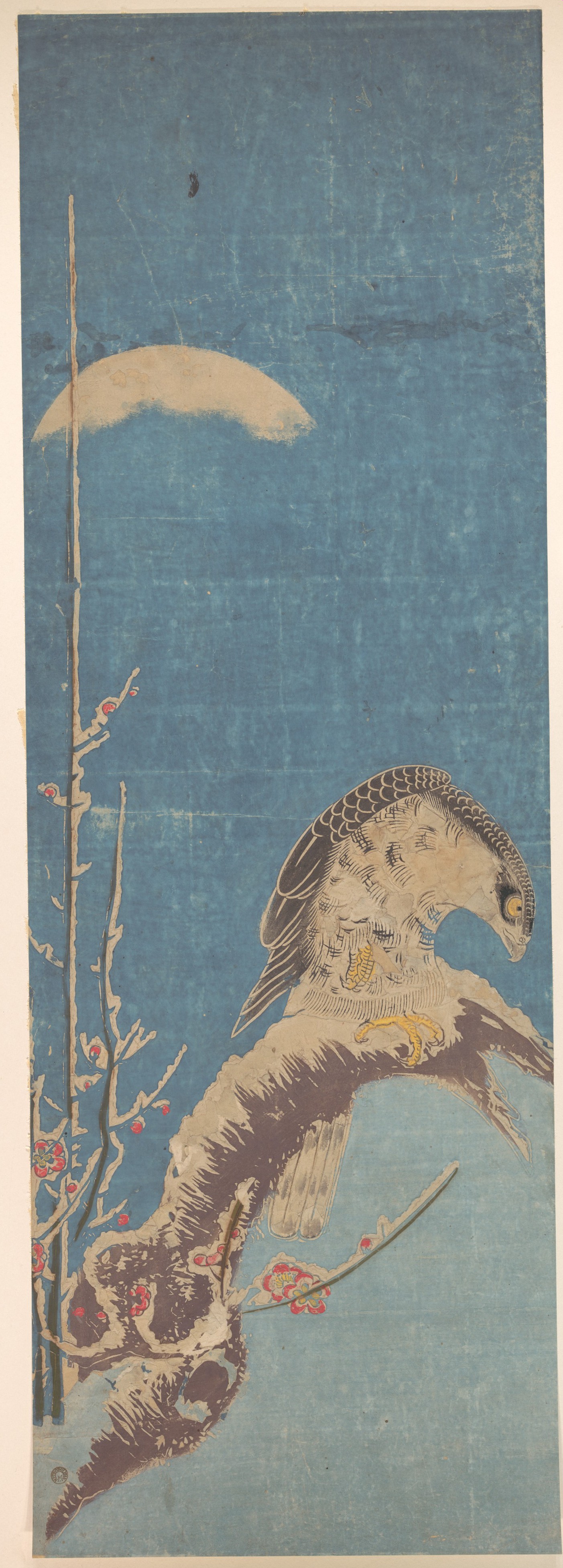
A Hawk Perched on a Snow-covered Pine Tree
- Date:
- probably 18th century
- Medium:
- Hand-colored print (ishizuri-e); ink and color on paper
- Source:
- Metropolitan Museum of Art
Description
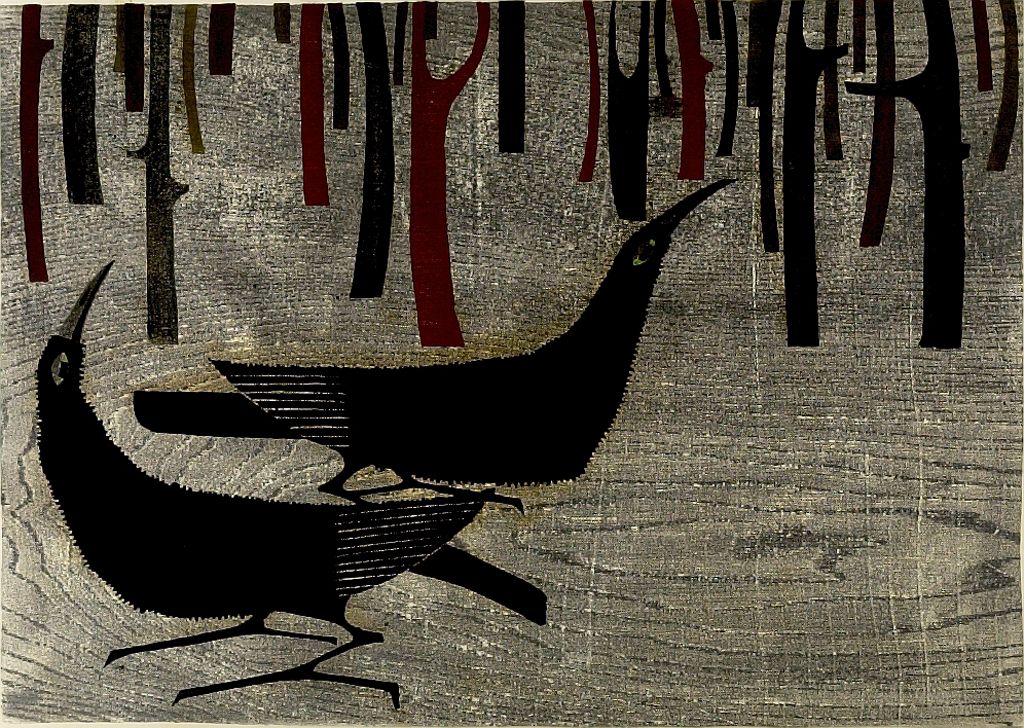
A Hawk Perched on a Snow-covered Pine Tree, attributed to Isoda Koryusai and held in the collection of the Metropolitan Museum of Art, exemplifies the kacho-e tradition that the Edo bijin-ga master pursued in parallel with his celebrated figure work. Hawks were one of the most prestigious avian subjects in Japanese visual culture, associated with samurai hawking practices and with the disciplined focus prized in warrior aesthetics, and Koryusai's own samurai background gave him a natural affinity for the theme. The print pairs the bird with a snow-laden pine, the pine itself an emblem of longevity and steadfastness through the year. The composition contrasts the alert profile of the bird against the static weight of snow on the tree's needles, with the hawk's hooded eye and curved beak rendered through precise contour drawing. Snow imagery in eighteenth-century ukiyo-e required careful negotiation between the paper's natural ground and the surrounding ink work, and Koryusai's printers used the reserved white of the paper to suggest the snow's mass without overworking the surface. Although his international reputation now rests largely on the Yoshiwara fashion series Hinagata Wakana no Hatsu Moyo, prints like this confirm his command of the bird-and-flower idiom and his contribution to the broader Edo printmaking ecology. The Metropolitan Museum of Art holds this impression as part of its substantial holdings of eighteenth-century Japanese printmaking, where it sits alongside related kacho-e by Koryusai's contemporaries.
More Prints by Isoda Koryūsai


More Winter Prints
Frequently Asked Questions
A Hawk Perched on a Snow-covered Pine Tree was created by Isoda Koryūsai (礒田湖龍斎) in probably 18th century.
A Hawk Perched on a Snow-covered Pine Tree depicts winter.