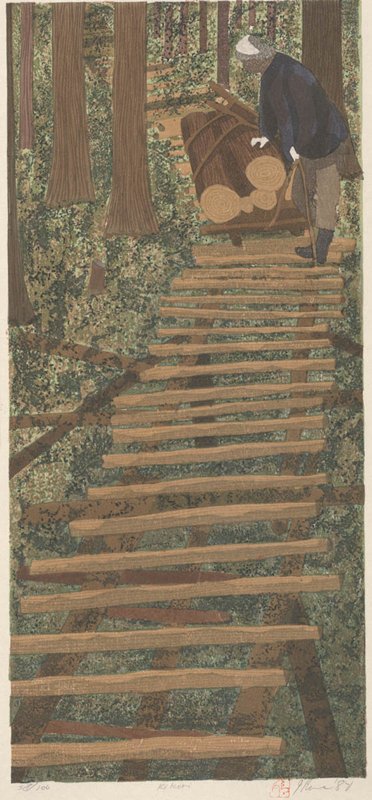
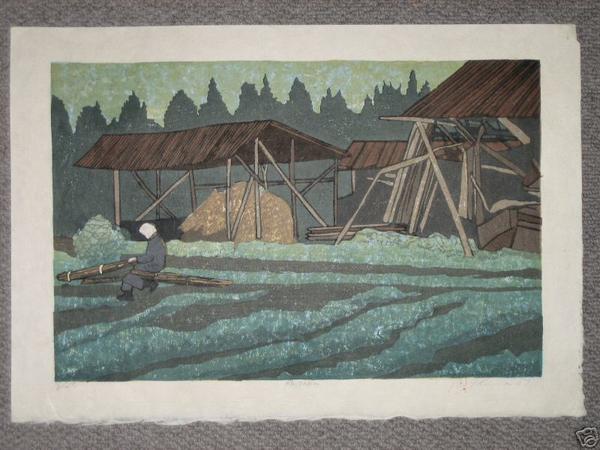
Kikori
by Joshua Rome
- Date:
- late 20th century
- Medium:
- Color woodblock print
- Format:
- Oban
- Dimensions:
- 54.9 × 24.9 cm
- Source:
- Minneapolis Institute of Art
Description
Kikori, the Japanese word for woodcutter, titles this color mokuhanga print from the late twentieth century. Joshua Rome invokes a figure from Japan's rural past whose labor, felling and sectioning timber in mountain forests, connected human communities to the wooded landscapes surrounding them. The oban-format print uses water-based pigments and hand-carved cherry-wood blocks to build layered color fields that suggest forest density and the interplay of light and shadow among trees. There is an inherent circularity in using a woodblock print, itself cut from wood, to depict a woodcutter, and this material self-reference is consistent with Rome's interest in the relationship between mokuhanga as a craft and the natural world that supplies its materials. The late twentieth-century date positions this print within Rome's established practice in Japan.
More Prints by Joshua Rome
More Craftspeople Prints
Frequently Asked Questions
Kikori was created by Joshua Rome in late 20th century.
Kikori depicts craftspeople, trees, and mountains.
Kikori measures 54.9 × 24.9 cm (Oban format).