
Ashikari (The Thatch Cutters)
by Joshua Rome
- Medium:
- Woodblock print
- Format:
- Oban
- Source:
- Ohmi Gallery
Description
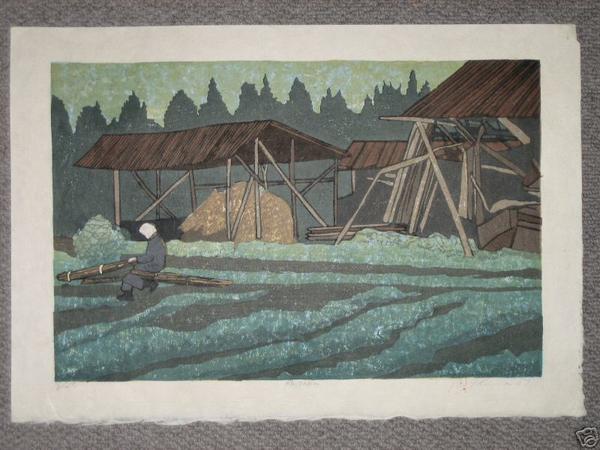
Ashikari, the Japanese term for thatch cutters, provides both the title and the human context for this oban mokuhanga print. Joshua Rome references the traditional rural labor of cutting and gathering reeds or grasses used for thatching roofs, a practice that persists in some Japanese villages and carries deep associations with the changing seasons and agrarian life. Rather than illustrating the activity literally, Rome filters the subject through his abstract sensibility, using layered water-based pigments to suggest the textures of cut grasses and the open landscapes where thatch-cutting takes place. The mokuhanga process, with its hand-carved cherry blocks and baren printing, connects Rome's contemporary practice to the same material traditions that the thatch cutters themselves represent, creating a thematic resonance between the art's subject and its means of production.
More Prints by Joshua Rome
More Landscapes Prints

Lake Kugushi in Wakasa Province (Wakasa Kugushiko), from the series Souvenirs of Travel I (Tabi miyage dai isshu)"
Wakasa Kugushiko
1920
Color woodblock print; oban
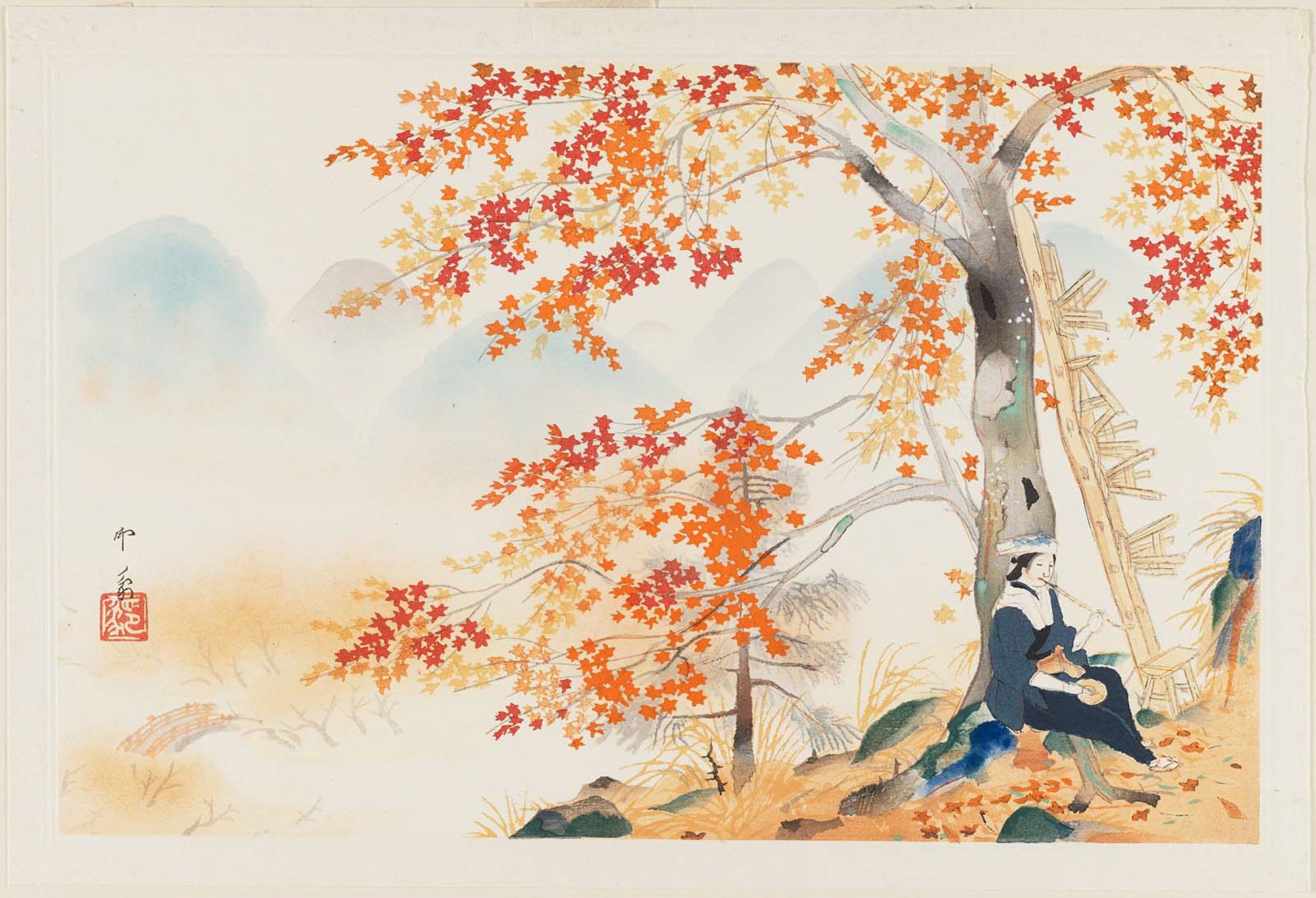
Autumn Maple Leaves at Takao, from the album Eight Views of Kyoto (Kyôto hakkei)
Woodblock print

The Beach at Kaiganji in Sanuki Province (Sanuki Kaiganji no hama), from the series "Collection of Views of Japan II, Kansai Edition (Nihon fukei shu II Kansai hen)"
1934
Color woodblock print; oban

Tea Kettle, section of a sheet from the series "Mirror of Stone Rubbings of Views of the Provinces" (Kohon meihitsu ishizuri kagami)
n.d.
Woodblock print; ishizuri-e, section of harimaze sheet
Featured in Collections
Curated cross-cuts that include this print.
Frequently Asked Questions
Ashikari (The Thatch Cutters) was created by Joshua Rome.
Ashikari (The Thatch Cutters) depicts landscapes, craftspeople, and daily life.