
Fukagawa - Matsuo Basho
- Medium:
- Mokuhanga (Japanese woodblock)
- Image courtesy of
- Saru Gallery
Description
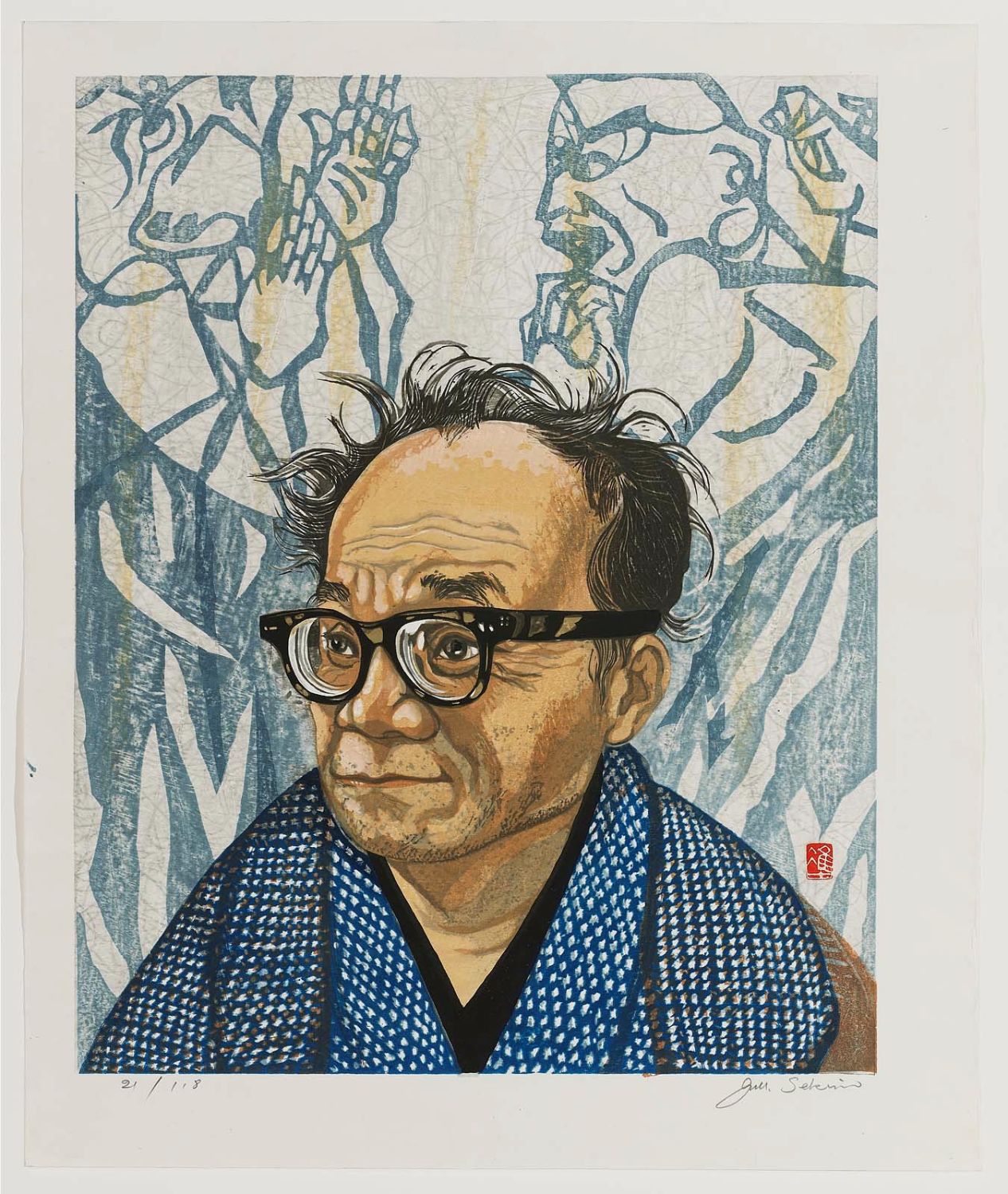
Fukagawa is the district on the eastern bank of the Sumida River in Edo (modern Tokyo) where the haiku poet Matsuo Bashō (1644–1694) established his Bashō-an hermitage in 1680, the place from which he embarked on the journeys that produced Oku no Hosomichi. Sekino's print fuses portrait and place, situating Bashō within the Fukagawa landscape rather than treating either subject in isolation. As a sōsaku-hanga artist, Sekino designed, carved, and printed his own blocks, and his portraits of literary and theatrical figures—Sōseki, Akutagawa, kabuki actors—form a substantial thread in his oeuvre. The technique here typically involves flat color planes registered against a textured key block, often with bokashi gradations evoking river mist or evening light. Sekino's interest in Tōhoku and the Tōkaidō overlapped with Bashō's own travel writing, making the poet a natural subject for an artist who, like Bashō, repeatedly turned to road and place as compositional material.
More Prints by Jun'ichiro Sekino
Featured in Collections
Curated cross-cuts that include this print.
Frequently Asked Questions
Fukagawa - Matsuo Basho was created by Jun'ichiro Sekino (関野準一郎).