
The Komadome Cherry Tree and Mt Fuji
- Medium:
- Woodblock print
- Source:
- Japanese Art Open Database
- Image courtesy of
- Japanese Art Open Database
Description
Kaiseki Jōkata's print of the Komadome Cherry Tree and Mount Fuji combines two canonical subjects of Japanese visual culture—a named ancient cherry tree and the silhouette of Fuji—within a single meisho-e composition. The Komadome-zakura (Horse-Stopping Cherry) takes its name from the tradition that travelers on horseback were compelled to stop when they encountered its bloom, the tree's beauty overriding the instinct to continue a journey. Jōkata's work belongs to the tradition of prints depicting famous named trees alongside the Fuji vista, a genre that persisted from the Edo period through the Meiji and Taishō eras. The composition likely positions the cherry tree as a near foreground element, its blossomed canopy framing or overlapping the more distant mountain silhouette in a spatial layering characteristic of the type. The tonal contrast between delicate pink blossoms and the blue-grey of Fuji's snow-capped peak provides the print's primary color structure. The named tree subject situates the composition at the intersection of meisho-e topography and botanical reverence.
More Prints by Jokata Kaiseki


More Landscapes Prints

Lake Kugushi in Wakasa Province (Wakasa Kugushiko), from the series Souvenirs of Travel I (Tabi miyage dai isshu)"
Wakasa Kugushiko
1920
Color woodblock print; oban
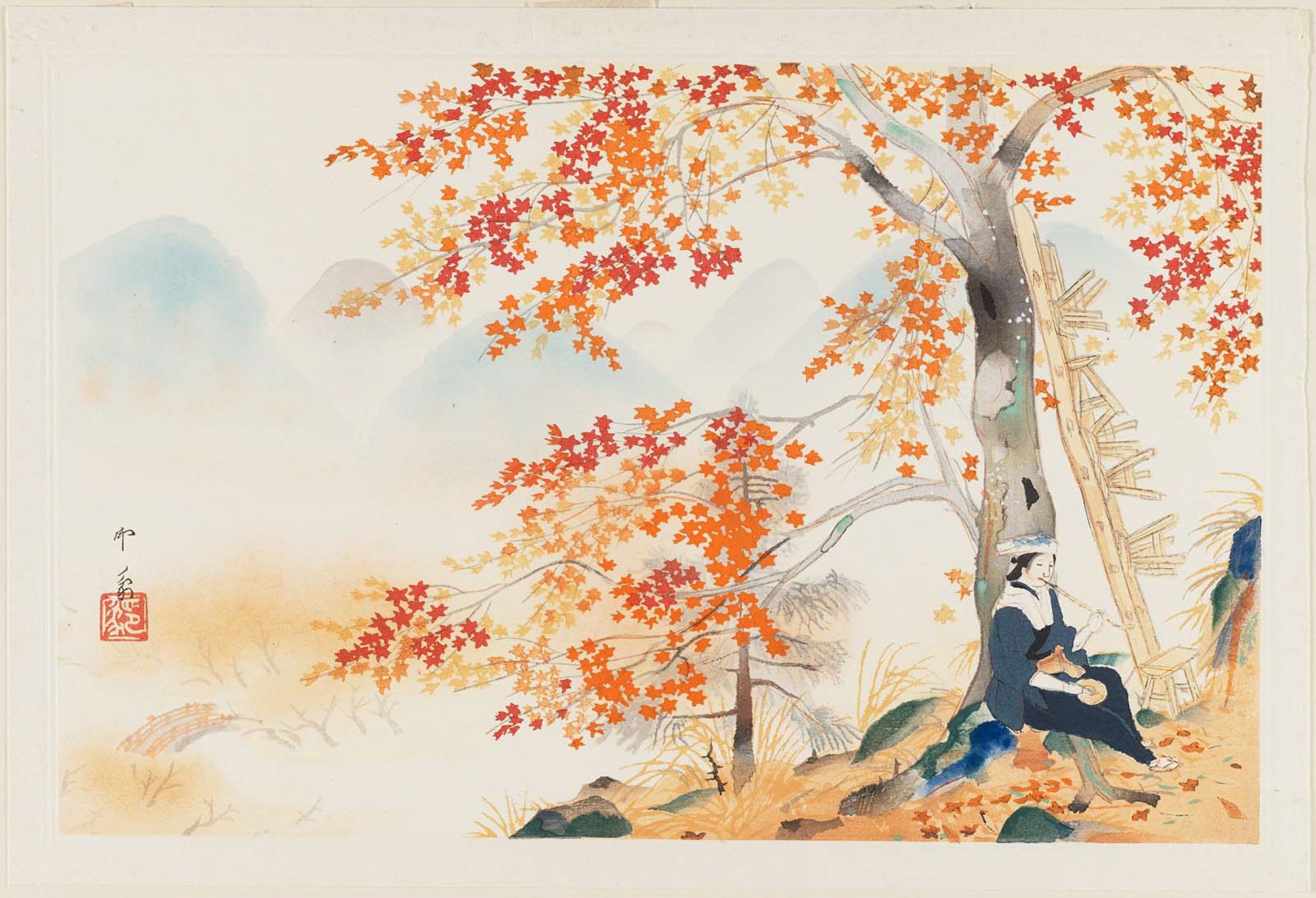
Autumn Maple Leaves at Takao, from the album Eight Views of Kyoto (Kyôto hakkei)
Woodblock print

The Beach at Kaiganji in Sanuki Province (Sanuki Kaiganji no hama), from the series "Collection of Views of Japan II, Kansai Edition (Nihon fukei shu II Kansai hen)"
1934
Color woodblock print; oban

Tea Kettle, section of a sheet from the series "Mirror of Stone Rubbings of Views of the Provinces" (Kohon meihitsu ishizuri kagami)
n.d.
Woodblock print; ishizuri-e, section of harimaze sheet
Featured in Collections
Curated cross-cuts that include this print.
Frequently Asked Questions
The Komadome Cherry Tree and Mt Fuji was created by Jokata Kaiseki.
The Komadome Cherry Tree and Mt Fuji depicts landscapes.