Meisho-e: Famous-Place Prints
名所絵
Meisho-e (名所絵) is the Japanese woodblock genre depicting 'famous places' — pilgrimage sites, scenic viewpoints, urban landmarks, and the post-stations of Japan's domestic travel routes. Hiroshige's 'Fifty-Three Stations of the Tōkaidō' and 'One Hundred Famous Views of Edo' are the genre's defining works.
About This Collection
Meisho-e is what happened when Edo-period travel restrictions, growing pilgrimage culture, and a literate urban print market collided. The shogunate restricted long-distance travel, but the great pilgrimage routes — the Tōkaidō between Edo and Kyoto, the Kisokaidō through the mountains, the Nakasendō, the Saigoku route to thirty-three Kannon temples — were exempt under the cover of religious devotion. Prints that depicted these routes therefore served a triple function: travel guide, devotional aid, and souvenir for those who could not go.
Hiroshige's 'Fifty-Three Stations of the Tōkaidō' (1833–34) is the genre's commercial high point: 53 post-station prints plus start and end views, totalling 55 designs that sold in vast numbers and made Hiroshige the leading landscape ukiyo-e artist of his generation. His 'One Hundred Famous Views of Edo' (1856–58) extended the meisho-e logic to a single city — the shogunal capital itself, depicted at every season, weather, and time of day. Hokusai's earlier Fuji series and Eisen and Hiroshige's joint 'Sixty-Nine Stations of the Kisokaidō' fit the same genre.
This collection gathers meisho-e in the Hanga catalogue, drawn from Hiroshige's road series, the Kisokaidō works, Hokusai's Fuji and waterfall views, and the shin-hanga continuation of the meisho-e tradition by Hasui, Yoshida, and Tsuchiya Koitsu in the early twentieth century.
Prints in This Collection (60)

Lake Kugushi in Wakasa Province (Wakasa Kugushiko), from the series Souvenirs of Travel I (Tabi miyage dai isshu)"
Wakasa Kugushiko
1920
Color woodblock print; oban
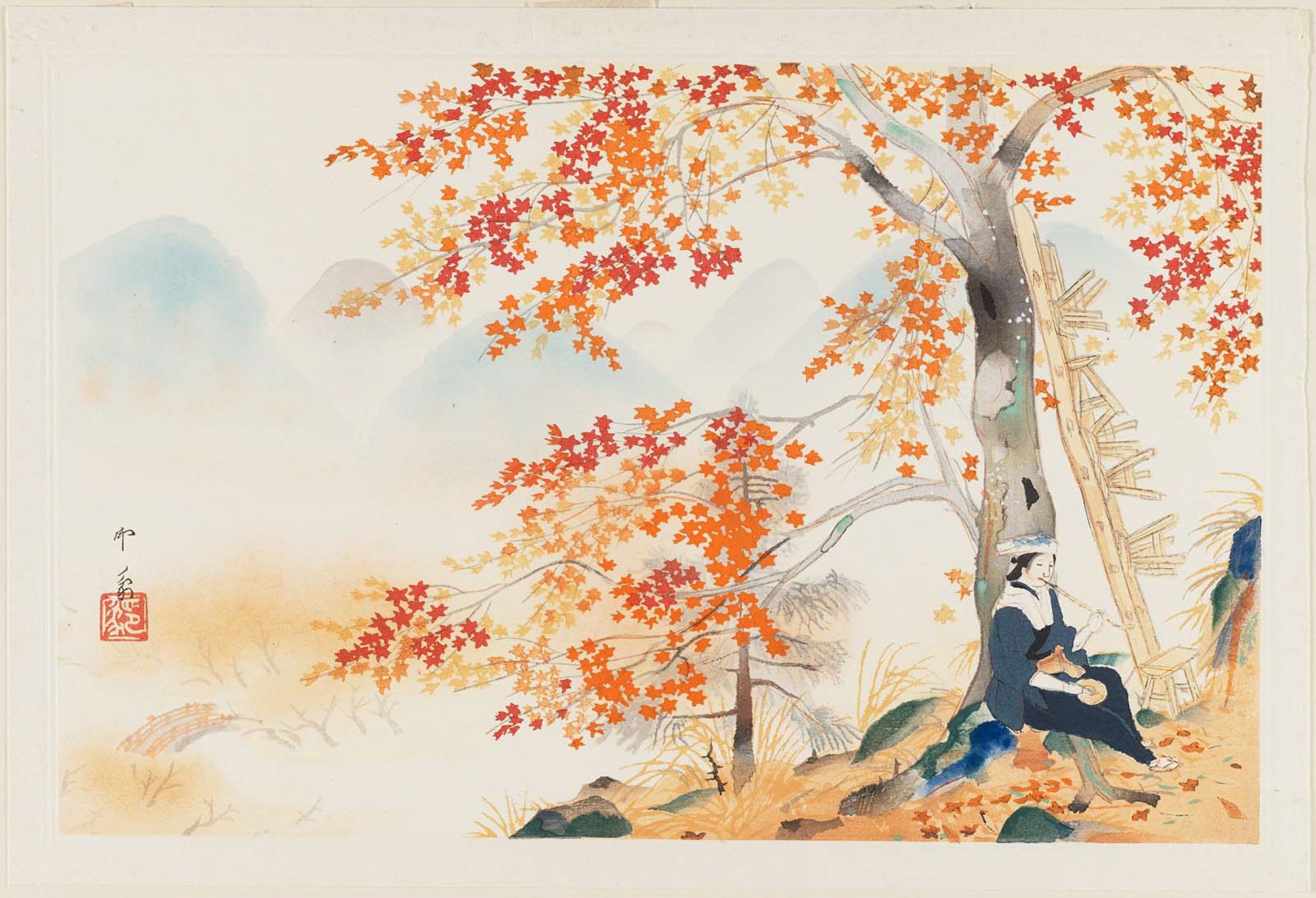
Autumn Maple Leaves at Takao, from the album Eight Views of Kyoto (Kyôto hakkei)
Woodblock print

The Beach at Kaiganji in Sanuki Province (Sanuki Kaiganji no hama), from the series "Collection of Views of Japan II, Kansai Edition (Nihon fukei shu II Kansai hen)"
1934
Color woodblock print; oban

Tea Kettle, section of a sheet from the series "Mirror of Stone Rubbings of Views of the Provinces" (Kohon meihitsu ishizuri kagami)
n.d.
Woodblock print; ishizuri-e, section of harimaze sheet

Pacific Ocean, Awa Province (Boshu Taikai), from the series "Souvenirs of Travel, Third Series (Tabi miyage dai sanshu)"
Boshu Taikai
1925
Color woodblock print; oban

Palace of the Queen Mother of the West (Seiōbo, Ch. Xiwangmu)
ca. 1779-94

No. 2: Ushiwakamaru Learns Swordsplay from the Tengu at Sojogatani on Mount Kurama (Nikai, Kuramayama Sojogatani ni oite Ushiwakamaru ijin yori kenpo o manabu), from the series "The Life of Yoshitsune (Yoshitsune ichidai zue)"
c. 1832/34
Color woodblock print; oban

View of Kabuki Theater from Matsuya (Ginza Matsuya yori Kabukiza), no. 3 from the series "Pictures of Ginza, First Series (Gashu Ginza dai isshu)"
1928
Color lithograph
![Mount Fuji on a Moonlit Night, Kawai Bridge (Tsukiyo no Fuji [Kawaibashi]), from the series "Selection of Views of the Tokaido (Tokaido fukei senshu)" by Kawase Hasui](https://www.artic.edu/iiif/2/d0960668-1e73-339a-b182-fb995a54bff0/full/843,/0/default.jpg)
Mount Fuji on a Moonlit Night, Kawai Bridge (Tsukiyo no Fuji [Kawaibashi]), from the series "Selection of Views of the Tokaido (Tokaido fukei senshu)"
1947
Color woodblock print; oban

Hoshifuri Pine at Zen'yoji Temple in Edogawa (Edogawa-ku Zen'yoji Hoshifuri matsu), from the series "One Hundred Views of Great Tokyo in the Showa Era (Showa dai Tokyo fukei hyaku zue hanga)"
1935
Color woodblock print; oban

Pine Beach at Miho (Miho no Matsubara), from the series "Selection of Views of the Tokaido (Tokaido fukei senshu)"
September 1931
Color woodblock print; oban

Seto, Bishu, from the series "Selection of Views of the Tokaido" (Tokaido fukei senshu, Bishu Seto)
March 1934
Color woodblock print

Setting Sun over Pines, Suzukawa Beach (Tokaido fukei senshu, Matsu no sekiyo (Suzukawa kaigan)), from the series "Selection of Views of the Tokaido"
1940
Color woodblock print

Distant View of Mitsukoshi Movie Theater in Shinjuku from the Sixth Floor of Hoteiya (Hoteiya rokkai kara Shinjuku Mitsukoshi Musashi no kan enbo zu), no. 1 from the series "Scenery of Shinjuku (Gashu Shinjuku fukei)"
1930
Color lithograph

Tokaido, Nissaka, from the series "Selection of Views of the Tokaido" (Tokaido fukei senshu, Tokaido Nissaka)
1942
Color woodblock print

Tokaido, Shimada, from the series "Selection of Views of the Tokaido" (Tokaido fukei senshu, Tokaido Shimada)
1942
Color woodblock print

Tokaido, Utsunoya, from the series "Selection of Views of the Tokaido (Tokaido fukei senshu)"
1947
Color woodblock print; oban

Evening Moon at Nakanoshima, Sapporo (Sapporo Nakanoshima no yuzuki), from the series "Collection of Views of Japan, Eastern Japan Edition (Nihon fukei shu higashi Nihon hen)"
March 1933
Color woodblock print; oban

Hachinohe-Same, from the series "Collection of Views of Japan, Eastern Japan Edition (Nihon fukei shu higashi Nihon hen)"
1933
Color woodblock print; oban

Shin Ohashi Bridge (Shin Ohashi), from the series "Twenty View of Tokyo (Tokyu nijukkei)"
1926
Color woodblock print; oban

Tsuta Hot Springs in Mutsu Province (Mutsu Tsuta onsen), from the series "Souvenirs of Travel, First Series (Tabi miyage dai isshu)"
Mutsu Tsuta onsen
1919
Color woodblock print; oban

Nakabusa River Rapids
1926
Color woodblock print

Honjo in Izumo Province (Izumo Honjo)
August 1932
Color woodblock print; o-tanzaku

Akashi-cho after Rain (Akashi-cho no ugo), from the series "Twenty Views of Tokyo (Tokyo nijukkei)"
1928
Color woodblock print; oban
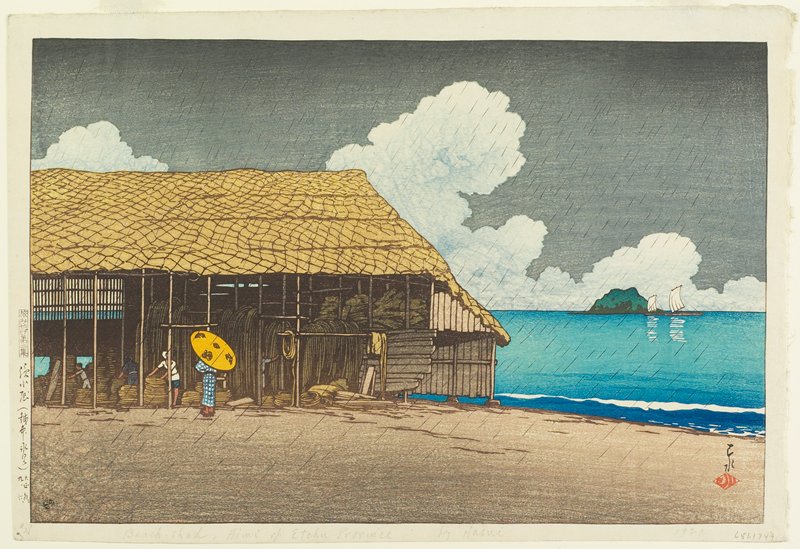
Beach Shed at Himi in Etchū Province
September 6, 1921
Woodblock print, ink and color on paper

Azuma Gorge (Azuma kyo)
1943
Color woodblock print
Twilight Snow at Uchikawa (Uchikawa bosetsu), from the series Eight Views of Kanazawa (Kanazawa hakkei)
20th century
Woodblock print; ink and color on paper
View of Asakusa in Snow (Asakusa secchū no zu), from the series Famous Places of Edo (Edo meisho no uchi)
19th century
Ukiyo-e woodblock print; ink and color on paper
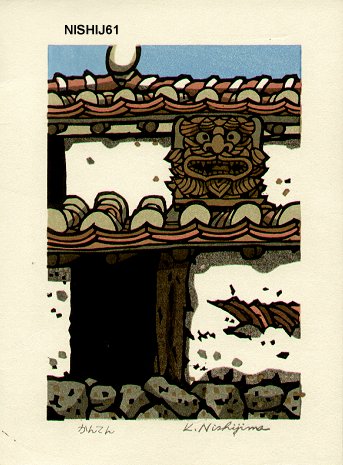
KANTEN, landscape in Okinawa
Woodblock print

Evening at Tago Bay (Tago no ura no yube), from the series "Selection of Views of the Tokaido (Tokaido fukei senshu)"
1940
Color woodblock print; oban

Fujiyama-First Light of the Sun, from the series "Ten Views of Fuji"
1926
Color woodblock print

Hirosaki Castle, from the series "Eight Views of Cherry Blossoms"
1935
Color woodblock print

Sanuki Province

Stone and Brick Construction at Kyobashi

Yase no Sato

Kanbara: Evening Snow (Kanbara, yoru no yuki), from the series "Fifty-three Stations of the Tokaido (Tokaido gojusan tsugi no uchi)," also known as the Hoeido Tokaido
c. 1833/34
Color woodblock print; oban
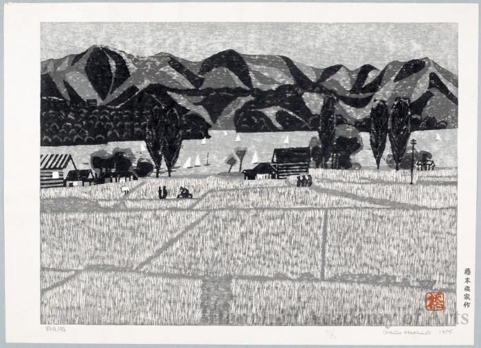
Landscape with Ricefields
1957
Woodblock print

Kanda Myojin Shrine Precent, from the series "Twenty Views of Tokyo" (Tokyo nijukei, Kanda Myojin keidai)
1926
Color woodblock print

Kinosaki in Tajima Province
1924
Woodblock print, ink and color on paper
TWO BIRDS ON A BRANCH
View of Tokyo (Shore with Boats)
19th century
Ink on paper

Seaside Cottage, Himi, Etchu, from the series "Souvenirs of Travel, Second Series" (Tabi miyage dai nishu, Hama shooku (Etchu Himi))
6 September 1921
Color woodblock print

Kiyomizu Hall, Ueno, from the series "Twenty Views of Tokyo" (Tokyo nijukei, Ueno Kiyomizudo)
1928
Color woodblock print

Army Headquarters Building

Fireworks at Ryogoku Bridge

Fujjikawa #38

Kude Beach in Wakasa Province (Wakasa Kude no hama), from the series "Souvenirs of Travel, First Series (Tabi miyage dai isshu)"
1920
Color woodblock print; oban

Kyonghoe Hall, Kyongsong (Keijo Keikaro), from the series "Eight Views of Korea (Chosen hakkei)"
November 1939
Color woodblock print; oban

Matsubara Lake in Shinano Province (Shinshu Matsubarako)
1941
Color woodblock print; oban
Two Fish
19th century
Paper
View of Tokyo, Snow Scene
19th century

British Legation on the Shores of Yokohama Harbour

Great Bridge at Senju

Night Scene at Matsuchiyama

Scene of Soga Brothers

Moon at Umagome, from the series "Twenty Views of Tokyo" (Tokyo nijukei, Uragome no tsuki)
1930
Color woodblock print

Major General Odera Fighting Fiercely at the Hundred Foot Cliff in Weihaiwei (Ikaiei hyakusekigaisho ni Odera shosho funsen su)
1895
Color woodblock print; oban triptych

Tokyo Port Wild Bird Park (One Hundred Views of Tokyo, Message to the 21st Century)
東京百景 21世紀へのメッセージ
1989-99
Woodblock print, zinc anastic plate on paper
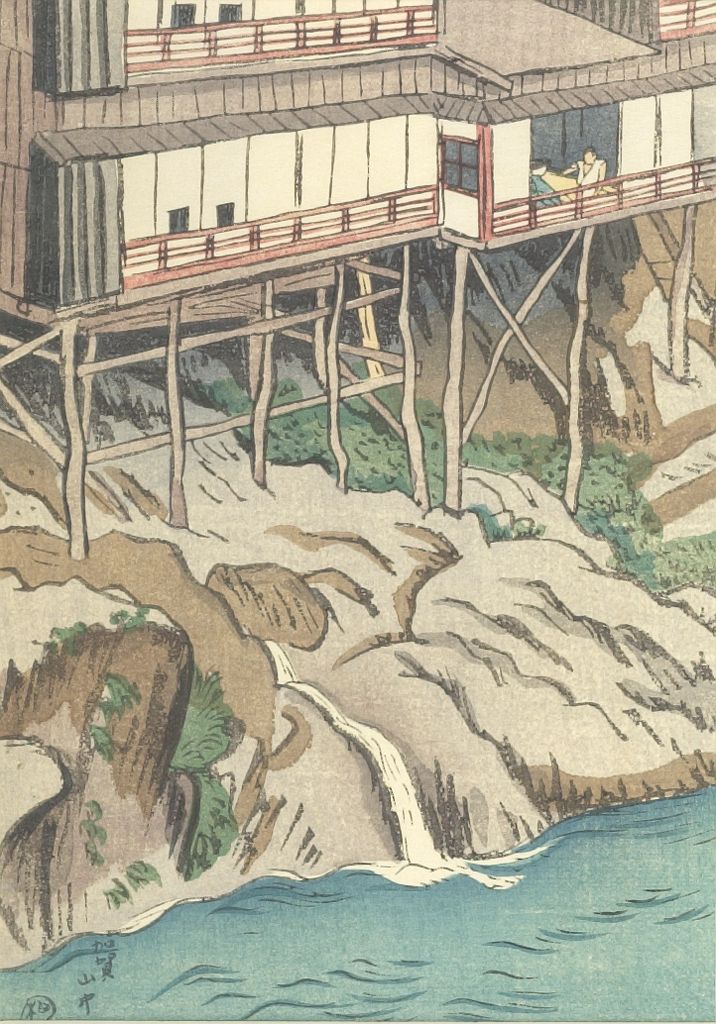
Kaga Sanchu, Taishô period?
Woodblock print

April (Arashiyama Park, a Famous Scenic Resort)
四月 (嵐山)
second half 20th century
Woodblock print, ink and color on paper
Frequently Asked Questions
Meisho-e (名所絵) translates as 'pictures of famous places.' It is the Japanese woodblock print genre depicting scenic viewpoints, pilgrimage sites, urban landmarks, and post-stations along the country's main travel routes. Hiroshige's 'Fifty-Three Stations of the Tōkaidō' is the most famous meisho-e series.
Utagawa Hiroshige (1797–1858) is the defining meisho-e artist. His 'Fifty-Three Stations of the Tōkaidō' (1833–34) and 'One Hundred Famous Views of Edo' (1856–58) made him the leading landscape ukiyo-e printmaker of his generation. Hokusai's 'Thirty-Six Views of Mount Fuji' is also commonly classed as meisho-e.
Meisho-e served as travel guide, devotional reference, and souvenir simultaneously. Edo-period travel restrictions exempted religious pilgrimage along the great routes, and meisho-e depicted exactly those routes — making the prints an armchair-travel medium for the urban audience that could not undertake the journey themselves.