
Dayflower
by Saito Kaoru
- Medium:
- Etching
- Image courtesy of
- Saru Gallery
Description
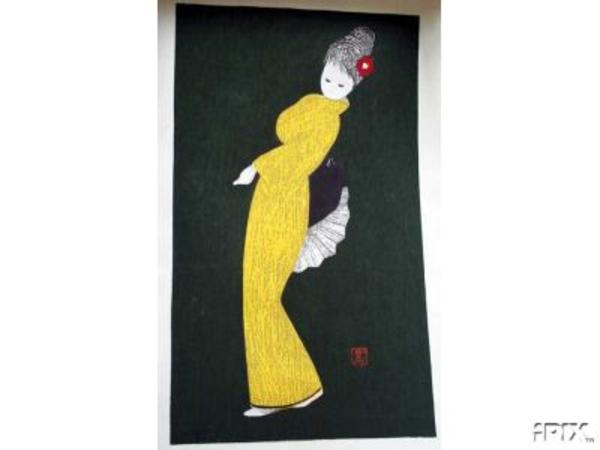
Tsuyukusa, the dayflower (Commelina communis), is a traditional Japanese motif valued for the brief lifespan of its blue blossom — open at dawn, withered by afternoon. The flower carries connotations of impermanence and fleeting attachment in classical Japanese poetry from the Man'yōshū onward, and dye drawn from its petals (aobana) was used to sketch kimono patterns that would later wash away. Saito's etching likely treats the dayflower either as a still-life subject in close focus or as an emblem accompanying a female figure, drawing on the same literary reservoir that fed the Genji cycle. Bitten line is well suited to the plant's narrow leaves and three-petaled bloom, picking out vein and stem against an open ground. Within Saito's wider work, Dayflower belongs to the small-format intaglio prints in which classical Japanese flora and Heian sentiment are filtered through European technique.
More Prints by Saito Kaoru



Featured in Collections
Curated cross-cuts that include this print.
Frequently Asked Questions
Dayflower was created by Saito Kaoru (斎藤薫).