
Actor Ichikawa Komazô III as Nyosan no Miya (The Third Princess), Ukare Zatô (A Blind Street Performer), and Sakata no Kaidô-maru in “Expanded Summer Festival” (“Zôho natsu matsuri”)
- Date:
- About 1791
- Medium:
- Color woodblock print; hosoban
- Source:
- Art Institute of Chicago
Description
This hosoban print in the Art Institute of Chicago, dated to about 1791, shows the kind of multi-role hayagawari (quick-change) virtuosity that kabuki audiences prized in their stars. Ichikawa Komazō III appears here in three sequential roles within Zōhō Natsu Matsuri (Expanded Summer Festival): the noble Nyosan no Miya (Third Princess), the lowly Ukare Zatō (a blind street performer), and the legendary warrior Sakata no Kaidō-maru. Quick-change sequences, in which a single actor transformed onstage from one identity to another, were among the most exhilarating theatrical effects available in late-eighteenth-century kabuki, and prints documenting such sequences attempted to compress that succession into a single visual frame. Shun'ei rises to the compositional challenge by laying out the three figures across the hosoban sheet in a way that registers all three identities simultaneously. The print is both a tribute to Komazō III's protean range and a virtuosic Katsukawa-school exercise in multi-figure composition.
More Prints by Katsukawa Shun'ei

Actor Sawamura Sôjûrô III as Oda Kazusanosuke Harunaga in “Muromacho Chronicle in Kana Script” (“Kanagaki Muromachi bundan”)
About 1791
Color woodblock print; hosoban triptych

Act Four: Enya Hangan's Castle from the play Chushingura (Treasury of the Forty-seven Loyal Retainers)
c. 1795
Color woodblock print; koban

The Actor Segawa Tomisaburo II in an Unidentified Role
c. 1793
Color woodblock print; hosoban; from a multisheet composition (?)

The Actor Yamashita Kinsaku II as the maid Tsumagi in the play "Otokyama O-Edo no Ishizue," performed at the Kiri Theater in the eleventh month, 1794
c. 1794
Color woodblock print; hosoban
More Summer Prints
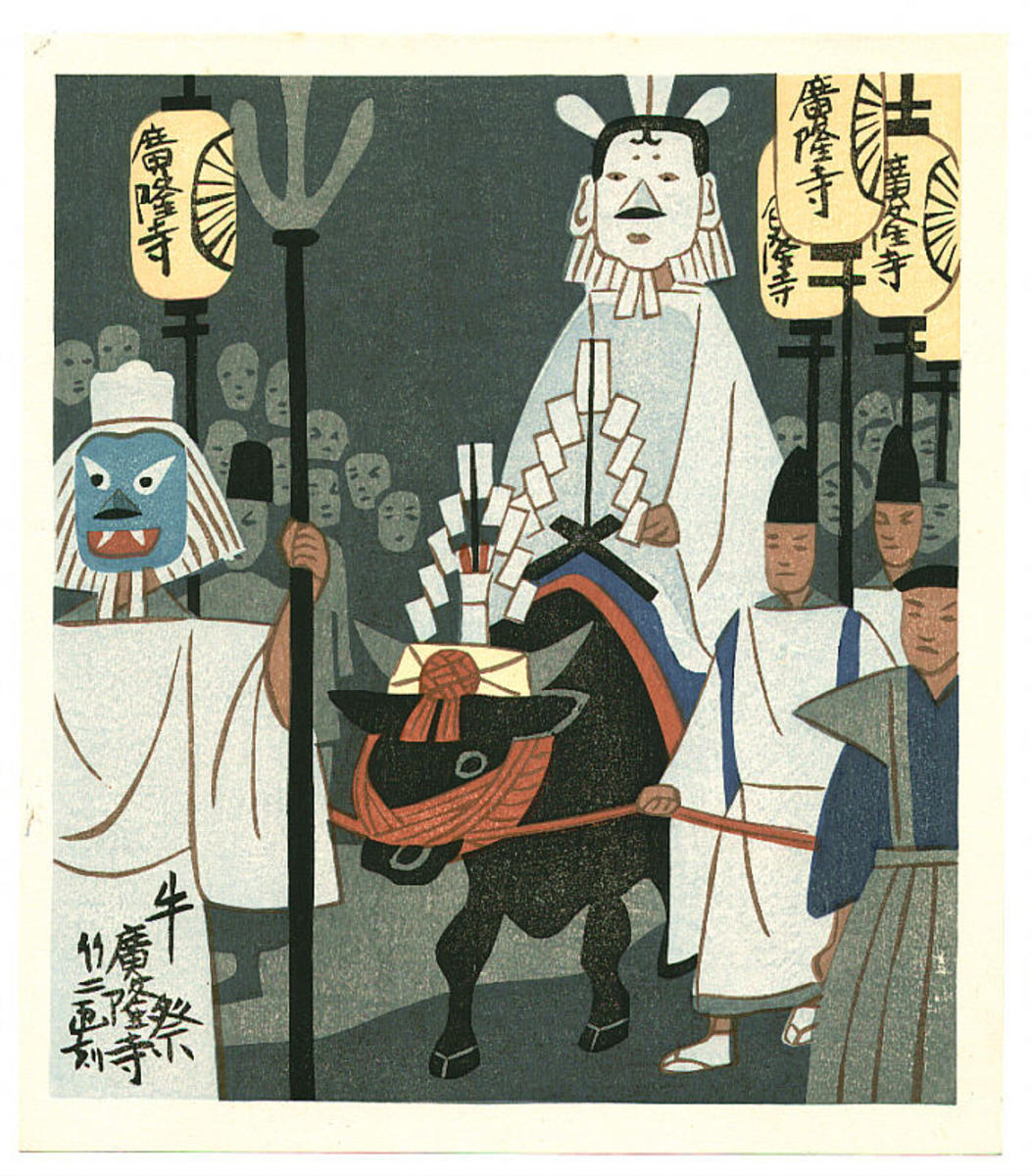
Bull Festival at Koryuji
広隆寺牛祭
Woodblock print
February (The Annual Festival of the Fushimi Inari)
二月 (伏見稲荷大社祭)
second half 20th century
Woodblock print, ink and color on paper

July (Gorgeous Procession of Yama-hoko or the Floats at the Gion Festival)
七月 (祇園祭山鉾巡行)
second half 20th century
Woodblock print, ink and color on paper

August (The Bonfire Festival of the Daimonji Hill Viewed from the Sanjo Bridge)
八月 (三条大橋より大文字)
second half 20th century
Woodblock print, ink and color on paper
Frequently Asked Questions
Actor Ichikawa Komazô III as Nyosan no Miya (The Third Princess), Ukare Zatô (A Blind Street Performer), and Sakata no Kaidô-maru in “Expanded Summer Festival” (“Zôho natsu matsuri”) was created by Katsukawa Shun'ei (勝川春英) in About 1791.
Actor Ichikawa Komazô III as Nyosan no Miya (The Third Princess), Ukare Zatô (A Blind Street Performer), and Sakata no Kaidô-maru in “Expanded Summer Festival” (“Zôho natsu matsuri”) depicts summer.