
Kotobuki
- Date:
- 1997
- Medium:
- Mezzotint
- Edition:
- Self-printed
- Source:
- Art Institute of Chicago
Description
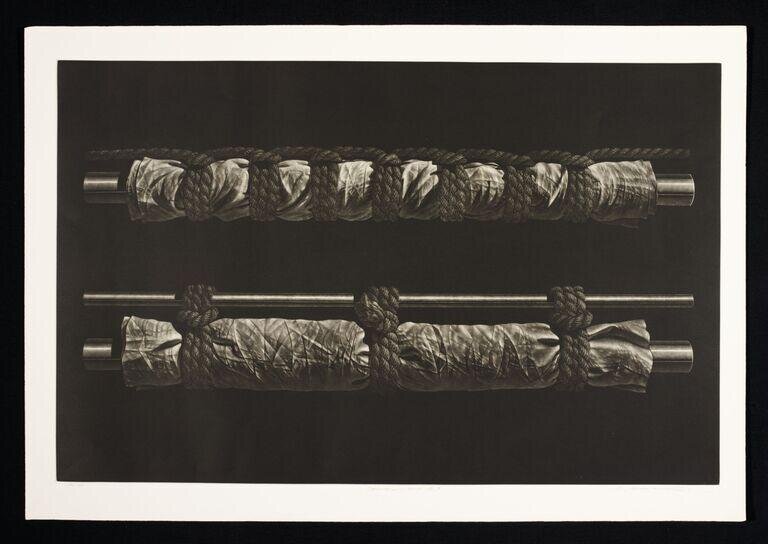
Kotobuki, meaning "celebration" or "longevity" in Japanese, is a 1997 mezzotint that takes its title from a concept deeply embedded in Japanese decorative arts and ceremonial culture. The word appears on gifts, at New Year celebrations, and in kabuki theater as an auspicious invocation. Hamanishi renders the subject with the rich, velvety tones unique to the mezzotint process, where the image emerges from total darkness through the painstaking burnishing of the copper plate's roughened surface. The celebratory theme may be expressed through traditional symbols of good fortune such as cranes, turtles, pine, bamboo, or plum, each carrying specific associations with longevity and prosperity. The print exemplifies Hamanishi's ongoing project of interpreting Japanese cultural motifs through a Western printmaking technique, creating works that exist at the intersection of two traditions.
More Prints by Katsunori Hamanishi


Featured in Collections
Curated cross-cuts that include this print.
Frequently Asked Questions
Kotobuki was created by Katsunori Hamanishi (浜西勝則) in 1997.
Kotobuki uses Mezzotint, on mezzotint.