
Gathering Herbs
- Date:
- c. 1796/97
- Medium:
- Color woodblock print; long surimono
- Format:
- Oban
- Source:
- Art Institute of Chicago
Description
Figures move through a pastoral setting gathering seasonal herbs, their tasks depicted with the attentive detail Hokusai brought to scenes of rural industry. Issued as a long-format surimono (nagaban) around 1796–97, the print was likely commissioned for a poetry gathering commemorating a spring custom tied to the lunar calendar, when collecting young greens carried both culinary and medicinal significance.
More Prints by Katsushika Hokusai
Hokusai manga (Hokusai Sketchbooks)
19th century
Woodblock-printed book; ink and light color on paper
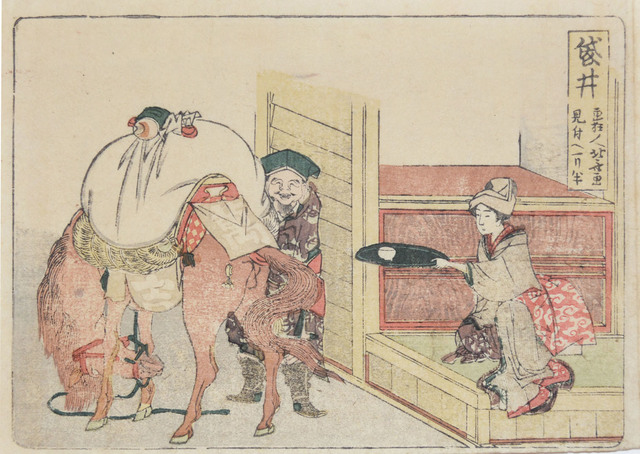
Fukuroi
1804
Japanese woodblock print

The Fishermen of Katase Hauling in Their Nets: The Purple Shell (Murasakigai)
1821
Color woodblock print with metallic pigments; surimono shikishiban

Burdock Root (Kurama gobo), from the series "A Selection of Horses (Uma-zukushi)"
1822
Color woodblock print; shikishiban, surimono
More Figures Prints
Frequently Asked Questions
Gathering Herbs was created by Katsushika Hokusai (葛飾北斎) in c. 1796/97.
Gathering Herbs depicts figures, spring, and daily life.