
Horse Iris Pattern (Koma shobu), from the series "A Selection of Horses (Uma-zukushi)"
- Date:
- 1822
- Medium:
- Color woodblock print; shikishiban, surimono
- Source:
- Art Institute of Chicago
Description
Horse Iris Pattern comes from Katsushika Hokusai's surimono series A Selection of Horses, designed in 1822 to celebrate the Year of the Horse. The Uma-zukushi set was published for poetry clubs, with each sheet using equine themes as an excuse for varied still lifes, costumes, and pattern designs. In Horse Iris Pattern, Hokusai concentrates on a textile motif in which stylized horses are integrated with iris flowers, transforming an actual fabric pattern into the protagonist of the print. The composition reads as both decorative arts study and visual pun, since the iris, called shobu, is a homophone for shobu meaning martial spirit, a quality long associated with horses in Japanese culture. As a surimono, the sheet was produced in small editions on heavyweight paper with refined pigments, often including silver, gold, and embossing, elevating it well above commercial Edo ukiyo-e production. Hokusai's mastery of pattern, line, and the close observation of textile design is fully on display, presented with the precision a poetry connoisseur would appreciate. The Art Institute of Chicago holds this ukiyo-e print as part of its surimono collection, where Katsushika Hokusai's contributions to private poetry printing are documented in depth, illuminating an essential, less commercial side of the Edo ukiyo-e tradition.
More Prints by Katsushika Hokusai
Hokusai manga (Hokusai Sketchbooks)
19th century
Woodblock-printed book; ink and light color on paper
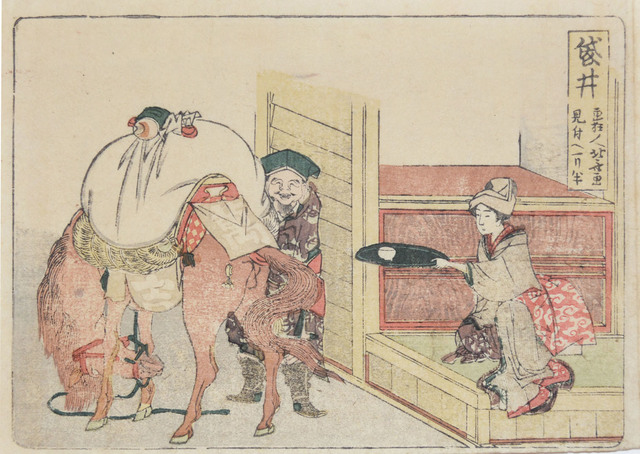
Fukuroi
1804
Japanese woodblock print

The Fishermen of Katase Hauling in Their Nets: The Purple Shell (Murasakigai)
1821
Color woodblock print with metallic pigments; surimono shikishiban

Burdock Root (Kurama gobo), from the series "A Selection of Horses (Uma-zukushi)"
1822
Color woodblock print; shikishiban, surimono
More Birds & Flowers Prints
Featured in Collections
Curated cross-cuts that include this print.
Frequently Asked Questions
Horse Iris Pattern (Koma shobu), from the series "A Selection of Horses (Uma-zukushi)" was created by Katsushika Hokusai (葛飾北斎) in 1822.
Horse Iris Pattern (Koma shobu), from the series "A Selection of Horses (Uma-zukushi)" depicts birds & flowers and landscapes.