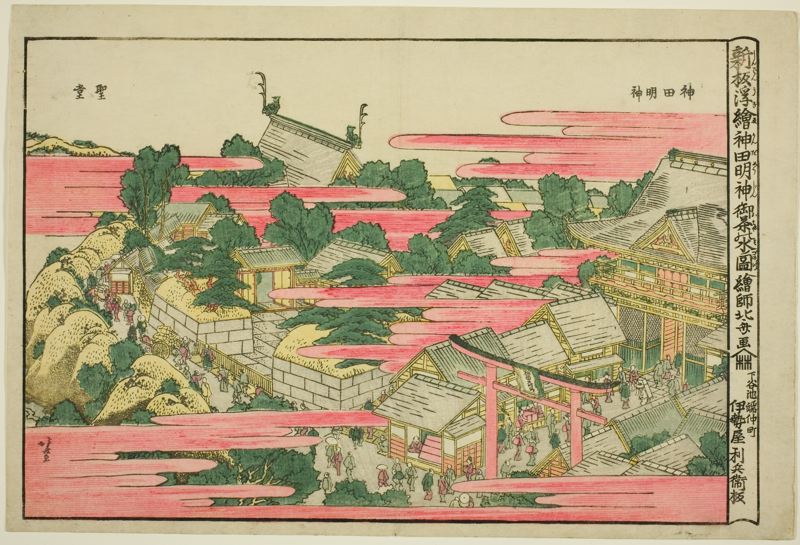
Ochanomizu in Kanda Mojin Shrine
- Medium:
- Woodblock print
- Format:
- Oban
- Source:
- Art Institute of Chicago
Description
The Ochanomizu cliff and stream running below the Kanda Myojin shrine compound — the "tea water" channel that gave the district its name — appear in this print from around 1806. Ochanomizu was both a scenic destination within Edo and a site of practical water supply, its clear spring water prized for tea preparation by the shogunal household, a detail that infuses even a topographic view with flavor of the capital's court culture.
More Prints by Katsushika Hokusai
Hokusai manga (Hokusai Sketchbooks)
19th century
Woodblock-printed book; ink and light color on paper
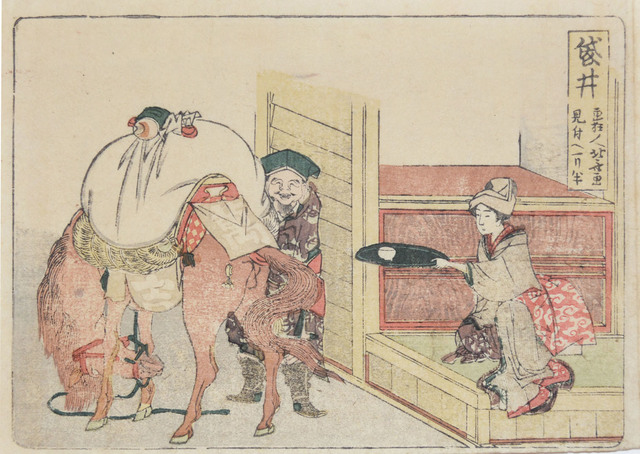
Fukuroi
1804
Japanese woodblock print

The Fishermen of Katase Hauling in Their Nets: The Purple Shell (Murasakigai)
1821
Color woodblock print with metallic pigments; surimono shikishiban

Burdock Root (Kurama gobo), from the series "A Selection of Horses (Uma-zukushi)"
1822
Color woodblock print; shikishiban, surimono
More Urban Scenes Prints
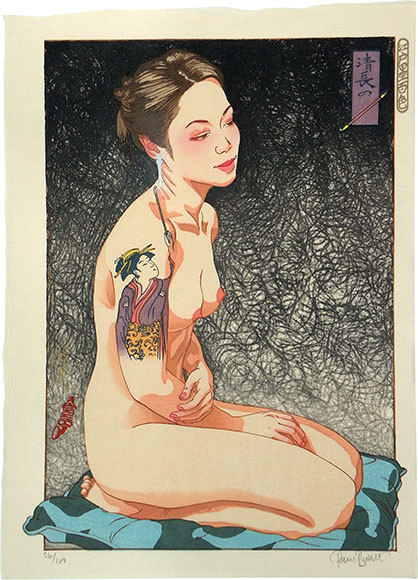
A Hundred Shades of Ink of Edo: Kiyonaga's Pipe (Edo zumi hyaku shoku: Kiyonaga no kiseru)
Woodblock print

View of Kabuki Theater from Matsuya (Ginza Matsuya yori Kabukiza), no. 3 from the series "Pictures of Ginza, First Series (Gashu Ginza dai isshu)"
1928
Color lithograph

Distant View of Mitsukoshi Movie Theater in Shinjuku from the Sixth Floor of Hoteiya (Hoteiya rokkai kara Shinjuku Mitsukoshi Musashi no kan enbo zu), no. 1 from the series "Scenery of Shinjuku (Gashu Shinjuku fukei)"
1930
Color lithograph
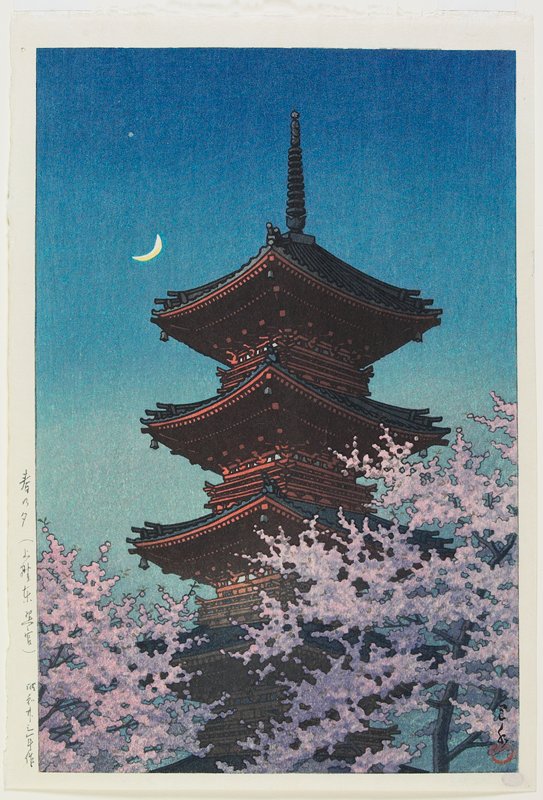
Spring Dusk at the Tōshō Shrine in Ueno
1948
Woodblock print, ink and color on paper
Featured in Collections
Curated cross-cuts that include this print.
Frequently Asked Questions
Ochanomizu in Kanda Mojin Shrine was created by Katsushika Hokusai (葛飾北斎).
Ochanomizu in Kanda Mojin Shrine depicts urban scenes and temples & shrines.