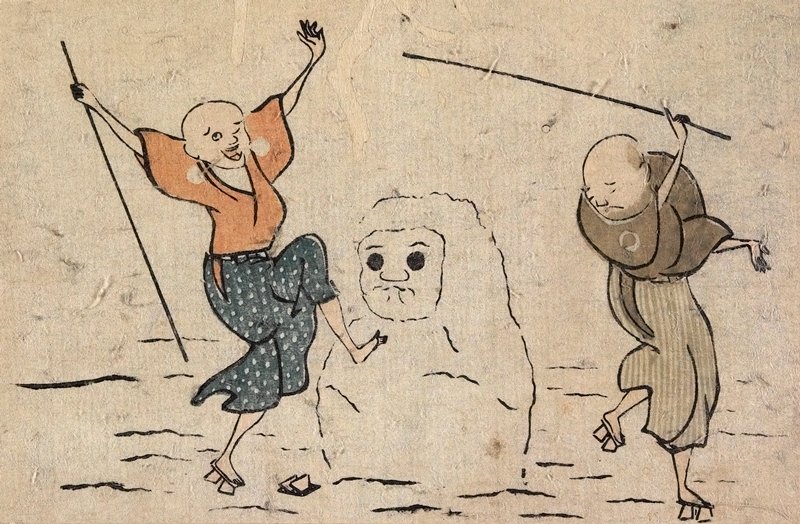
Two Blind Men and Snowman
- Date:
- 1780s
- Medium:
- Woodblock print (surimono), ink and color on paper
- Format:
- Oban
- Dimensions:
- 11.1 × 16.8 cm
- Source:
- Minneapolis Institute of Art
Description
Two blind itinerant musicians (zatō) encounter a snowman in a winter street scene, their sightlessness playing against the comic visibility of the snow figure that they cannot perceive. Produced as a surimono in the 1780s, the print reflects Hokusai's early engagement with genre humor and the visual irony that would later mature into the psychological subtlety of his great landscape series.
More Prints by Katsushika Hokusai
Hokusai manga (Hokusai Sketchbooks)
19th century
Woodblock-printed book; ink and light color on paper
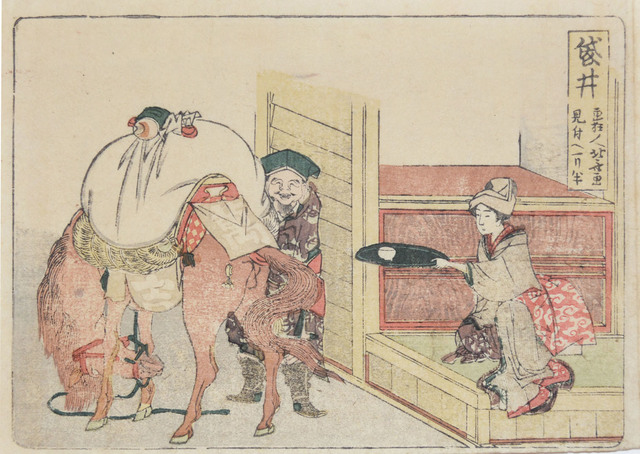
Fukuroi
1804
Japanese woodblock print

The Fishermen of Katase Hauling in Their Nets: The Purple Shell (Murasakigai)
1821
Color woodblock print with metallic pigments; surimono shikishiban

Burdock Root (Kurama gobo), from the series "A Selection of Horses (Uma-zukushi)"
1822
Color woodblock print; shikishiban, surimono
More Figures Prints
Frequently Asked Questions
Two Blind Men and Snowman was created by Katsushika Hokusai (葛飾北斎) in 1780s.
Two Blind Men and Snowman depicts figures, snow scenes, and winter.
Two Blind Men and Snowman measures 11.1 × 16.8 cm (Oban format).