
Yoshino, from the series "Snow, Moon and Flowers (Setsugekka)"
- Date:
- c. 1833
- Medium:
- Color woodblock print; oban
- Source:
- Art Institute of Chicago
Description
Yoshino, from the series Snow, Moon and Flowers (Setsugekka), is one of three designs in Katsushika Hokusai's elegantly themed late landscape set inspired by the classical poetic triad of snow, moon, and blossoms. Published around 1828, the series uses one celebrated location to embody each element; Yoshino, in the mountains of Yamato, is famous for its dense cherry groves and serves here as the embodiment of flowers (ka). Hokusai shows the slopes of Yoshino covered in clouds of pale pink and white blossoms, with paths and small figures of pilgrims winding through the trees and distant peaks fading into a soft mist. The design uses delicate bokashi gradations rather than the more saturated Prussian blues of the Mount Fuji series, in keeping with the lyrical, almost ethereal mood of cherry-blossom imagery. The Art Institute of Chicago holds this Edo ukiyo-e print and documents it as part of the Setsugekka set. As a Yoshino subject, the design carries centuries of literary association, going back at least to the poetry of the Heian and medieval courts. Hokusai treats this freight of tradition lightly: his version of Yoshino is essentially a panoramic landscape composition, in which famous-place pilgrimage merges with a generalized celebration of spring. The result is a quintessential example of how Hokusai used ukiyo-e print conventions to bring classical poetic themes into a modern visual format accessible to a wide Edo audience.
More Prints by Katsushika Hokusai
Hokusai manga (Hokusai Sketchbooks)
19th century
Woodblock-printed book; ink and light color on paper
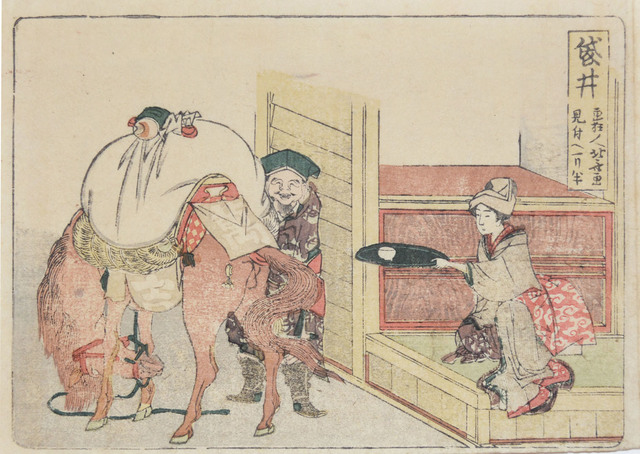
Fukuroi
1804
Japanese woodblock print

The Fishermen of Katase Hauling in Their Nets: The Purple Shell (Murasakigai)
1821
Color woodblock print with metallic pigments; surimono shikishiban

Burdock Root (Kurama gobo), from the series "A Selection of Horses (Uma-zukushi)"
1822
Color woodblock print; shikishiban, surimono
More Birds & Flowers Prints
Featured in Collections
Curated cross-cuts that include this print.
Frequently Asked Questions
Yoshino, from the series "Snow, Moon and Flowers (Setsugekka)" was created by Katsushika Hokusai (葛飾北斎) in c. 1833.
Yoshino, from the series "Snow, Moon and Flowers (Setsugekka)" depicts birds & flowers, landscapes, and moonlight.