
Crane Among Reeds
葦間鶴図
- Date:
- 1887–92
- Medium:
- Album leaf; ink and color on silk
Description
Crane Among Reeds is a Meiji-period album leaf by Kawabata Gyokushō, executed in ink and color on silk and dated 1887-1892, held by the Metropolitan Museum of Art as part of the Charles Stewart Smith Collection given to the museum in 1914 (accession number 14.76.61.91). The painting measures 34.3 by 27.6 cm (13 1/2 by 10 7/8 in.) and depicts a single crane standing in marsh reeds — one of the most heavily freighted motifs in Japanese painting, associated for over a millennium with longevity, fidelity, and Daoist immortality, and a standard subject for senior nihonga painters working in the Maruyama-school manner. Gyokushō's drawing handles the bird with the close attention to anatomy and posture that his teacher Nakajima Raishō, working in the direct lineage of Maruyama Ōkyo, had emphasized as the central discipline of Kyoto-style shasei (sketching from life). The reeds, suggested in a few quick washes of color and ink, give the composition its environmental setting without competing with the figure of the bird. As a small, intimate example of Gyokushō's bird studies, the leaf is widely used in teaching about the persistence of Edo-period naturalist painting habits into the Meiji painting academy and the Imperial Household Artist tradition that culminated in Gyokushō's 1904 appointment to the Teishitsu Gigeiin.
More Prints by Kawabata Gyokushō

Spring Warmth (Haru atatakai no zu)
春暖之図
March 1881
Hanging scroll; ink and color on silk
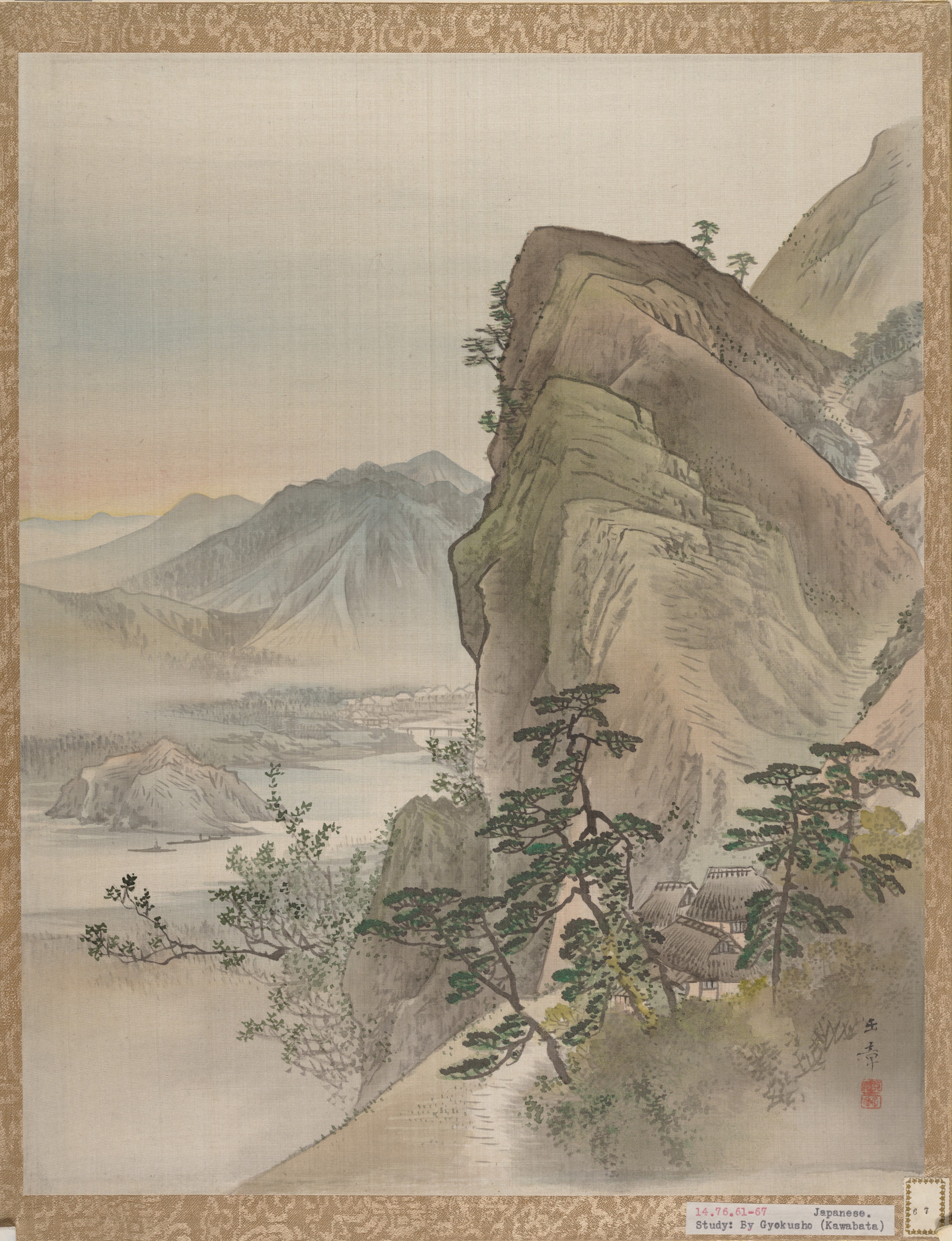
Landscape
山水図
ca. 1887–92
Album leaf; ink and color on silk
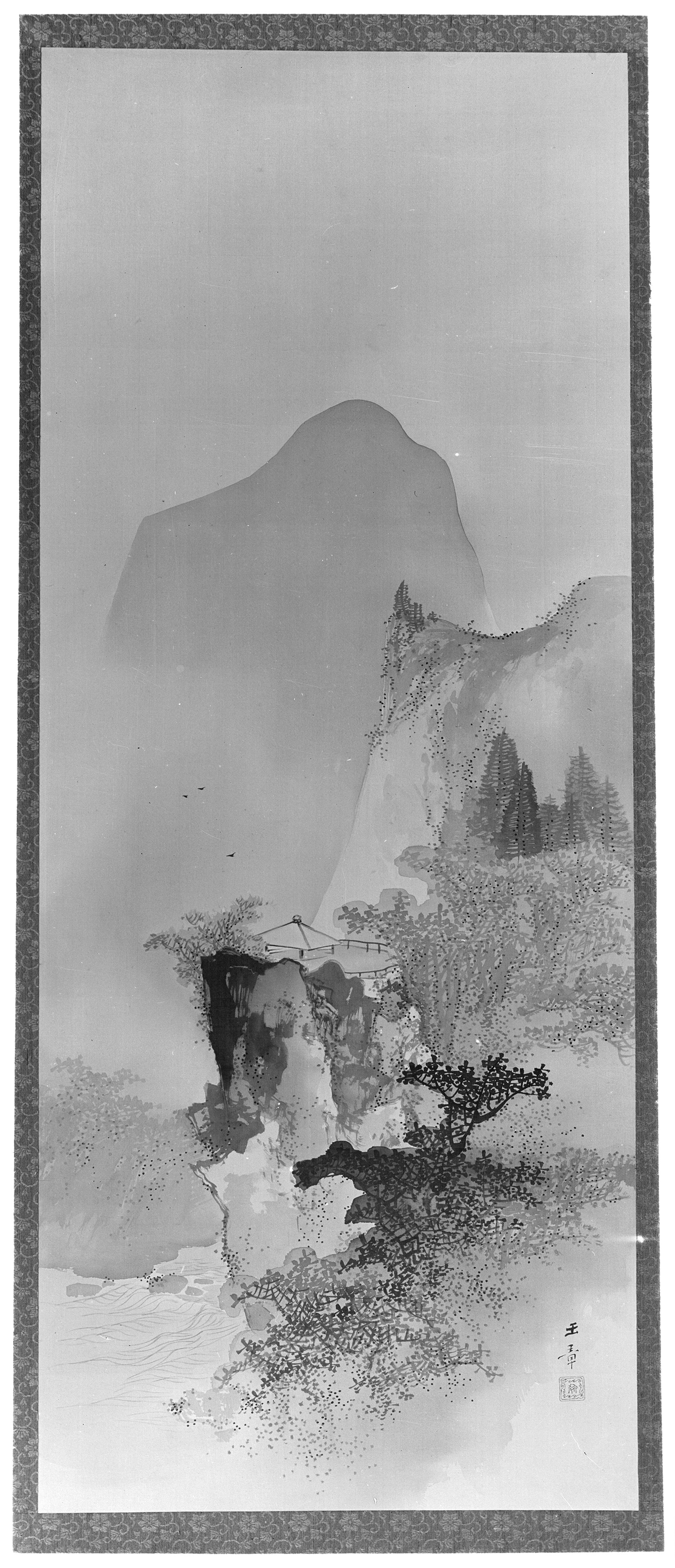
Spring Landscape
春景山水図
20th century (1900–1912)
Set of two hanging scrolls; ink and color on silk

Eggplant Plant and Mount Fuji
茄子と富士図
ca. 1880–1890
Color woodblock print
More Birds & Flowers Prints
Frequently Asked Questions
Crane Among Reeds (葦間鶴図) was created by Kawabata Gyokushō (川端玉章) in 1887–92.
Crane Among Reeds depicts birds & flowers.