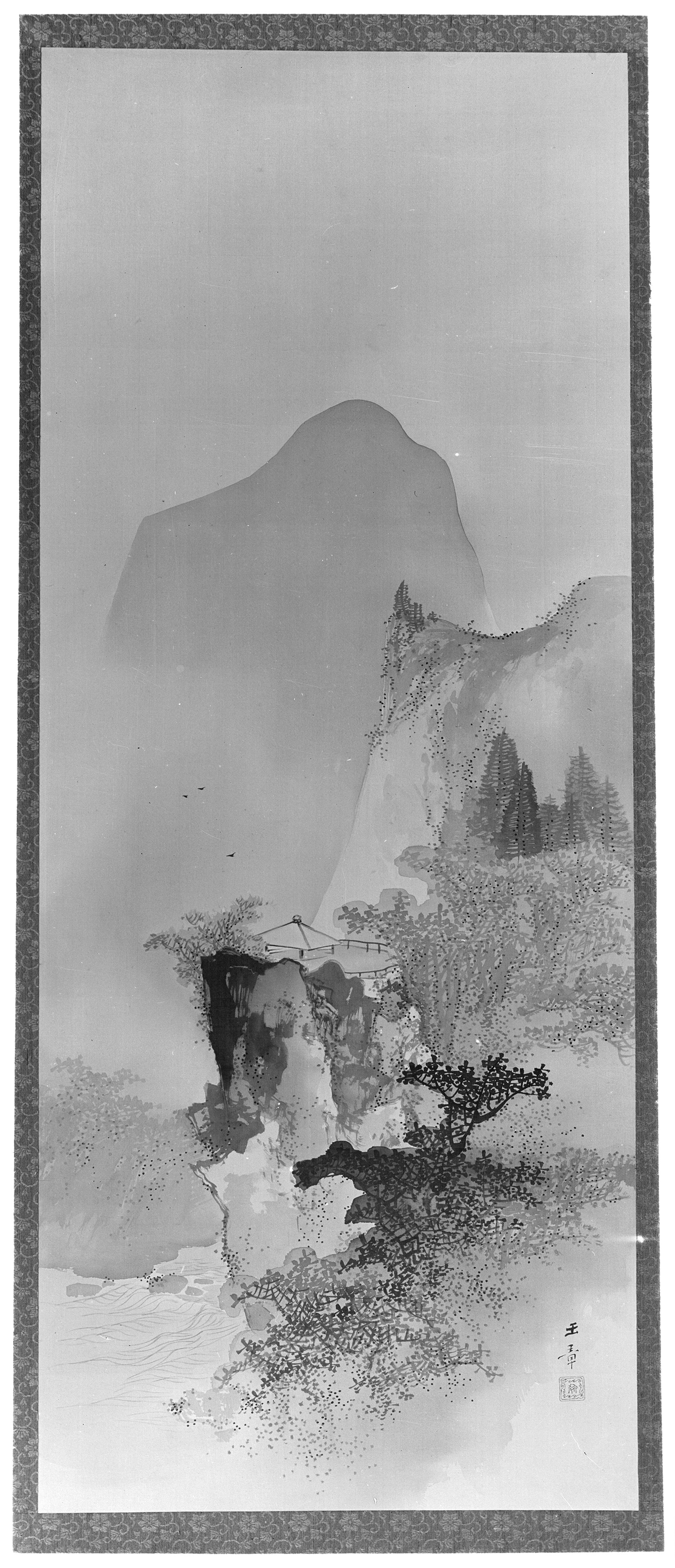
Spring Landscape
春景山水図
- Date:
- 20th century (1900–1912)
- Medium:
- Set of two hanging scrolls; ink and color on silk
- Source:
- Metropolitan Museum of Art
Description
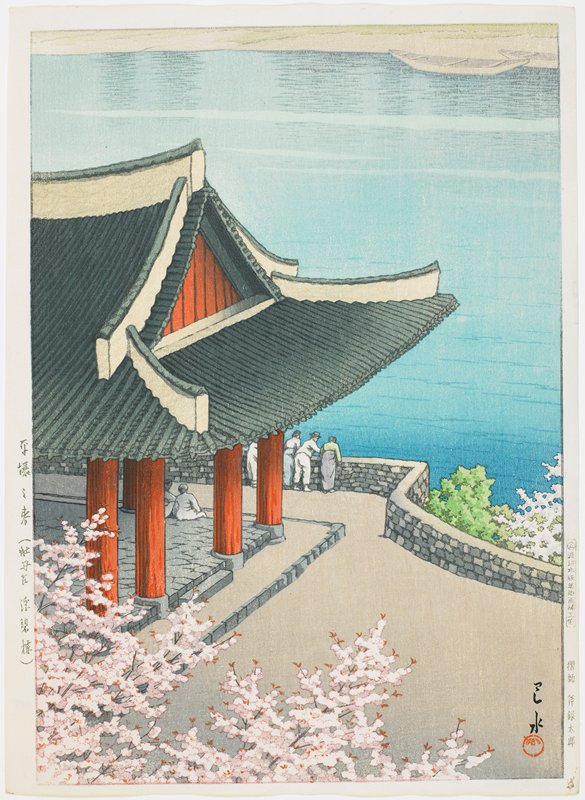
Spring Landscape is a set of two large hanging scrolls by Kawabata Gyokushō, executed in ink and color on silk during his late period (about 1900-1912) and acquired by the Metropolitan Museum of Art in 1908 as the gift of Francis Lathrop (accession numbers 08.148.10 and .11). The pair functions as a single composition spread across two scrolls — a habit of presentation borrowed from the larger format of the folding screen and from the Buddhist pair-scroll tradition — depicting a Japanese mountain landscape in the soft, atmospheric mood of early spring. Each scroll measures roughly 123.5 by 50.2 cm (48 5/8 by 19 3/4 in.) in the image and 131.8 by 54.9 cm overall with mounting, a scale that places the work firmly within the public-facing, formal painting practice expected of a senior Meiji-period Imperial Household Artist. Gyokushō's Maruyama-Shijō training under Nakajima Raishō is evident in the careful drawing of trees, rocks, and water, while his selective absorption of Western perspective during his 1876-1878 study under Antonio Fontanesi at the Kōbu Bijutsu Gakkō shows in the calibrated recession of the distant peaks. As one of the few large-format Gyokushō landscape compositions in an American collection, the pair is a key example of his late-career engagement with the sansui-ga (landscape) genre and an important counterweight to the better-known small bird-and-flower album leaves he produced for the print trade.
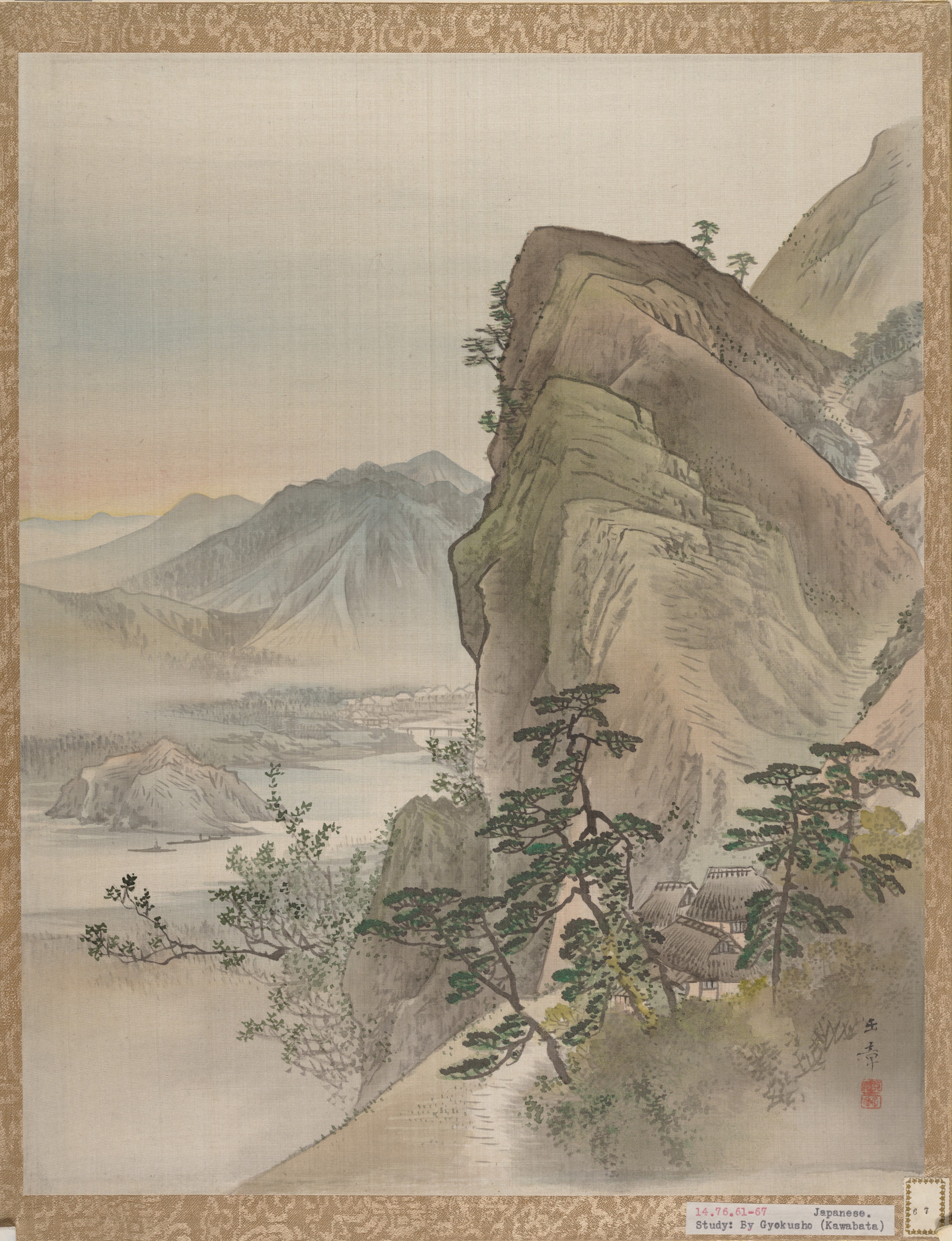
More Prints by Kawabata Gyokushō



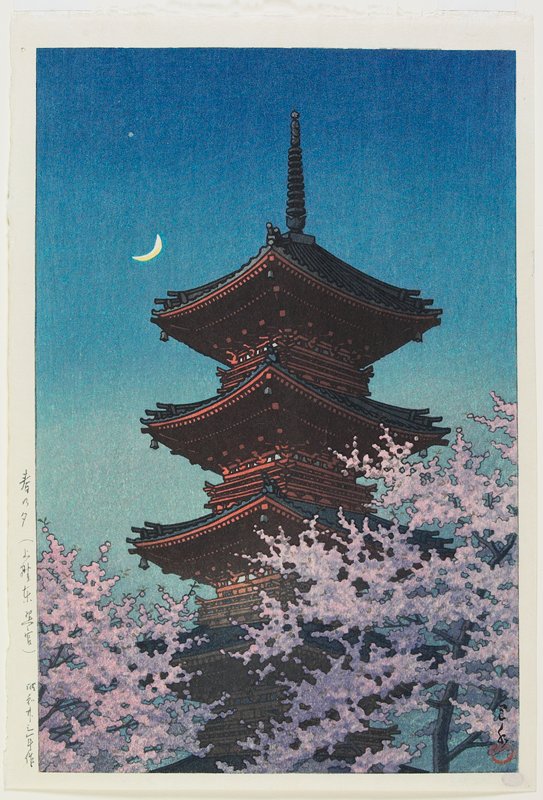
More Spring Prints

Frequently Asked Questions
Spring Landscape (春景山水図) was created by Kawabata Gyokushō (川端玉章) in 20th century (1900–1912).
Spring Landscape depicts spring.