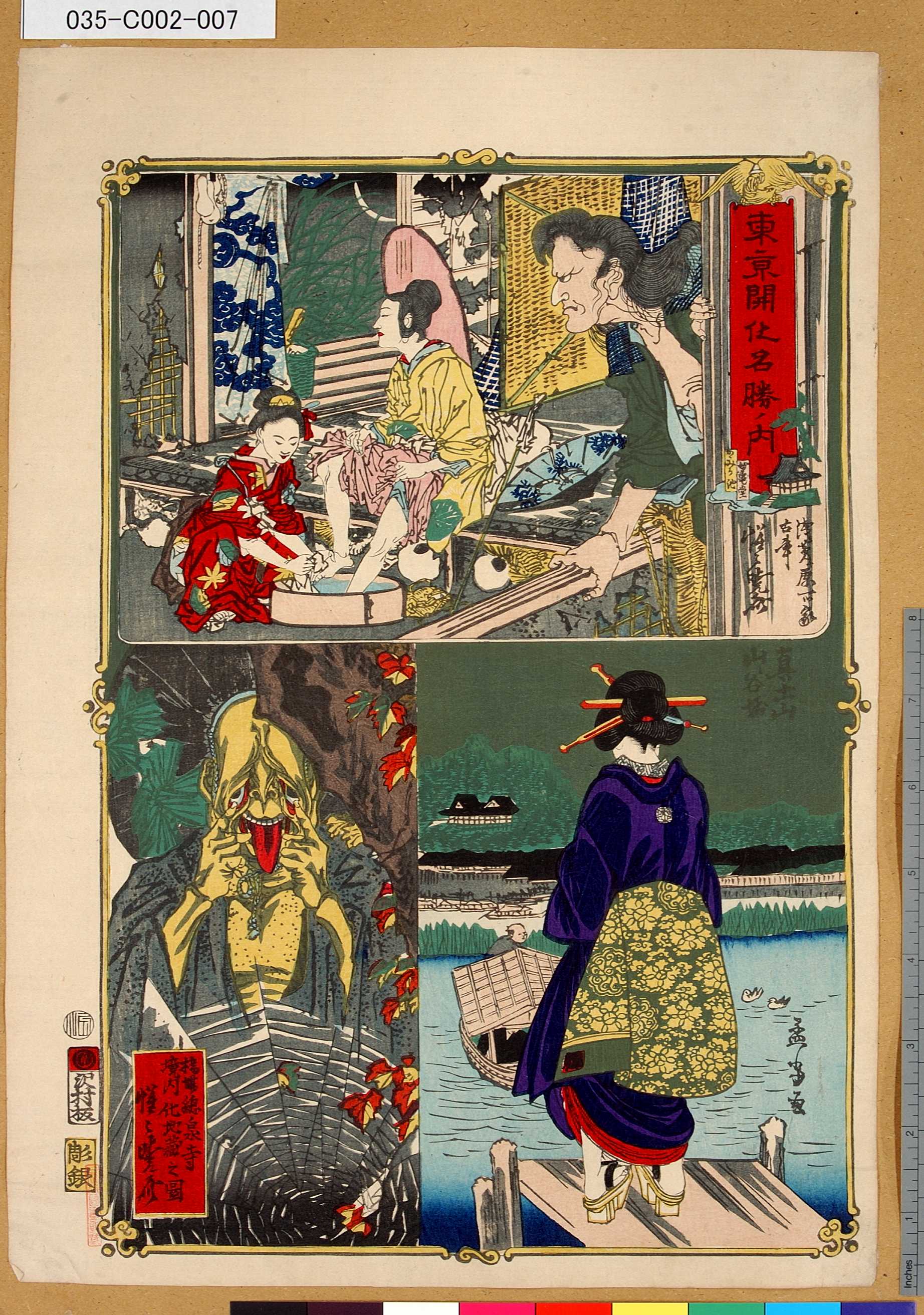
「東京開化名勝ノ内」 「浅茅ヶ原一ツ家古事」「真土山山谷掘」「橋場総泉寺境内化地蔵之図」
- Medium:
- Woodblock print
- Source:
- Metropolitan Museum of Art
- Image courtesy of
- Metropolitan Museum of Art
Description
This print shares its title with kawanabe-kyosai--6 and appears to be a second impression or variant state of the same design from the 'Tōkyō Kaika Meishō no Uchi' series. The three vignettes — the Asajigahara murderous-hag legend, the Sanyabori canal at Manuchiyama, and the Kewai Jizō at Hashiba's Sōsenji — constitute the same composition examined under different printmaking conditions. Differences between impressions of multi-state nishiki-e from this period may manifest in ink saturation, color register alignment, paper tone, or progressive block wear affecting line crispness. The Asajigahara legend, circulating in Edo fiction and kabuki dramatizations of the Adachigahara tale, gave this locale potent supernatural associations that Kyosai — trained from childhood in demon and ghost imagery — would have engaged with evident authority. The Kewai Jizō subject grounds the supernatural content in living devotional practice, showing the coexistence of folk religion and uncanny lore within the meishō-e geographic record.
More Prints by Kawanabe Kyosai
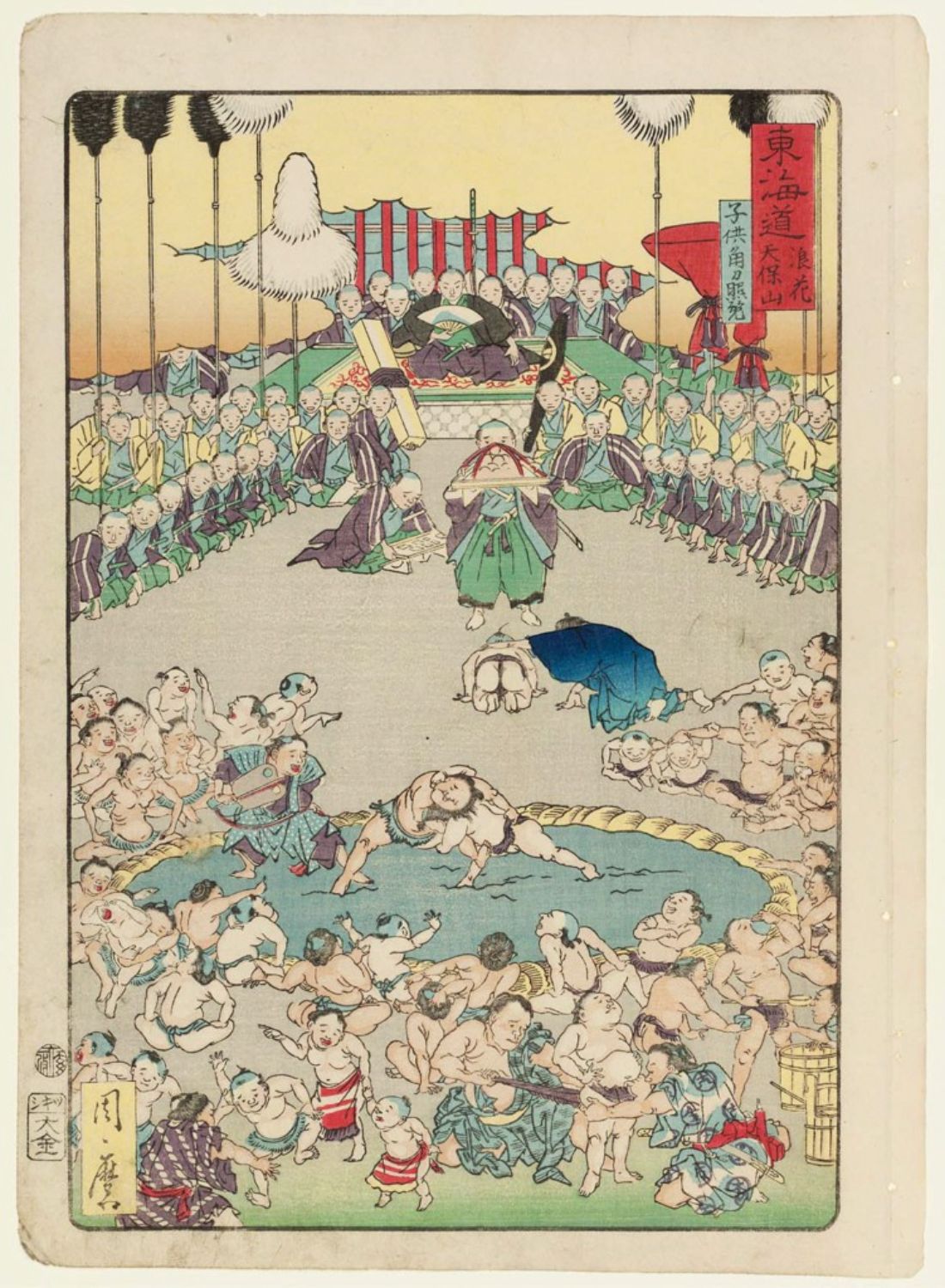
Tenpôzan in Osaka: Viewing Children's Sumo (Naniwa Tenpôzan kodomo sumô shôran), from the series Scenes of Famous Places along the Tôkaidô Road (Tôkaidô meisho fûkei), also known as the Processional Tôkaidô (Gyôretsu Tôkaidô), here called Tôkaidô
1863
Woodblock print
Kyosai, Royal Academy, London, FREE DOMESTIC SHIPPING
2022
Original Museum Lithographic Exhibition Poster
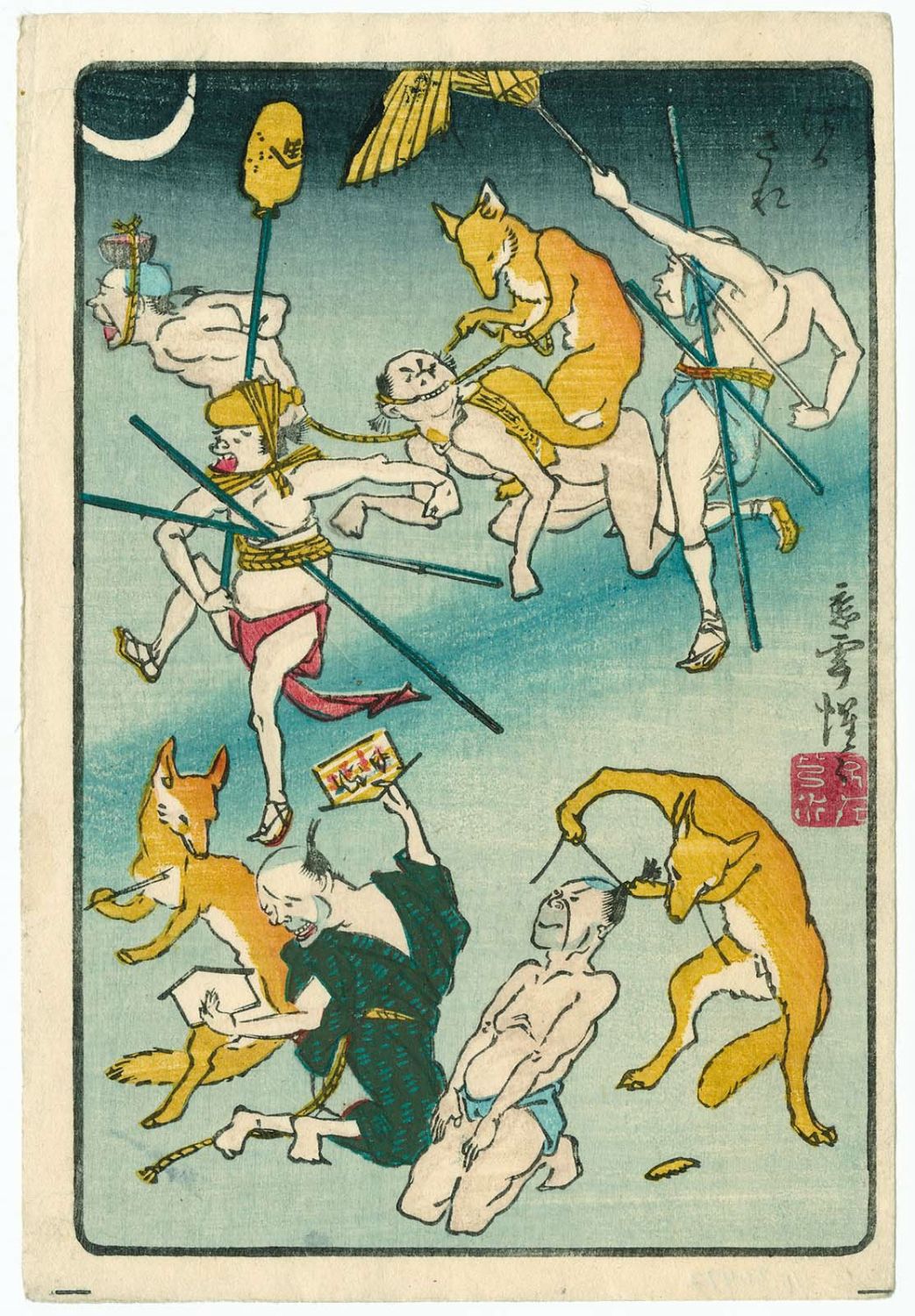
from the series One Hundred Pictures by Kyôsai (Kyôsai hyakuzu)
Woodblock print
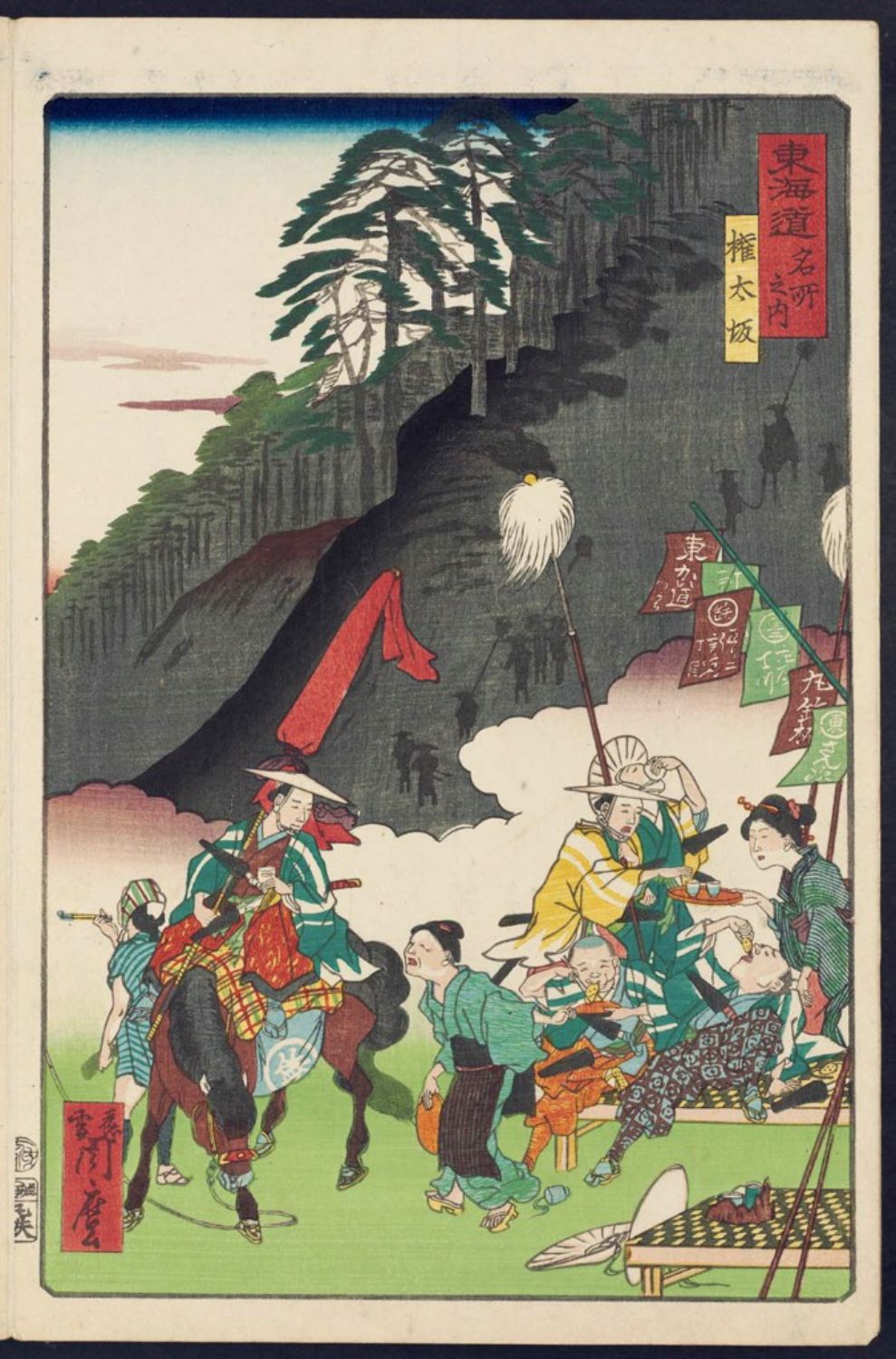
Gontazaka, from the series Scenes of Famous Places along the Tôkaidô Road (Tôkaidô meisho fûkei), also known as the Processional Tôkaidô (Gyôretsu Tôkaidô), here called Tôkaidô meisho no uchi
Woodblock print
Frequently Asked Questions
「東京開化名勝ノ内」 「浅茅ヶ原一ツ家古事」「真土山山谷掘」「橋場総泉寺境内化地蔵之図」 was created by Kawanabe Kyosai (河鍋暁斎).