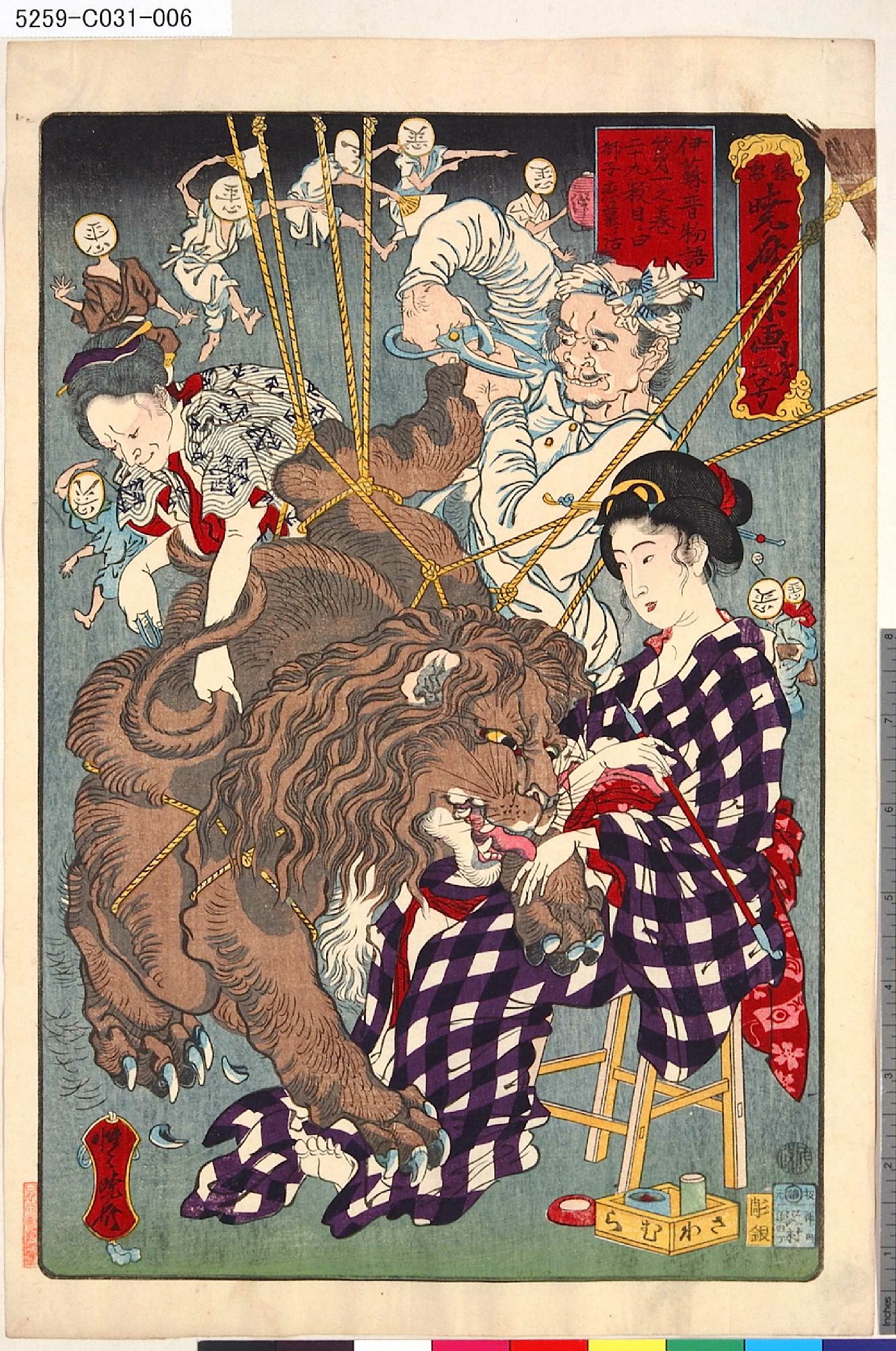
「応需暁斎楽画」 「第六号」「伊蘇普物語第一之巻二十九枚目ニ曰獅子恋慕ノ話」
- Medium:
- Woodblock print
- Source:
- Metropolitan Museum of Art
- Image courtesy of
- Metropolitan Museum of Art
Description
The sixth Rakuga print illustrates Aesop's fable of the lion in love — the story in which a lion, smitten with a farmer's daughter, agrees to have his claws and teeth removed at the farmer's request and is subsequently beaten off by the now-unthreatened farmer. The fable, catalogued in the Aesop's Fables translation circulating in Meiji Japan as volume one, story twenty-nine, carried obvious allegorical potential for commentary on the vulnerabilities created by desire and trust misplaced. Kyosai's rendering would have transposed the Mediterranean setting into something visually legible to Japanese audiences, likely depicting the lion in a manner informed by the Chinese and Japanese lion (shishi) traditions of decorative painting rather than any naturalistic study of the African lion. The composition probably emphasizes the moment of the lion's humiliation, a subject that lent itself to Kyosai's talent for depicting figures in states of comic indignity or physical exertion.
More Prints by Kawanabe Kyosai
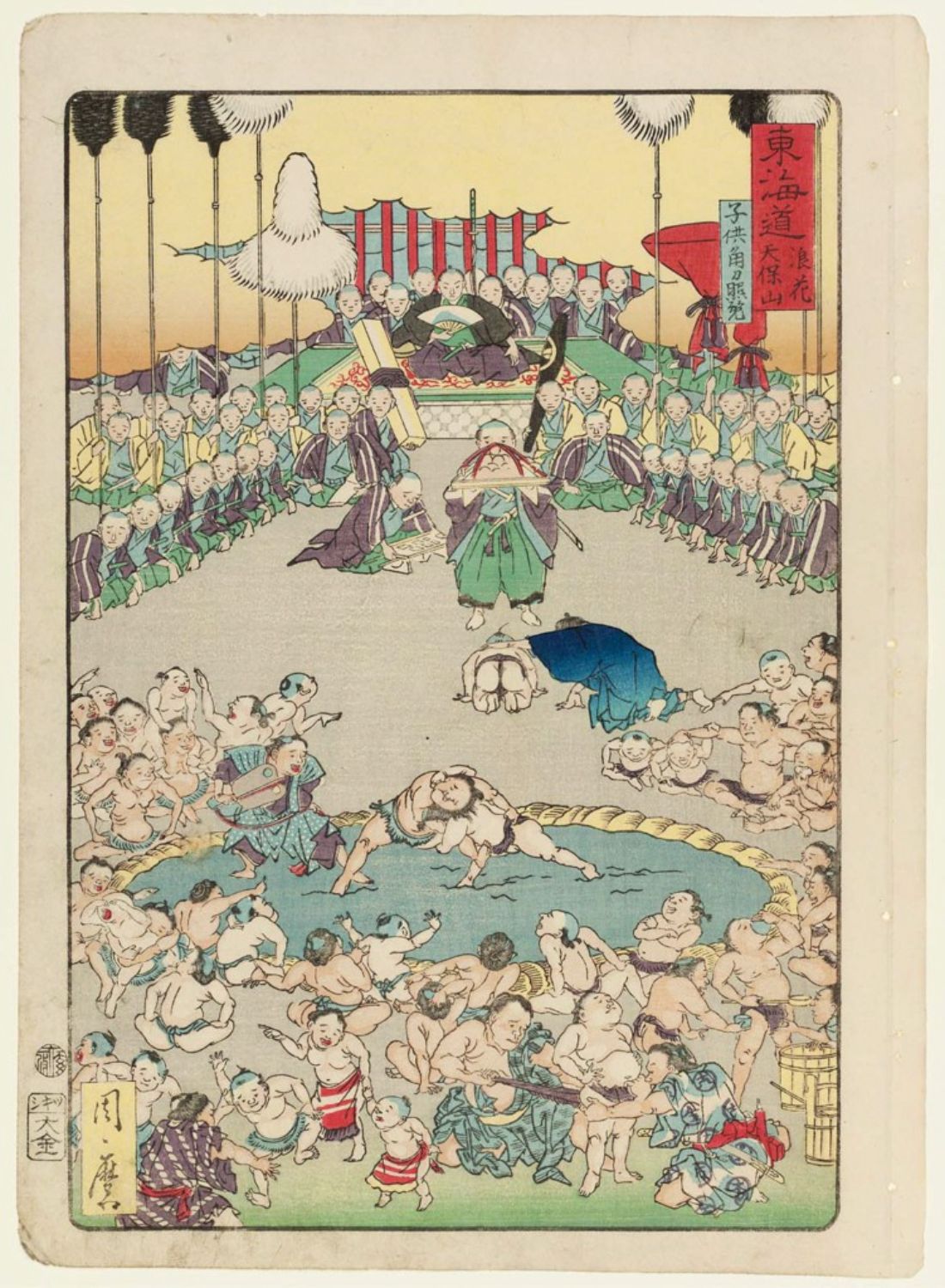
Tenpôzan in Osaka: Viewing Children's Sumo (Naniwa Tenpôzan kodomo sumô shôran), from the series Scenes of Famous Places along the Tôkaidô Road (Tôkaidô meisho fûkei), also known as the Processional Tôkaidô (Gyôretsu Tôkaidô), here called Tôkaidô
1863
Woodblock print
Kyosai, Royal Academy, London, FREE DOMESTIC SHIPPING
2022
Original Museum Lithographic Exhibition Poster
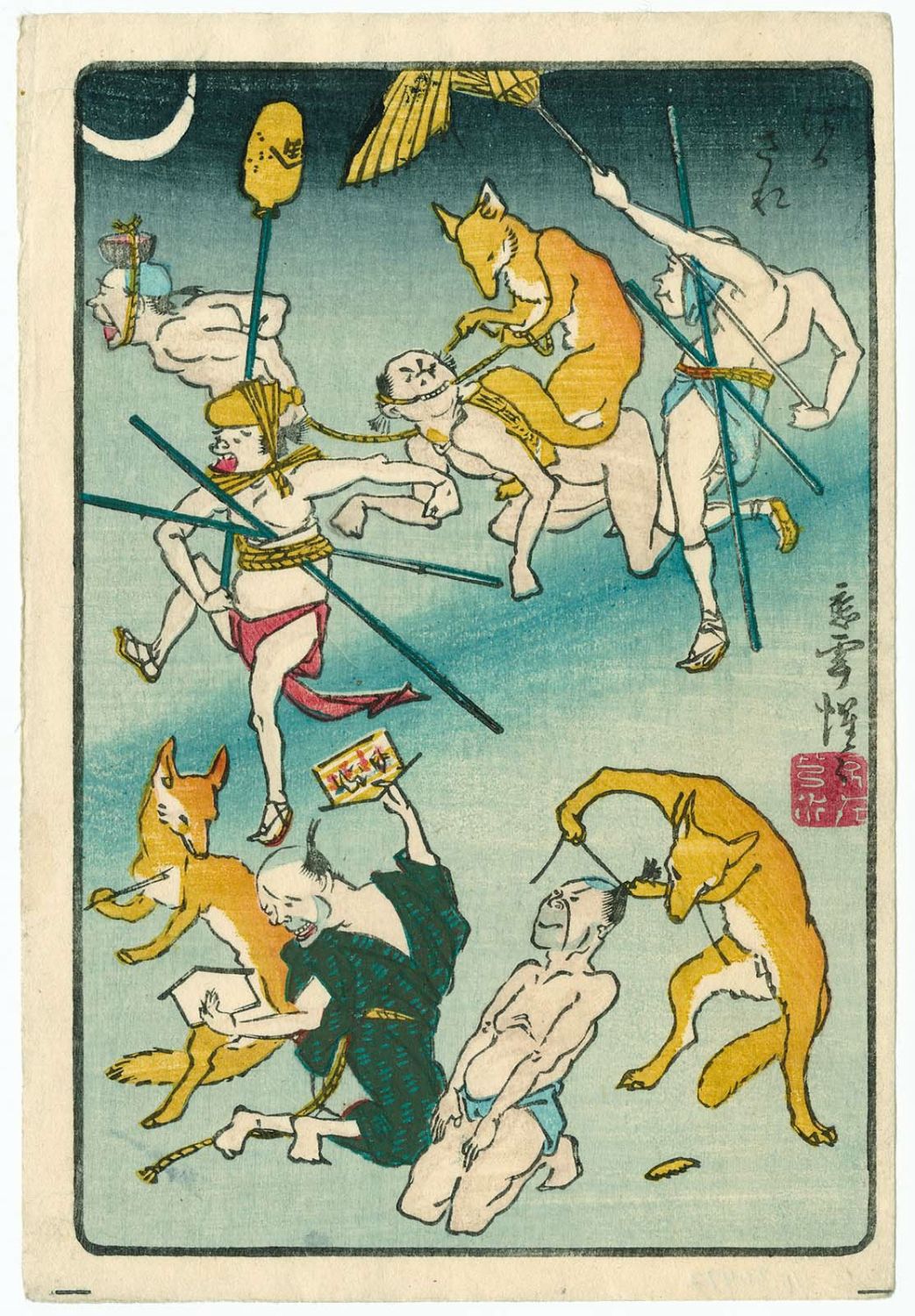
from the series One Hundred Pictures by Kyôsai (Kyôsai hyakuzu)
Woodblock print
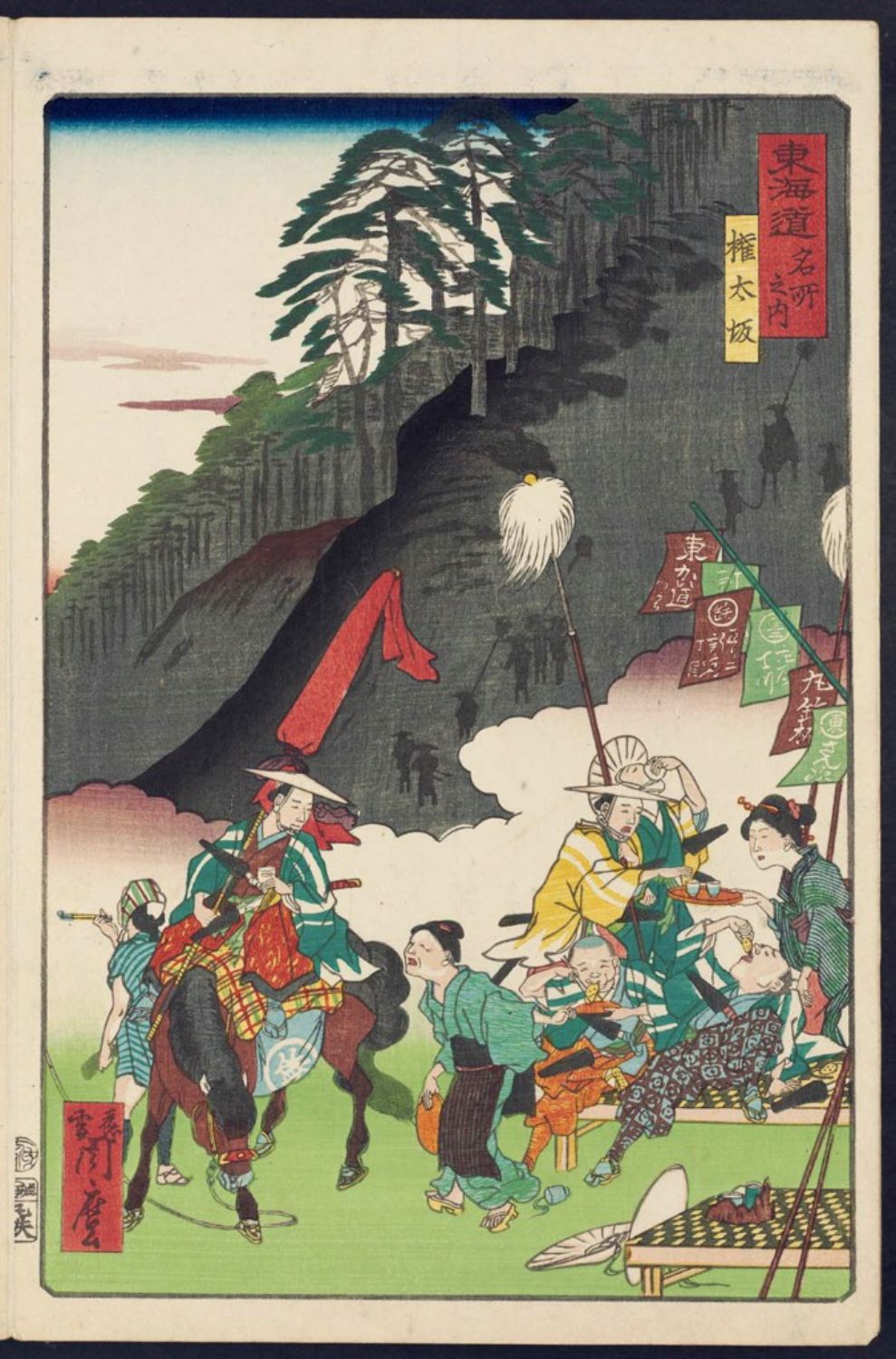
Gontazaka, from the series Scenes of Famous Places along the Tôkaidô Road (Tôkaidô meisho fûkei), also known as the Processional Tôkaidô (Gyôretsu Tôkaidô), here called Tôkaidô meisho no uchi
Woodblock print
Frequently Asked Questions
「応需暁斎楽画」 「第六号」「伊蘇普物語第一之巻二十九枚目ニ曰獅子恋慕ノ話」 was created by Kawanabe Kyosai (河鍋暁斎).