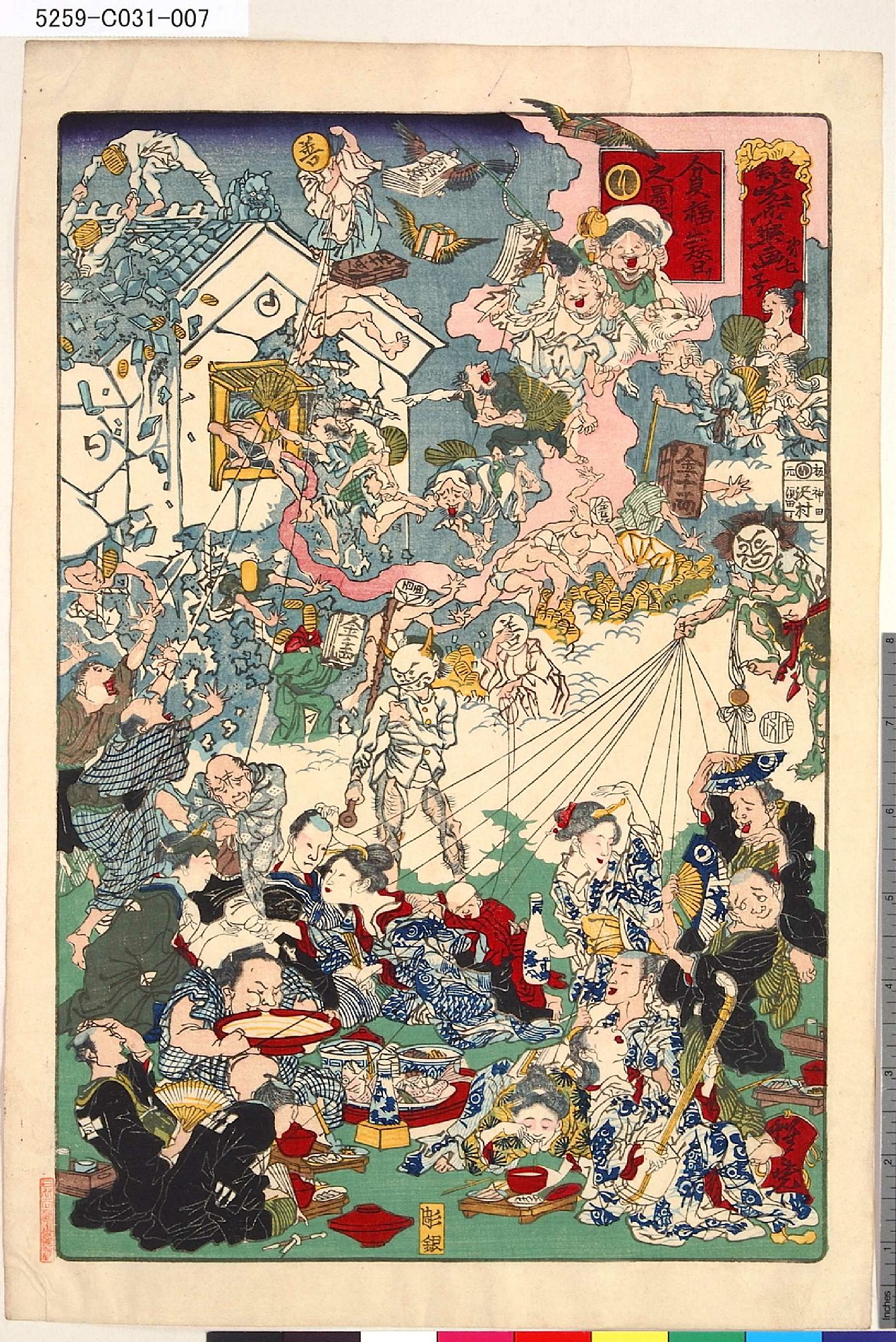
「応需暁斎楽画」 「第七号」「貧福出替り之図」
- Medium:
- Woodblock print
- Source:
- Metropolitan Museum of Art
- Image courtesy of
- Metropolitan Museum of Art
Description
This seventh number in the Rakuga series carries the subtitle "Hinpuku deidegawari no zu" — a picture of poverty and wealth trading places — a subject with deep roots in Japanese popular culture and moralistic literature. The composition likely depicts allegorical figures representing poverty (贫) and wealth (福) in the act of exchanging roles, a scenario that offered Kyosai ample room for satirical observation of Meiji-era social flux, in which old hierarchies of the Edo period were rapidly displaced by new merchant and bureaucratic wealth. The visual language probably draws on karikatura conventions that Kyosai had absorbed through exposure to Western illustrated periodicals circulating in Tokyo after the opening of Japan, blended with his deep training in Kanō school and ukiyo-e traditions. The print's humor would have resonated with audiences experiencing the disorienting economic volatility of the early Meiji years.
More Prints by Kawanabe Kyosai
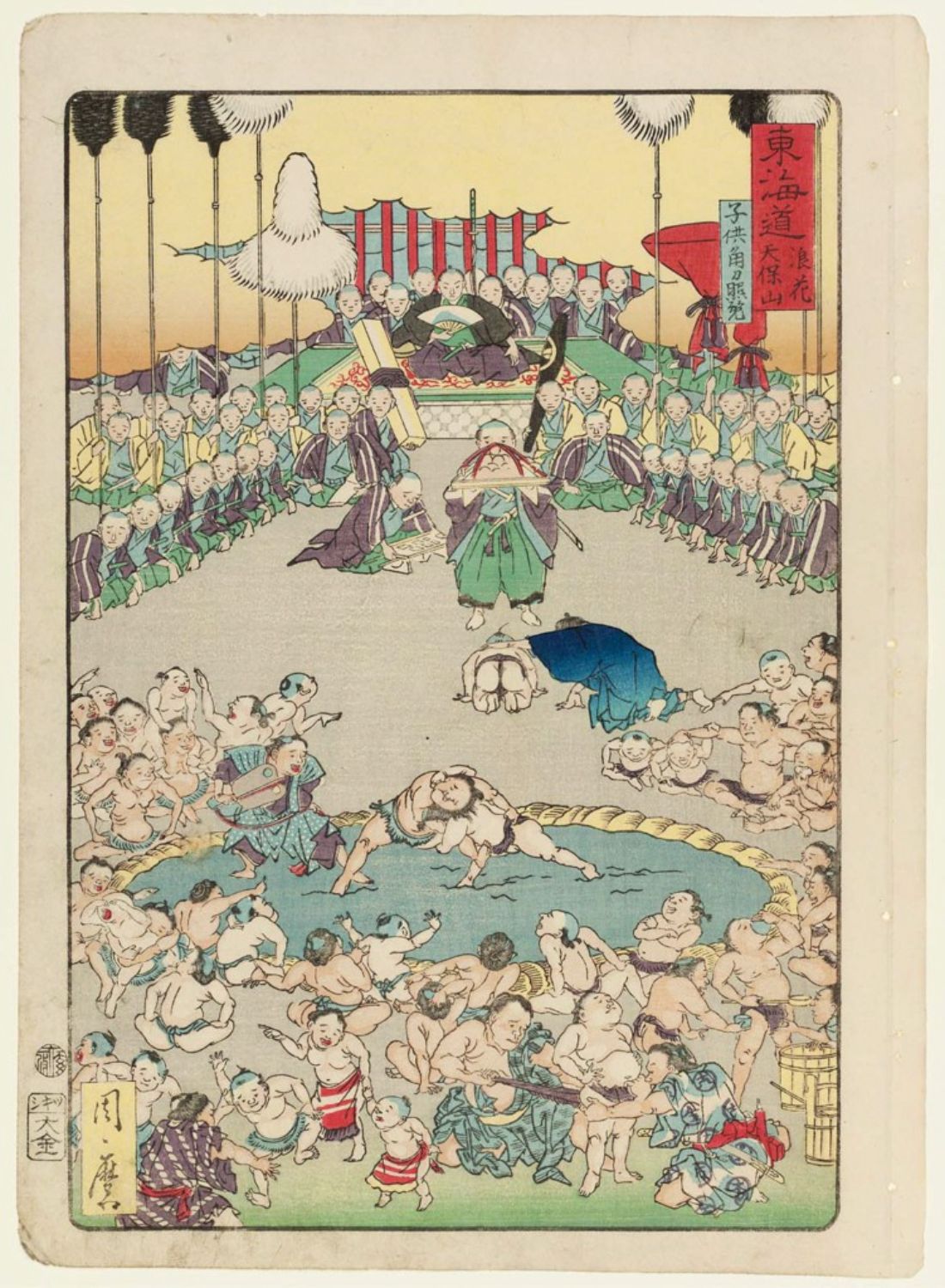
Tenpôzan in Osaka: Viewing Children's Sumo (Naniwa Tenpôzan kodomo sumô shôran), from the series Scenes of Famous Places along the Tôkaidô Road (Tôkaidô meisho fûkei), also known as the Processional Tôkaidô (Gyôretsu Tôkaidô), here called Tôkaidô
1863
Woodblock print
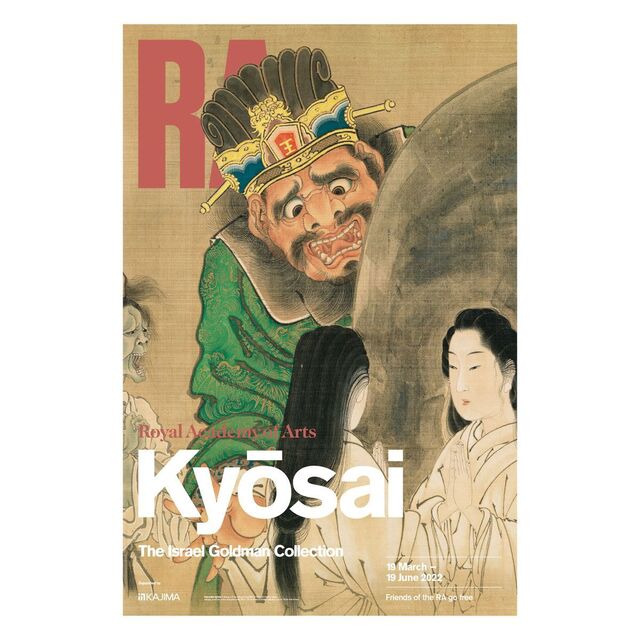
Kyosai, Royal Academy, London, FREE DOMESTIC SHIPPING
2022
Original Museum Lithographic Exhibition Poster
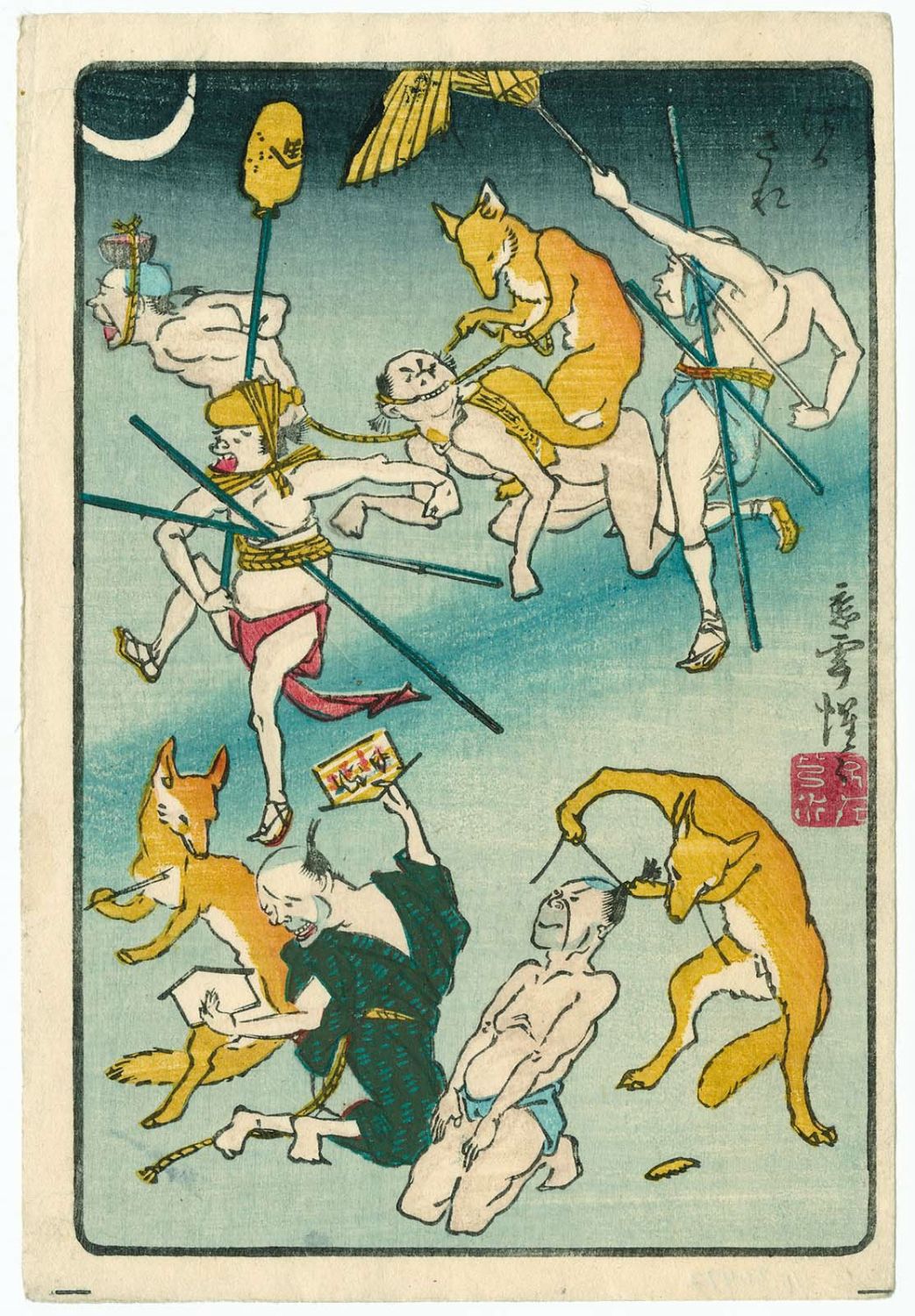
from the series One Hundred Pictures by Kyôsai (Kyôsai hyakuzu)
Woodblock print
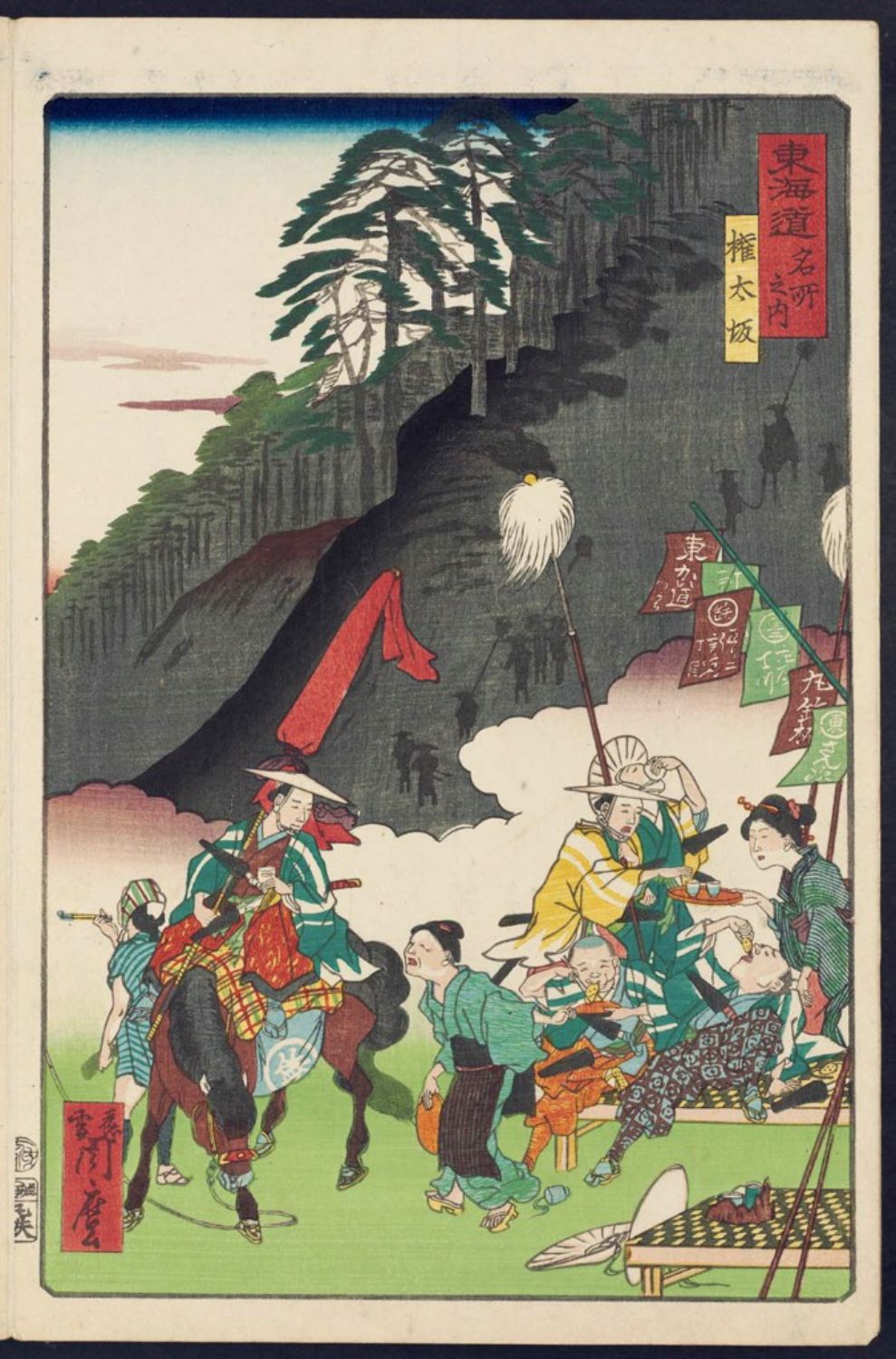
Gontazaka, from the series Scenes of Famous Places along the Tôkaidô Road (Tôkaidô meisho fûkei), also known as the Processional Tôkaidô (Gyôretsu Tôkaidô), here called Tôkaidô meisho no uchi
Woodblock print
Frequently Asked Questions
「応需暁斎楽画」 「第七号」「貧福出替り之図」 was created by Kawanabe Kyosai (河鍋暁斎).