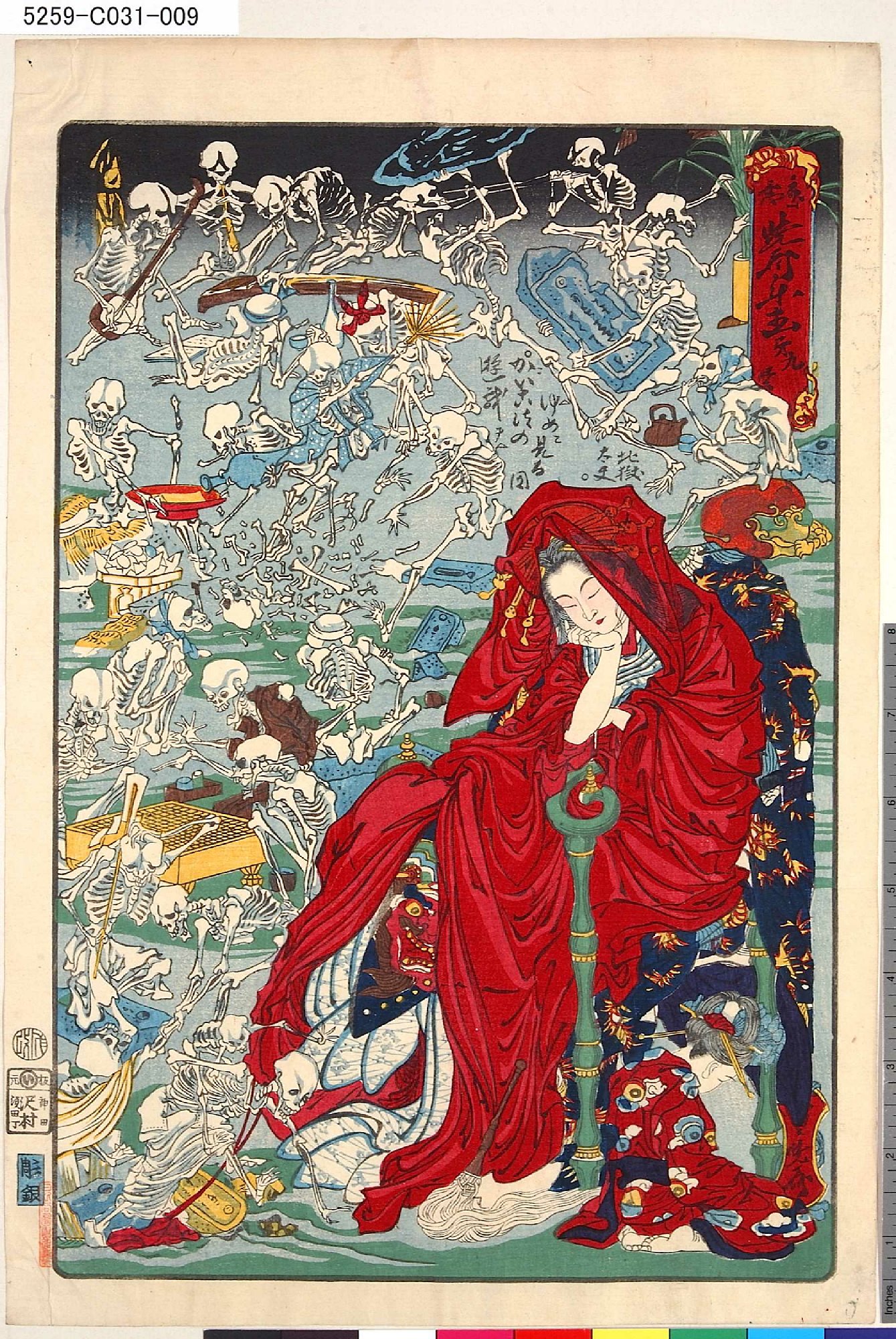
「応需暁斎楽画」 「第九号」「地獄太夫かいこつの遊戯をゆめに見る図」
- Medium:
- Woodblock print
- Source:
- Metropolitan Museum of Art
- Image courtesy of
- Metropolitan Museum of Art
Description
The ninth Rakuga print depicts Jigoku Dayu — the Hell Courtesan — dreaming of skeletons at play, a subject that merges two of Kyosai's most characteristic preoccupations: the famous historical courtesan who wore robes decorated with Buddhist hell imagery, and his celebrated series of skeleton paintings. Jigoku Dayu, a real fifteenth-century courtesan associated with the Zen monk Ikkyū, became in Japanese artistic tradition an emblem of the intersection of beauty and mortality. Kyosai's skeleton imagery — influenced by his study of anatomical specimens and his familiarity with Hokusai's skull compositions — here appears in a dream sequence, allowing the skeletons to engage in playful, absurdist activity. The compositional structure likely separates the sleeping figure of Jigoku Dayu from a visionary scene rendered in a looser, more animated style, a device Kyosai employed frequently to distinguish waking reality from supernatural apparition. This is among the more thematically rich numbers in the series.
More Prints by Kawanabe Kyosai
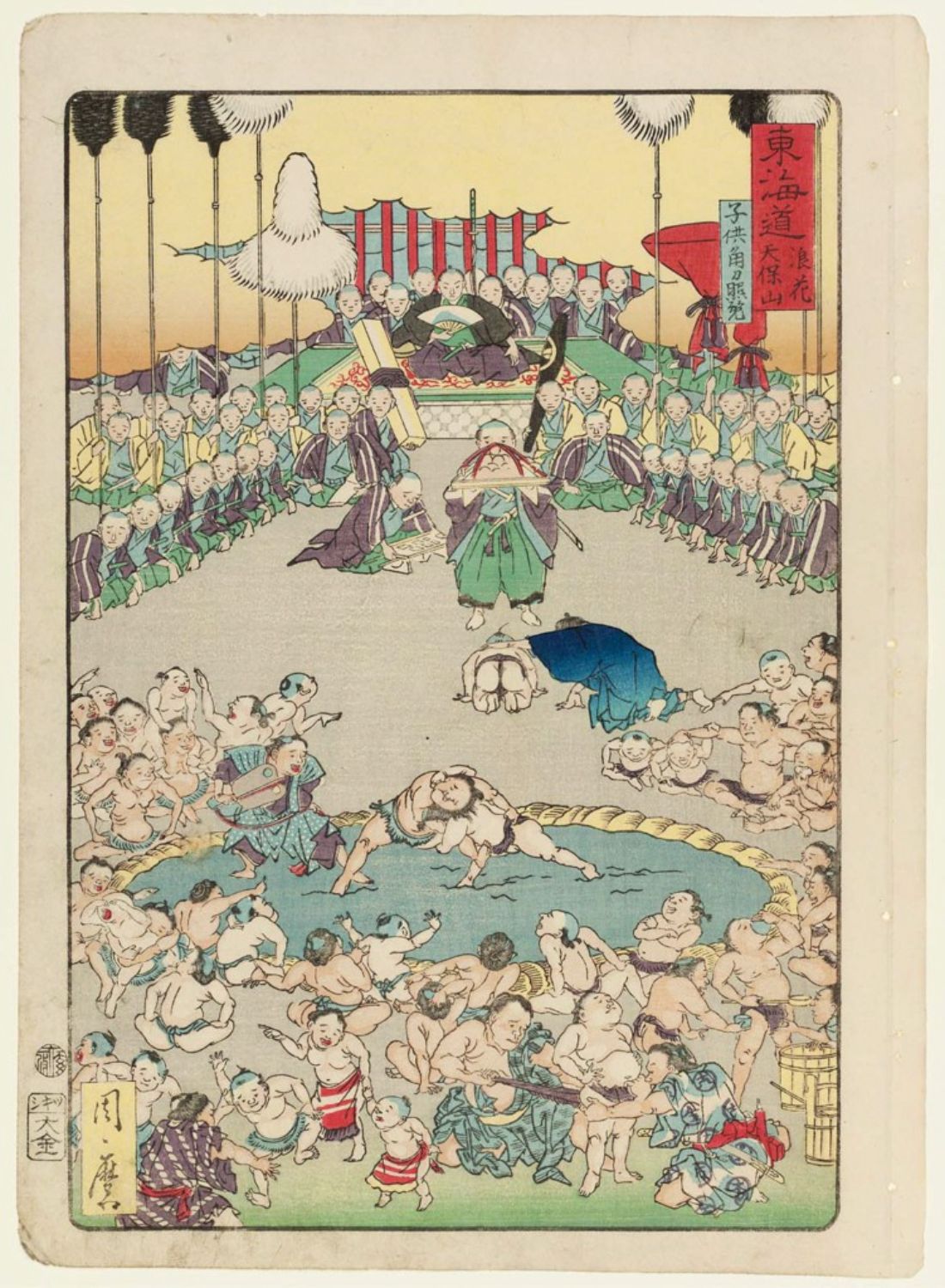
Tenpôzan in Osaka: Viewing Children's Sumo (Naniwa Tenpôzan kodomo sumô shôran), from the series Scenes of Famous Places along the Tôkaidô Road (Tôkaidô meisho fûkei), also known as the Processional Tôkaidô (Gyôretsu Tôkaidô), here called Tôkaidô
1863
Woodblock print
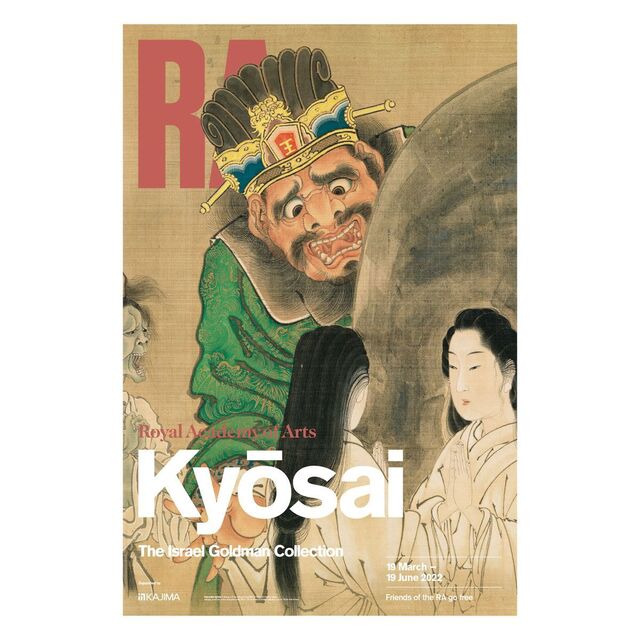
Kyosai, Royal Academy, London, FREE DOMESTIC SHIPPING
2022
Original Museum Lithographic Exhibition Poster
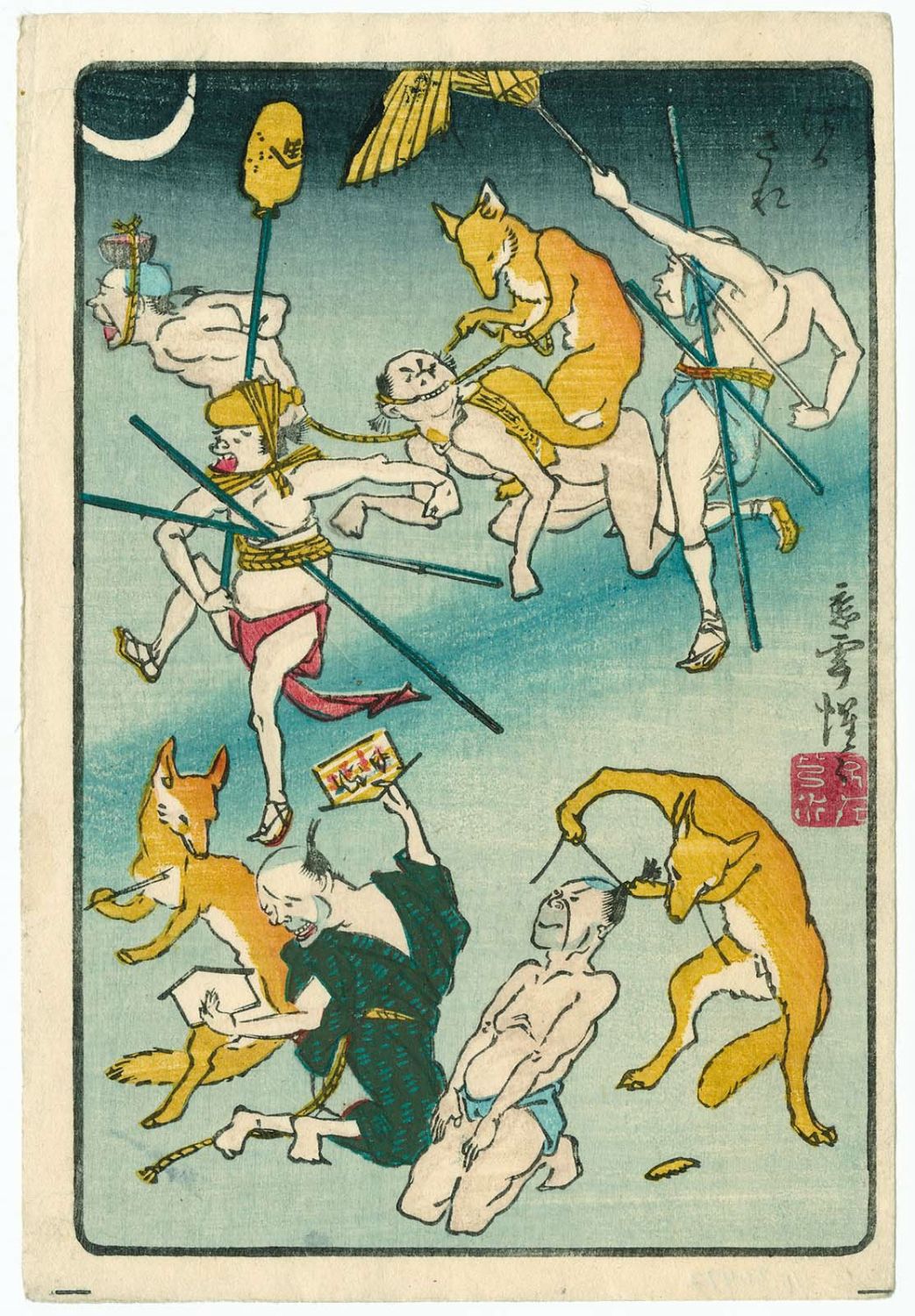
from the series One Hundred Pictures by Kyôsai (Kyôsai hyakuzu)
Woodblock print
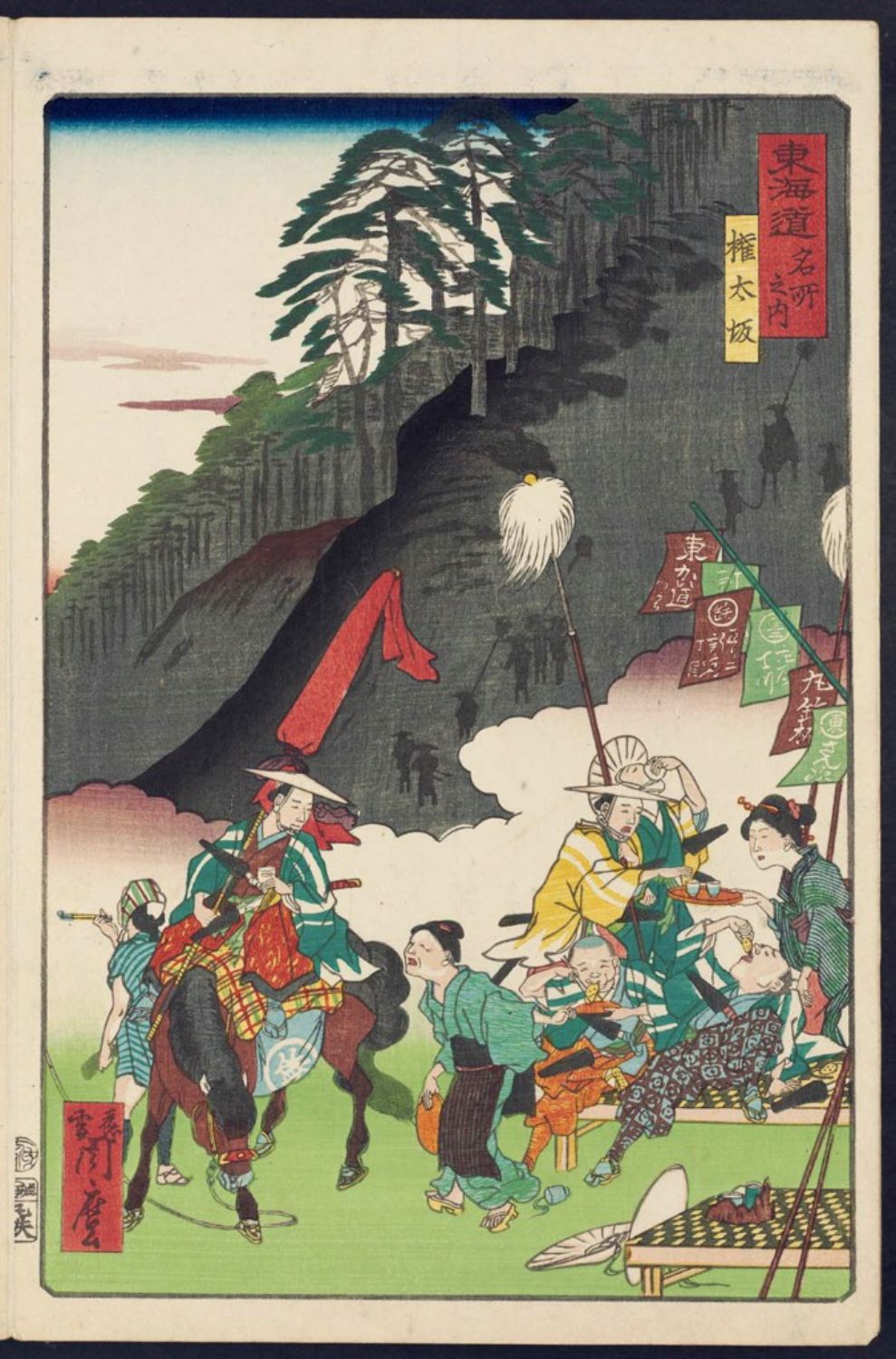
Gontazaka, from the series Scenes of Famous Places along the Tôkaidô Road (Tôkaidô meisho fûkei), also known as the Processional Tôkaidô (Gyôretsu Tôkaidô), here called Tôkaidô meisho no uchi
Woodblock print
Frequently Asked Questions
「応需暁斎楽画」 「第九号」「地獄太夫かいこつの遊戯をゆめに見る図」 was created by Kawanabe Kyosai (河鍋暁斎).