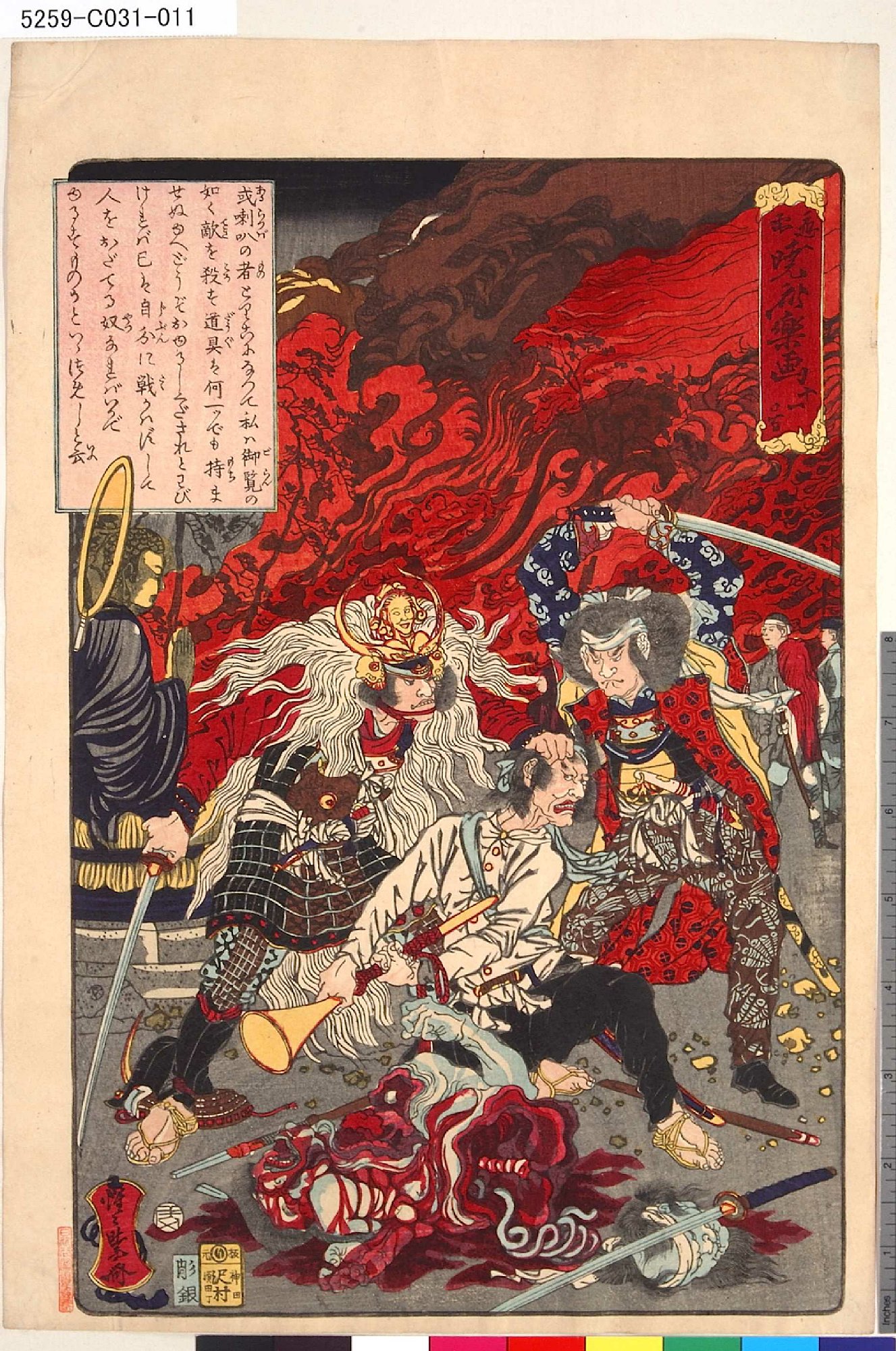
「応需暁斎楽画」 「十一号」
- Medium:
- Woodblock print
- Source:
- Metropolitan Museum of Art
- Image courtesy of
- Metropolitan Museum of Art
Description
The eleventh number in the Kyosai Rakuga series continues the sequence of satirical single-sheet prints produced to order in the 1870s. Without a descriptive subtitle preserved in the title inscription, the precise subject requires visual confirmation, but the Rakuga series at this stage had established a pattern of alternating between social satire, Aesop's fables adapted with Japanese humor, and subjects drawn from Japanese folklore and religious tradition. Kyosai's woodblock prints in this series characteristically exploit bold tonal contrasts — dense ink passages set against open washi ground — rather than the elaborate polychrome gradients (bokashi) associated with more expensive commercial print production. The numbered series format mirrors Meiji-era publishing practices, in which installment prints were issued to subscribers or sold individually through publishers, making satirical commentary accessible to a broad urban audience in Tokyo.
More Prints by Kawanabe Kyosai
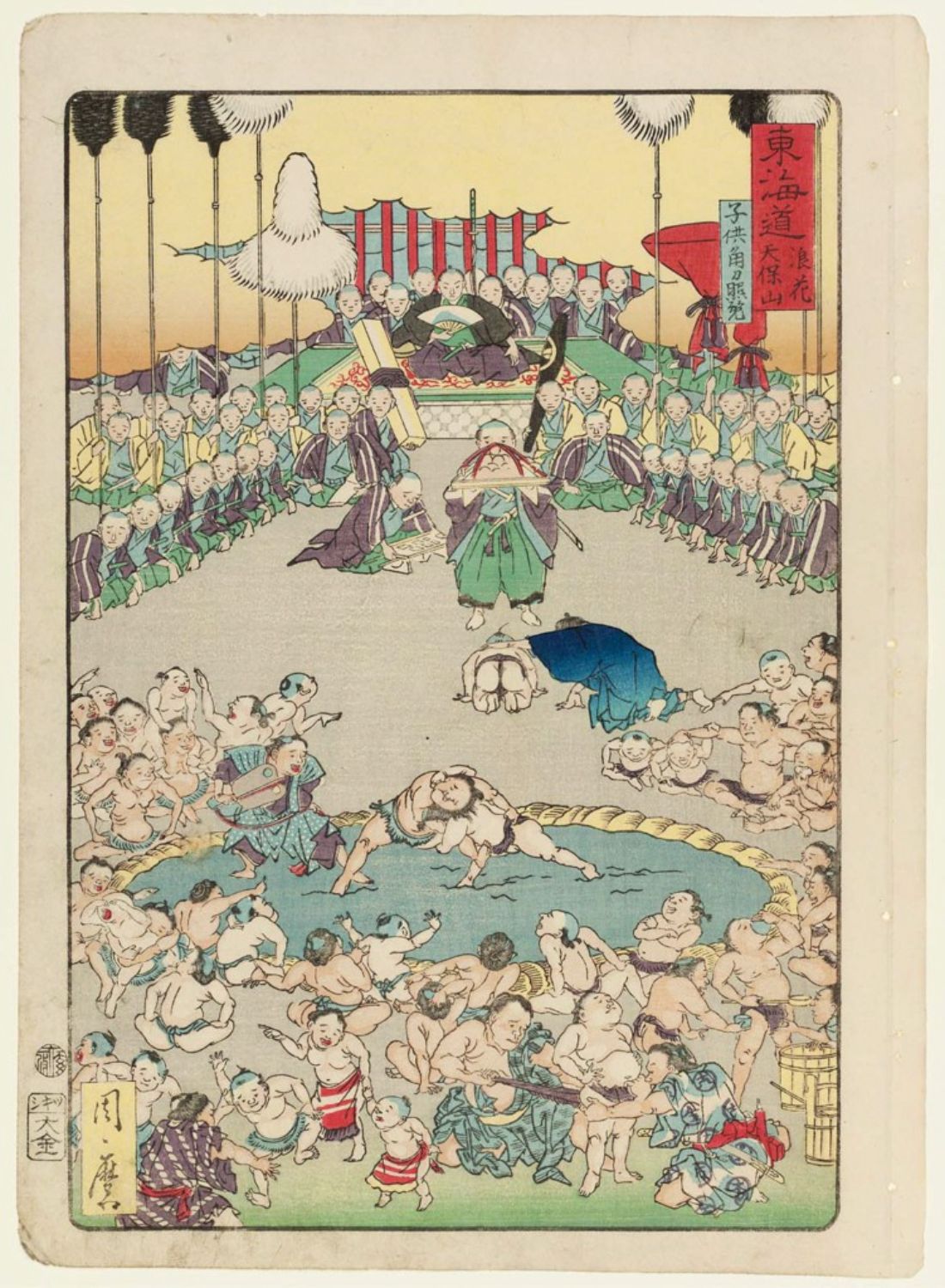
Tenpôzan in Osaka: Viewing Children's Sumo (Naniwa Tenpôzan kodomo sumô shôran), from the series Scenes of Famous Places along the Tôkaidô Road (Tôkaidô meisho fûkei), also known as the Processional Tôkaidô (Gyôretsu Tôkaidô), here called Tôkaidô
1863
Woodblock print
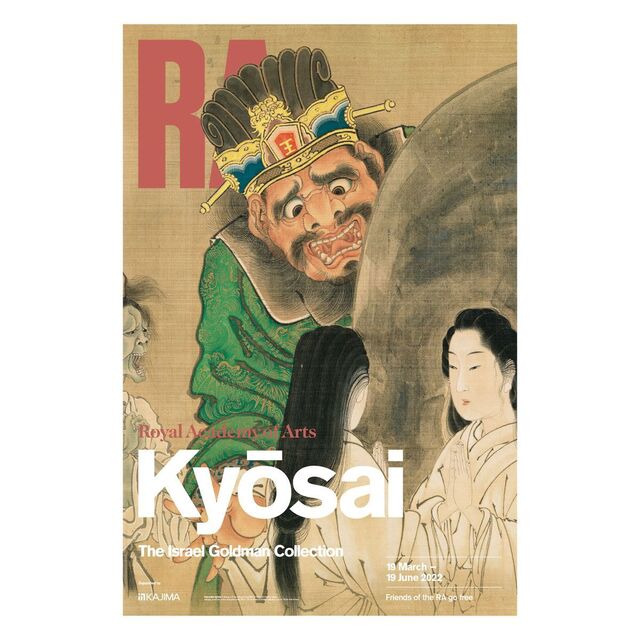
Kyosai, Royal Academy, London, FREE DOMESTIC SHIPPING
2022
Original Museum Lithographic Exhibition Poster
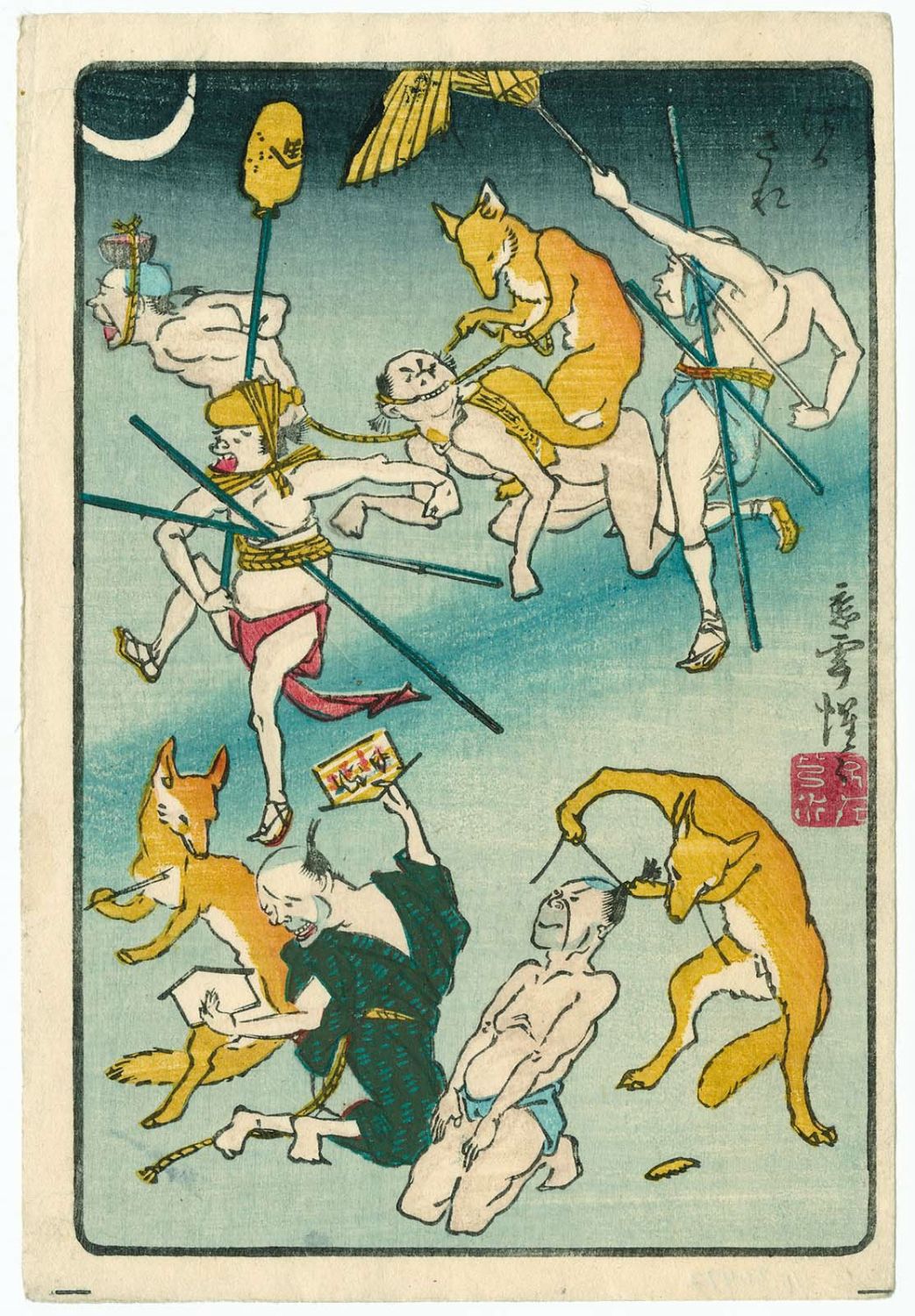
from the series One Hundred Pictures by Kyôsai (Kyôsai hyakuzu)
Woodblock print
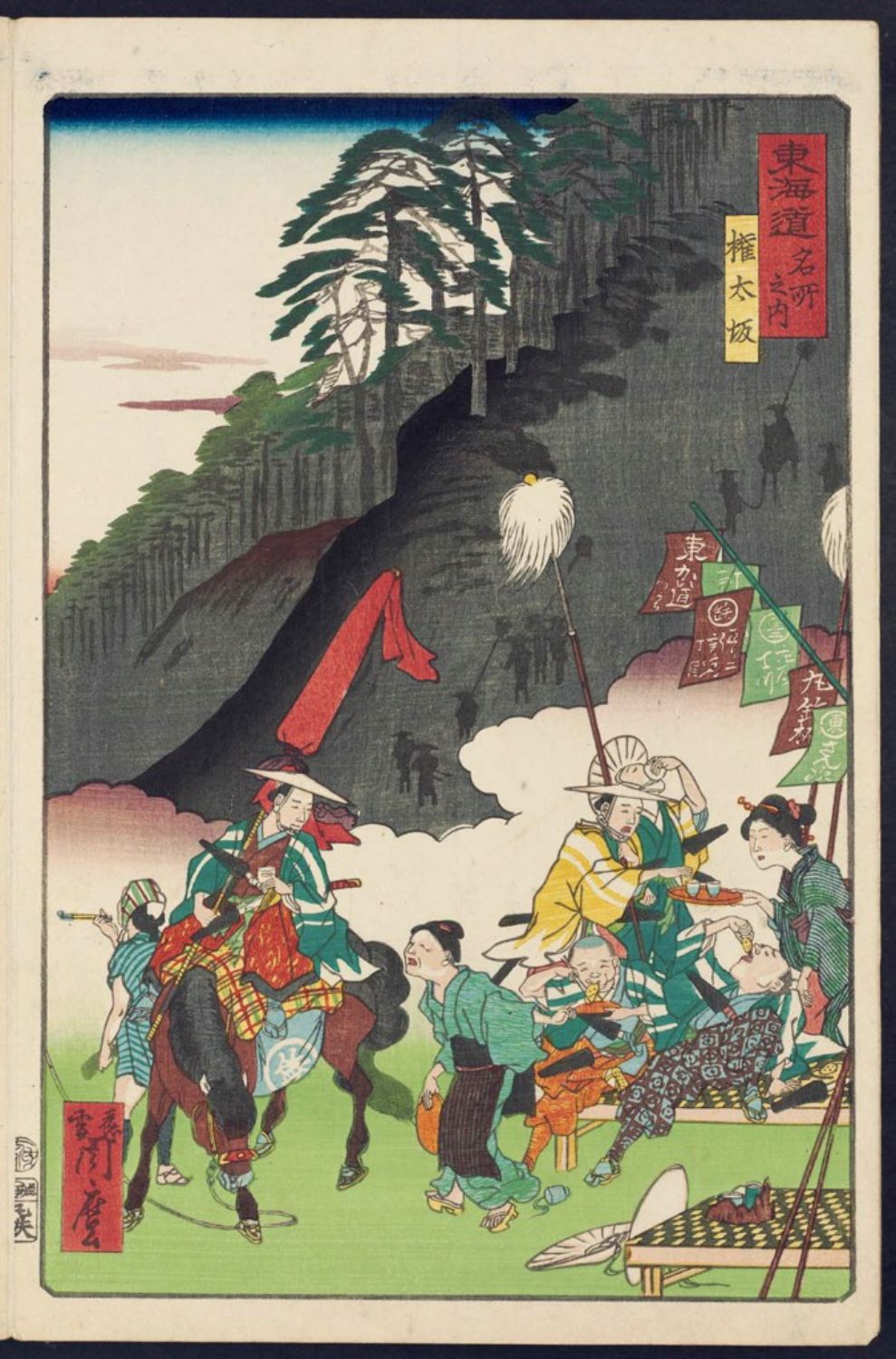
Gontazaka, from the series Scenes of Famous Places along the Tôkaidô Road (Tôkaidô meisho fûkei), also known as the Processional Tôkaidô (Gyôretsu Tôkaidô), here called Tôkaidô meisho no uchi
Woodblock print
Frequently Asked Questions
「応需暁斎楽画」 「十一号」 was created by Kawanabe Kyosai (河鍋暁斎).