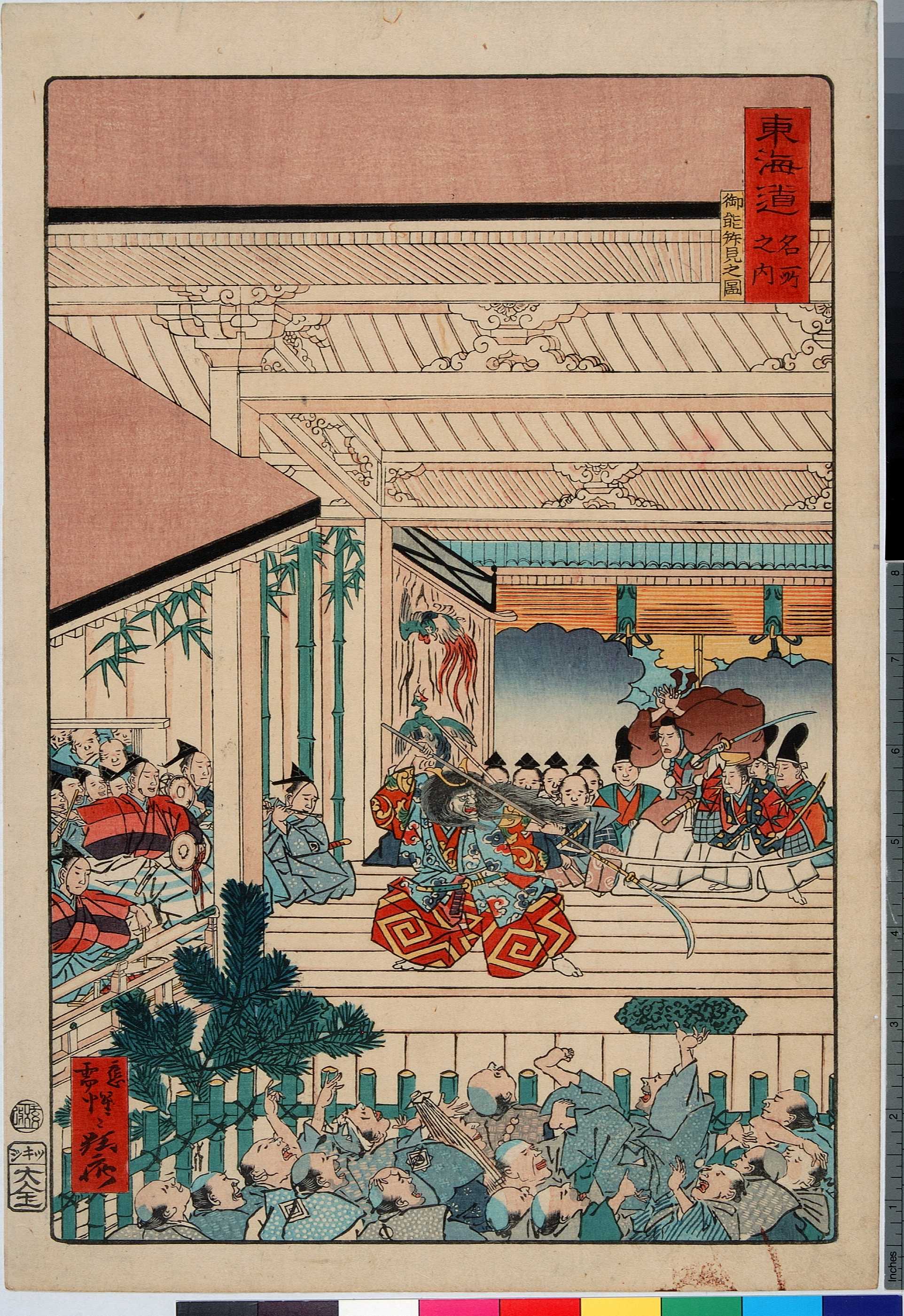
「東海道名所之内」「御能拝見之図」
- Medium:
- Woodblock print
- Source:
- Ritsumeikan University
- Image courtesy of
- Ritsumeikan University
Description
From the 'Tōkaidō Famous Places' series, this print depicts an audience assembled to view a Noh (能) performance (御能拝見之図). Noh, the classical Japanese musical drama patronized under the Tokugawa as a ceremonial art, is here presented as a meishō-e subject — its performance as a famous sight worth recording. The composition would show the elevated hinoki-floored stage with its distinctive cypress roof and kagami-ita pine-painted back wall, masked performers in layered kosode and over-robes, and the assembled audience in formal dress. Rendering Noh costuming and mask — the austere shite mask, the stiff brocade kariginu — in the woodblock print medium presents a coloristic and linear challenge distinct from kabuki's vivid spectacle. Kyosai's engagement with theatrical culture ran deep: he designed kabuki prints, rendered actor portraits, and brought a performer's timing to his pictorial work, though Noh's ceremonial restraint occupies different territory from the popular drama he more frequently depicted.
More Prints by Kawanabe Kyosai
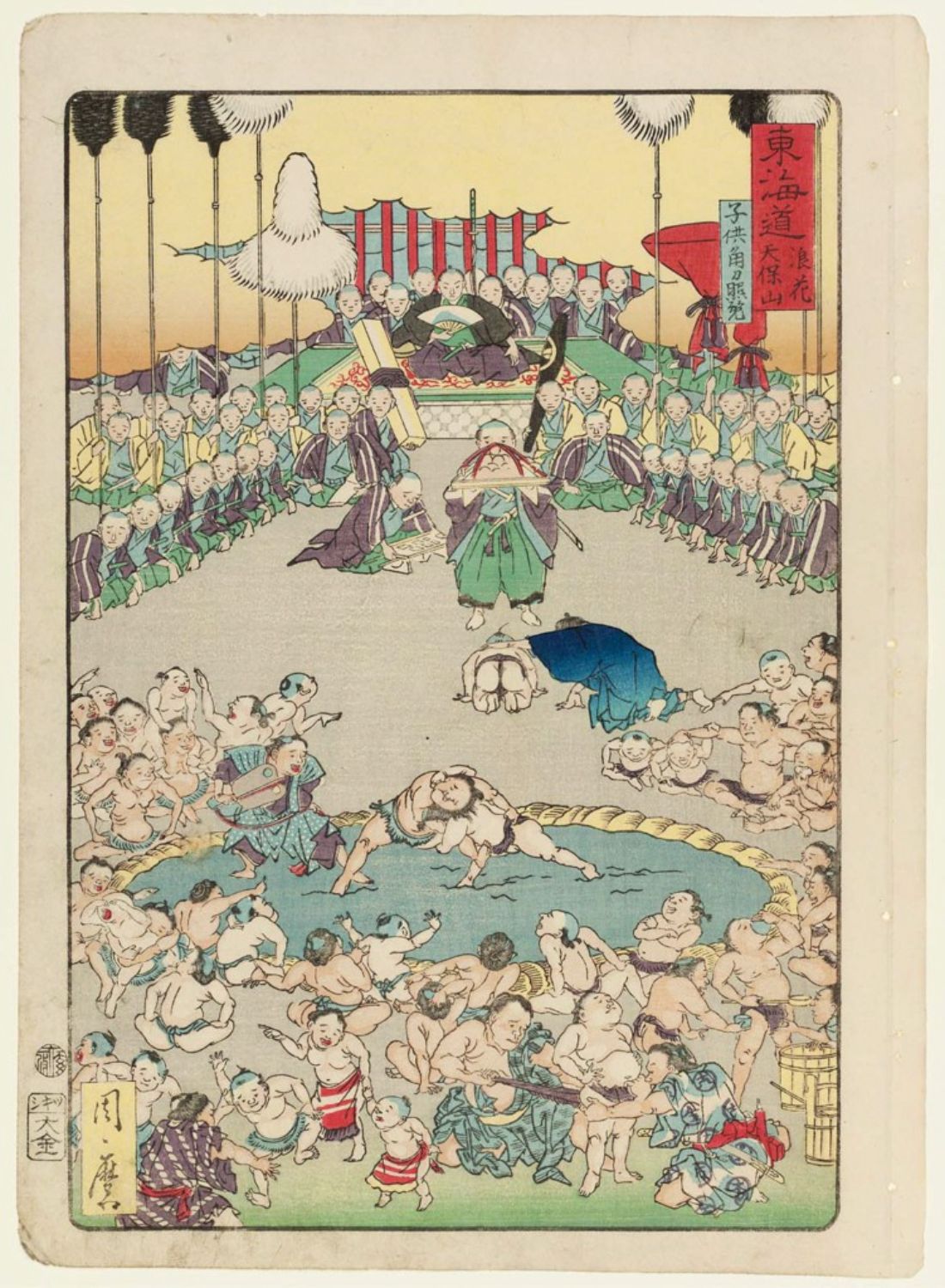
Tenpôzan in Osaka: Viewing Children's Sumo (Naniwa Tenpôzan kodomo sumô shôran), from the series Scenes of Famous Places along the Tôkaidô Road (Tôkaidô meisho fûkei), also known as the Processional Tôkaidô (Gyôretsu Tôkaidô), here called Tôkaidô
1863
Woodblock print
Kyosai, Royal Academy, London, FREE DOMESTIC SHIPPING
2022
Original Museum Lithographic Exhibition Poster
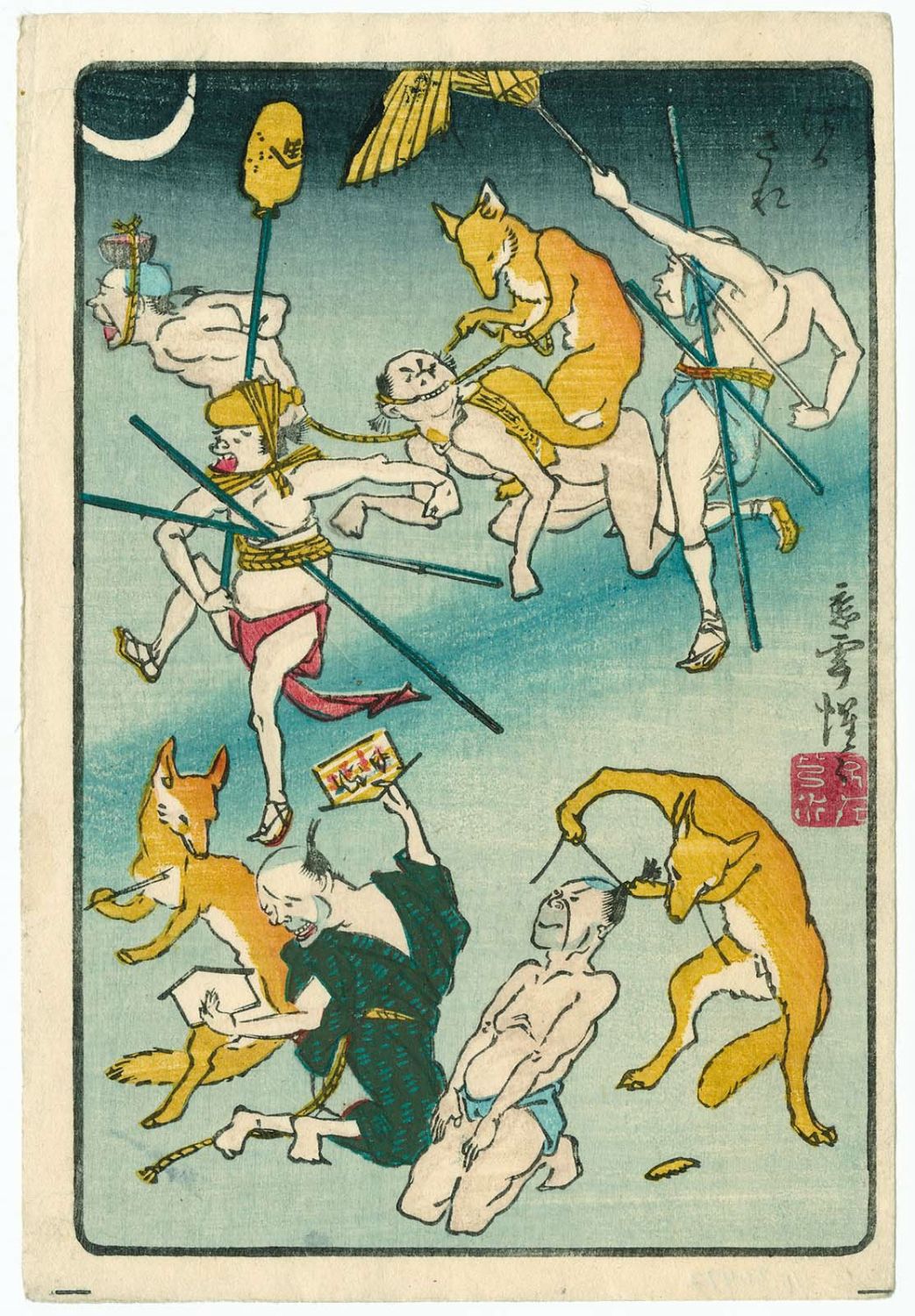
from the series One Hundred Pictures by Kyôsai (Kyôsai hyakuzu)
Woodblock print
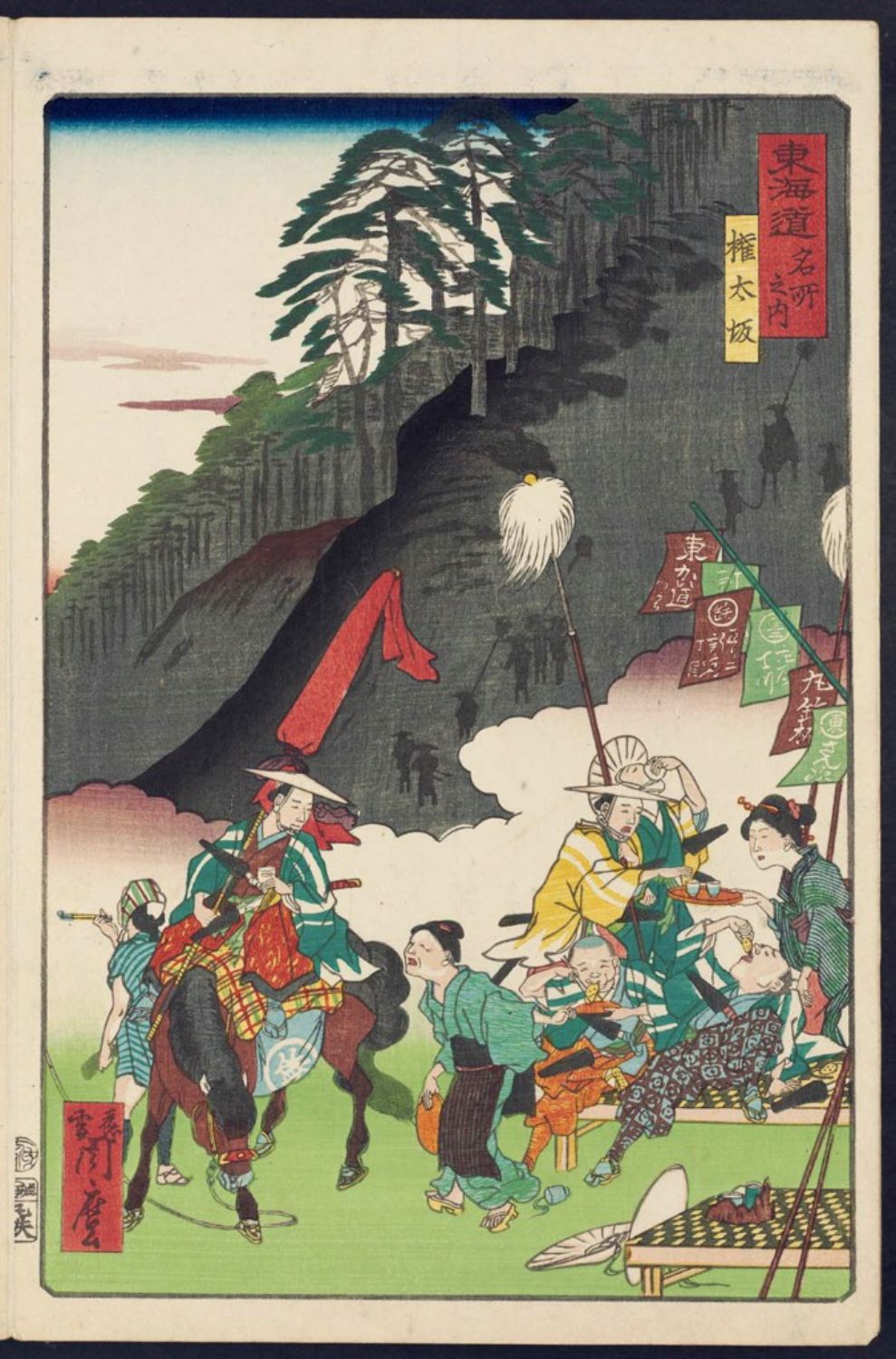
Gontazaka, from the series Scenes of Famous Places along the Tôkaidô Road (Tôkaidô meisho fûkei), also known as the Processional Tôkaidô (Gyôretsu Tôkaidô), here called Tôkaidô meisho no uchi
Woodblock print
Frequently Asked Questions
「東海道名所之内」「御能拝見之図」 was created by Kawanabe Kyosai (河鍋暁斎).