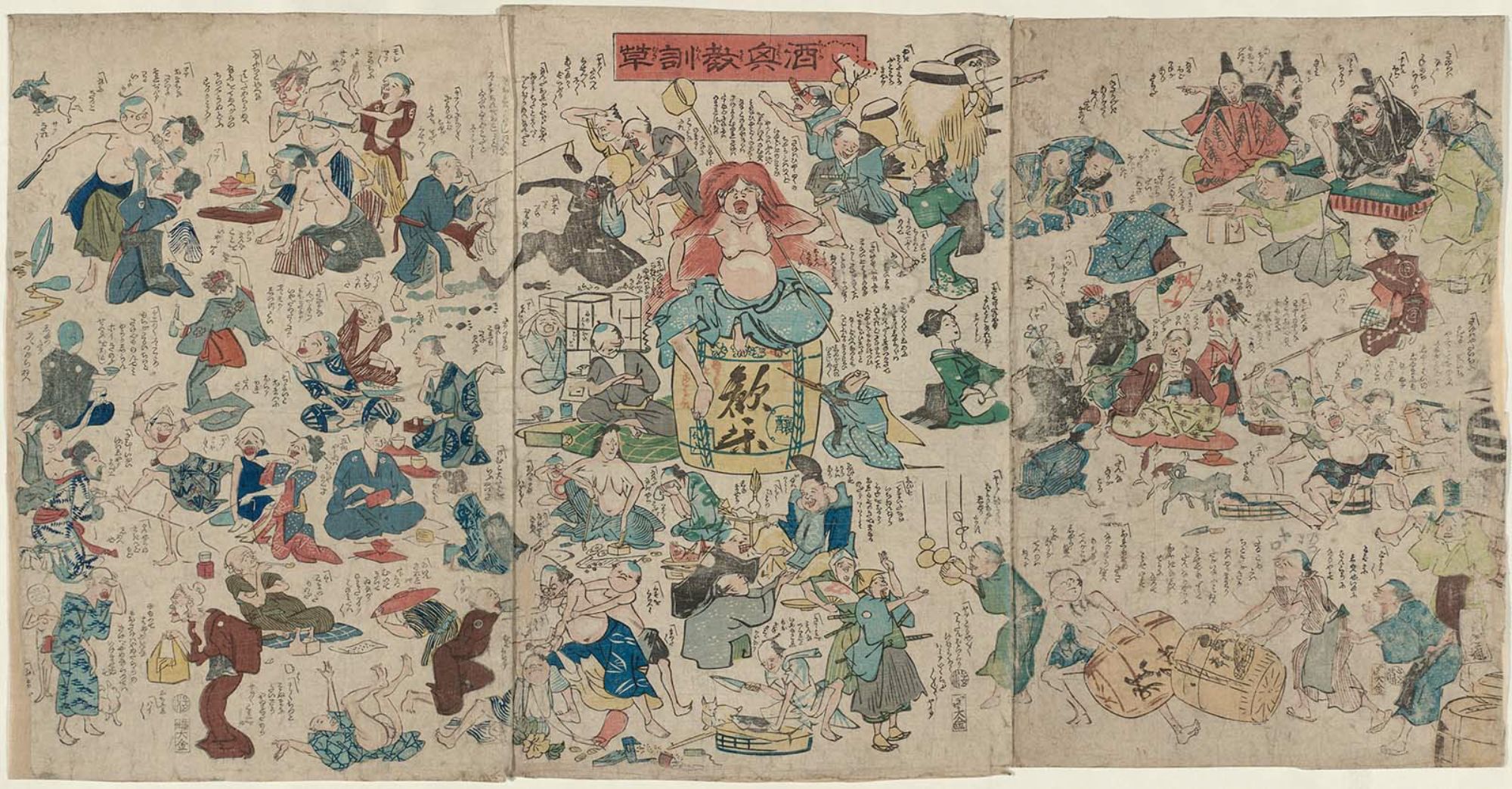
Instructions for Drinking Parties (Shukyô kyôkun-gusa)
- Medium:
- Woodblock print
- Source:
- Museum of Fine Arts Boston
- Image courtesy of
- Museum of Fine Arts Boston
Description
This woodblock print parodies the kyōkun (moral instruction) literature of the Edo and Meiji periods by applying its didactic format to the conventions of the drinking party (shūkyō). The suffix gusa (grasses or weeds, used metaphorically for informal writings) signals the mock-serious register of the text, which would have offered humorous or satirical guidance for party behavior, etiquette, and drinking ritual. Kyosai was a celebrated contributor to the kokkei-e (humorous picture) and kyōga (wild picture) traditions, and works of this type display his skill in fusing satirical text with expressive illustration. The print likely combines illustrated scenes of drinkers in various states of merriment or indiscretion with accompanying text columns. His characteristic brushwork — rapid, loose, and gestural — translates into the woodblock medium with energy and immediacy. The work reflects the social culture of Meiji Tokyo, where drinking parties (enkais) were important social institutions, and comic commentary on their rituals found a ready audience.
More Prints by Kawanabe Kyosai
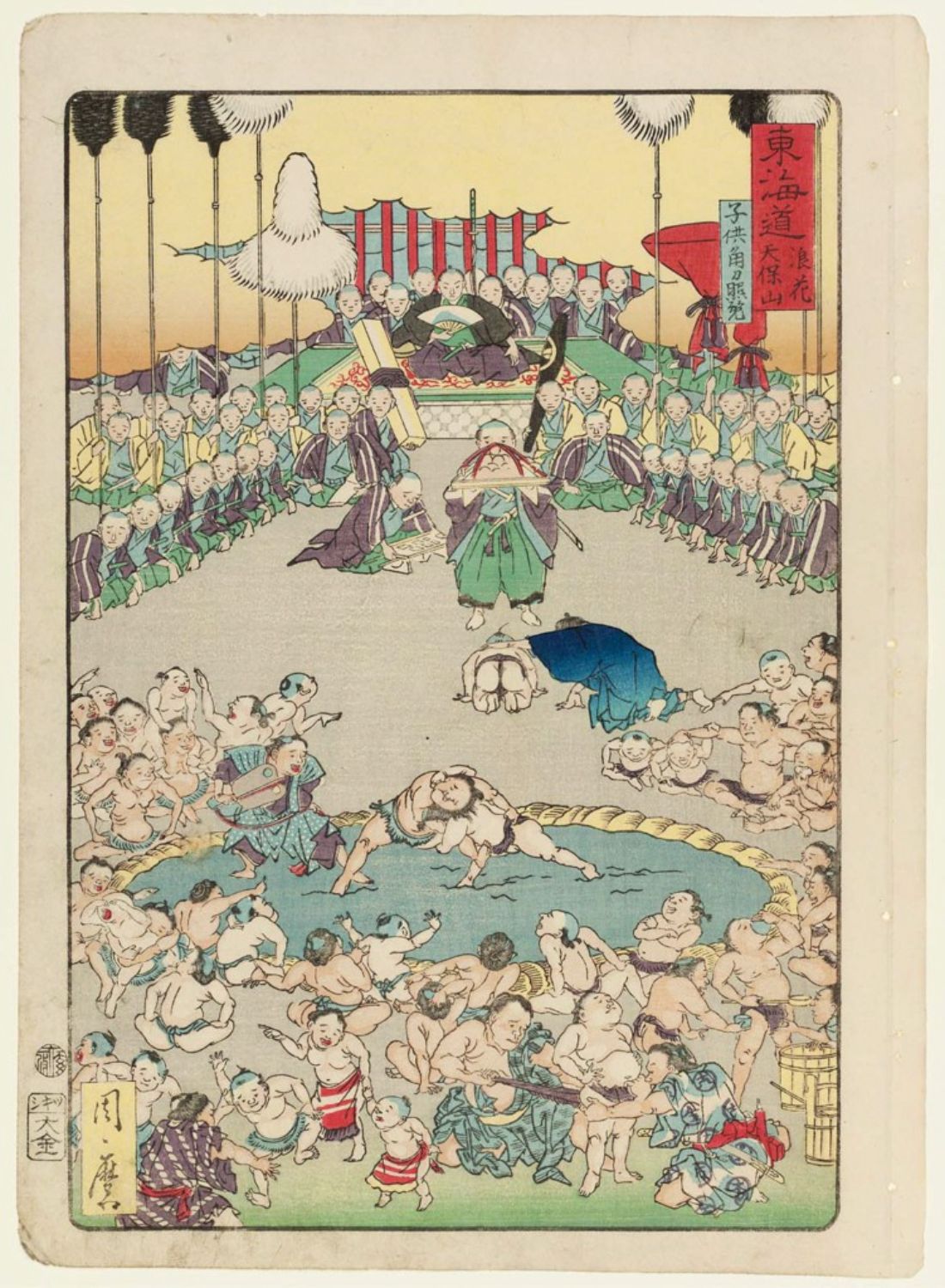
Tenpôzan in Osaka: Viewing Children's Sumo (Naniwa Tenpôzan kodomo sumô shôran), from the series Scenes of Famous Places along the Tôkaidô Road (Tôkaidô meisho fûkei), also known as the Processional Tôkaidô (Gyôretsu Tôkaidô), here called Tôkaidô
1863
Woodblock print
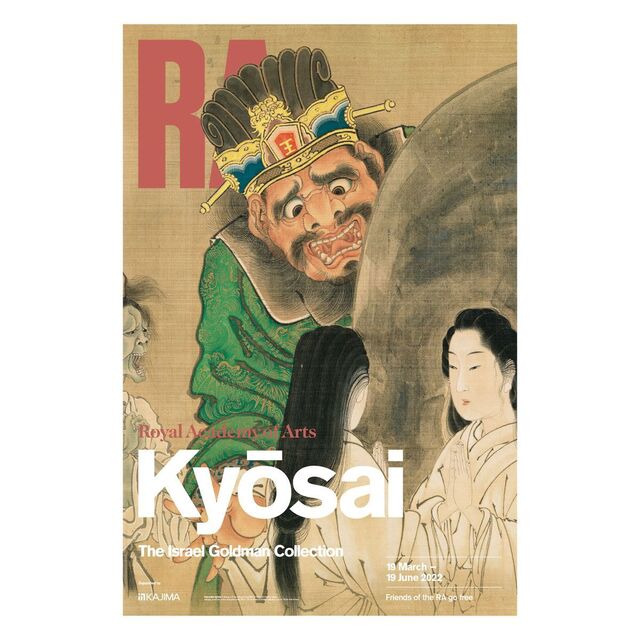
Kyosai, Royal Academy, London, FREE DOMESTIC SHIPPING
2022
Original Museum Lithographic Exhibition Poster
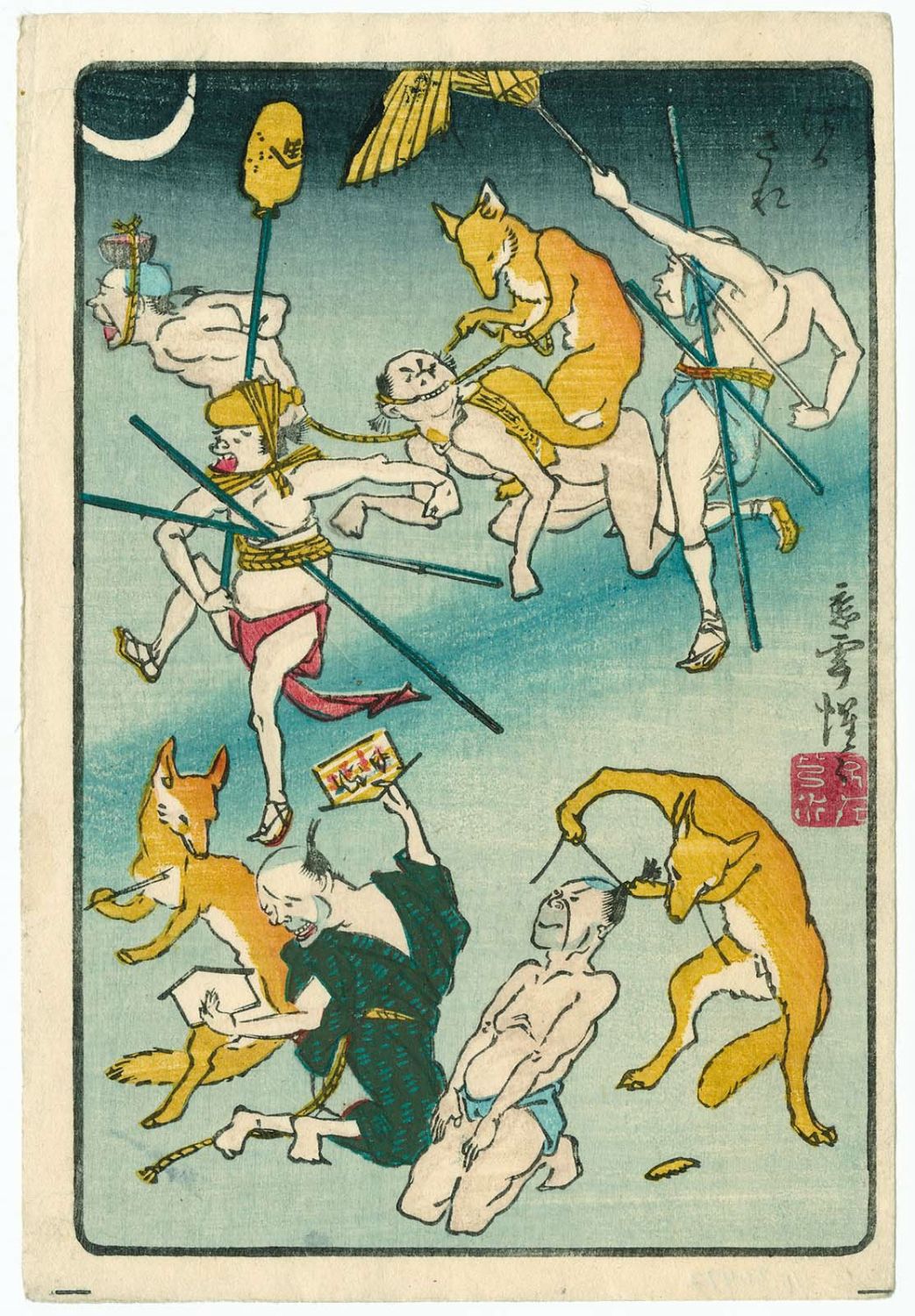
from the series One Hundred Pictures by Kyôsai (Kyôsai hyakuzu)
Woodblock print
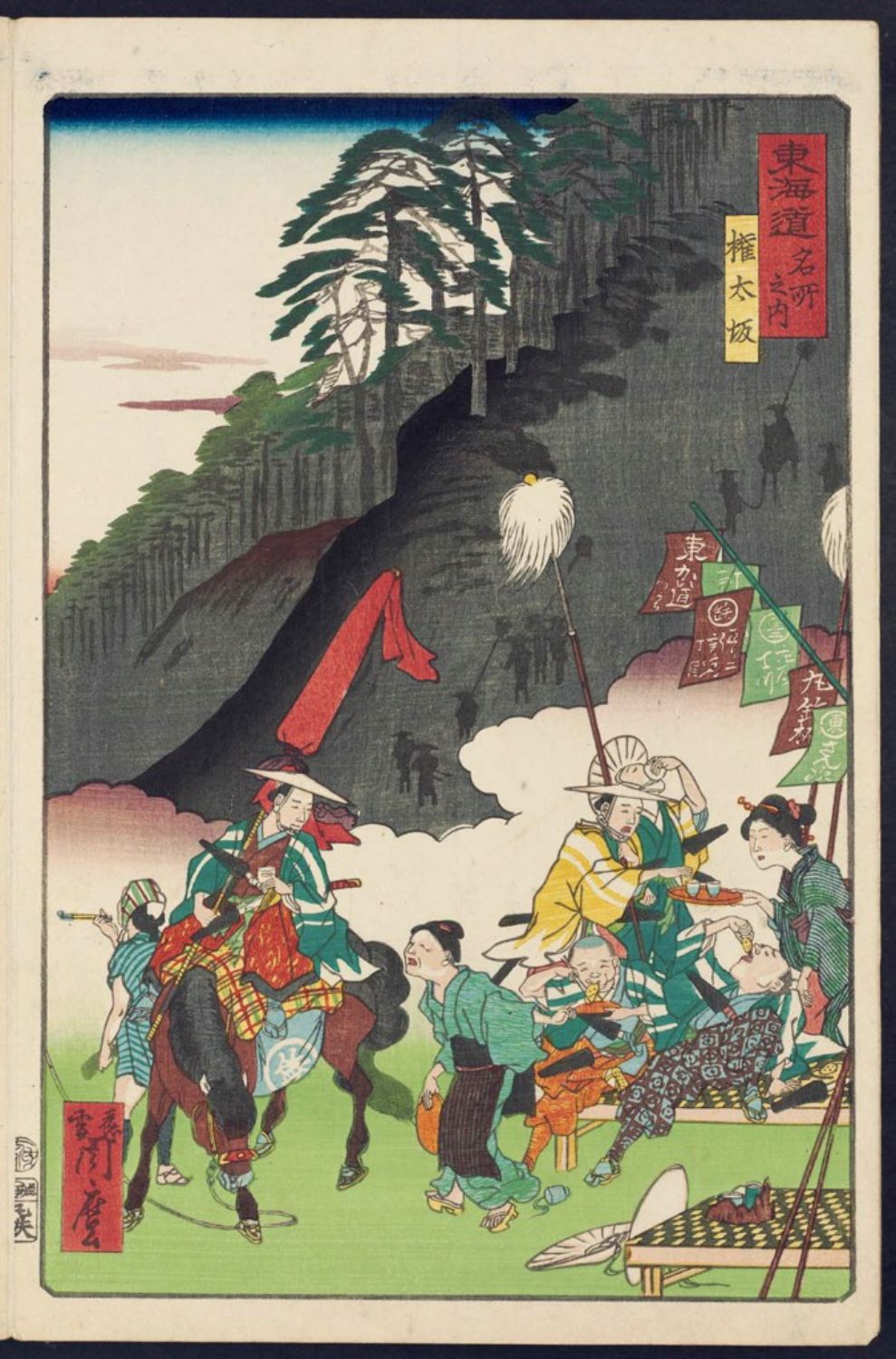
Gontazaka, from the series Scenes of Famous Places along the Tôkaidô Road (Tôkaidô meisho fûkei), also known as the Processional Tôkaidô (Gyôretsu Tôkaidô), here called Tôkaidô meisho no uchi
Woodblock print
Frequently Asked Questions
Instructions for Drinking Parties (Shukyô kyôkun-gusa) was created by Kawanabe Kyosai (河鍋暁斎).