
Two Ronin
- Medium:
- Mokuhanga (Japanese woodblock)
- Image courtesy of
- Saru Gallery
Description
Two armored ronin dominate the composition against a bokashi background that fades from deep indigo at the top to pale gray-green below. The standing figure grips a raised spear and bites at his sleeve with a fierce expression, wearing black armor edged in white triangular scale-pattern trim over a red-and-gold patterned underlayer; the second figure kneels low in front, also gripping a spear, with a fur or hair headband and a bright kimono skirt patterned in gold, blue, and red florals, a sword sheathed at his waist. A vertical cartouche of Japanese text and white flowering branches occupies the upper right, with a red seal and additional inscriptions in the lower right corner. This print, "Two Ronin" by Kawanabe Kyosai, is a mokuhanga (Japanese woodblock print) of unknown date.
More Prints by Kawanabe Kyosai
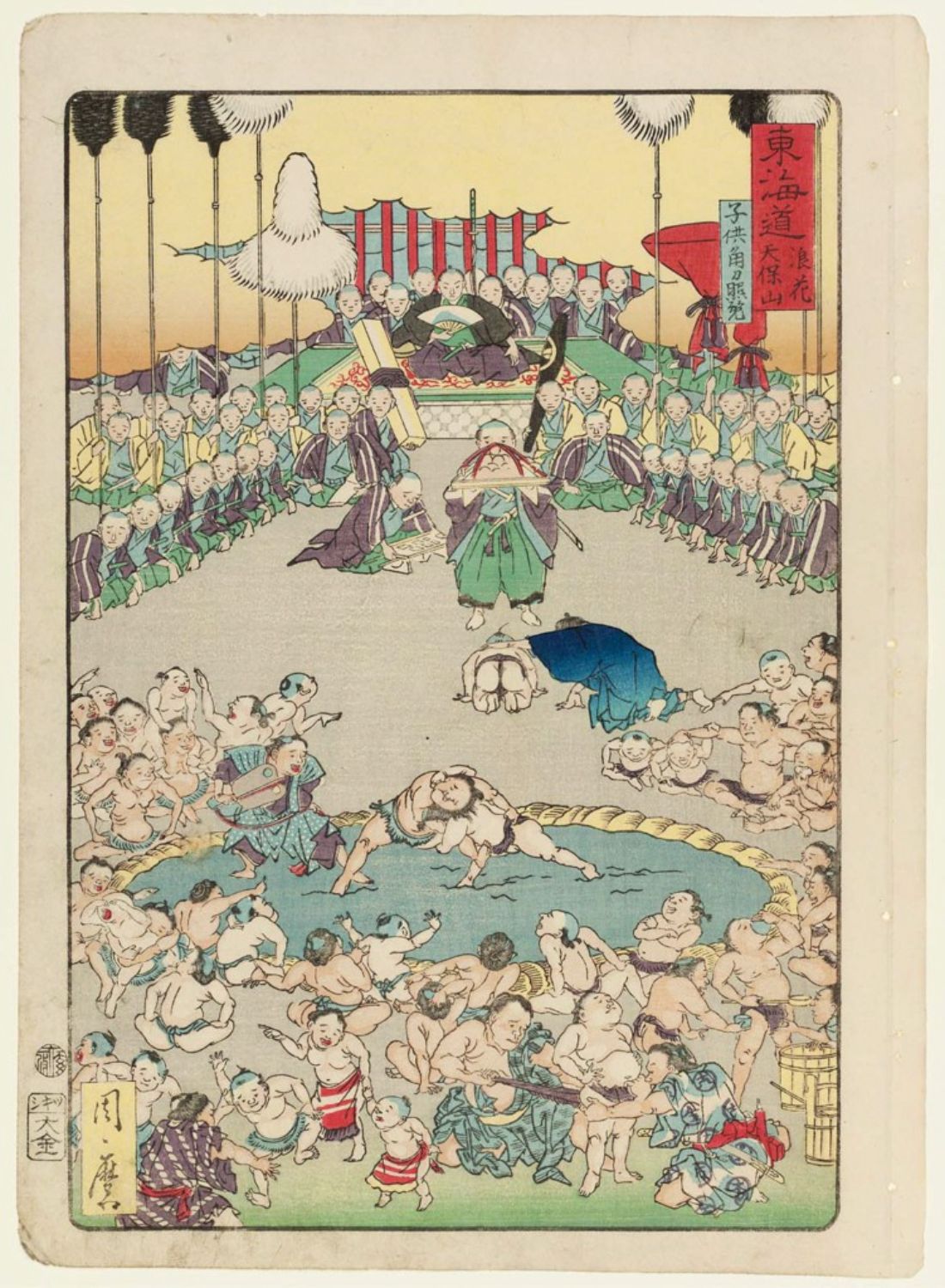
Tenpôzan in Osaka: Viewing Children's Sumo (Naniwa Tenpôzan kodomo sumô shôran), from the series Scenes of Famous Places along the Tôkaidô Road (Tôkaidô meisho fûkei), also known as the Processional Tôkaidô (Gyôretsu Tôkaidô), here called Tôkaidô
1863
Woodblock print
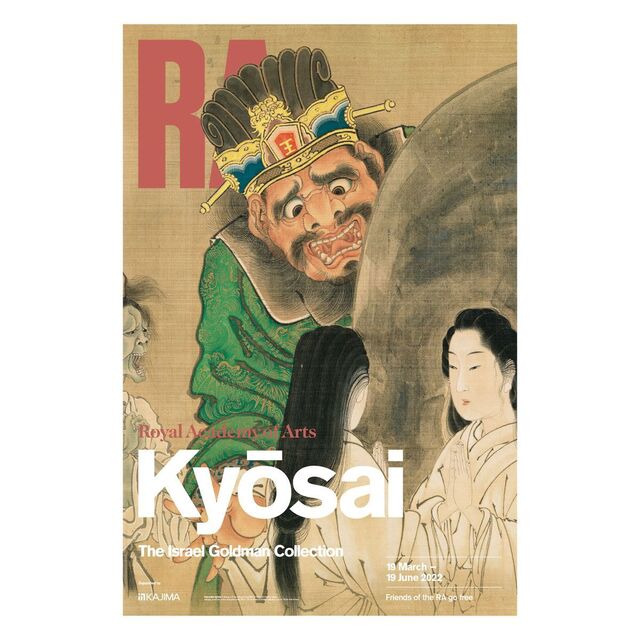
Kyosai, Royal Academy, London, FREE DOMESTIC SHIPPING
2022
Original Museum Lithographic Exhibition Poster
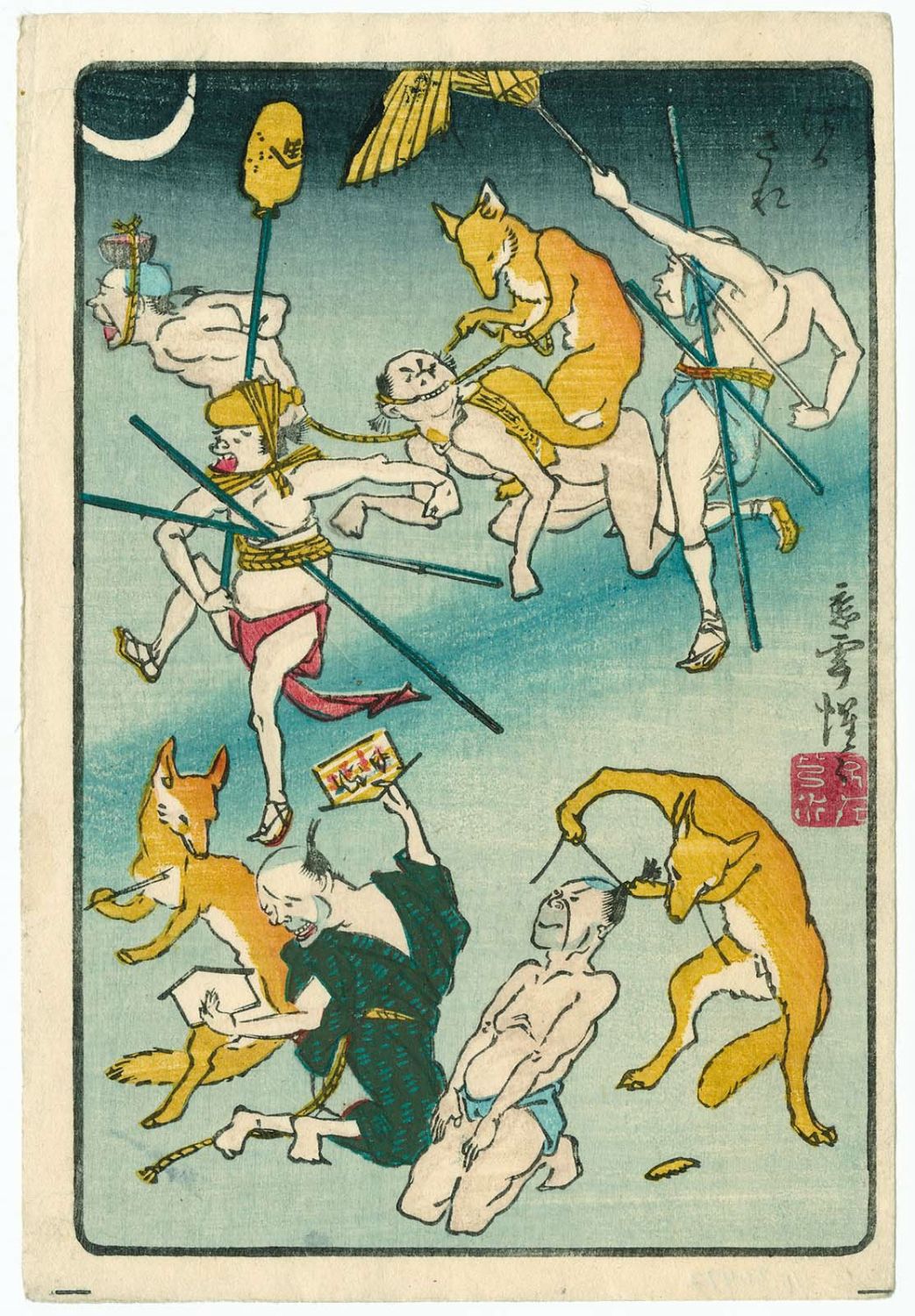
from the series One Hundred Pictures by Kyôsai (Kyôsai hyakuzu)
Woodblock print
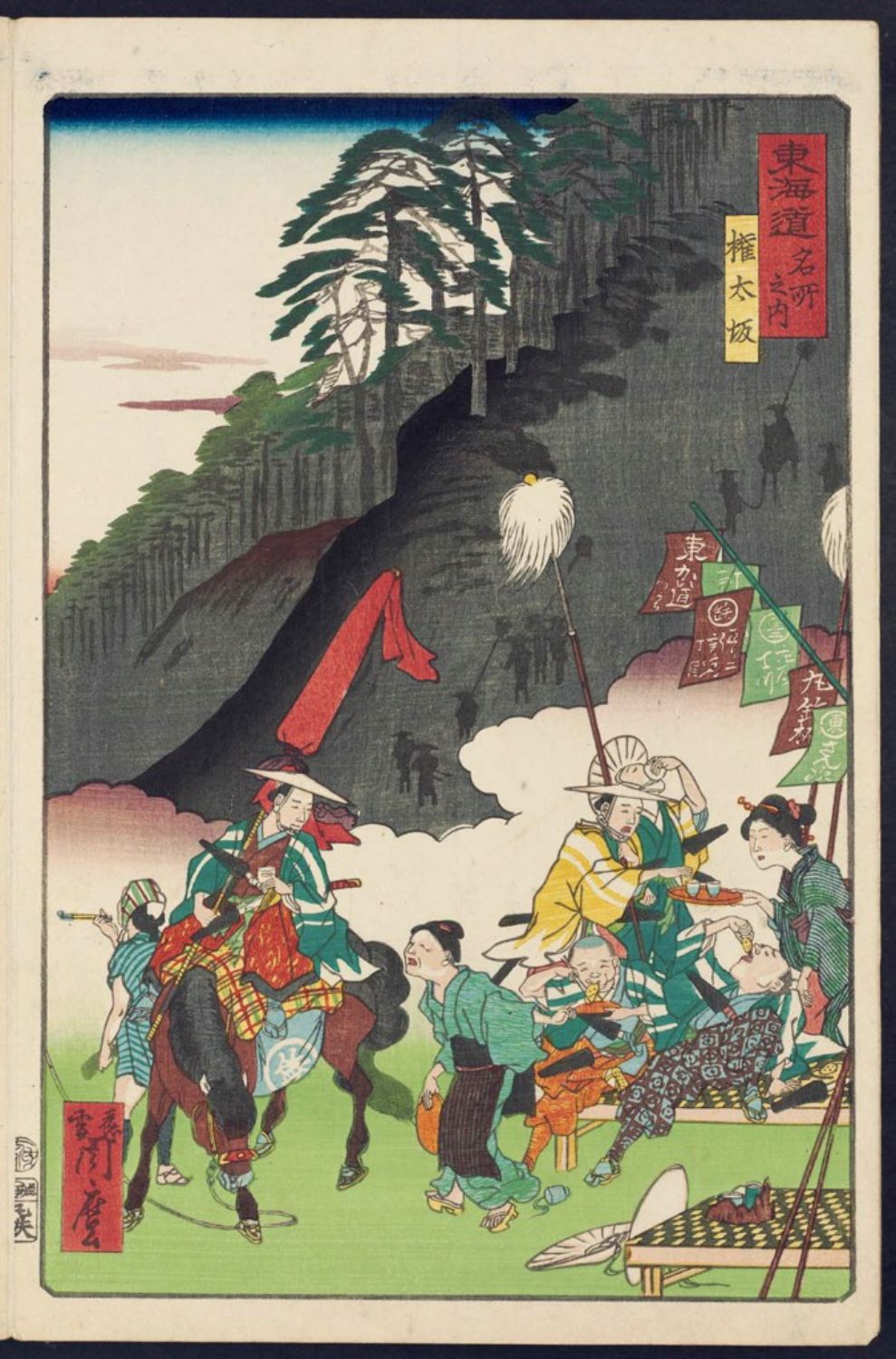
Gontazaka, from the series Scenes of Famous Places along the Tôkaidô Road (Tôkaidô meisho fûkei), also known as the Processional Tôkaidô (Gyôretsu Tôkaidô), here called Tôkaidô meisho no uchi
Woodblock print
Frequently Asked Questions
Two Ronin was created by Kawanabe Kyosai (河鍋暁斎).