
Fuji C
- Medium:
- Mokuhanga (Japanese woodblock)
- Image courtesy of
- Saru Gallery
Description
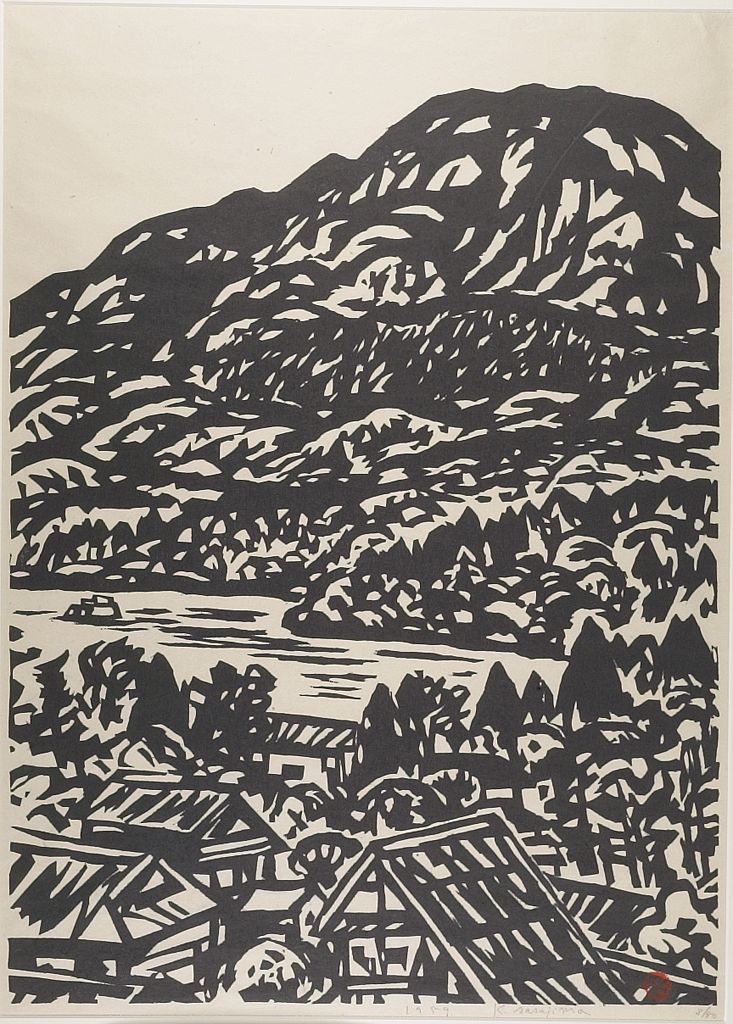
"Fuji C" belongs to a sequence of Mount Fuji studies labeled alphabetically — a working method common in sosaku-hanga, where artists exploring a single motif across multiple states or compositions distinguished prints by letter rather than narrative title. Mount Fuji is a subject Japanese printmakers have returned to since at least Hokusai's "Thirty-Six Views" of the 1830s, and successive generations approached the mountain with their own formal commitments. Sasajima's hand-carved sosaku-hanga idiom, learned under Onchi Koshiro, produces a Fuji unlike the layered bokashi-built versions of nineteenth-century commercial woodblock or the atmospheric shin-hanga revivalist treatments of the early twentieth: bold contour, exposed knife and gouge marks, heavy black against the texture of washi. While the temples of Nara and Kyoto remained his central subject through five decades of practice, Mount Fuji recurs as a secondary motif, treated with the same insistence that the artist personally design, carve, and print every block.
More Prints by Kihei Sasajima


Featured in Collections
Curated cross-cuts that include this print.
Frequently Asked Questions
Fuji C was created by Kihei Sasajima (笹島喜平).